01
Göbekli Tepe
19 entries
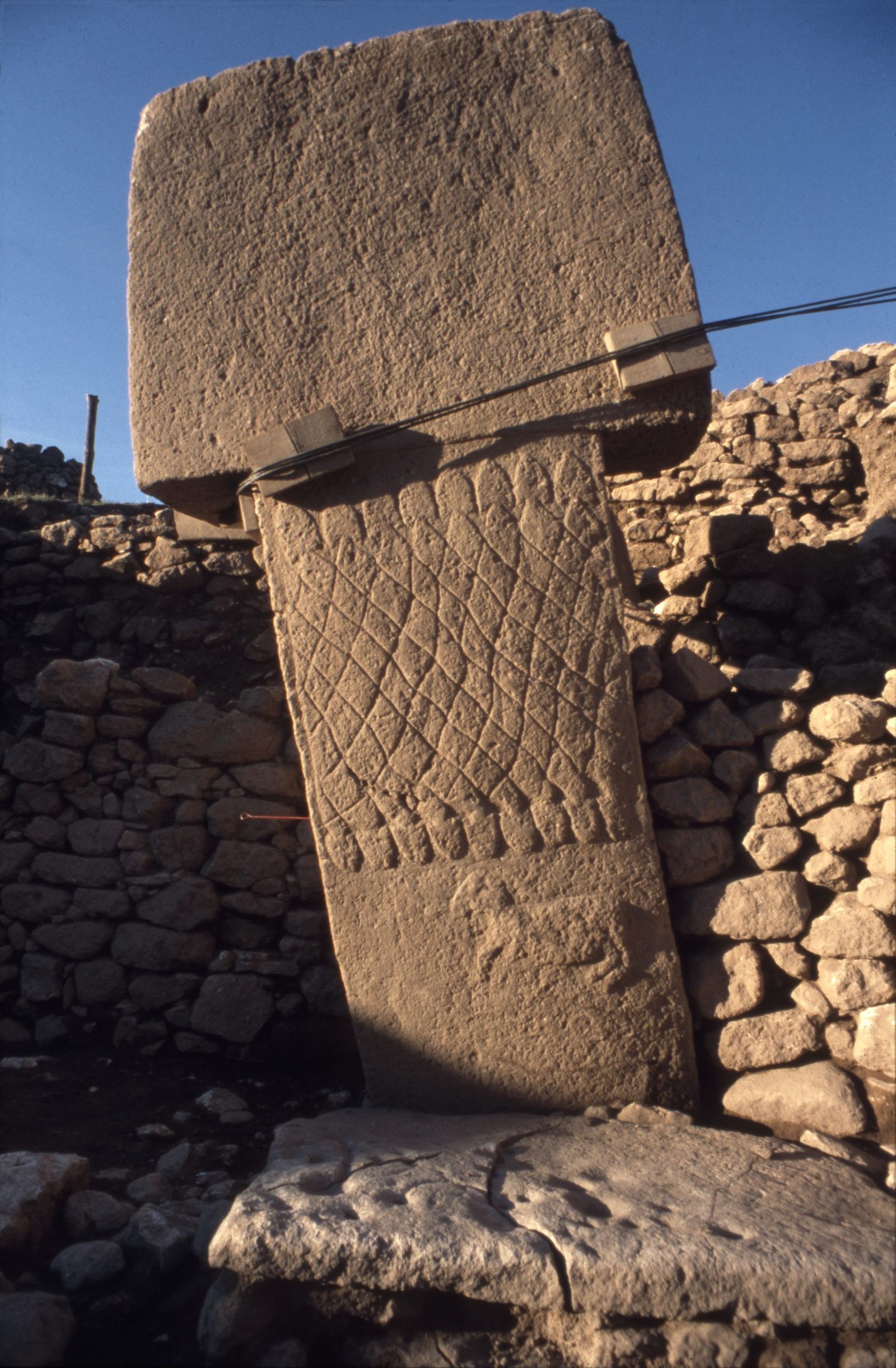
Pillar 1 — the snake-net and the ram
One of the two great central pillars of Enclosure A, carrying a net-like mesh formed entirely of snakes above the figure of a ram, and a band of five…
Full page →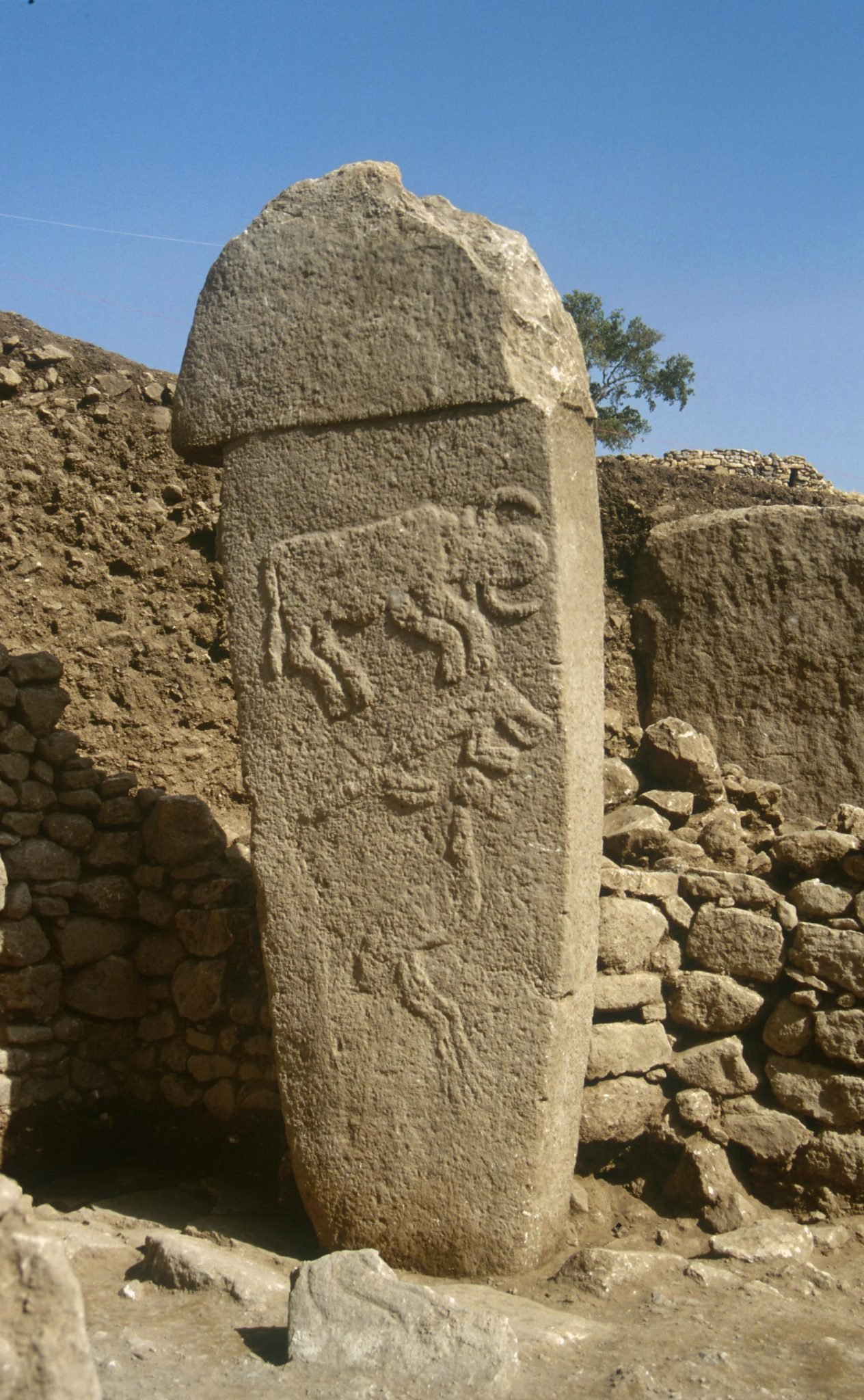
Pillar 2 — aurochs, fox and crane
The second central pillar of Enclosure A, carved down one side with a vertical column of three animals — a wild bull, a fox and a crane — and, on its…
Full page →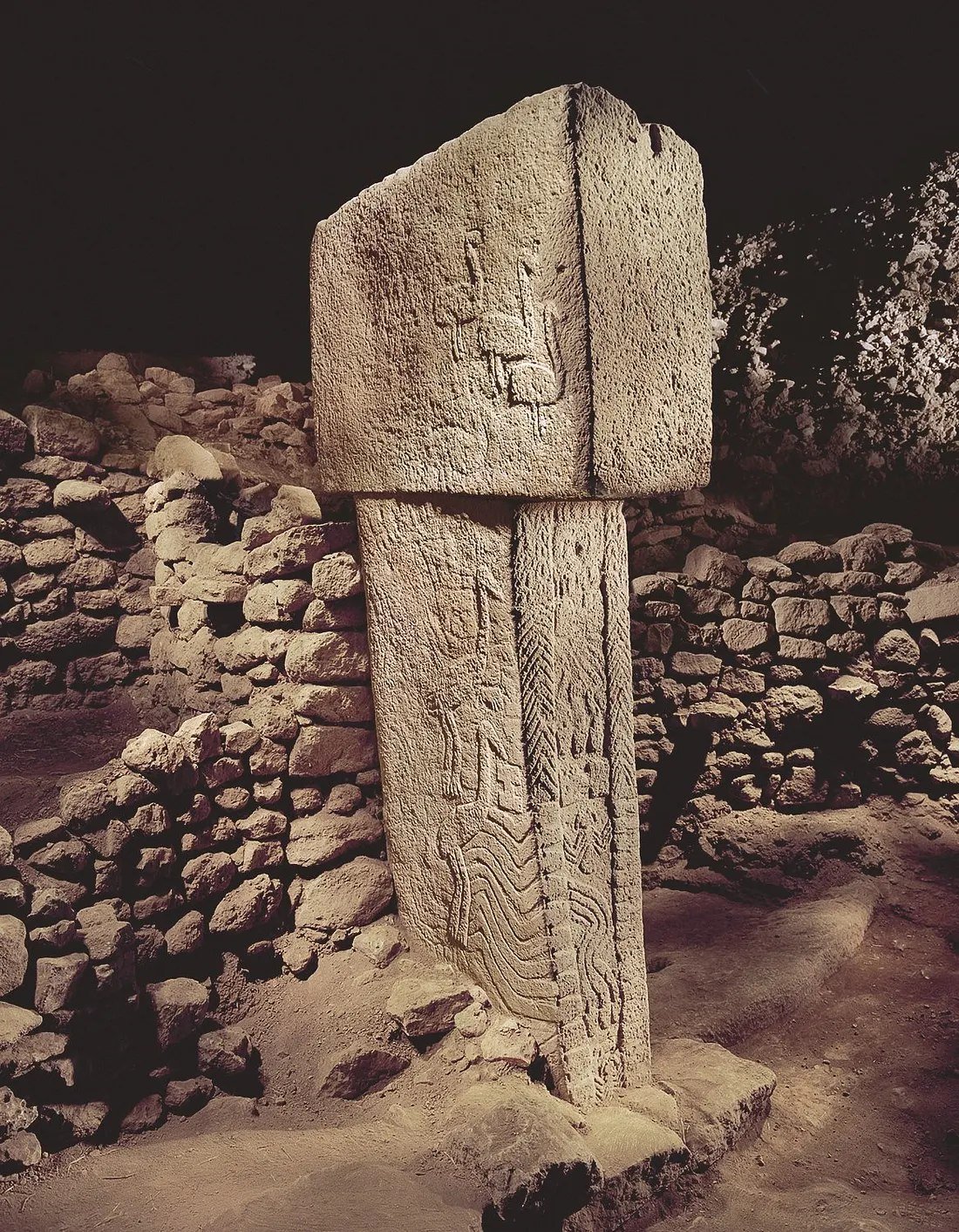
Pillar 33 — cranes, snakes and a fox
A wall pillar of Enclosure D whose two broad faces answer each other: tall cranes and a great bundle of snakes on one side, a leaping fox with an equal…
Full page →Pillar 37 — the destroyed western central pillar of Enclosure C
One of the two central pillars of Enclosure C — smashed in antiquity. Pillar 37 is known mostly from its position and its pairing with the…
Full page →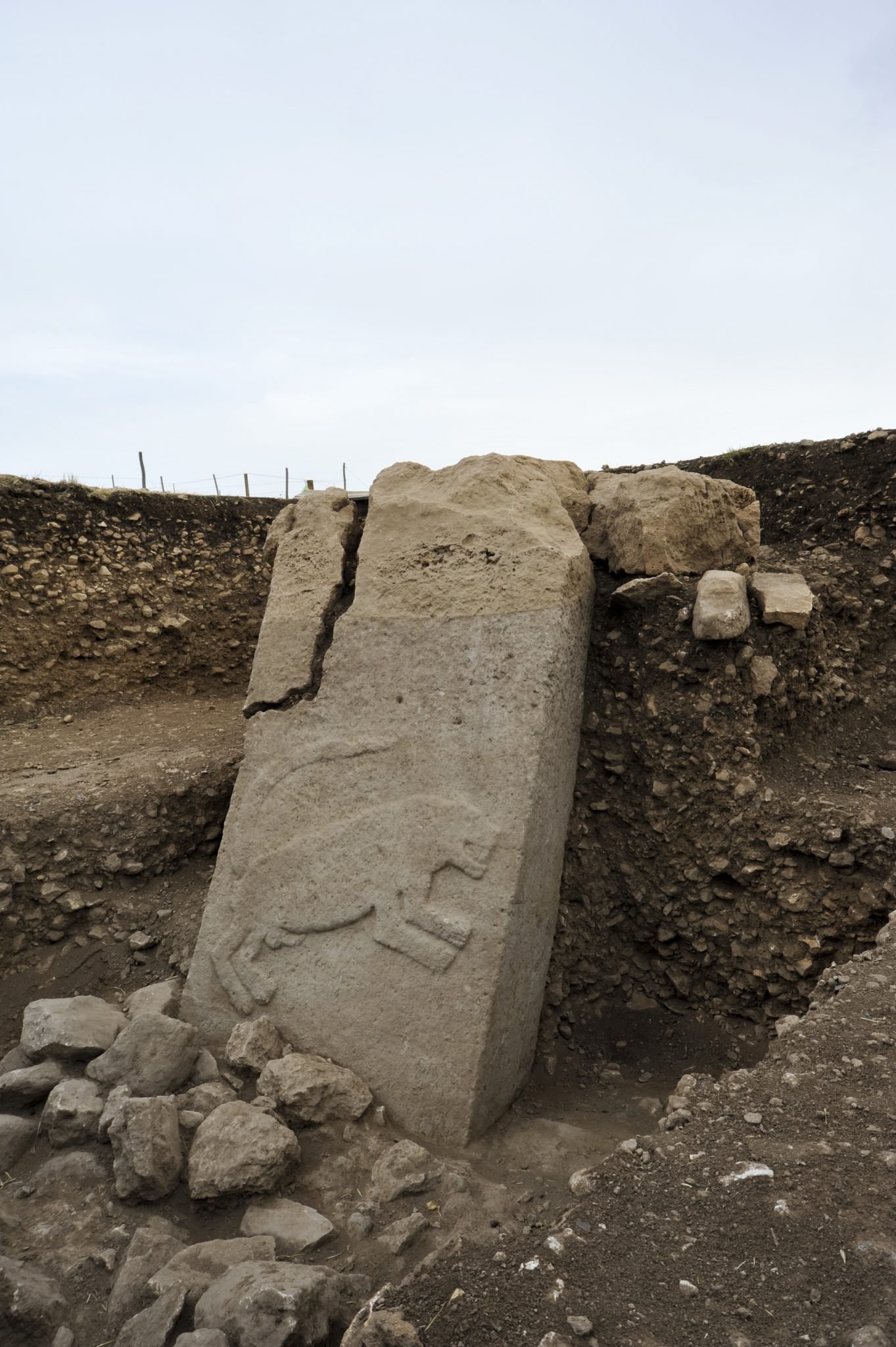
Pillar 51 — the big-cat central pillar
The one central pillar so far found in Enclosure H — a T-pillar carrying a garment-like band down its front and, on its western broad side, the relief…
Full page →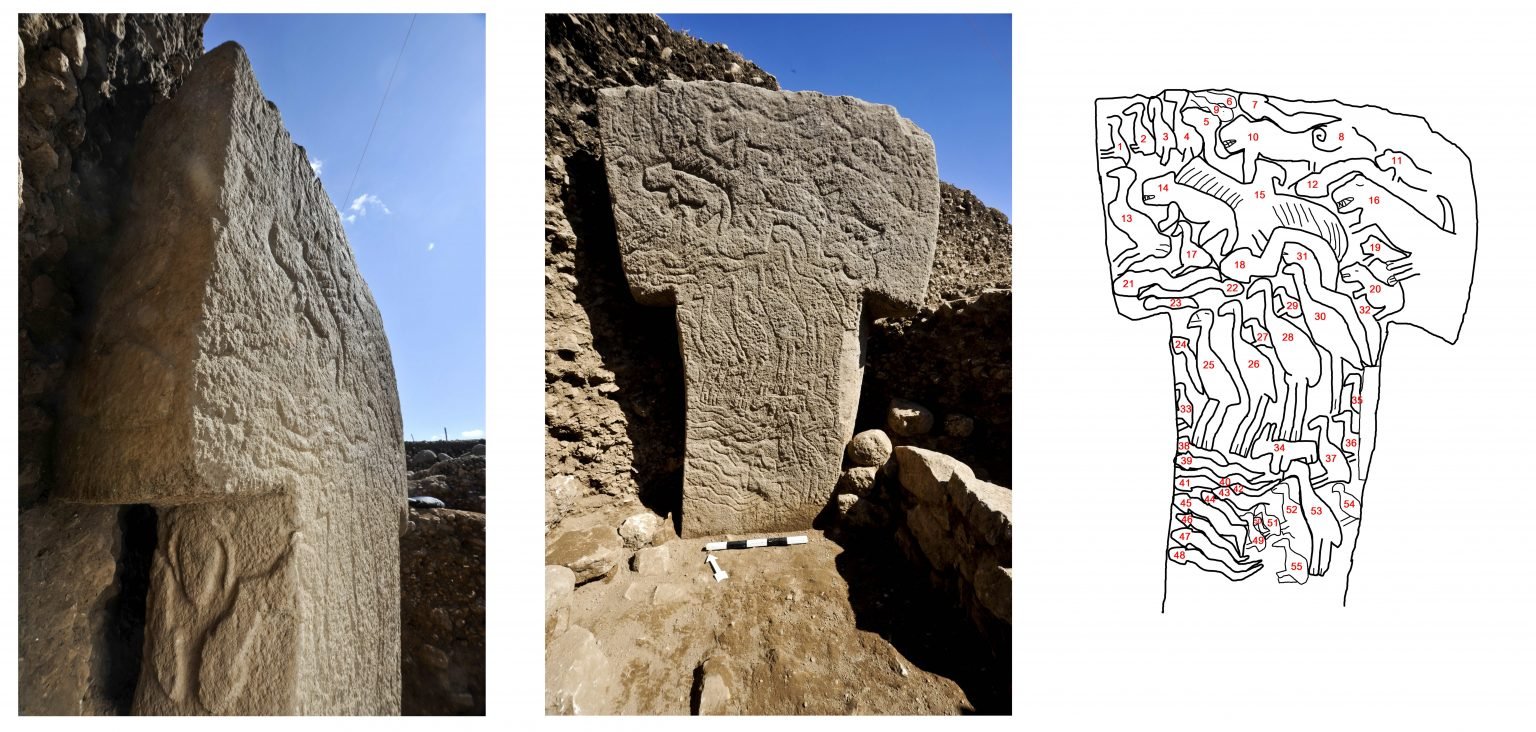
Pillar 56 — the crowded menagerie
One broad face of this pillar in Enclosure H is packed with about fifty-five animals carved so tightly that each one's outline runs into the next —…
Full page →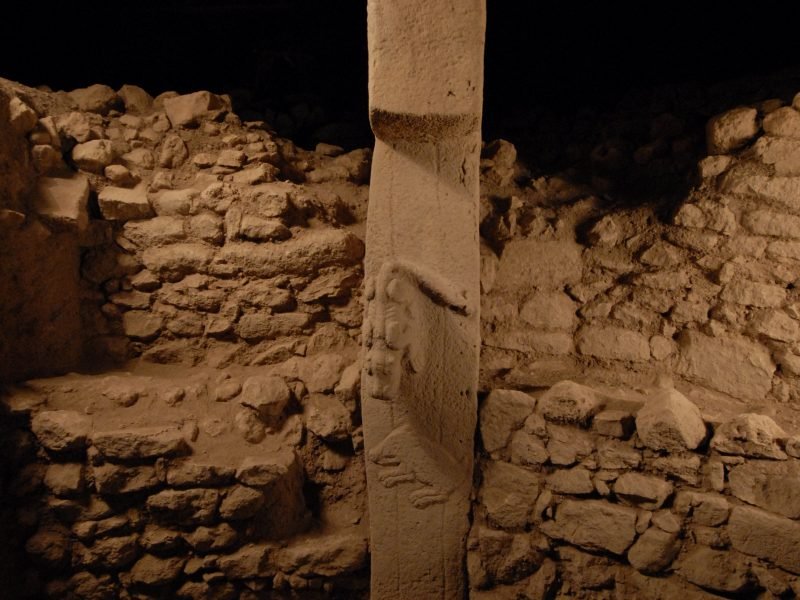
The Big-Cat Sculpture in Enclosure C
A nearly complete 75 cm felid sculpture was found in situ in the second ring wall of Building C, with a large head, flat circular eyes, bared teeth,…
Full page →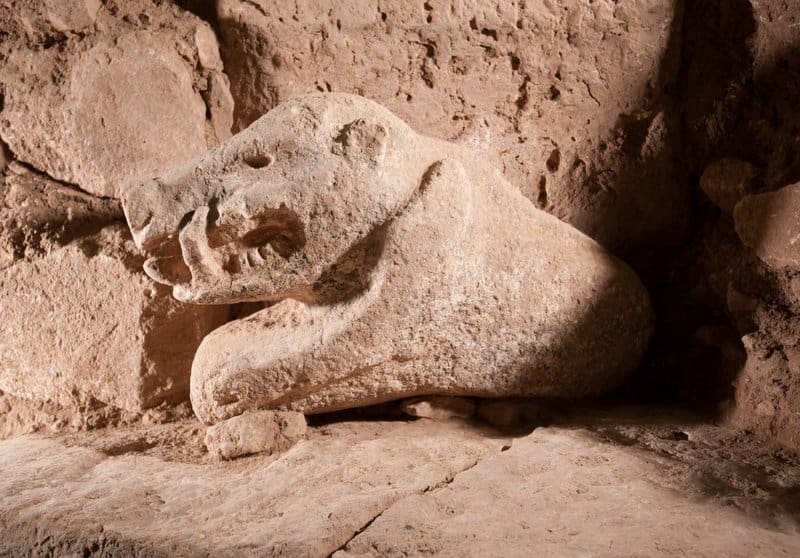
The Boar Cache Near Pillar 35
The Pillar 35 boar cache is a Building C context with a massive boar sculpture beside Pillar 35, perforated stone plates, a bowl, a fragmented plate,…
Full page →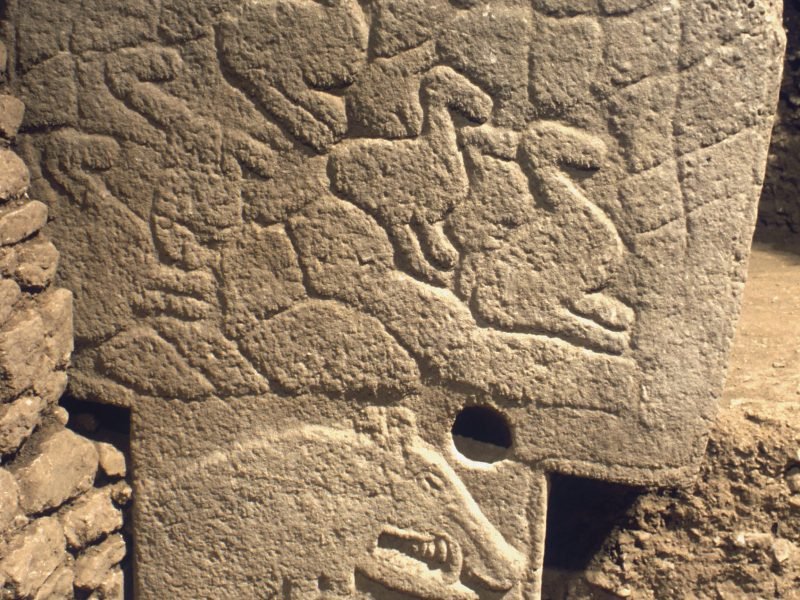
The Boar Relief: Pillar 12 in Enclosure C
Pillar 12 is a Building C second-ring-wall pillar with a boar relief and an adjacent 48.5 cm boar sculpture found in front of that relief. Pillar 12…
Full page →The Fox and Arm-Bend Pillar: Building F Pillar 70
Pillar 70 is the northern central pillar of Building F. It is damaged, with its T-head lost, but parts of the shaft were reconstructed from fragments.
Full page →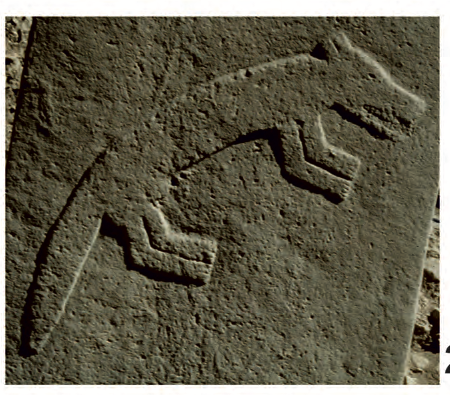
The Fox Pair: Pillars 9 and 10 in Enclosure B
Pillars 9 and 10 are the central pillars of Göbekli Tepe's Enclosure B. Both carry fox depictions, making them the building's strongest visual anchor.
Full page →The Human and Animal Relief: Building F Pillar 74
Pillar 74 stands in the south of Building F. Its head is missing, but the shaft preserves relief bands, a V-shaped necklace, arms, hands, a possible…
Full page →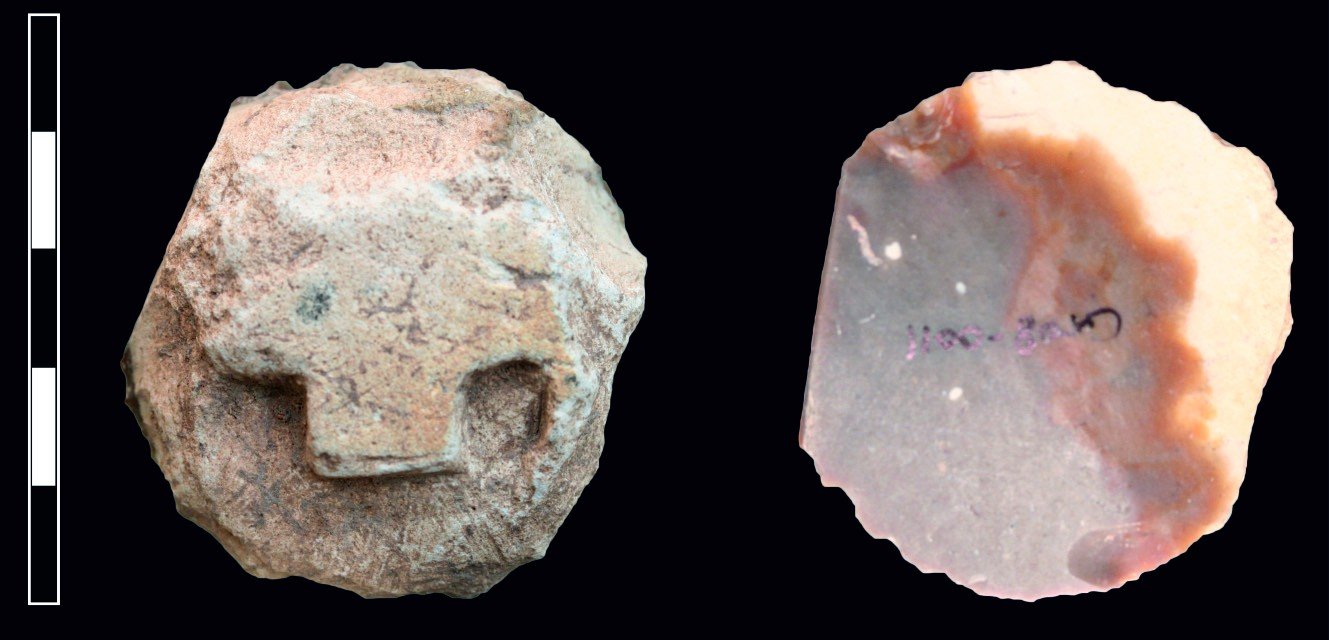
The Miniature Mask from Enclosure C
D44 is a 4.5 cm miniature flint-cortex mask found in Area L9-87, Locus 116.1, next to the eastern central pillar of Building C. D44 is small, but…
Full page →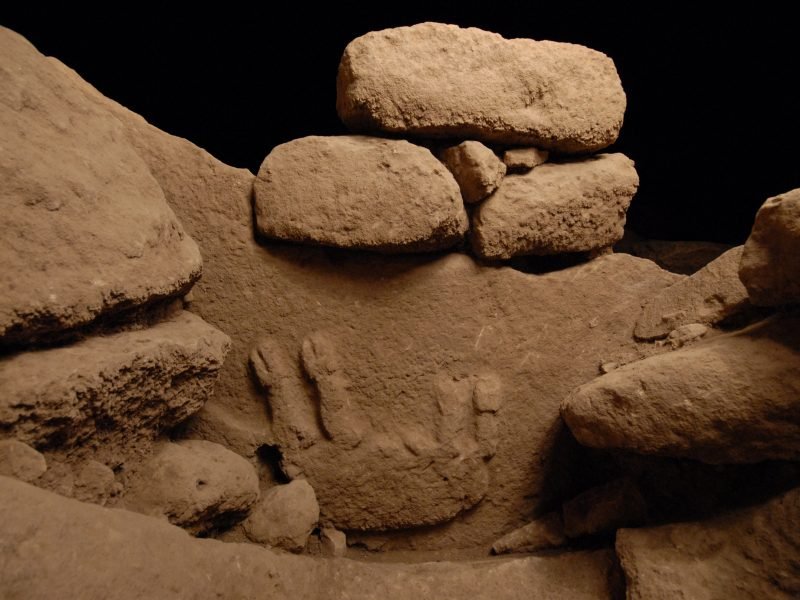
The Porthole Slab at Enclosure C
The Enclosure C dromos porthole slab is a vertical limestone entrance slab south of Enclosure C, with a porthole and a flat wild-boar relief below it,…
Full page →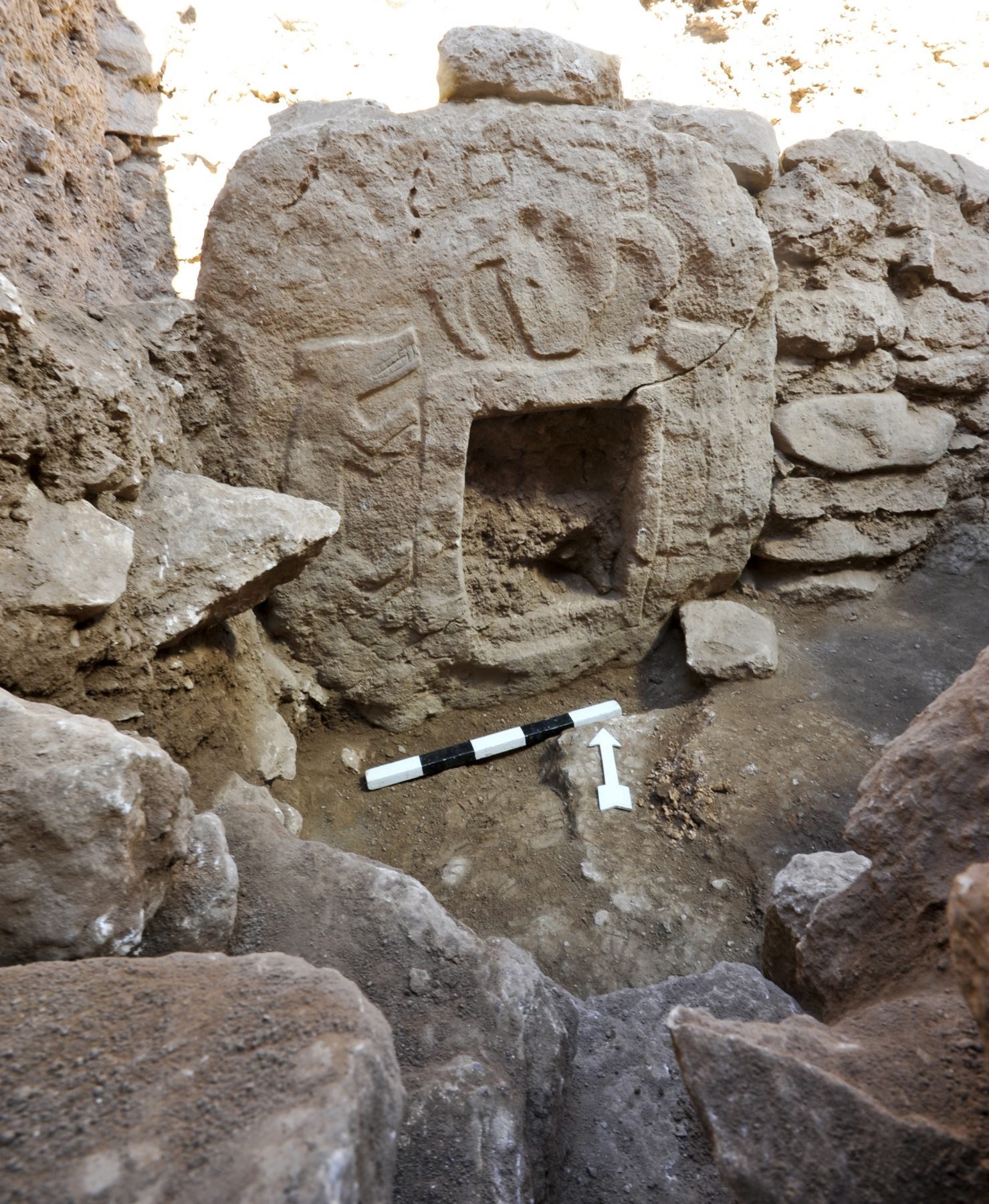
The Porthole Stone in Enclosure B
A porthole stone was found lying on the terrazzo floor south of Enclosure B's central pillars. Porthole stones are megalithic stone pieces with one or…
Full page →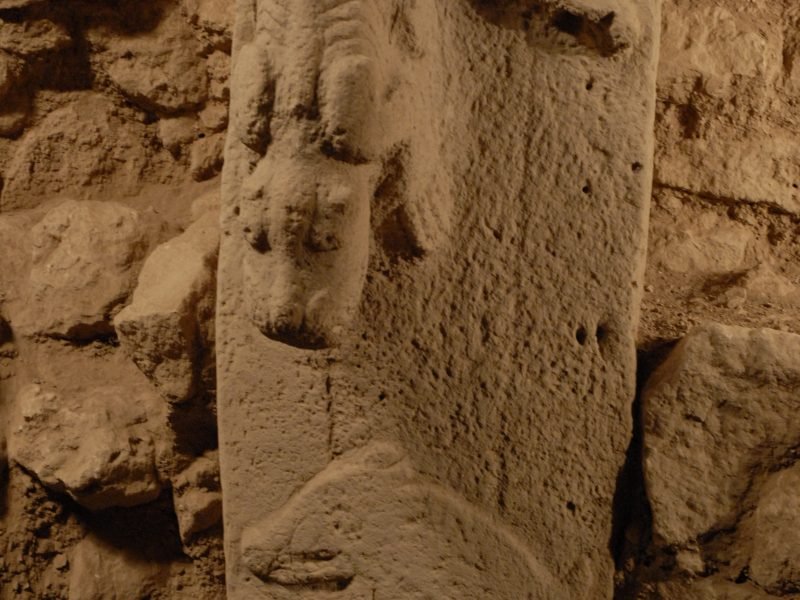
The predator of Pillar 27
A snarling beast carved almost fully in the round, crawling head-first down a pillar in Enclosure C — the closest thing to a sculpture the carvers of…
Full page →The Predator Slab Near Pillar 36
The Pillar 36 porthole-predator lead is a predator high relief found atop the wall east of Pillar 36 in Enclosure C, discussed as a possible…
Full page →The Terrazzo Bowl and Channel in Enclosure B
Between Enclosure B's central pillars, excavators exposed a terrazzo floor rather than the smoothed bedrock floor known from many other Göbekli Tepe…
Full page →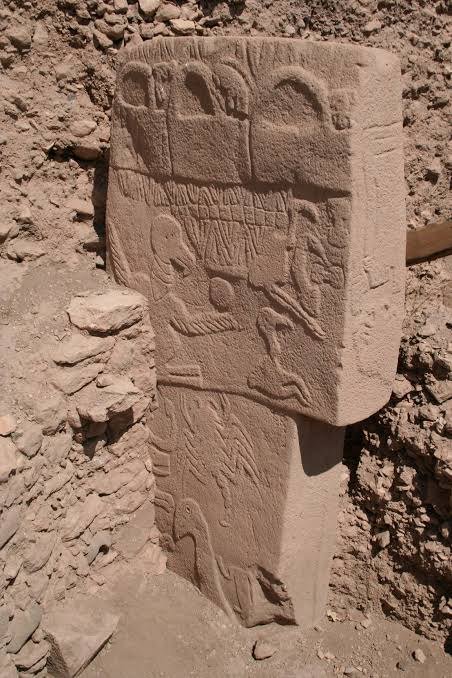
The Vulture Stone (Pillar 43)
Göbekli Tepe's most famous carved pillar — a crowded scene of a vulture, a scorpion, snakes, birds, a row of strange bag-shaped objects, and a headless…
Full page →02
Karahan Tepe
18 entries
A wild donkey, running underfoot
Away from the monuments, a palm-sized animal was carved into the floor of a place where people actually lived.
Full page →Animal Remains from Structure BF
Structure BF's animal remains are useful public evidence, but species, counts, and exact loci should stay linked to formal source updates. reported…
Full page →Fill And Sealing Sequence
Structure AB was deliberately filled through staged deposits, stone packing, and a stone-covered final surface. Karul 2021 describes stones placed…
Full page →Fire And Activity Features
Fire And Activity Features are reported evidence groups in Structure BF at Karahan Tepe. The page keeps the object classes separate while exact counts…
Full page →The Descent Route into Structure AB
The descent route is the best way to understand Structure AB: visitors move down into a carved space rather than simply standing before upright…
Full page →The human-faced pillar
A standing stone that stops being a post and starts being a person.
Full page →The large stone vessel of Structure BH
A large stone vessel reported standing against the north wall of Structure BH — a promising find that the excavation has not yet fully published, so…
Full page →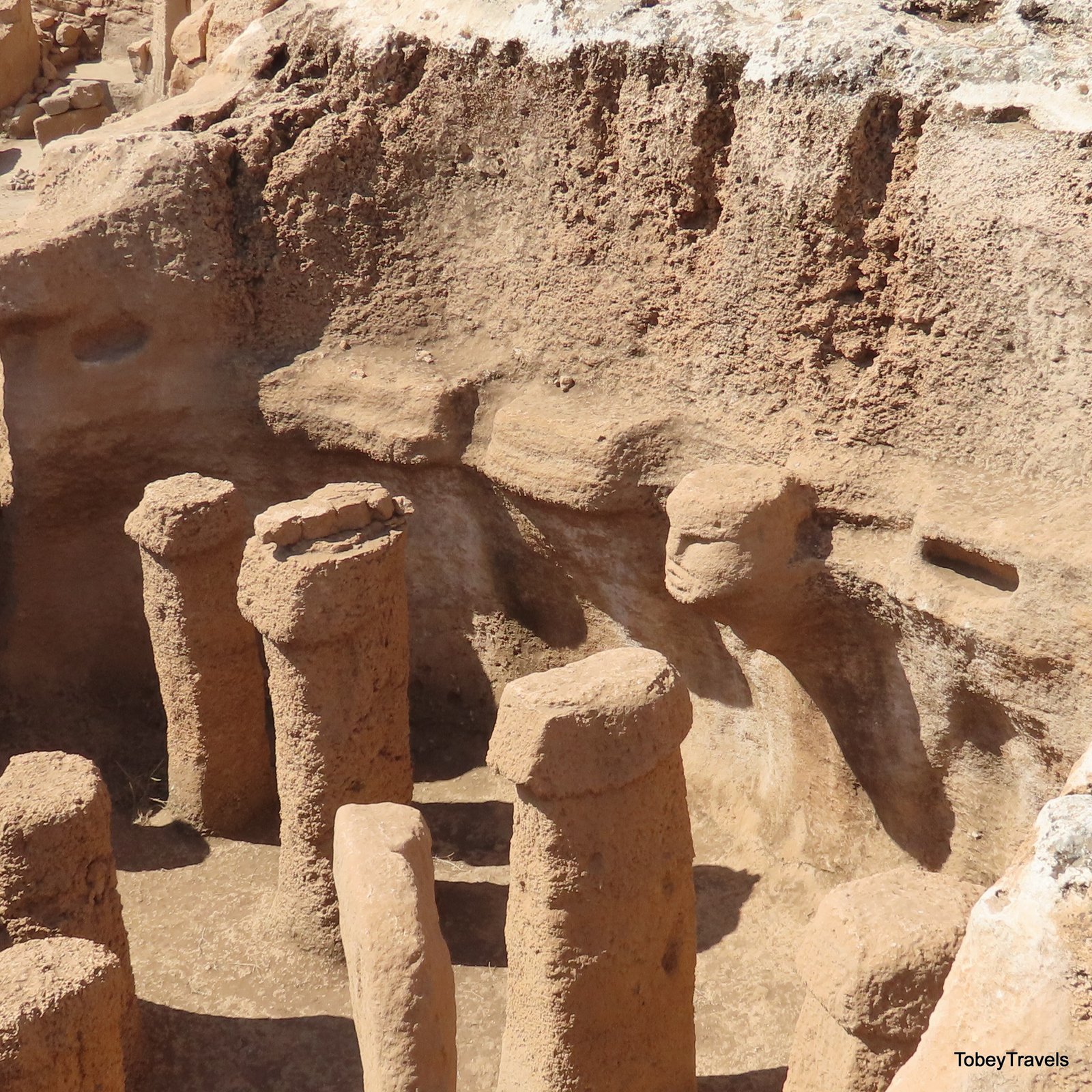
The phallic pillars
Ten uprights carved straight from the bedrock floor — a chamber that surrounds the body with generative stone.
Full page →The reported basalt human sculpture
A human sculpture in the Structure BD area recorded in the site's own working notes as basalt — a promising lead that we have not been able to confirm…
Full page →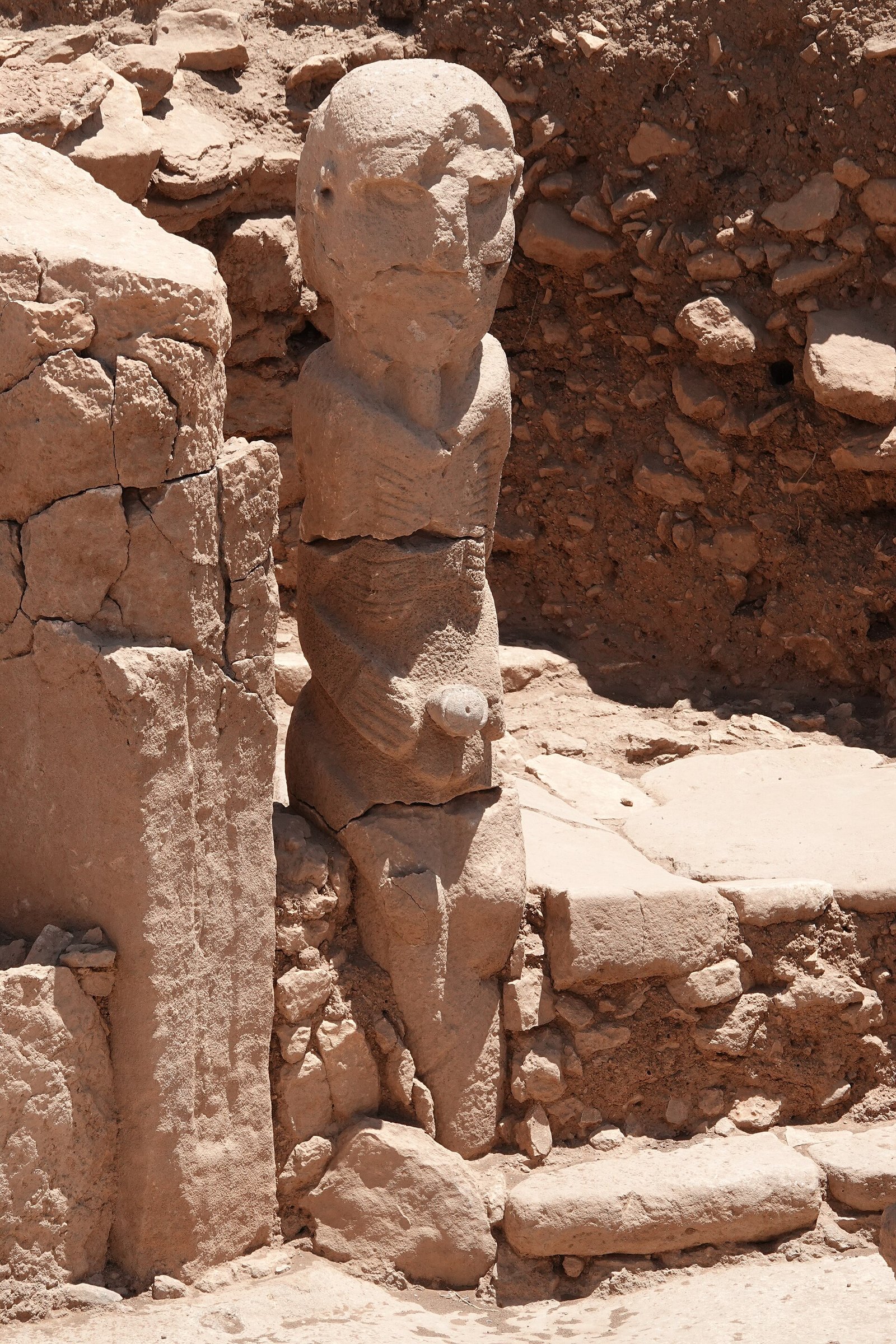
The Ribbed Man
A stone figure where mortality and generation are forced into the same body.
Full page →The serpentine channel
A winding cut that carried something into the chamber — we just don't yet know what.
Full page →The central T-pillars of Structure BD
The twelve T-pillars make Structure BD one of Karahan Tepe's most important large-building leads. Twelve T-shaped pillars are reported in BD, including…
Full page →The Vessels, Rings, and Figurines from Structure BF
Structure BF is important because it gathers vessels, stone rings, and small figurines into one of Karahan Tepe's clearest 2025 object groups. The…
Full page →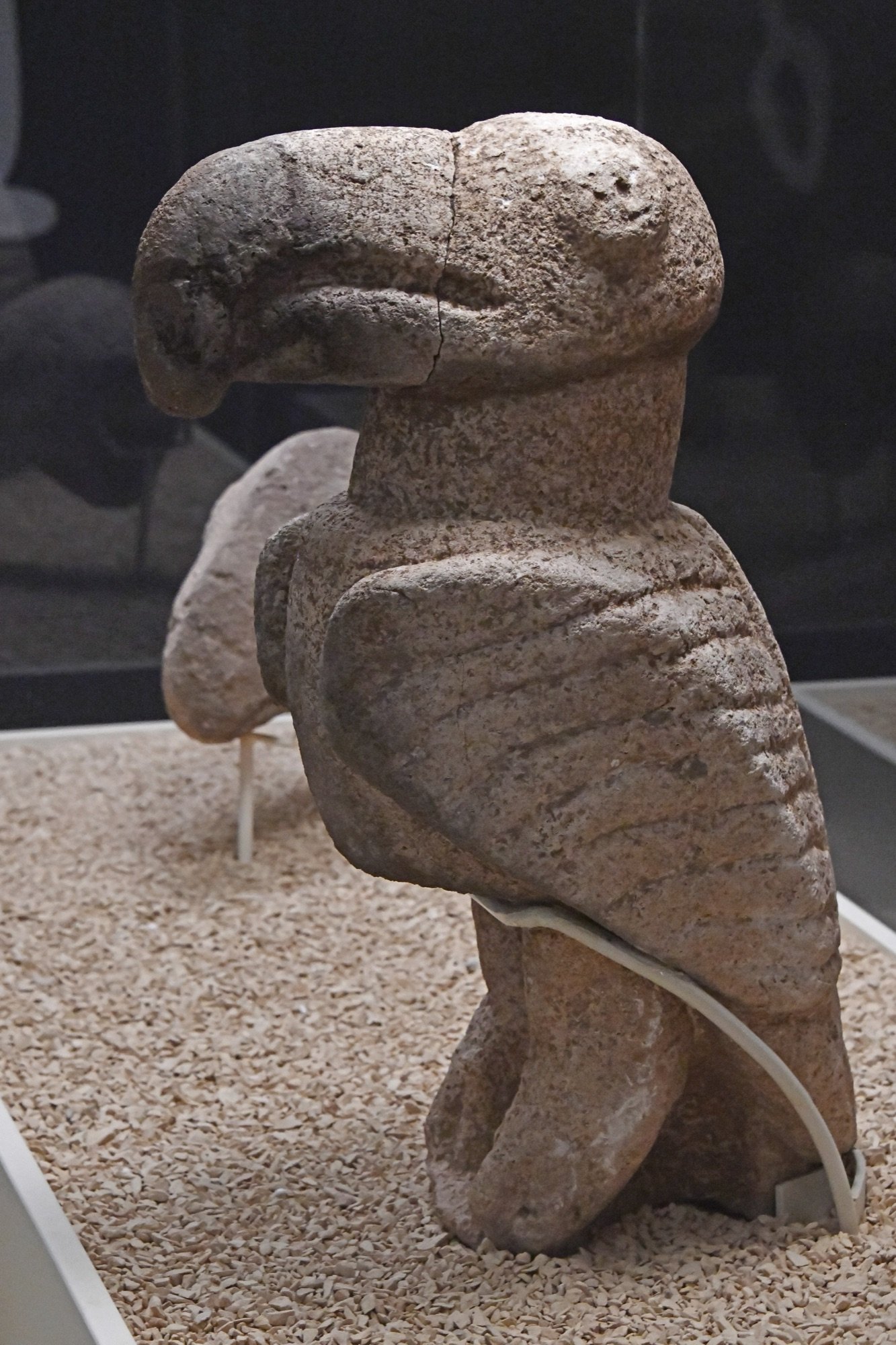
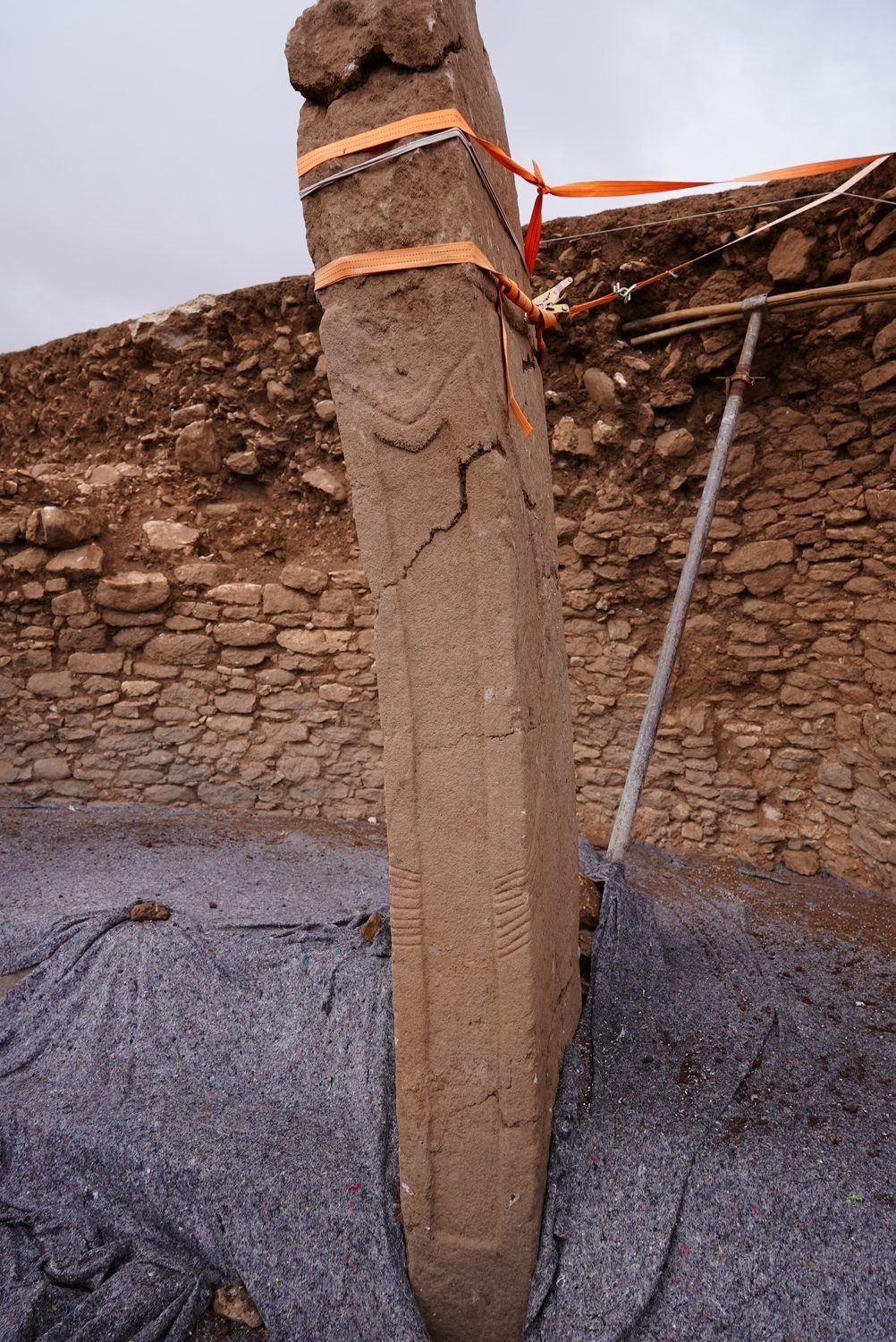
The eight-fingered pillar (Structure AH)
A T-pillar carved with arms that bend down the shaft and meet low in a pair of hands showing eight fingers, the upper arm shaped like a vulture’s head — the clearest join of human body and bird in the Taş Tepeler world.
Full page →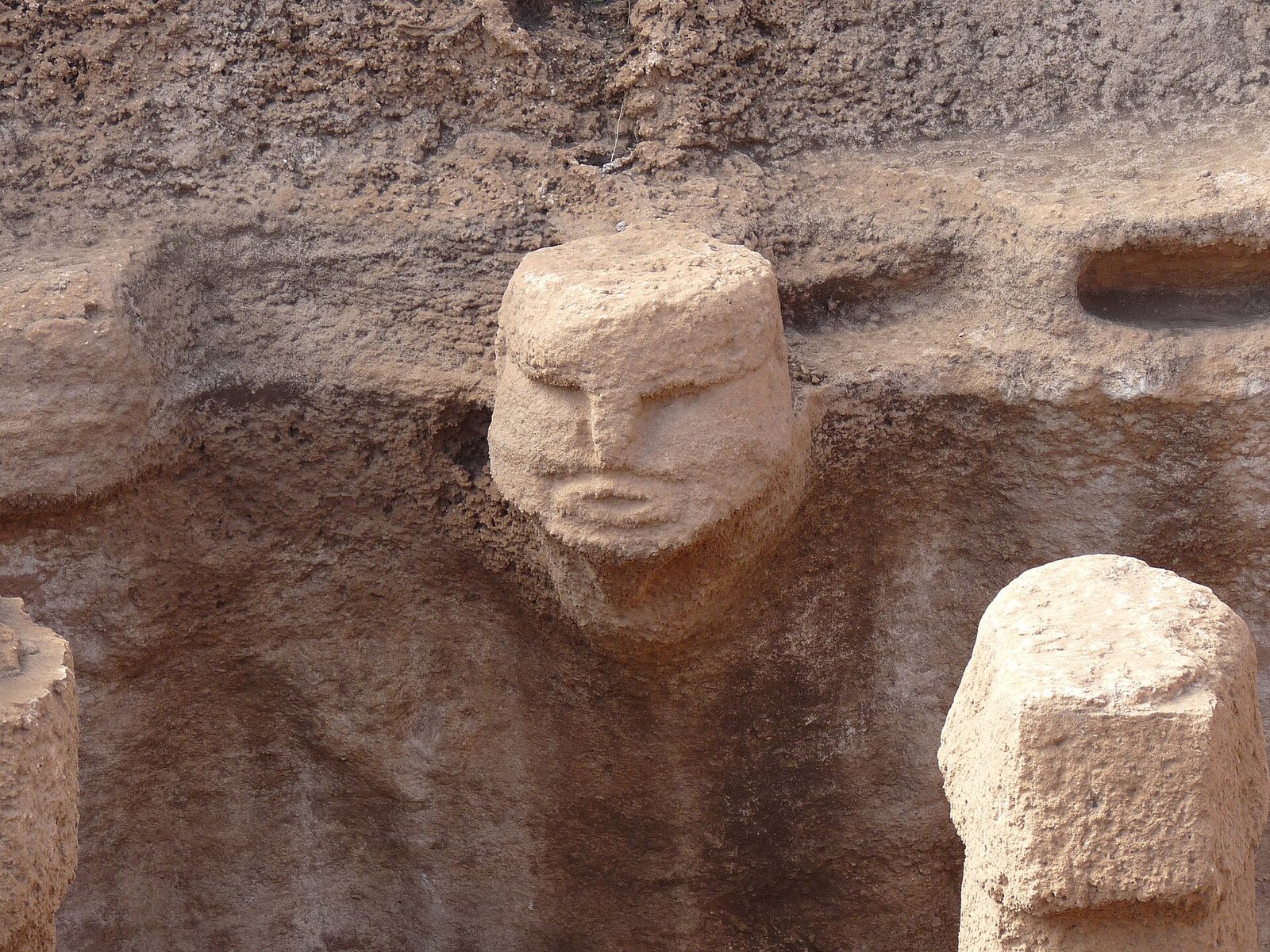
The watching head of Karahan Tepe
A human face carved from the living bedrock, rising out of the wall of Structure AB to watch everyone who climbs down into the room — one of the most…
Full page →03
Sayburç
22 entries
Adjacent Context
Structure CD is reported as adjacent to Structure CB. The published record treats CD as an adjacent special-building record.
Full page →
Bedrock Bench
Structure BB includes a bedrock bench as part of the room layout. The bench helps organize the room edge and is tied to the placement of tools and…
Full page →Burning Evidence
Burning is reported on the human bones from the secondary burial evidence. The source describes signs of burning on recovered human bones and severe…
Full page →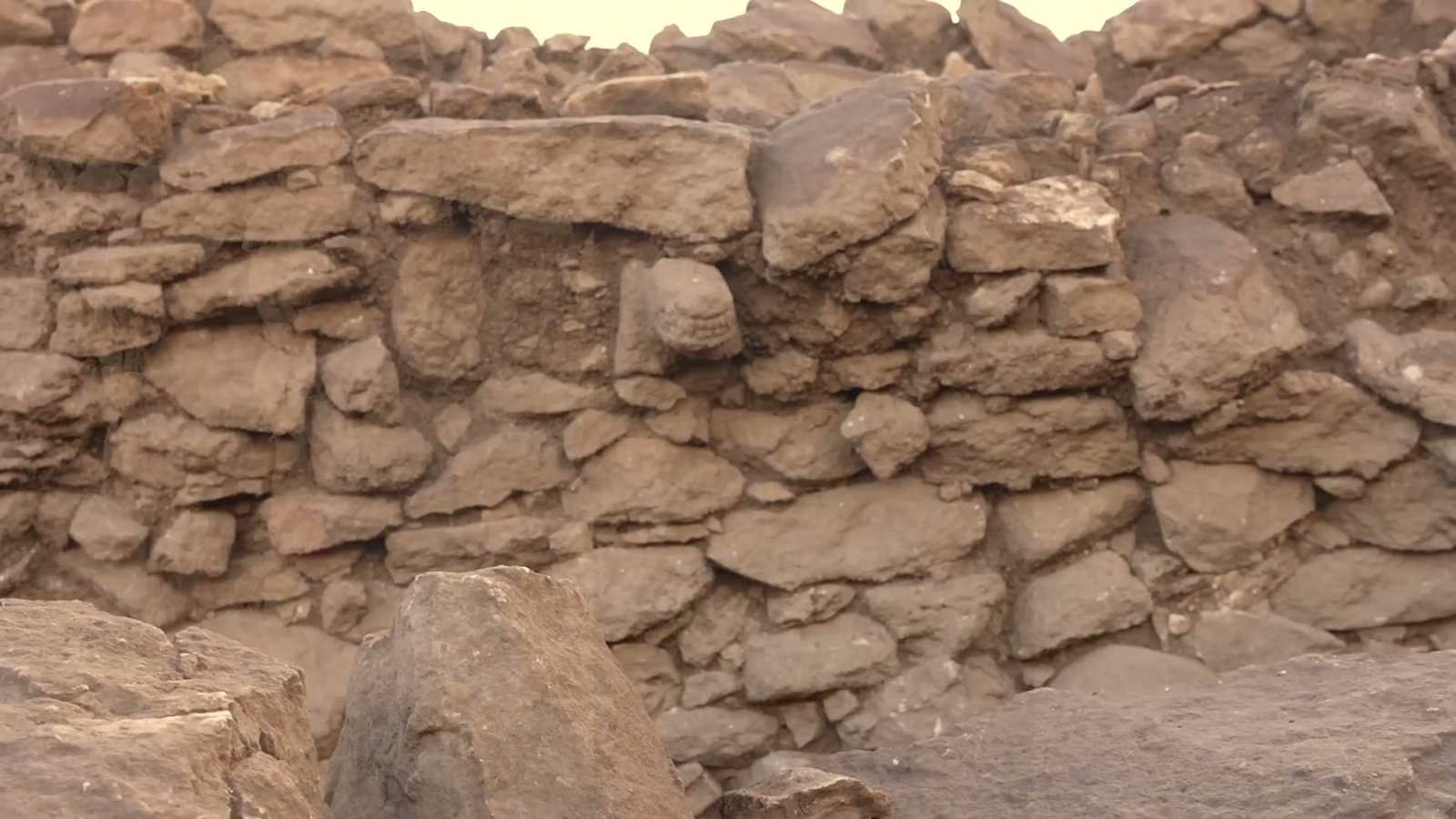
CB-Like Features
Structure CD is reported to have features similar to Structure CB. The source says CD has the same features as CB in a limited area.
Full page →
Central T-Pillar
Structure CB has a central T-pillar in the middle of the building. The central T-pillar is reported in the middle of the building, separate from the…
Full page →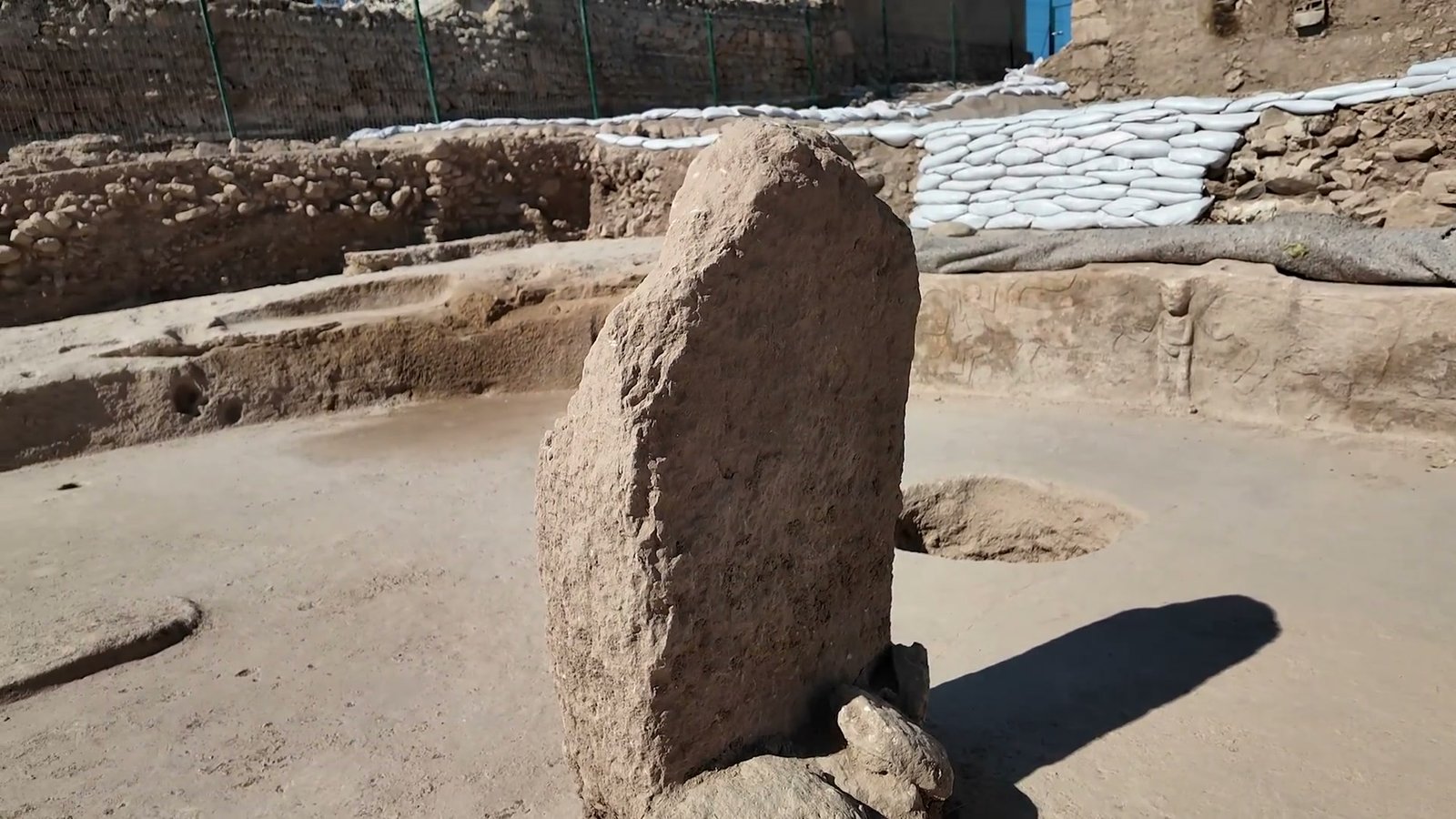
Destroyed Central T-Pillar
Structure DA has at least one destroyed central T-pillar lying on the floor. The source reports at least one central T-shaped pillar on the floor and…
Full page →Domed Hearth
Structure BB includes a domed hearth near the eastern wall. The hearth belongs to the domestic feature set of Structure BB and helps connect the…
Full page →Double-Step Bench
Structure DA has a double-step bench in front of the wall. Published work identifies a double-step bench as one of Structure DA's main architectural…
Full page →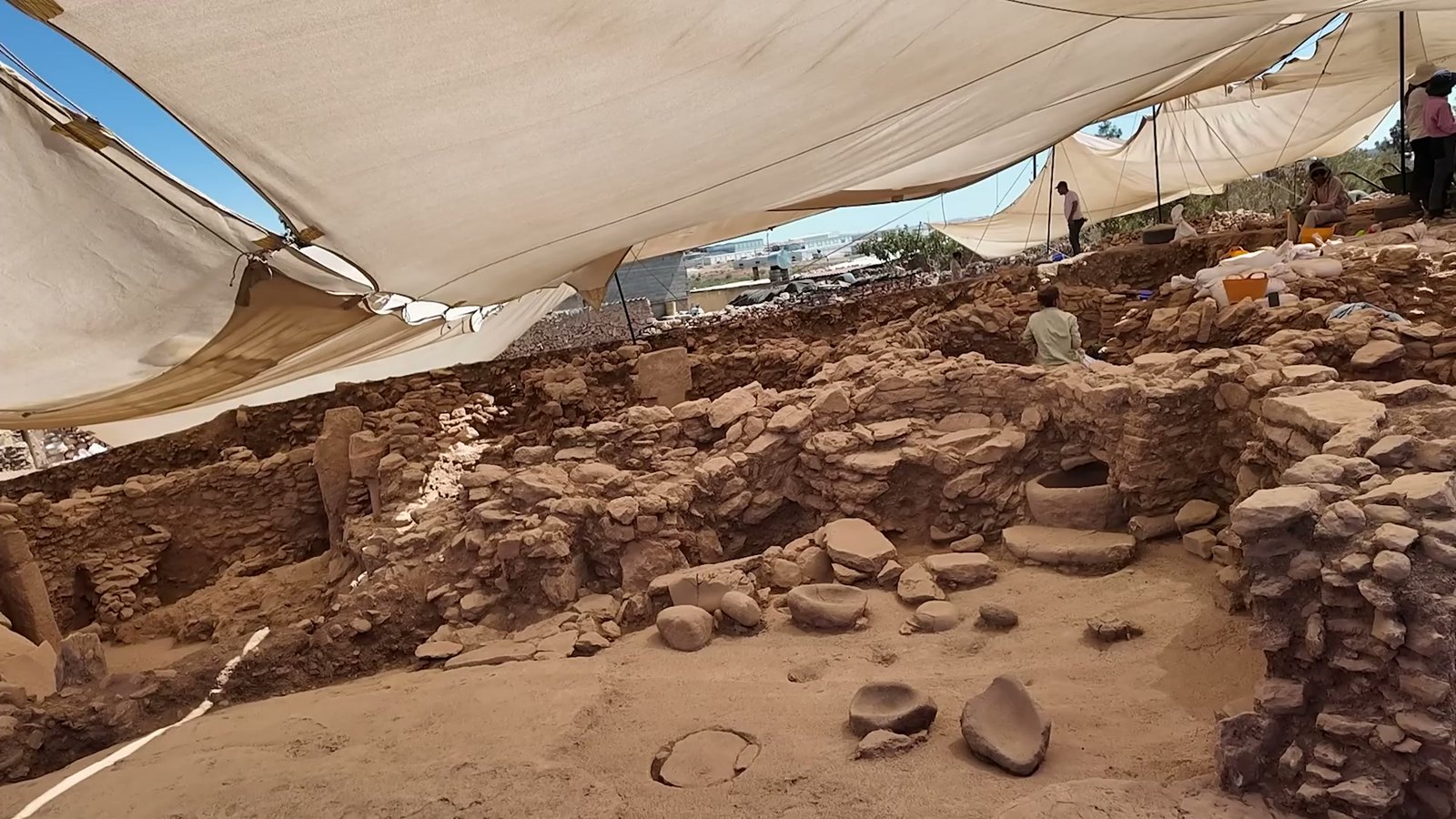
Grinding Tools
Structure BB has grinding stones and pestles connected with food preparation. The published record places grinding stones on the western bench, on the…
Full page →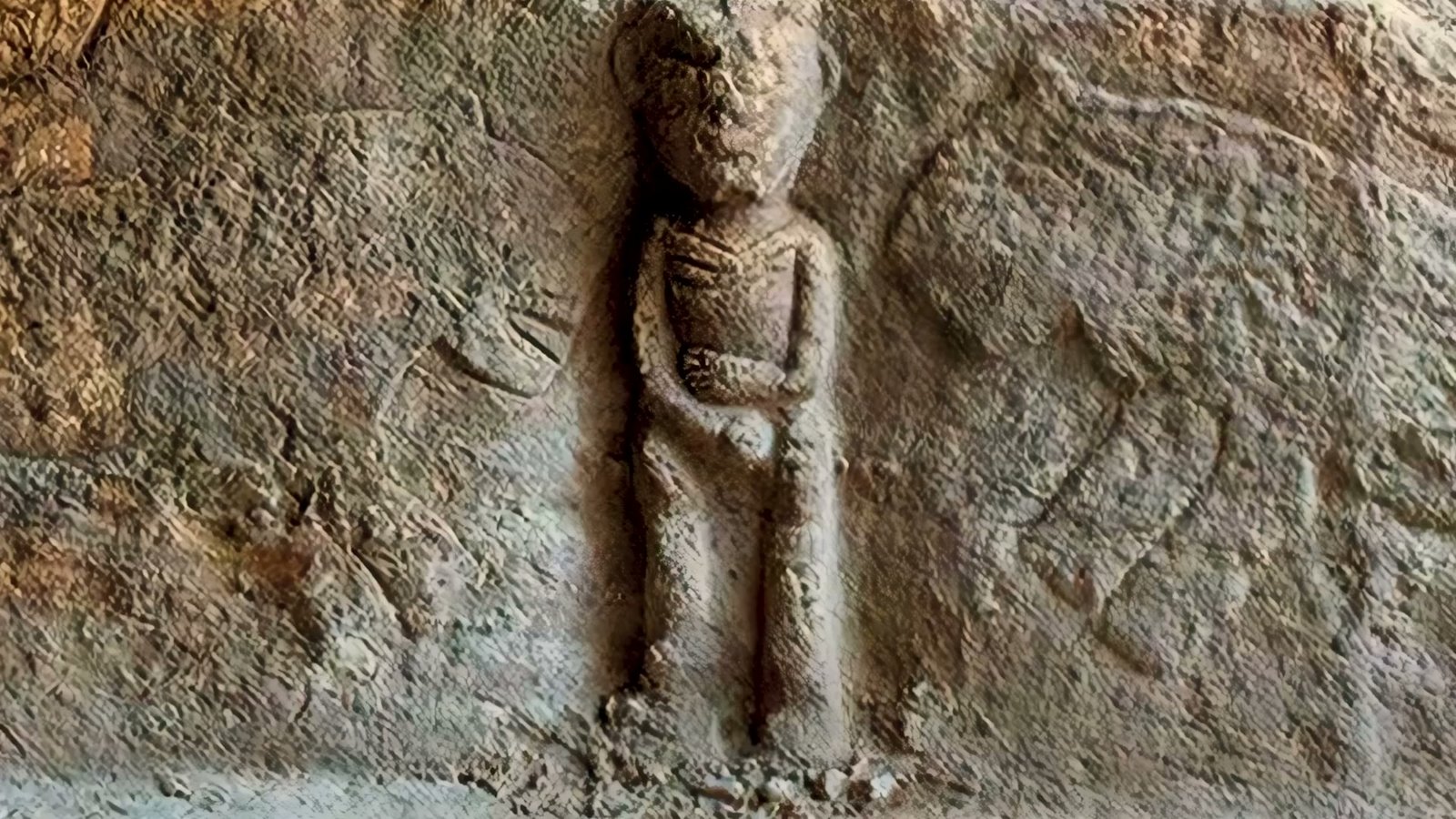
Human-Featured T-Pillar
The central T-pillar in Structure BB has human features. The pillar stands in the center of the room.
Full page →Limited Exposed Area
Structure CD is known from a limited exposed area. The source says the same features were found in CD, but only in a limited area.
Full page →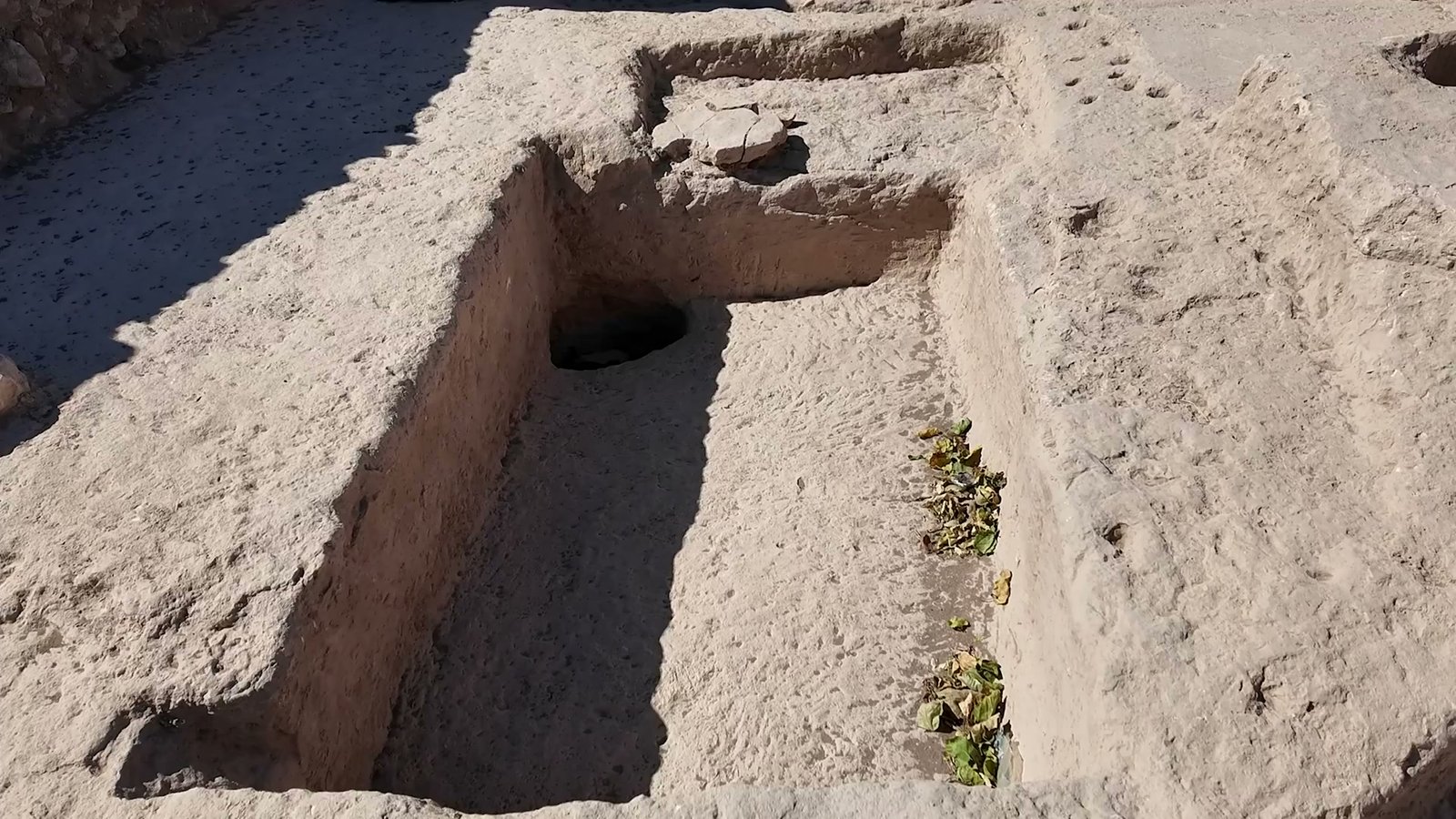
Niche
Structure BB includes a niche as part of its built interior. The niche is one of the main reported room features and should be kept as a room feature…
Full page →Probable Bench Line
Structure CB probably has a bench line behind the wall-side pillars. The source says the seven wall-side pillars were probably on a bench running…
Full page →Six-Individual Cluster
One Sayburç secondary burial cluster is described as six individuals. The second cluster is reported as a secondary burial of six individuals.
Full page →Skull Fragments And Long Bones
Skull fragments and long bones are important parts of the reported Sayburç burial evidence. The source cautiously states that selected bones,…
Full page →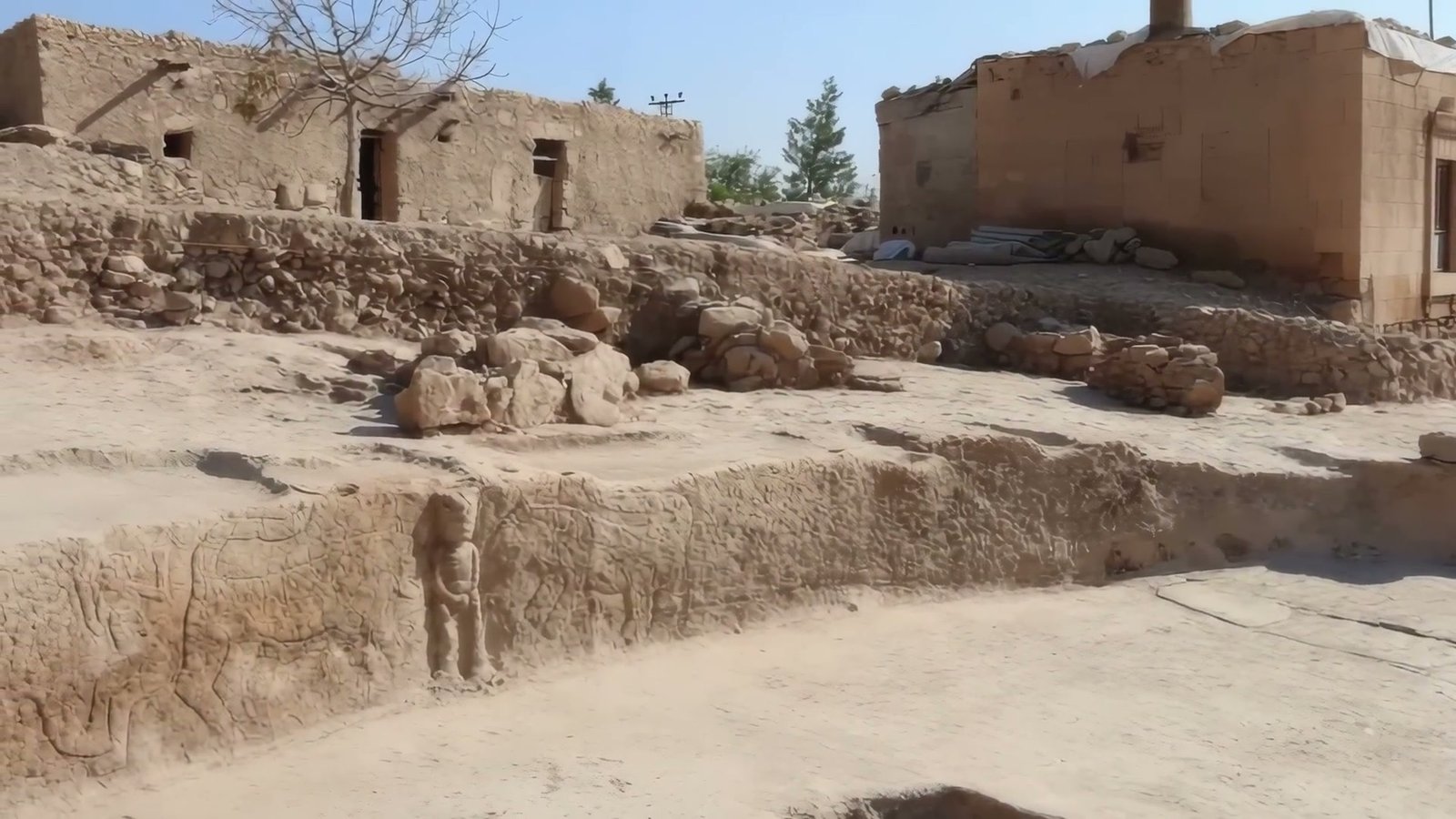
Surrounding Dwellings
Structure DA is reported as being encircled by dwellings. The surrounding dwellings matter because they place this special building inside a lived…
Full page →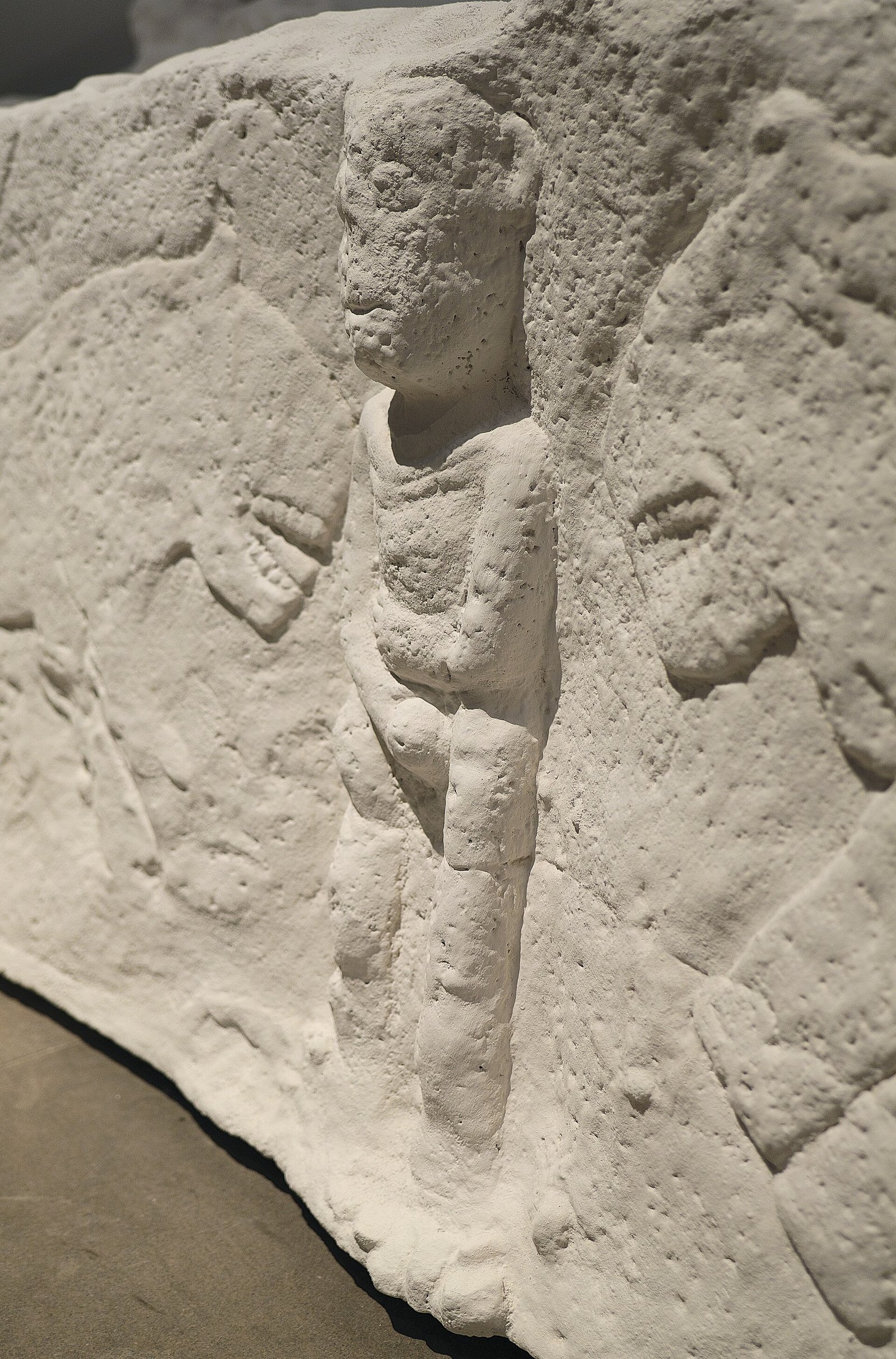
The Bench and Pillar Cavities at Sayburç
These cavities help explain how the Sayburç relief building was built and organized, separate from interpretation of the carved scene. The bench and…
Full page →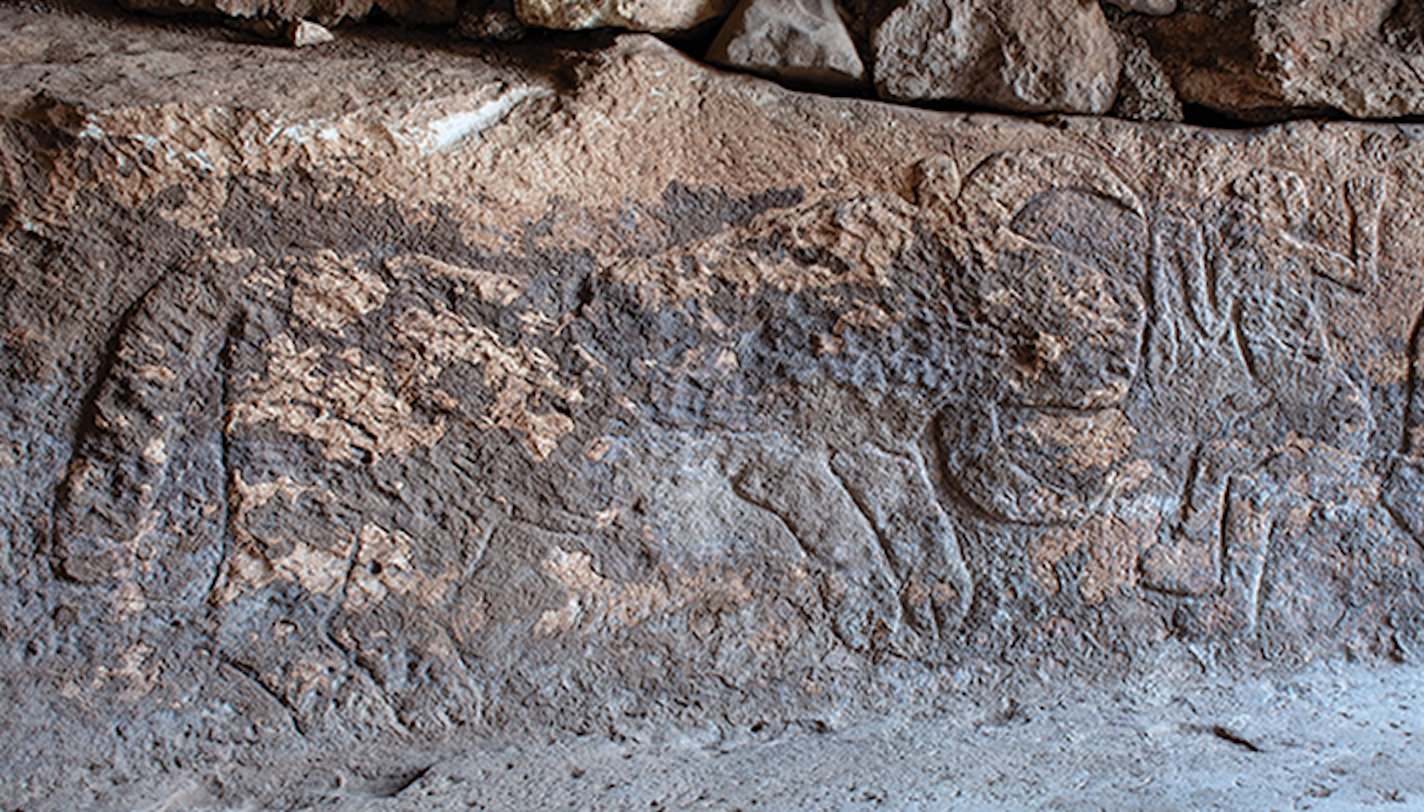
The Bull and Human Scene at Sayburç
This Sayburç scene focuses on the bull and human figures within the larger bench relief, keeping the detail connected to the whole panel. The bull is…
Full page →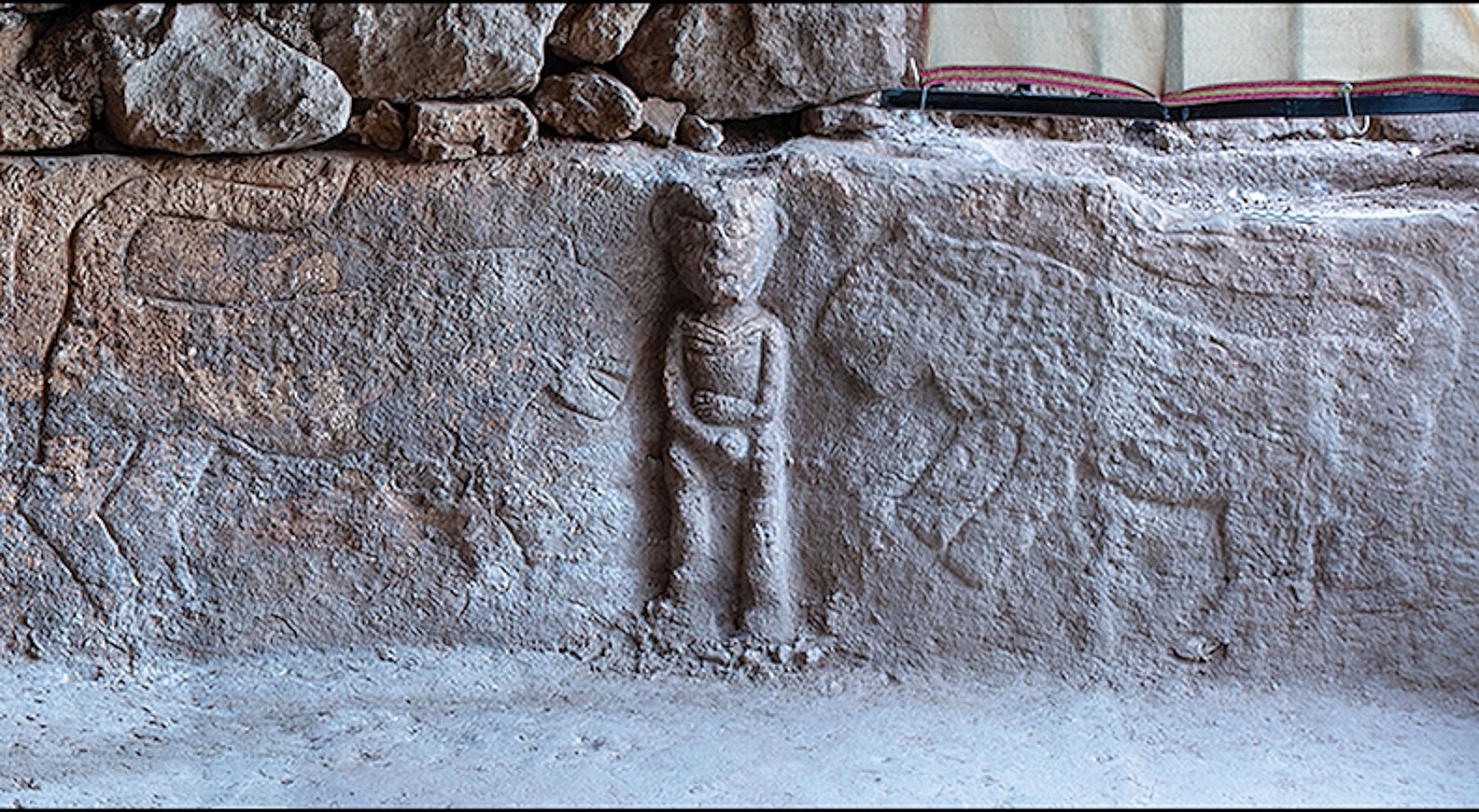
The Human Between Leopards at Sayburç
This Sayburç scene focuses on the human figure between two leopards, one of the clearest and most memorable parts of the bench relief. The second…
Full page →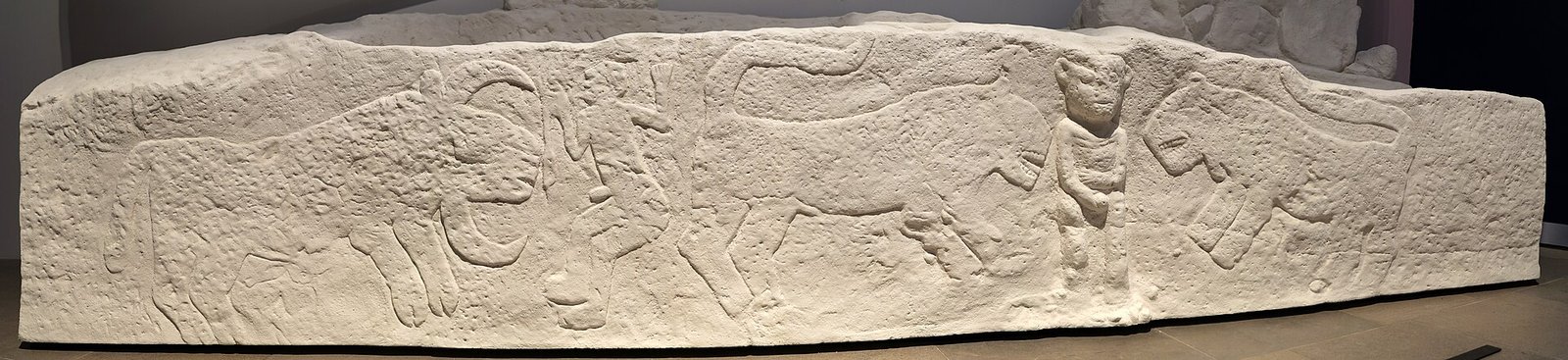
The Sayburç Relief: Humans, Leopards, and a Bull
The Sayburç relief is the site's most famous object: a carved bench panel with two humans, two leopards, and a bull inside the northern communal…
Full page →Three Human-Remain Clusters
Three clusters of human remains are reported in Sayburç's southern domestic area. The published record describes three human-remain clusters within…
Full page →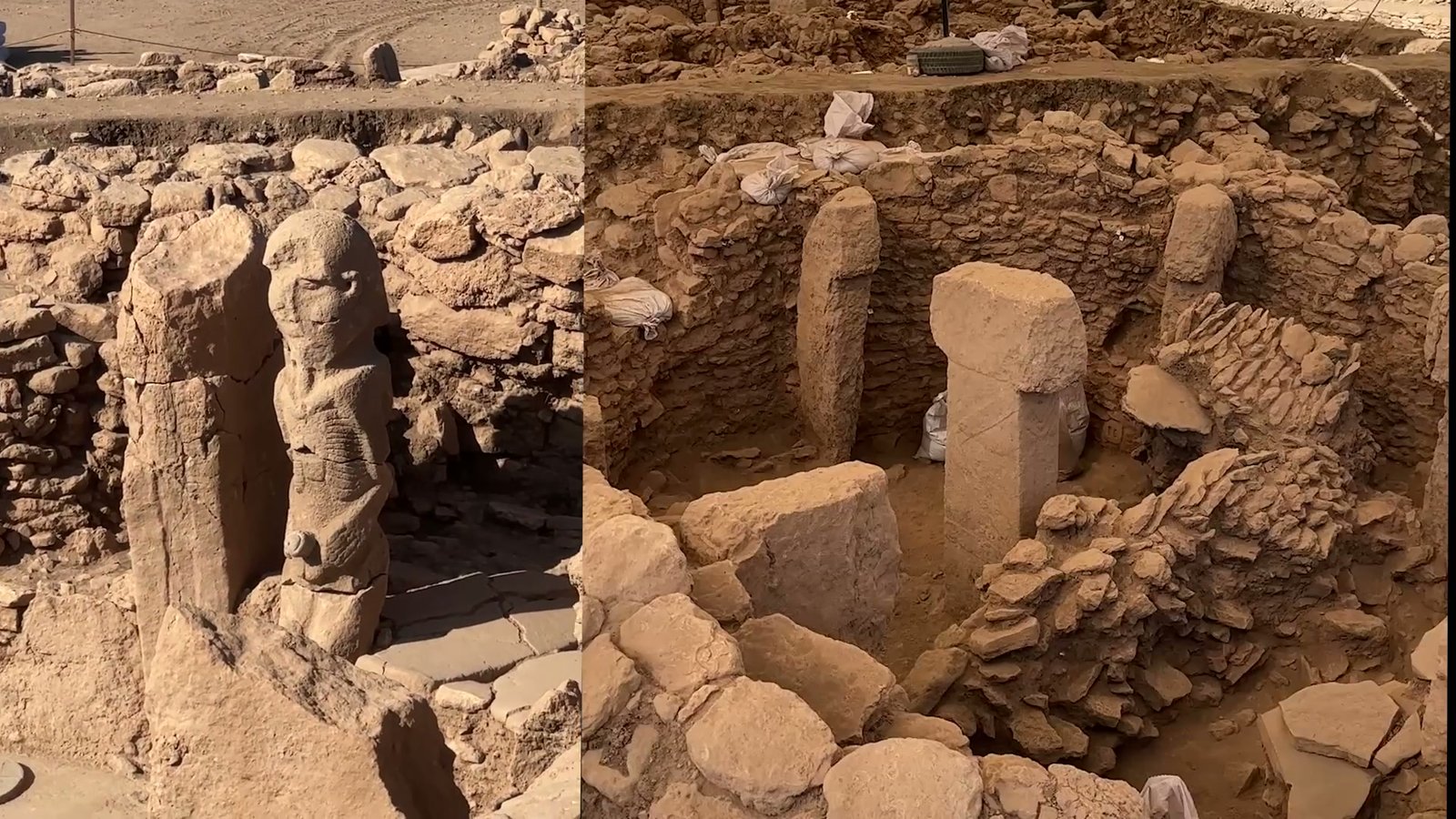
Wall-Side Pillars
Structure CB has seven T-shaped pillars placed in front of the walls. Published work describes seven T-shaped pillars in front of the walls, probably…
Full page →04
Sefertepe
8 entries
Lithic, Ground-Stone, And Bone Tools
Lithic, ground-stone, and bone tool assemblage is part of Sefertepe's public object layer; its exact findspot and metadata should stay separate from…
Full page →Seven Skulls With Skeletal Remains
7 skulls with remaining skeletal remains from North of skull room should be read as a separate count layer, not merged automatically with other…
Full page →The Boar Image on a Grinding Stone
This Sefertepe object links animal imagery with a grinding-stone context and should stay separate from broader boar symbolism. Materials: stone.
Full page →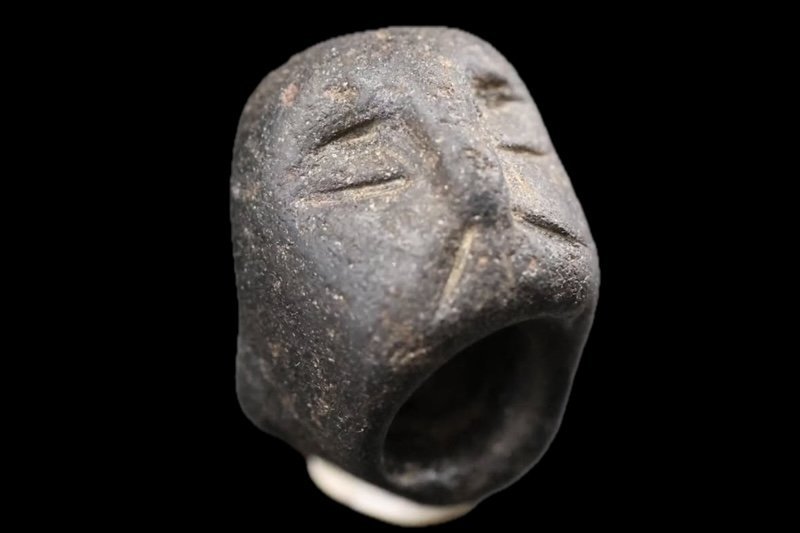
The Double-Faced Bead from Sefertepe
A pebble-sized bead only a few centimetres across, carved with a human face on each of its two sides — micro-work that is rare for the early Neolithic…
Full page →The Leopard Bead from Sefertepe
A small jade ornament in the form of a leopard — one of a pair of animal beads whose stone came from far outside the region, and whose imagery links…
Full page →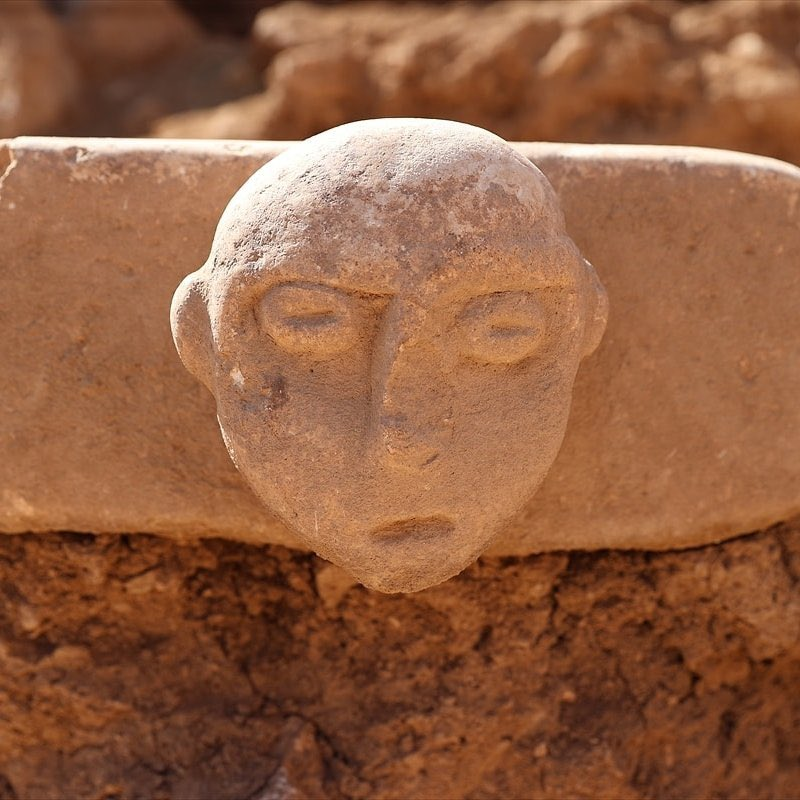
The Paired Human Faces at Sefertepe
Two human faces carved on a single dressed block — one in bold high relief, the other barely raised — set at the front corners of a stone platform.
Full page →The Sefertepe Bead Assemblage
Sefertepe's bead assemblage is a strong small-find layer, but individual objects, materials, counts, and findspots should stay separated. Materials:…
Full page →The Stone Object with 13 Circles
This worked stone object is a useful Sefertepe small-find lead because its thirteen circular marks make it visually memorable while its exact context.…
Full page →05
Çakmaktepe
5 entries
Çakmaktepe's Mortars and Food-Work Tools
Çakmaktepe's mortars and food-work tools help show that early Taş Tepeler evidence includes daily work, processing, and settlement planning, not only…
Full page →The Antelope Hunting Scene at Çakmaktepe
This hunting scene is one of Çakmaktepe's strongest visual leads and should stay connected to its specific source and building context. The official…
Full page →The Burnt Gazelle Skulls at Çakmaktepe
At least thirty gazelle skulls, burned before they were set down and arranged in a deliberate order, filling much of a communal building at one of the…
Full page →The Earlier Animal-Head Deposit at Çakmaktepe
This earlier animal-head context keeps cattle, sheep, and equid head evidence separate from the later Special Building 15 gazelle deposit. This object…
Full page →The Wild Sheep Heads at Çakmaktepe
These wild sheep heads belong beside the Special Building 15 animal-head evidence, but should stay separate from the larger burnt gazelle skull…
Full page →06
Harbetsuvan
1 entry
07
Ayanlar Höyük
4 entries
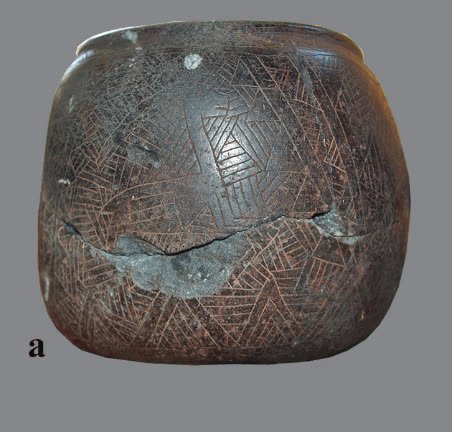
Ayanlar Ground-Stone Tools
Ayanlar ground-stone tools prepare the public object layer for later photos and catalog details while keeping context levels clear. Current notes…
Full page →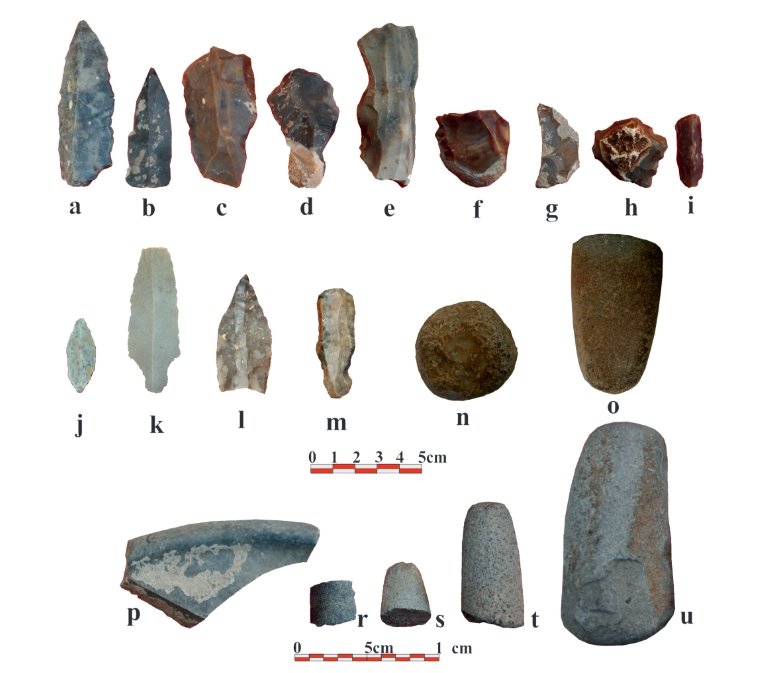
Blades And Stone Implements
Ayanlar blades and stone implements give the emerging site a practical lithic evidence layer. Current notes mention flint blades, flakes, points,…
Full page →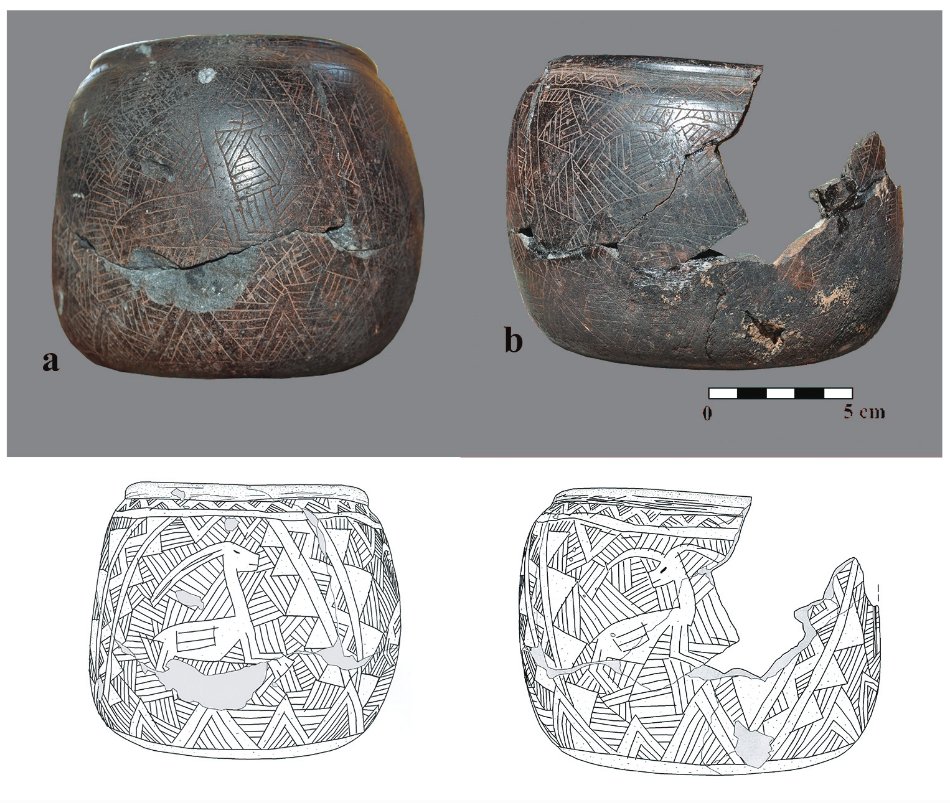
The Decorated Stone Vessel from Ayanlar Höyük
A worked and decorated stone vessel so close in character to the vessels of Körtik Tepe that it ties this western mound to a craft tradition running…
Full page →
The Possible Leopard-Head Fragment from Ayanlar
This possible leopard-head fragment is a promising Ayanlar research lead and should be presented as possible until source, image, and context details…
Full page →08
Gürcütepe
3 entries
Gürcütepe Animal and Food Evidence
Gürcütepe's animal and food evidence helps anchor the site in ordinary settlement life, hearths, craft, and subsistence. Current notes describe…
Full page →Gürcütepe Craft Tools and Everyday Objects
These Gürcütepe objects help show domestic work, craft, and village life rather than monumental architecture alone. The object group belongs with…
Full page →Gürcütepe Figurines
Gürcütepe's figurines belong in a plain settlement-and-craft context, helping the site show everyday Neolithic life beside symbolic objects. Current…
Full page →09
See them for yourself
We run small-group and private tours across the Taş Tepeler landscape, from the great rings of Göbekli Tepe to the rock-cut chambers of Karahan Tepe.
Book a tour →