Göbekli Tepe Object Profile
The Porthole Stone in Enclosure B
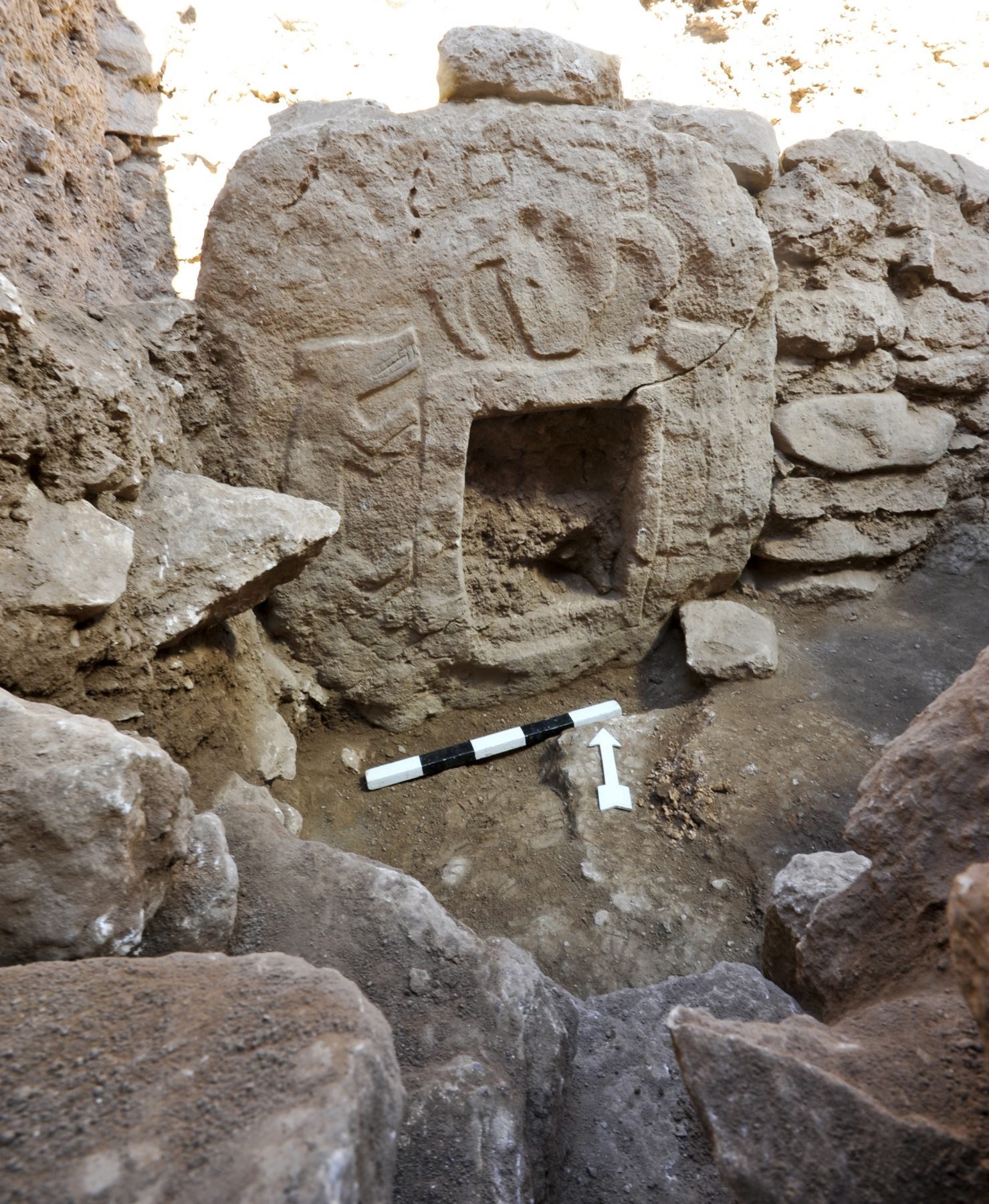
The Enclosure B porthole stone is a clear passage and viewing feature that should stay separate from later symbolic interpretation.
Quick Facts
- Site
- Göbekli Tepe
- Structure
- Enclosure B
- Type
- architectural_feature / carved_stone_object
What We Know
A porthole stone was found lying on the terrazzo floor south of Enclosure B's central pillars. Porthole stones are megalithic stone pieces with one or more openings, and an in situ example north of Enclosure B supports an entrance comparison. The central object's original placement, however, remains unresolved.
Main Details
- A porthole stone was found lying on the terrazzo floor south of Enclosure B's central pillars. Porthole stones are megalithic stone pieces with one or more openings, and an in situ example north of Enclosure B supports an entrance comparison. The central object's original placement, however, remains unresolved.
- porthole stone found lying on terrazzo floor
- located south of central pillars
- slightly off center
- porthole stone lying on terrazzo floor
- position south of central pillars
- object belongs to a category of megalithic workpieces with one or two openings
- A porthole stone was found lying on the terrazzo floor in Enclosure B.
- It was south of the central pillars and slightly off the enclosure's center.
- Porthole stones are described as roughly quadrangular megalithic workpieces with one or two central openings.
- Another richly decorated porthole stone was found in situ in a wall in a deep sounding north of Enclosure B.
- The in situ northern example supports a possible entrance interpretation for the object class.
Parent Context
- A porthole stone lay on the terrazzo floor south of the central pillars.
Public Reading Path
- A porthole stone was found lying on the terrazzo floor south of Enclosure B's central pillars. Porthole stones are megalithic stone pieces with one or more openings, and an in situ example north of Enclosure B supports an entrance comparison. The central object's original placement, however, remains unresolved.
- The Enclosure B porthole stone is a powerful object, but it needs careful handling. The main source overview places it south of the central pillars, lying on the terrazzo floor and slightly off the centre of the building. Porthole stones are described as roughly quadrangular megalithic pieces with one or two central openings. A richly decorated example found in situ in a wall north of Enclosure B supports the idea that some porthole stones may have worked as entrances or threshold elements. But for the porthole stone found inside Enclosure B, the original placement is not known. It may once have belonged to a wall, or perhaps another architectural context. Public wording should keep the object vivid but unresolved.
- A porthole stone lay on the terrazzo floor south of the central pillars.
- Porthole stones are carved stone pieces with openings.
- A nearby in situ example supports an entrance comparison.
- This object's original placement is not settled.
Physical Evidence
- porthole stone found lying on terrazzo floor
- located south of central pillars
- slightly off center
- porthole stone lying on terrazzo floor
- position south of central pillars
- object belongs to a category of megalithic workpieces with one or two openings
- A porthole stone was found lying on the terrazzo floor in Enclosure B.
- It was south of the central pillars and slightly off the enclosure's center.
- Porthole stones are described as roughly quadrangular megalithic workpieces with one or two central openings.
- Another richly decorated porthole stone was found in situ in a wall in a deep sounding north of Enclosure B.
Motifs And Feature Groups
- thresholds and entrances
- architectural uncertainty
- public versus research interpretation
- carved stone objects
- porthole stone found lying on terrazzo floor
- located south of central pillars
- porthole stone lying on terrazzo floor
- object belongs to a category of megalithic workpieces with one or two openings
What To Be Careful About
- Use reported wording where exact locus, phase, function, species, image rights, or restoration details remain open.
- Keep object description, placement, motif identification, and interpretation separate unless the source explicitly joins them.
- The Enclosure B central porthole stone may once have belonged to a wall.
- It may have belonged to another architectural context, possibly even a roof according to the source overview.
- Further research is needed before assigning original position or function.
- The Enclosure B porthole stone was certainly an entrance in its find position.
- Do not claim: The object proves a roof opening.
- All porthole stones had the same function.
- The porthole stone explains the meaning of the bowl/channel or fox pillars.
Source Trail
- GT-ENC-B-SRC-001
- GT-ENC-B-SRC-002
Open Questions
- Original placement unresolved
- Figure use requires rights review
- Avoid threshold/death-passage interpretation without attribution
- Which exact source image or excavation figure should be used when public image rights are cleared?
Evidence Review
- full source-card IDs
- Fig. 21 and Fig. 23 locator
- porthole-stone corpus comparison
- rights review
- Original placement unresolved
- Figure use requires rights review
- Avoid threshold/death-passage interpretation without attribution
Sources
- GT-ENC-B-SRC-001
- GT-ENC-B-SRC-002