Göbekli Tepe Object Profile

The Human and Animal Relief: Building F Pillar 74

Pillar 74 is a Building F image anchor where human and animal relief evidence should stay clearly tied to its own pillar.

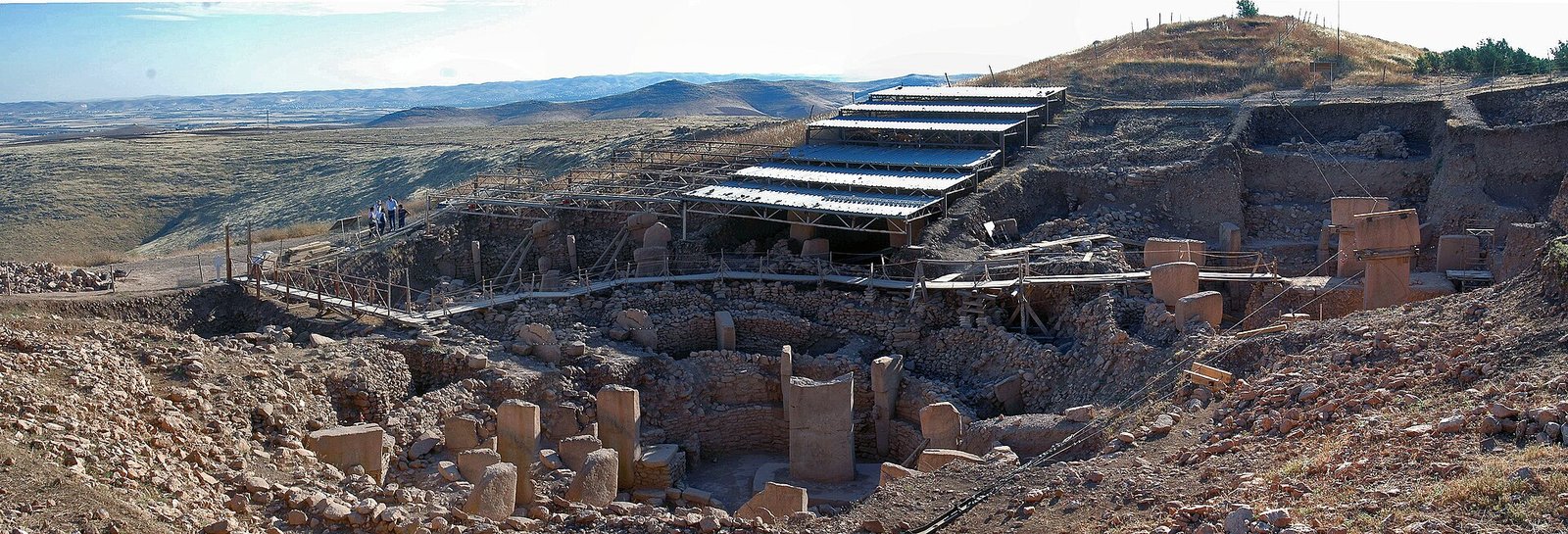
The Human and Animal Relief: Building F Pillar 74 visual reference
Visual reference for orientation. Use source images only when rights are clear.

Quick Facts

Site
Göbekli Tepe
Structure
Building F
Type
pillar / relief cluster

What We Know

Pillar 74 stands in the south of Building F. Its head is missing, but the shaft preserves relief bands, a V-shaped necklace, arms, hands, a possible dog or leopard, and a rare frontal human figure. The source notes relocation and reuse evidence. Interpretations of the animal species and the human figure's body must remain cautious.

Main Details

  • Pillar 74 stands in the south of Building F. Its head is missing, but the shaft preserves relief bands, a V-shaped necklace, arms, hands, a possible dog or leopard, and a rare frontal human figure. The source notes relocation and reuse evidence. Interpretations of the animal species and the human figure's body must remain cautious.
  • V-shaped necklace, arms, hands, and relief bands are visible
  • animal with upward-bent tail appears on rear side
  • frontal human figure appears below the animal
  • faint lines below chest may mark ribs
  • relocation and reuse evidence is present
  • southern Building F pillar
  • shaft broken
  • T-head missing
  • V-shaped necklace on front side
  • relief bands
  • hands on front side

Parent Context

  • Pillar 74 is one of Building F's strongest ring-wall imagery anchors and an important reuse/reworking example.
  • Pillar 74 preserves body features, possible animal imagery, and a rare frontal human figure.
  • The pillar also preserves evidence for relocation and reuse.

Public Reading Path

  • Pillar 74 stands in the south of Building F. Its head is missing, but the shaft preserves relief bands, a V-shaped necklace, arms, hands, a possible dog or leopard, and a rare frontal human figure. The source notes relocation and reuse evidence. Interpretations of the animal species and the human figure's body must remain cautious.
  • Pillar 74 is one of Building F's most important child objects because it combines anthropomorphic pillar features with rare human imagery. The front side facing the building centre preserves a V-shaped necklace, relief bands, arms, and hands. On the rear side, the source describes an animal with an upward-bent tail, identified during excavation as a dog but also possibly interpretable as a leopard. Below it appears a frontal human figure, visible down to the knee, with faint lines below the chest that may mark ribs. The article discusses possible partial skeletonization but also notes that the body could instead reflect a cape-like garment. Pillar 74 should therefore be public, but always with caveats: it is powerful because of what is visible, not because its meaning is solved.
  • Pillar 74 preserves body features, possible animal imagery, and a rare frontal human figure.
  • The animal has been described as dog or possibly leopard.
  • The human figure's body may suggest ribs, but interpretation remains uncertain.
  • The pillar also preserves evidence for relocation and reuse.

Physical Evidence

  • V-shaped necklace, arms, hands, and relief bands are visible
  • animal with upward-bent tail appears on rear side
  • frontal human figure appears below the animal
  • faint lines below chest may mark ribs
  • relocation and reuse evidence is present
  • southern Building F pillar
  • shaft broken
  • T-head missing
  • V-shaped necklace on front side
  • relief bands

Motifs And Feature Groups

  • leopard
  • human imagery
  • anthropomorphic pillars
  • animal imagery
  • reuse and reworking
  • interpretation caution
  • V-shaped necklace, arms, hands, and relief bands are visible
  • animal with upward-bent tail appears on rear side
  • frontal human figure appears below the animal
  • relocation and reuse evidence is present

What To Be Careful About

  • Use reported wording where exact locus, phase, function, species, image rights, or restoration details remain open.
  • Keep object description, placement, motif identification, and interpretation separate unless the source explicitly joins them.
  • The human may appear partially skeletonized, but this is not settled.
  • The body form may instead relate to a garment.
  • The animal may be a dog or leopard; species should stay open unless a later source resolves it.
  • The animal is definitely a leopard.
  • The animal is definitely a dog.
  • The human figure is definitely skeletonized.
  • Do not claim: The figure proves a death ritual.
  • Pillar 74 depicts a complete narrative scene with known meaning.

Source Trail

  • GT-BLDG-F-SRC-001

Open Questions

  • Animal species uncertainty must remain visible
  • Human-figure interpretation must not be overclaimed
  • Figure rights required before public visual use
  • Which exact source image or excavation figure should be used when public image rights are cleared?

Evidence Review

  • full source-card IDs
  • figure locator
  • human-imagery corpus comparison
  • Pillar 43 comparison boundary
  • image-rights review
  • Animal species uncertainty must remain visible
  • Human-figure interpretation must not be overclaimed
  • Figure rights required before public visual use

Object Evidence

What Is Secure

  • Pillar 74 stands in the south of Building F. Its head is missing, but the shaft preserves relief bands, a V-shaped necklace, arms, hands, a possible dog or leopard, and a rare frontal human figure. The source notes relocation and reuse evidence. Interpretations of the animal species and the human figure's body must remain cautious.
  • Pillar 74 is a Building F image anchor where human and animal relief evidence should stay clearly tied to its own pillar.
  • V-shaped necklace, arms, hands, and relief bands are visible
  • animal with upward-bent tail appears on rear side

Source Trail

  • GT-BLDG-F-SRC-001
  • Site evidence notes

Boundaries

  • Use reported wording where exact locus, phase, function, species, image rights, or restoration details remain open.
  • Keep object description, placement, motif identification, and interpretation separate unless the source explicitly joins them.
  • The human may appear partially skeletonized, but this is not settled.
  • The body form may instead relate to a garment.

Next Evidence Needed

  • Animal species uncertainty must remain visible
  • Human-figure interpretation must not be overclaimed
  • Figure rights required before public visual use
  • Which exact source image or excavation figure should be used when public image rights are cleared?

Open the parent structure

Sources

  • GT-BLDG-F-SRC-001

Back to Building F