Göbekli Tepe Object Profile
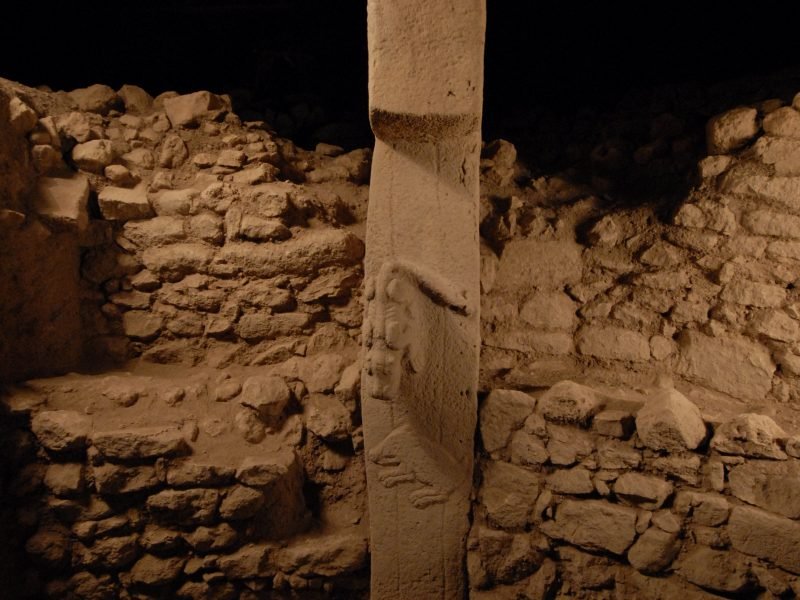
The Big-Cat Sculpture in Enclosure C
This Enclosure C object keeps the felid or big-cat sculpture evidence visible without folding it into every animal-image claim at Göbekli Tepe.
Quick Facts
- Site
- Göbekli Tepe
- Structure
- Enclosure C
- Type
- zoomorphic sculpture / in situ wall-context object
What We Know
A nearly complete 75 cm felid sculpture was found in situ in the second ring wall of Building C, with a large head, flat circular eyes, bared teeth, massive fangs, bent legs, and evidence for a probable rear peg.
Main Details
- A nearly complete 75 cm felid sculpture was found in situ in the second ring wall of Building C, with a large head, flat circular eyes, bared teeth, massive fangs, bent legs, and evidence for a probable rear peg.
- This is one of the strongest non-boar Enclosure C sculpture contexts. Unlike loose or uncertain sculpture leads, the source says this felid was found in situ in the second ring wall of Building C. It should be public as a sculpture and placement fact, while interpretation of its meaning stays in review.
- Dietrich 2023 says the sculpture was found in situ in the second ring wall of Building C.
- The figure caption and description give a length of 75 cm.
- The source identifies the sculpture as a felid.
- The felid has a large head, circular flat eyes, a muzzle with bared teeth and massive fangs, small ears, and a slightly indicated nose.
- The front legs are intensely bent back, the hind legs slightly; the body appears rectangular with slight rounding and a flattened top suggesting the backbone.
- A fracture surface on the rear part indicates where a peg was probably attached, fitting a wall-placement reading.
- An X-shaped scratching between the eyes is noted.
- This is separate from the Building A felid spolia and from Pillar 27's predator/leopard relief.
- The sculpture was found in situ in the second ring wall of Building C.
- It is described as almost complete.
Parent Context
- in situ second-ring-wall context
Public Reading Path
- A nearly complete 75 cm felid sculpture was found in situ in the second ring wall of Building C, with a large head, flat circular eyes, bared teeth, massive fangs, bent legs, and evidence for a probable rear peg.
- This is one of the strongest non-boar Enclosure C sculpture contexts. Unlike loose or uncertain sculpture leads, the source says this felid was found in situ in the second ring wall of Building C. It should be public as a sculpture and placement fact, while interpretation of its meaning stays in review.
- Dietrich 2023 says the sculpture was found in situ in the second ring wall of Building C.
- The figure caption and description give a length of 75 cm.
- The source identifies the sculpture as a felid.
- The felid has a large head, circular flat eyes, a muzzle with bared teeth and massive fangs, small ears, and a slightly indicated nose.
Physical Evidence
- Dietrich 2023 says the sculpture was found in situ in the second ring wall of Building C.
- The figure caption and description give a length of 75 cm.
- The source identifies the sculpture as a felid.
- The felid has a large head, circular flat eyes, a muzzle with bared teeth and massive fangs, small ears, and a slightly indicated nose.
- The front legs are intensely bent back, the hind legs slightly; the body appears rectangular with slight rounding and a flattened top suggesting the backbone.
- A fracture surface on the rear part indicates where a peg was probably attached, fitting a wall-placement reading.
- An X-shaped scratching between the eyes is noted.
- This is separate from the Building A felid spolia and from Pillar 27's predator/leopard relief.
- The sculpture was found in situ in the second ring wall of Building C.
- It is described as almost complete.
Motifs And Feature Groups
- It has a large head with circular flat eyes.
- The front of the head is sintered.
- A nose is slightly indicated by notches.
- A rear fracture surface indicates a probable peg.
What To Be Careful About
- Use reported wording where exact locus, phase, function, species, image rights, or restoration details remain open.
- Keep object description, placement, motif identification, and interpretation separate unless the source explicitly joins them.
- Pillar 27 high-relief predator/leopard
- Building A felid with pronounced ribs / spolia
- Pillar 36 predator slab
- Pillar 12 boar sculpture
- Pillar 35 boar cache
- general felid corpus at Göbekli Tepe
- symbolic meaning of the felid
- shamanic helper-spirit interpretation
Source Trail
- GT-ENC-C-SRC-003
- GT-ENC-C-PUBLIC-OBJECT-MAP-001
Open Questions
- Build GT-NEXT-ENCLOSURE-C-A88-BIRD-HOLDING-HEAD-CONTEXT-PASS-001 to resolve the next human/head imagery lead.
- Interpretation boundary: Do not present shamanic, animistic, or helper-spirit interpretation as public fact.
- Keep separate from other felid/predator objects: This is not Pillar 27's high-relief predator/leopard, the Pillar 36 predator slab, or the Building A felid spolia.
- Peg and installation caution: The rear fracture surface indicates a probable peg, but the full installation mechanism should not be over-reconstructed.
- Image rights blocked: Fig. 11 images 3-4 require image identity and rights review before public display.
- Which exact source image or excavation figure should be used when public image rights are cleared?
Evidence Review
- source refs
- lineage
- shamanism/animism interpretation boundary
- comparison to Building A felid spolia
- image-rights status
- Interpretation boundary: Do not present shamanic, animistic, or helper-spirit interpretation as public fact.
- Keep separate from other felid/predator objects: This is not Pillar 27's high-relief predator/leopard, the Pillar 36 predator slab, or the Building A felid spolia.
- Peg and installation caution: The rear fracture surface indicates a probable peg, but the full installation mechanism should not be over-reconstructed.
Sources
- GT-ENC-C-SRC-003
- GT-ENC-C-PUBLIC-OBJECT-MAP-001