The head, kept
Of all the threads that bind the Taş Tepeler world together, the deepest and the strangest is what people did with the head. Again and again — in bone and in stone, across a dozen sites and more than a thousand years — the head is treated as separable from the body: removed from the dead, worked, curated, and put on show. To the people who built these places, the skull was not simply a part of a person. It may have been the person.
This is not a scatter of odd finds. It is one of the best-attested shared ideas of the Neolithic Near East, and Göbekli Tepe gave us its most startling physical proof.
Carved skulls, made to hang
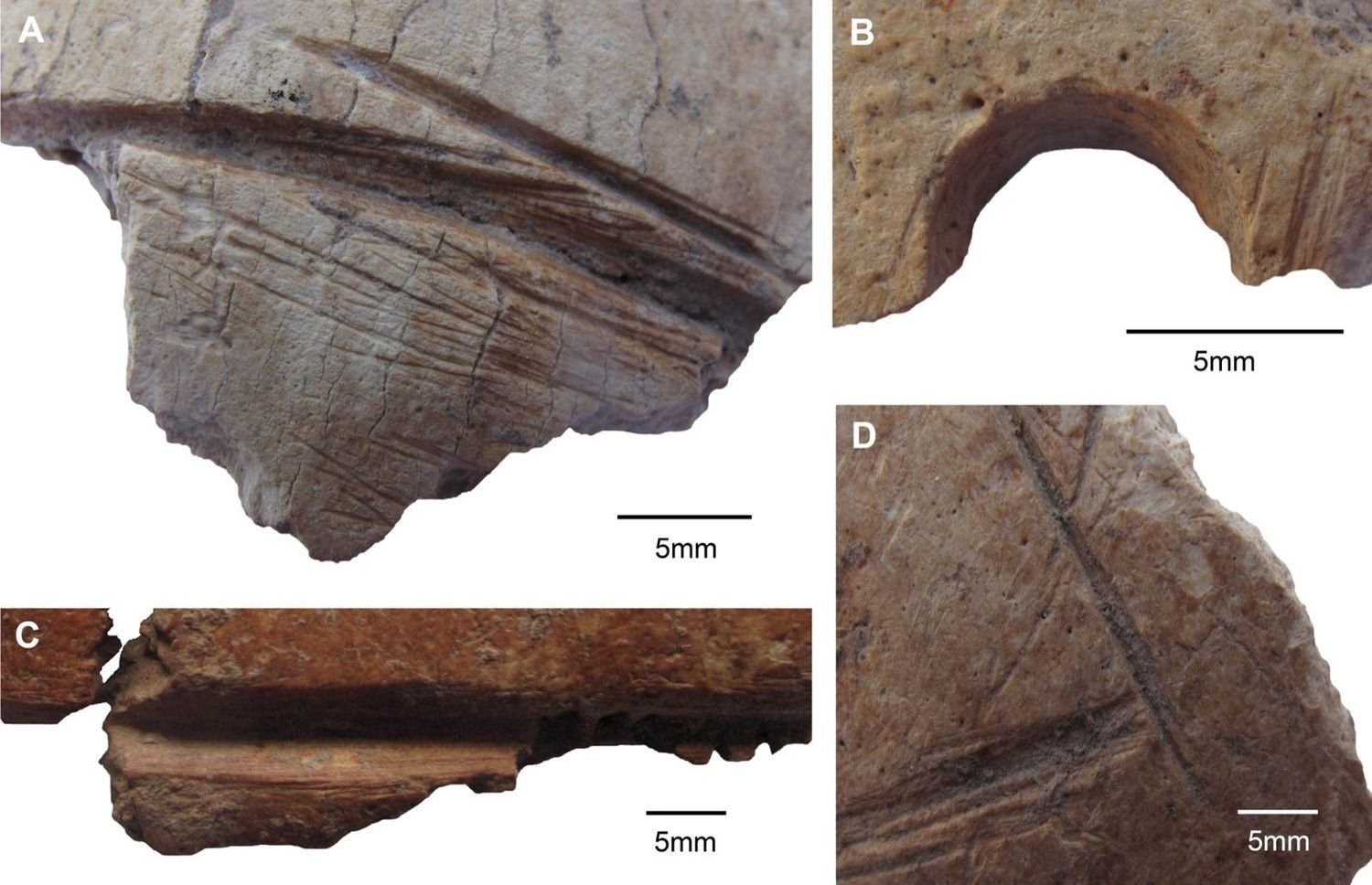
In 2017, a study led by the anthropologist Julia Gresky, with Juliane Haelm and Lee Clare, published fragments of three human skulls from Göbekli Tepe that had been altered after death — and altered in a way never seen before. Using stone tools, someone had cut deep, deliberate grooves that ran along the top of each skull, front to back, following the sagittal line. One skull also carried a drilled hole in the left side, and traces of red ochre.
Put together, the grooves and the hole read as a fixing system: a cord looped around the skull and threaded through the drilled hole, so the head could be suspended and displayed — hung up, carried, or fixed in place, perhaps decorated with pigment. The team called it a new form of Neolithic skull cult, because the carved grooves set it apart from every other known example. This is the first real evidence of how Göbekli Tepe's people treated their own dead: not ordinary burial, but the curation of the head.
Heads of stone, knocked off on purpose
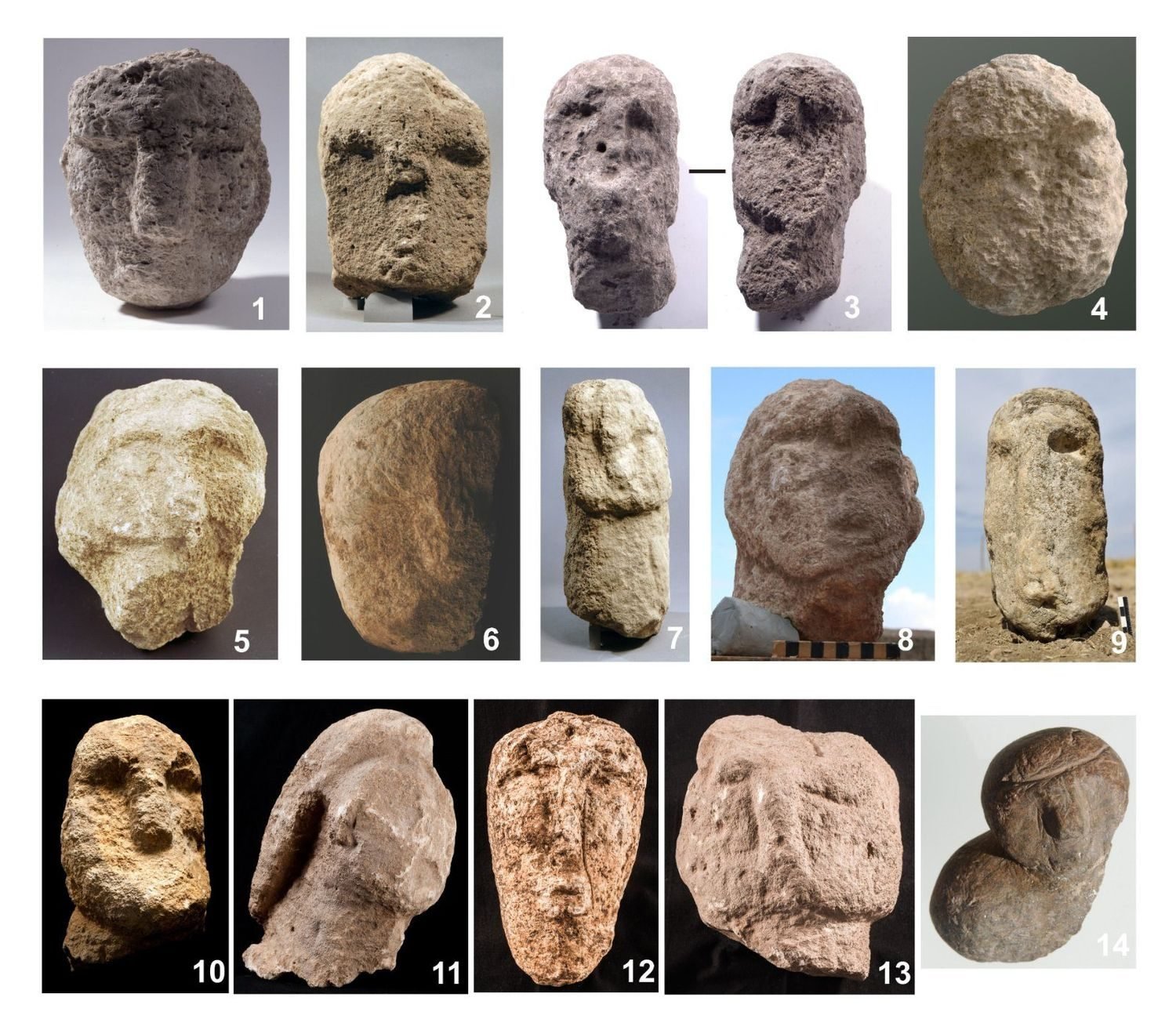
The obsession runs straight into the art. Many of Göbekli Tepe's anthropomorphic sculptures were deliberately beheaded — their heads snapped off and then deposited on their own, often tucked beside the pillars as the enclosures were filled in. Excavators have recovered a whole series of these detached limestone heads; one of them even carries a drilled hole, exactly like the real skull. Stone and bone were treated the same way.
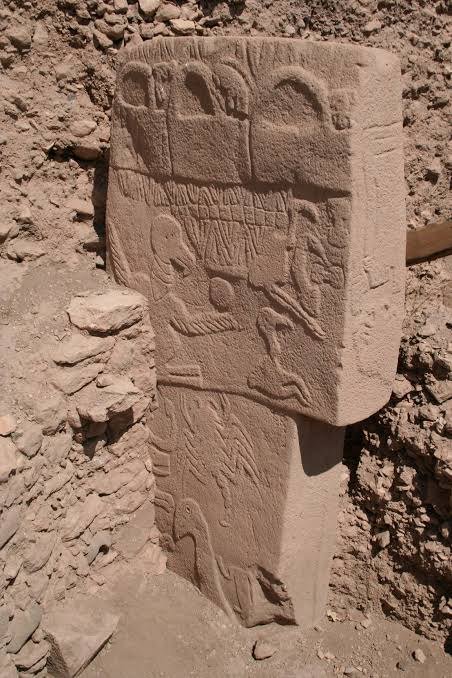
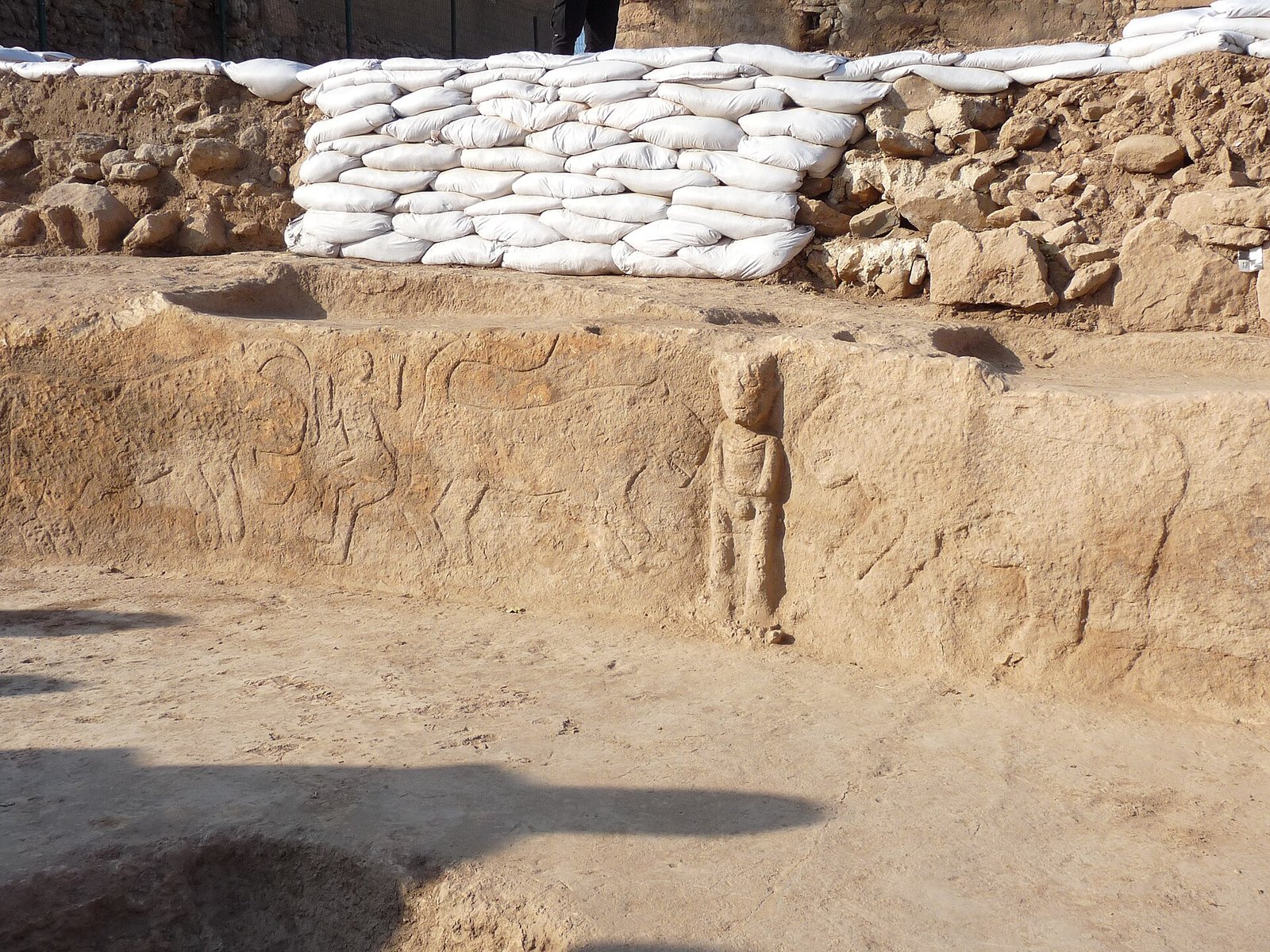
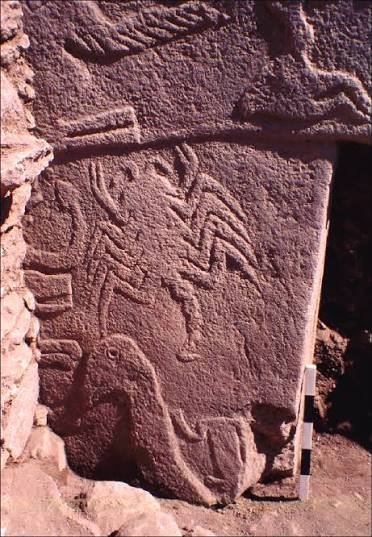
The clearest carved statement is low on Pillar 43, the 'Vulture Stone': a small human figure shown without its head, beside a bird — an image many link to excarnation, the exposure of the dead so that vultures strip the body. At Karahan Tepe, sculptors went the other way, making detached heads and setting them into the walls to gaze out over the rooms. Whether removed from a body, a corpse, or a statue, the message is consistent: the head could stand alone, and standing alone, it mattered.
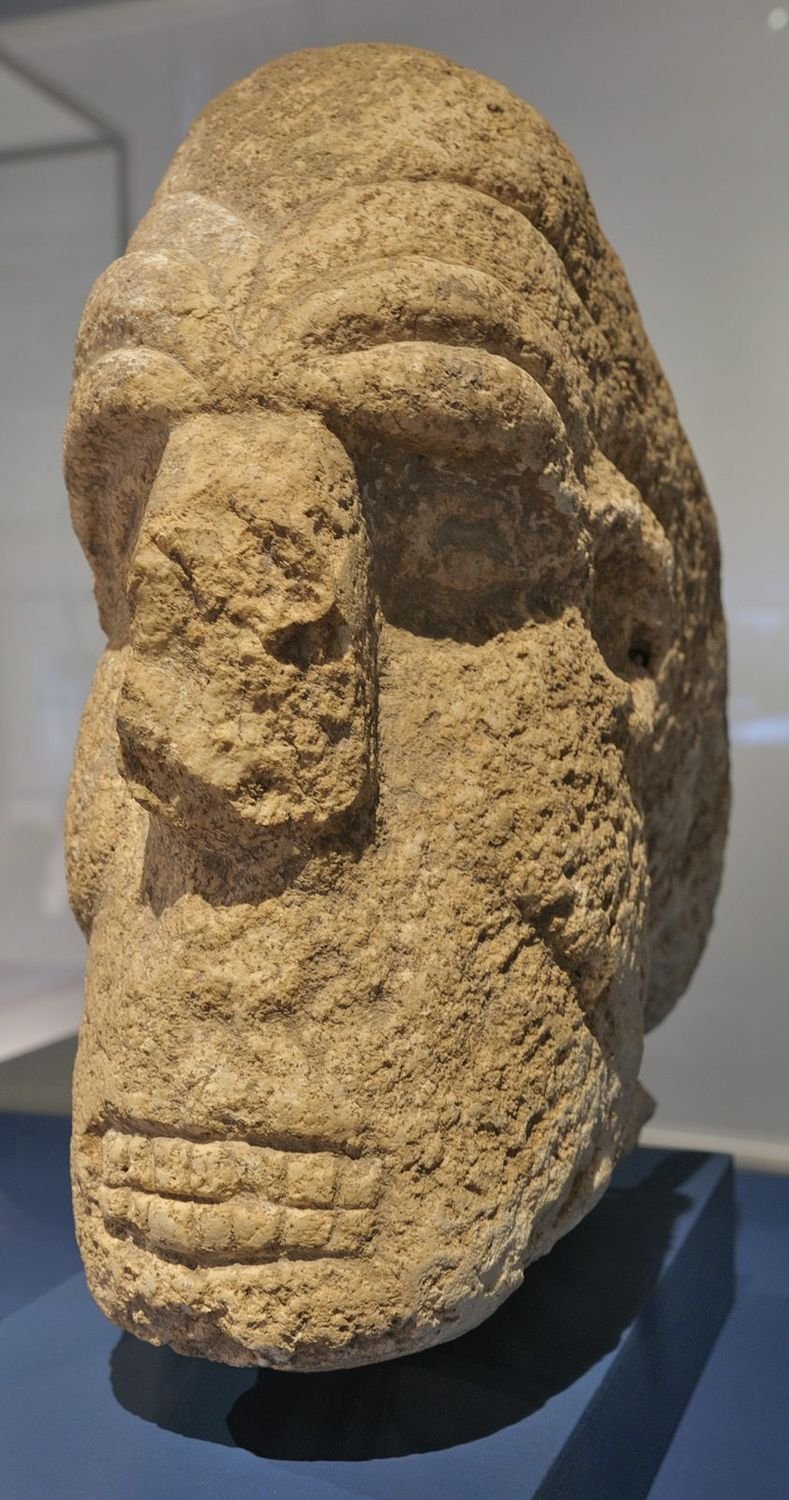
Bautsch, Menschenkopf.Karahantepe.MNR.25362.P1067685, CC0, via Wikimedia Commons.
Older than Göbekli, wider than the plateau
This was not a Göbekli invention. The roots reach back to Körtik Tepe on the Tigris — one of the oldest villages in the region, occupied from around 10,400 BCE — where the dead were given secondary burials, their bones cut, defleshed, and dusted with ochre. The idea of returning to the dead, and to the head in particular, was already old when Göbekli's pillars went up.
And it stretched far beyond the Şanlıurfa hills. At Çayönü, further east, excavators found a 'Skull Building' with the remains of hundreds of people — dozens of human skulls stacked beneath its floor, alongside a large flat 'altar' stone that tested positive for human and animal blood. Far to the south, in the Levant, the tradition took its most famous form: the plastered skulls of Jericho and 'Ain Ghazal, where real skulls were coated in lime plaster, their faces modelled and eyes inlaid with shell, to make the dead look back at the living. Göbekli's grooved, hung skulls are a distinct Upper Mesopotamian variant of a practice that ran across the whole Neolithic Near East — the same profound idea, expressed a dozen different ways.
Same idea, local grammar
Within the Taş Tepeler network itself, the head-theme repeats without repeating exactly — the surest sign of a living tradition rather than a copied habit. Göbekli modified skulls for suspension; Karahan turned heads into architecture; at Sefertepe, the 2024 season reported a room of skulls, with a single skull set apart and facing east. At Sayburç, the excavator Eylem Özdoğan records secondary burial with skulls and long bones — but is careful to note there is, so far, no evidence of the perforated, hung skulls seen at Göbekli. Each community reached for the head; each handled it in its own way.
That variation is the point. The underlying conviction — that the head carries identity and power, and is owed something after death — is shared across the whole region. How it was acted out was local.
Why the head?
No one can say for certain, and the excavators are careful. The mainstream reading is ancestor veneration: the skull kept close as a link to the dead, curated and displayed to bind a community — increasingly settled, increasingly tied to a place — to the people who came before it. A rival possibility, raised by the researchers themselves, is that some displayed heads were not ancestors but enemies — trophies of the dispatched. The truth may be both, in different cases.
Set the whole record side by side — the grooved and drilled skulls, the beheaded statues, the wall-set heads at Karahan, the headless man on Pillar 43, the skull room at Sefertepe, the Skull Building at Çayönü, the plastered faces of Jericho — and a single, powerful idea comes into focus. For the first settled communities on earth, death did not end a person's presence, and the head was how that presence was kept.
One broader reading, set out by Lewis-Williams and Pearce in Inside the Neolithic Mind, ties the obsession to the vulture: the bird that strips the dead, and the separation of the skull from the body, imagined as stages in sending the dead between the worlds. The site's own team holds such altered-state readings at arm's length, but it is a picture that links the heads, the vultures and the underground chambers into one story.
Common questions
What is the Göbekli Tepe skull cult? It is the name for three human skulls from the site that were deliberately modified after death — carved with deep grooves along the top and, in one case, drilled and marked with ochre, apparently so the skull could be hung and displayed. Published by Gresky, Haelm and Clare in 2017, it is called a new form of skull cult because the carved grooves are unlike any other known example.
Why are there headless figures and detached heads at Göbekli Tepe? Both the carved figures (the headless man on Pillar 43) and the sculptures (many deliberately beheaded, their stone heads deposited beside the pillars) treat the head as separable. It mirrors what was done to real skulls, and to heads across the Neolithic Near East.
Is the skull cult only at Göbekli Tepe? No. Skull removal and curation is documented from Körtik Tepe and Çayönü in the north to Jericho and 'Ain Ghazal in the Levant. Göbekli's grooved, suspended skulls are one regional version of a Near-East-wide tradition.
What is uncertain
The meaning is interpretation, not fact. 'Skull cult' is a useful label, not a proven religion, and whether the displayed heads were venerated ancestors or defeated enemies is open — the excavators propose both. The Göbekli skulls are only three, fragmentary individuals; that is enough to prove the practice, not to measure how common it was.
Within Taş Tepeler the practices differ, and some are still provisional: the hung, grooved skulls are confirmed only at Göbekli Tepe, Sayburç is explicitly a contrast case, and the Sefertepe skull room comes from field reporting ahead of full publication. What is firm is the recurrence of the act itself. Across the region, in bone and in stone, the head is singled out, separated, kept and shown — the clearest window we have into how these people thought about death.
Key takeaways
- Three skulls from Göbekli Tepe were carved with deep grooves and one drilled for suspension — the first direct evidence of how the site's people treated their own dead.
- The obsession runs into the art: many statues were deliberately beheaded and their stone heads deposited beside the pillars, and heads were built into the walls at Karahan Tepe.
- The head-cult is regional and older than Göbekli — from Körtik Tepe (~10,400 BCE) and Çayönü's Skull Building to the plastered skulls of Jericho and 'Ain Ghazal.
- Whether the displayed heads were venerated ancestors or defeated enemies is still open — the excavators propose both.
Sources
- Gresky, J., Haelm, J. & Clare, L. (2017). Modified human crania from Göbekli Tepe provide evidence for a new form of Neolithic skull cult. Science Advances 3(6), e1700564.
- DAI Tepe Telegrams — Losing your head at Göbekli Tepe (skull cult in regional context)
- Özkaya, V. & Coşkun, A. (2009). Körtik Tepe, a new Pre-Pottery Neolithic A site in south-eastern Anatolia. Antiquity 83(320).
- Wikipedia — Plastered human skulls (Jericho, 'Ain Ghazal; PPNB Levant)
- Özdoğan, E. (2022). The Sayburç reliefs: a narrative scene from the Neolithic. Antiquity 96(390).
This article is written from the primary literature and excavators' reports cited above. Interpretations are attributed; uncertainties are stated in the text.