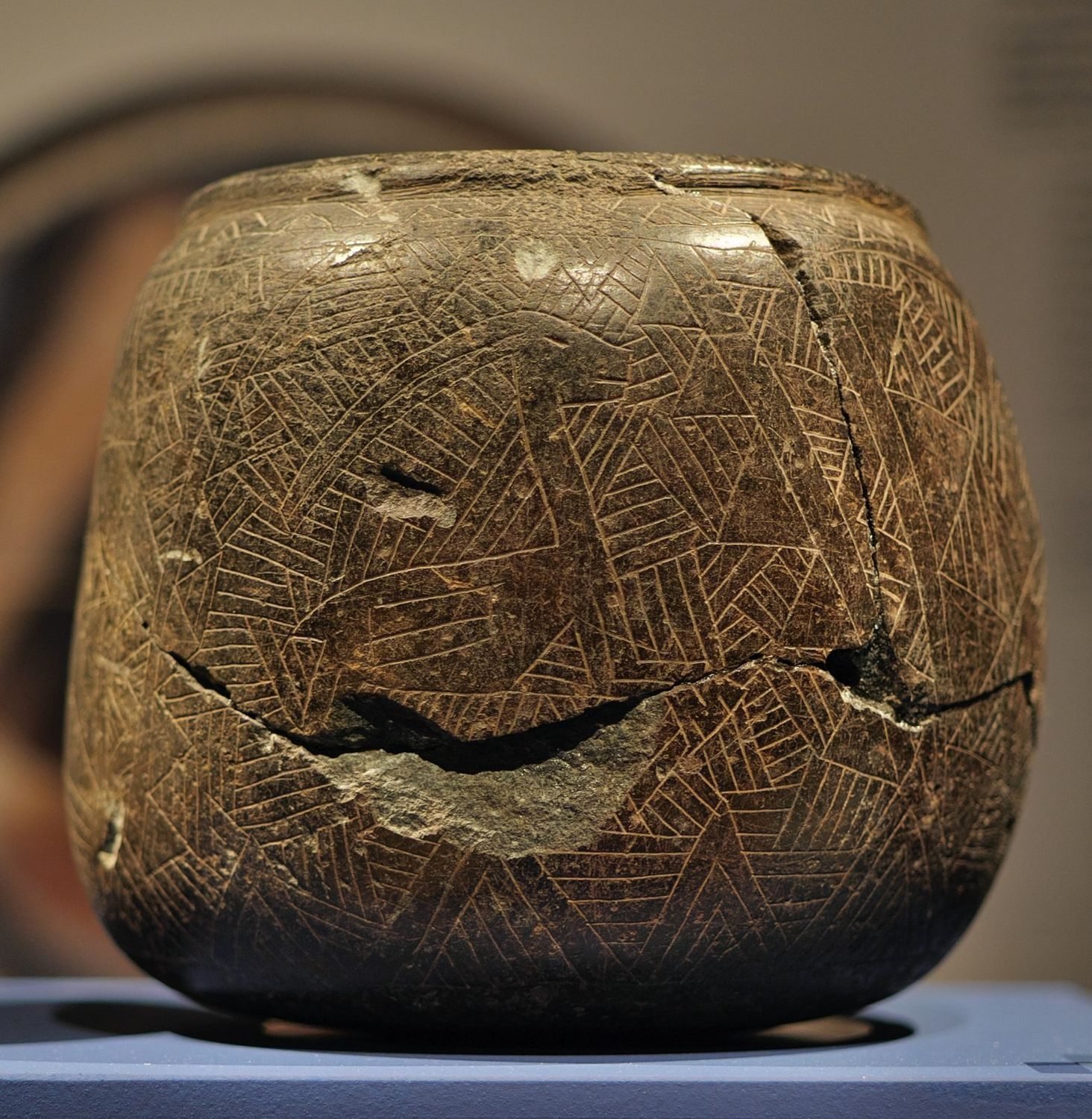
Bowls before pots
It is easy to forget that the Taş Tepeler world had no pottery. Fired clay vessels arrive much later; this is the Pre-Pottery Neolithic. When these people wanted a bowl, a cup or a platter, they carved it out of stone — and they did it well, hollowing and smoothing vessels out of limestone and, strikingly often, out of green-grey stones like chlorite and serpentine that mineralogists group loosely as 'greenstone'.
At Göbekli Tepe the excavations have produced a range of these greenstone vessels, documented in profile drawings and photographs by the project's specialists. Some are small cups; some are substantial, heavy containers. They sit alongside the site's grinding stones and storage equipment as part of a real, working material culture — not just monuments and carvings.
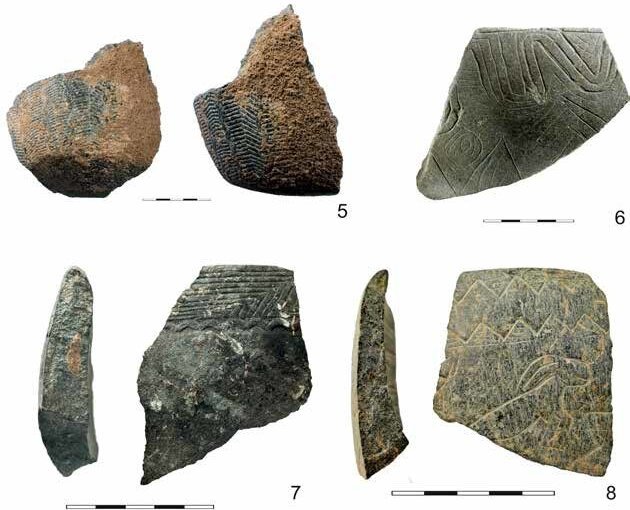
German Archaeological Institute, N. Becker, O. Dietrich, I. Wagner N., K. Schmidt, Greenstone-vessels-from-Goebekli-Tepe-shapes-graphics-L-Dietrich-photos-German (cropped), CC BY 4.0, via Wikimedia Commons.
The same craft, mound after mound
What turns this from a Göbekli detail into a network signature is how widely the stone vessels recur. At Karahan Tepe, excavators have lifted small stone vessels in situ and the Şanlıurfa museum displays a finely carved chlorite vessel from the site; a large stone vessel is among its recorded finds. At Söğüt Tarlası (and neighbouring Biris Mezarlığı), research going back to the 1960s recorded an assemblage that includes limestone cups, greenstone axes, grooved smoothers and grinding stones — the same stoneworking repertoire. At Ayanlar Höyük, field investigation has noted decorated stone vessels and vessel fragments together with basalt grinding equipment.
Put on a map, the vessels trace the network as clearly as the T-pillars do. The same idea — a carefully hollowed stone container, often in green stone — recurs from mound to mound across the same landscape and the same few centuries.
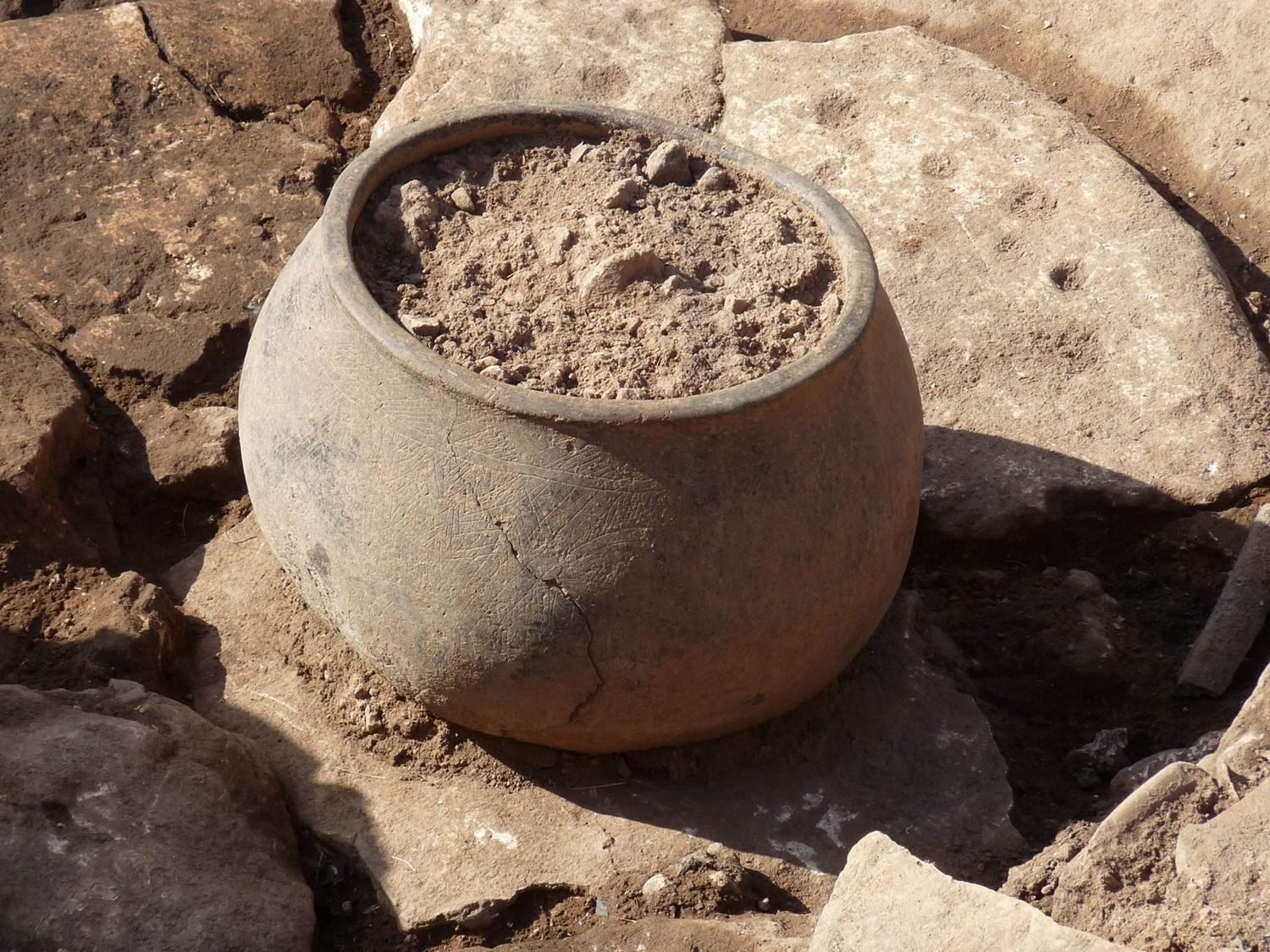
Frantisek Trampota, Karahan Tepe in-situ stone vessel, Public domain, via Wikimedia Commons.
Why greenstone matters
The choice of stone is the interesting part. Bright green-grey chlorite and serpentine are not evenly available everywhere; carrying the raw material, or the finished cups, from where the stone outcrops to where it was used implies movement and exchange across the region. The consistency of form suggests shared craft knowledge as well — people making vessels the same way in different places.
The vessels also bridge two worlds that the monuments alone keep separate. A carved stone bowl can hold food or drink for a gathering, and the same object can be deposited in a special context as something more than a container. At sites where feasting and ritual are argued from the architecture, the humble stone cup is a piece of the everyday that ties the two together.
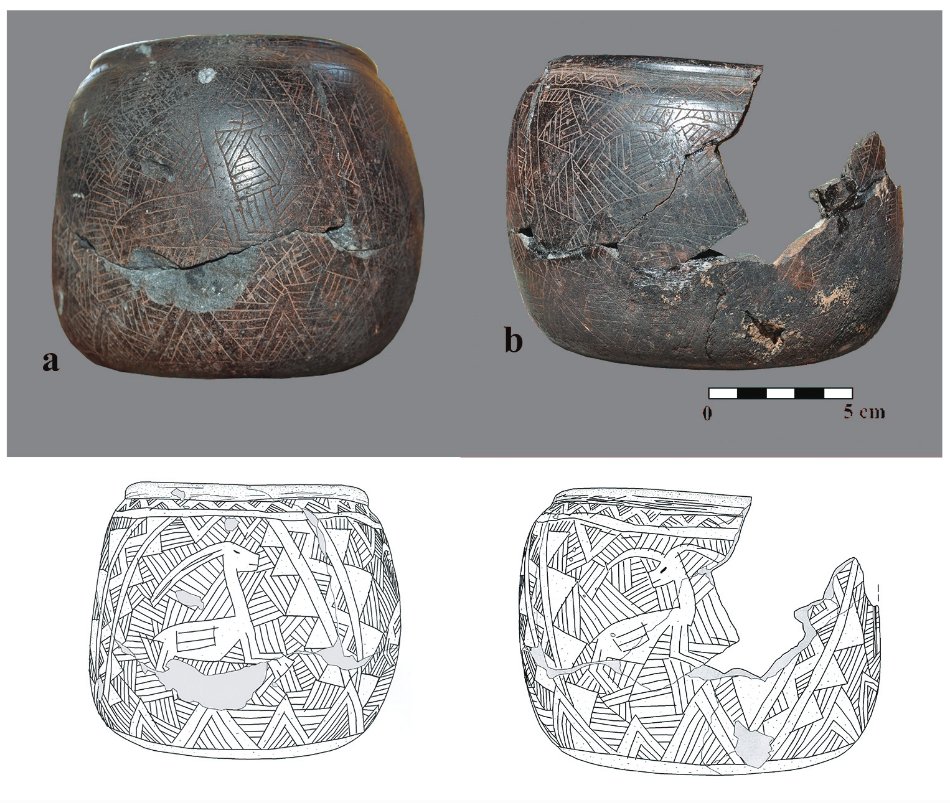
A cup that bridges two worlds
The stone vessels do something the monuments alone cannot: they tie the everyday to the ritual. A carefully hollowed stone bowl can hold food or drink for a gathering, and the very same object can be deliberately deposited in a special context as something more than a container. At sites where feasting and ceremony are argued from the architecture, the humble stone cup is the piece of ordinary life that links the two.
It also reminds us these were not only builders of giant pillars. Alongside the carvings, the people of the Taş Tepeler — living in the Şanlıurfa region of southeastern Türkiye around twelve thousand years ago — kept a real, working material culture of grinding stones, storage equipment and hand-made vessels. The bowls sat in kitchens and gathering places, not just in museums.
Why the green stone travelled
Bright green-grey chlorite and serpentine do not outcrop evenly everywhere, so carrying either the raw stone or the finished cups from source to settlement implies contact across the region. The consistency of shape from mound to mound points the same way: people were making vessels in much the same manner in different places — a sign of shared know-how passed between communities long before the potter's craft existed.
What is uncertain
Provenance is the open question: without full geochemical sourcing we cannot yet say how far any given greenstone travelled, so 'exchange' is inference from distribution and material, not a measured trade route. Several of the assemblages are also provisional — the Söğüt Tarlası material comes from mid-20th-century work, and the Ayanlar vessels from on-site observation whose excavated contexts still await publication.
What is firm is the recurrence: carved stone vessels, often in greenstone or chlorite, are a shared element across the Taş Tepeler sites, and they belong to a Neolithic that made fine containers from rock centuries before it made them from clay.
Common questions
Did Göbekli Tepe have pottery? No — Göbekli Tepe and the other early Taş Tepeler sites belong to the Pre-Pottery Neolithic. Instead of fired clay, people carved their bowls, cups and platters directly out of stone.
What are the Taş Tepeler stone vessels made of? Limestone, and strikingly often green-grey stones like chlorite and serpentine — loosely called 'greenstone' — hollowed and smoothed into containers found across Göbekli Tepe, Karahan Tepe, Söğüt Tarlası and Ayanlar.
Key takeaways
- The Taş Tepeler world had no pottery — when people wanted a bowl or cup, they carved it out of stone.
- They often chose green-grey chlorite and serpentine ('greenstone'), hollowing and smoothing it into fine containers.
- The same stone-vessel craft recurs mound after mound — Göbekli Tepe, Karahan Tepe, Söğüt Tarlası and Ayanlar Höyük.
- Carrying greenstone across the region implies movement, exchange and shared craft knowledge.
Sources
- Dietrich, L. et al. (2019). Cereal processing at Early Neolithic Göbekli Tepe, southeastern Turkey. PLoS ONE 14(5). (grinding and vessel equipment)
- Karul, N. (2021). Buried Buildings at Pre-Pottery Neolithic Karahantepe. Türk Arkeoloji ve Etnografya Dergisi 82.
- Çelik, B. (2017). A new Pre-Pottery Neolithic settlement in southeastern Turkey: Ayanlar Höyük (Gre Hut). Documenta Praehistorica 44.
This article is written from the primary literature and excavators' reports cited above. Interpretations are attributed; uncertainties are stated in the text.