A sculpture unlike the pillars
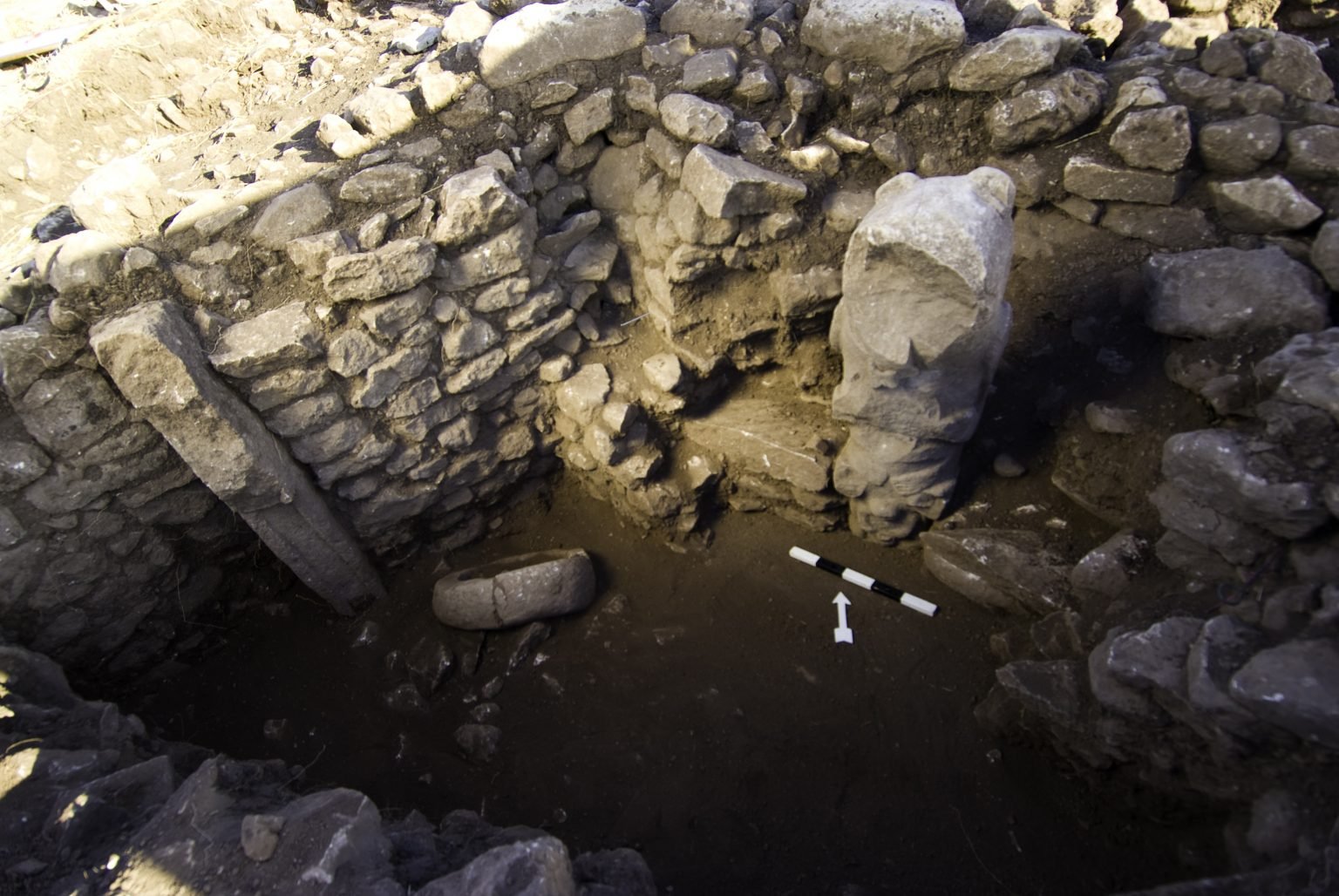
Most of the famous Taş Tepeler art is relief — figures carved onto the flat faces of pillars. But the sculptors also worked fully in the round, and their most extraordinary product is the object the Göbekli Tepe team calls a totem pole: a tall stone column, roughly 1.9 metres high, on which several beings are stacked vertically and carved as one.
On the Göbekli example, the reading from top to bottom runs: a large predator — a bear or big cat — over a human head held in or below its jaws, with further human figures and snakes below. It was found reused, built into the wall of a later Pre-Pottery Neolithic building, which is why its original setting is lost. Whatever it once stood for, someone later thought it important enough to keep and re-set into a wall.
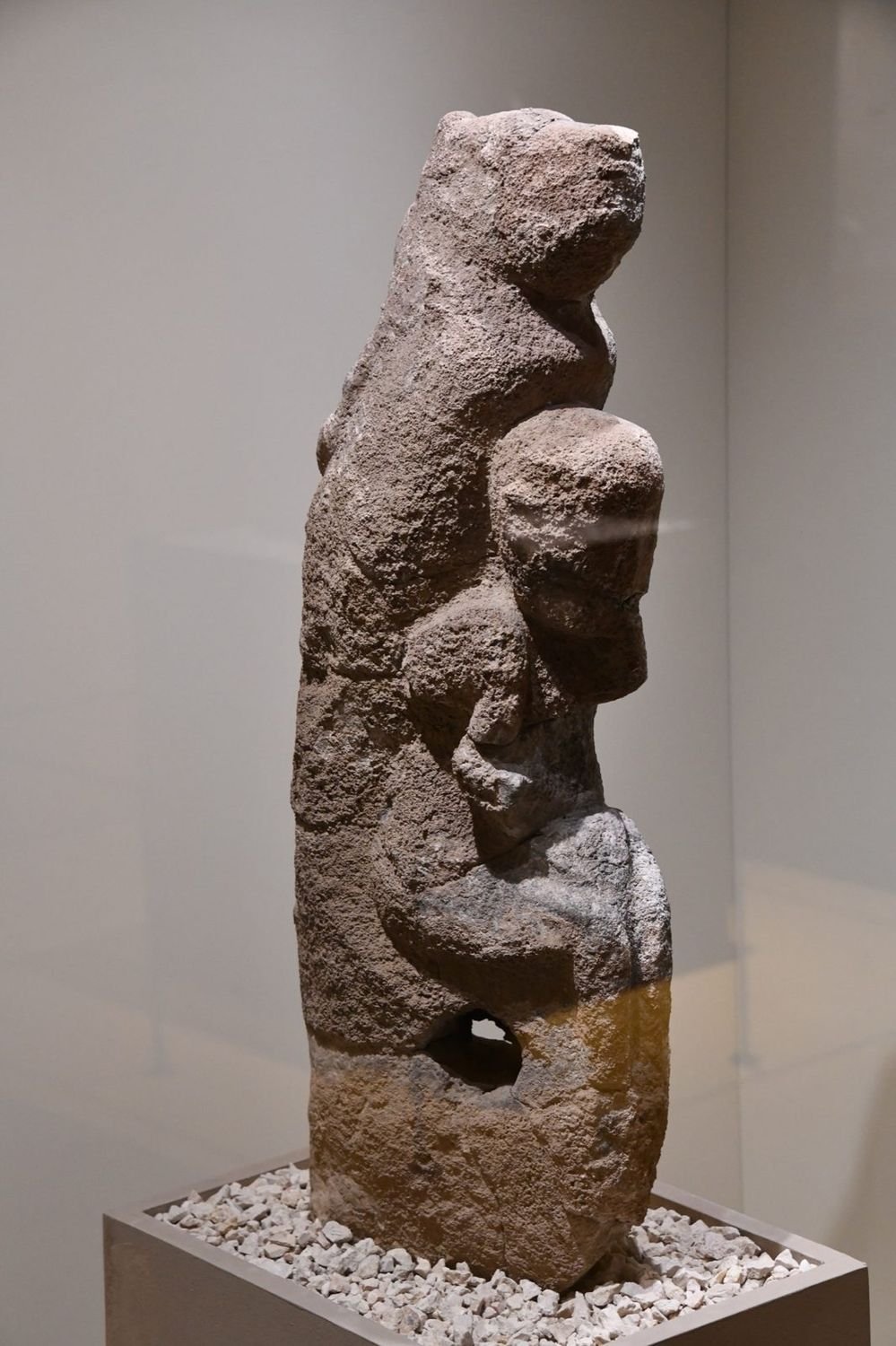
Dosseman, Urfa museum Karahantepe Totem Neolithic Age in 2024 7351, CC BY-SA 4.0, via Wikimedia Commons.
The stacked-being idea recurs
This is not a one-off. Karahan Tepe has produced composite sculptures displayed as a 'totem' in the Şanlıurfa museum — beings combined into a single vertical object in the same spirit. The idea also has deep roots in the wider region: at the nearby Pre-Pottery Neolithic site of Nevalı Çori, decades earlier, excavators found composite sculptures combining humans and birds into single carved pieces.
So the totem pole belongs to a shared sculptural grammar, distinct from the flat pillar reliefs: the practice of combining several beings — animal and human — into one stacked, three-dimensional object. It sits at the sculptural end of the same imagination that produced the anthropomorphic pillars and the animal reliefs.
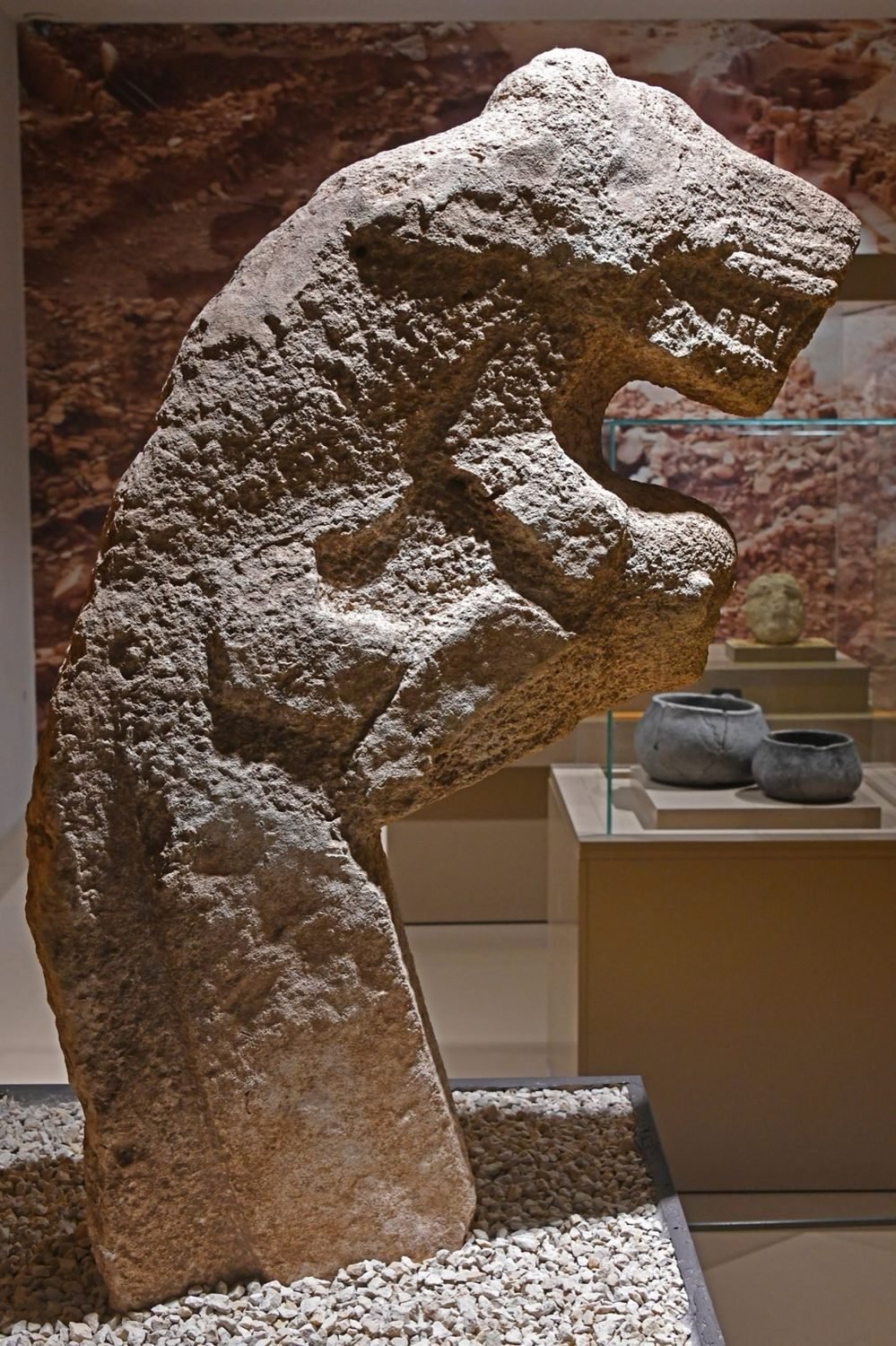
Dosseman, Urfa museum Karahantepe Human statue with leopard on back Neolithic Age in 2024 7376, CC BY-SA 4.0, via Wikimedia Commons.
Who is eating, or carrying, whom
The vertical arrangement invites a reading of relationship between the figures — a predator above a human, a human above snakes. Interpreters have proposed everything from a scene of death or devouring (the beast taking the head) to a birth or emergence image, or a genealogy of beings stacked like ancestors. The Göbekli team keeps these readings tentative, precisely because the sculpture was found out of its original context.
What is not in doubt is the effort and intention. Carving several interlocked beings into a single near-two-metre monolith is a far more demanding act than adding a relief to a pillar. Someone wanted these figures bound together, one above another — and that binding is the message, even where its meaning escapes us.
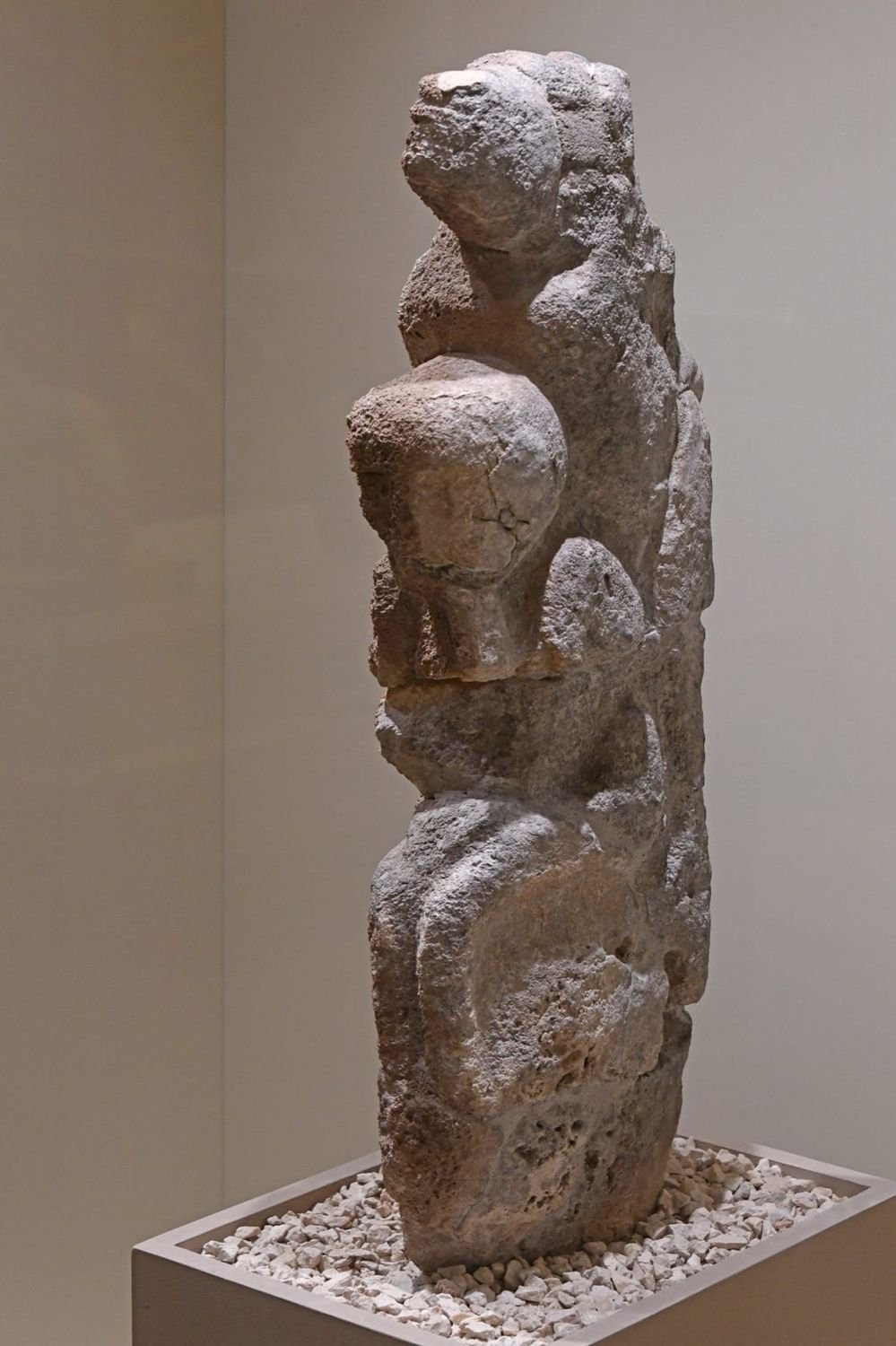
Dosseman, Urfa museum Karahantepe Totem Neolithic Age in 2025 9285, CC BY-SA 4.0, via Wikimedia Commons.
Effort as the message
Whatever the totem pole meant, the effort behind it is unmistakable. Carving several interlocked beings into a single near-two-metre monolith is far harder than adding a relief to the flat face of a pillar. Someone wanted these figures bound together, one above another — and that binding is itself the statement, even where its precise meaning escapes us.
The vertical order invites a reading of relationship: a predator above a human, a human above snakes. Interpreters have imagined everything from a scene of death or devouring to an image of birth or emergence, or a line of beings stacked like ancestors. Because the sculpture had already been lifted from its first home and re-set into a later wall, the excavation team keeps all of these readings deliberately tentative.
What is uncertain
The Göbekli totem pole was reused in a later wall, so its date and original placement are uncertain and its 'story' cannot be read from context. The identification of the top predator as a bear or a big cat, and readings of devouring versus birth, are interpretation. The Karahan and Nevalı Çori comparanda are stylistic parallels within the region, not evidence of a single workshop or direct copying.
What is firm is the form: alongside the pillars and the reliefs, the Taş Tepeler sculptors made composite, vertically stacked figures — a distinct kind of monument that recurs across more than one site.
Common questions
What is the Göbekli Tepe totem pole? A roughly 1.9-metre stone sculpture carved in the round, on which several beings are stacked vertically — a large predator over a human head over further humans and snakes. It was found reused inside the wall of a later Pre-Pottery Neolithic building.
What do the stacked figures mean? No one is certain. Readings range from a scene of devouring or death to a birth or emergence image, or a genealogy of beings piled like ancestors — but because the sculpture was found out of its original setting, the interpretations stay tentative.
Key takeaways
- Alongside the flat pillar reliefs, the sculptors carved fully in the round — most strikingly a "totem pole" of beings stacked one above another.
- The Göbekli example stands about 1.9 metres tall: a large predator over a human head, with further figures and snakes below.
- It was found reused inside a later wall, so its original setting — and its story — are lost.
- The same stacked-being idea recurs at Karahan Tepe and Nevalı Çori, marking a shared sculptural grammar across the region.
Sources
- DAI Tepe Telegrams — The Göbekli Tepe 'totem pole'
- Köksal-Schmidt, Ç. & Schmidt, K. (2010). The Göbekli Tepe 'Totempole'. A first discussion of an autumn 2010 discovery. Neo-Lithics 1/10.
- Schmidt, K. (2010). Göbekli Tepe – the Stone Age Sanctuaries. Documenta Praehistorica 37 (sculpture and high reliefs).
This article is written from the primary literature and excavators' reports cited above. Interpretations are attributed; uncertainties are stated in the text.