Short answer
Across the early Neolithic Near East, human heads were separated, carved, drilled, plastered and gathered into rooms — a consistent preoccupation with the head, and the Taş Tepeler sites sit in the middle of it.
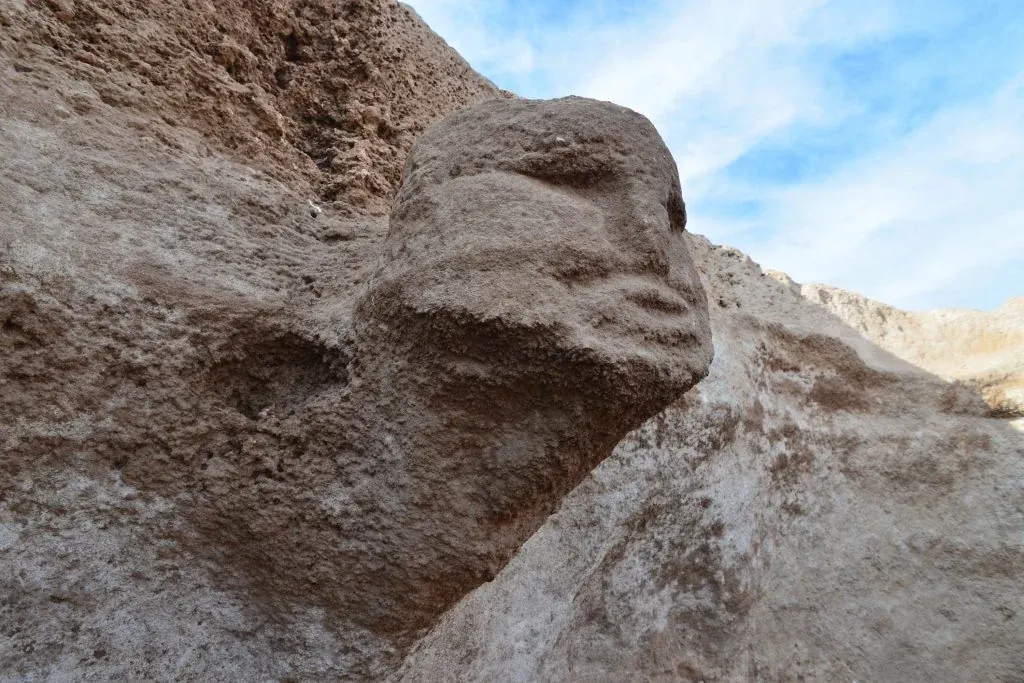
Göbekli Tepe produced skull fragments with cut marks and a drilled perforation (the 'skull cult'); Karahan Tepe has a head carved from the bedrock that watches the room; Sefertepe has chambers of skulls gathered together. The most common reading is ancestor veneration, but honoured ancestor and defeated enemy cannot yet be told apart.
A pattern, not a curiosity
Take the sites of this period one at a time and the treatment of human heads looks like a local oddity. Put them side by side and it becomes one of the defining preoccupations of the early Neolithic Near East.
The head is detached. It is kept. It is modified, displayed, buried separately, carved in stone, plastered into a face, or gathered with others into a single room. This happens across a wide region, over thousands of years, at sites that were not all in contact.
It is worth being blunt about why this feels strange to a modern reader: we treat a body as a unit and a burial as final. These communities evidently did neither.
Göbekli Tepe: cut marks and drill holes
The most rigorous evidence comes from Göbekli Tepe. In 2017 Julia Gresky, Juliane Haelm and Lee Clare published modified human skull fragments from the site in Science Advances, describing deliberate carving — deep incisions cut into the bone — and in at least one case a drilled perforation.
The perforation matters because it implies suspension. A hole bored through a skull is a means of hanging it, which means display: a head kept where it could be seen, not a head disposed of.
The paper described this as evidence for a previously unknown form of Neolithic skull cult. Lee Clare has since been careful about how far the interpretation should run — the cut marks and drill holes point fairly securely toward postmortem treatment, suspension, and practices concerned with ancestors and generations, but they do not license confident claims about deities or organised religion.
The pillars are headless bodies, and the heads are elsewhere
There is an odd symmetry at Göbekli Tepe that is easy to miss. The T-pillars are human figures — arms, hands, belts — whose 'head' is a flat, blank slab seen in profile. They have no faces.
Meanwhile the site produces actual human heads, modified and displayed. And Pillar 43 carries a headless human figure among its birds.
Nobody has demonstrated a link between these things, and it would be easy to over-read. But the recurrence is hard to ignore: faceless stone bodies in the architecture, real heads treated with care in the deposits, and a decapitated figure in the imagery.
Karahan Tepe: a head that watches the room
At Karahan Tepe the head is not portable at all. In Structure AB, a human head is carved directly out of the bedrock wall — shaped from the living rock rather than made and placed.
It leans out into the sunken chamber and turns toward the entrance, so that anyone descending into the room is met by it. Whatever else it is, it is positioned to be encountered.
This is a different solution to the same preoccupation. Göbekli Tepe kept real heads; Karahan Tepe made one that could never be removed.
Sefertepe: a room of skulls
At Sefertepe the practice appears at its most concentrated. Onsite notes taken from archaeologists at the end of August 2024 record 22 skulls: 21 grouped together in a chamber in what was described as a deliberate, ritual-style arrangement — associated with the bones of an infant — and one further skull standing alone, facing east.
That was an early snapshot. The documented total for the skull room reached 31, and the 2025 season added a further 12 across a second chamber — 43 in all, from individuals ranging from infants of six months to adults of around forty.
What is not in doubt is the shape of the practice: heads brought together, into one space, on purpose.
The wider Neolithic: plaster and faces
Outside the Taş Tepeler group the same impulse takes yet another form. At Jericho, excavated by Kathleen Kenyon, human skulls were coated in plaster and modelled into faces, with shells set into the eye sockets — the dead given features again.
At 'Ain Ghazal in Jordan, large plaster statues with strikingly rendered faces and eyes were made and deliberately buried.
And earlier still, at the Natufian burial of Hilazon Tachtit, an elderly woman was interred with a complete human foot that was not her own — a body part detached, kept and deposited with intent.
Skull, face, foot. The specific practice varies by region and century. The underlying habit — that parts of a person can be separated, kept and given continuing social work to do — is remarkably persistent.
What might explain it
The most common reading is ancestors. A kept skull is a person who has not fully left. In communities that were becoming sedentary — staying in one place, holding territory, inheriting things — being able to point to a specific ancestor is socially useful. The dead become evidence of belonging.
A second reading emphasises memory and identity: the head is where a person is recognised, so keeping a head keeps a person recognisable.
A third possibility is less comfortable. Some of the skulls at Göbekli Tepe show treatment that could equally fit enemies or trophies rather than revered forebears. The evidence does not currently distinguish between an ancestor kept in honour and a defeated person kept as proof.
What is genuinely unresolved
Whether the modified skulls at Göbekli Tepe represent honoured ancestors, defeated enemies, or something with no modern equivalent.
Whether the practices at these sites are historically connected or are independent responses to similar pressures.
Whether the facelessness of the T-pillars relates to the treatment of real heads at all.
And at Sefertepe, the basic figures — how many skulls, from which contexts — are still moving as excavation continues.
The honest summary is that the pattern is real and well-evidenced, and that the meaning behind it is not established. Anyone who tells you confidently what the Neolithic skull cult believed has gone beyond the evidence.
Common questions
Did Neolithic people really keep human skulls?
Yes. Modified human skull fragments from Göbekli Tepe show deliberate carving and at least one drilled perforation implying suspension; Sefertepe has a chamber with skulls gathered together; Jericho produced skulls plastered into faces.
What is the Göbekli Tepe skull cult?
A term from Gresky, Haelm and Clare's 2017 paper describing carved and perforated human skull fragments as evidence for a previously unknown form of Neolithic skull treatment. It describes a practice, not a documented religion.
Why would anyone drill a hole in a skull?
The most straightforward reading is suspension — a means of hanging the skull for display, implying the head was kept visible rather than buried away.
Were these ancestors or enemies?
Unresolved. Ancestor veneration is the most common interpretation, but the treatment observed could equally fit trophies taken from enemies. The evidence does not currently separate the two.
Is this the same as the plastered skulls at Jericho?
Related in impulse, different in practice. Jericho's skulls were coated in plaster and modelled into faces with shells for eyes; Göbekli Tepe's were carved and perforated. Whether the traditions are historically connected is not established.
Sources & further reading8 references
- Gresky, J., Haelm, J. & Clare, L. (2017). Modified human crania from Göbekli Tepe provide evidence for a new form of Neolithic skull cult. Science Advances 3(6): e1700564. doi:10.1126/sciadv.1700564
- Clare, L. (2025). Public lectures and interviews on Göbekli Tepe (Göbekli Tepe Project, DAI). Transcribed talks and interviews held in the Taş Tepeler research atlas. Spoken material rather than a peer-reviewed publication; positions may be refined in print.
- Karul, N. (2021). Buried Buildings at Pre-Pottery Neolithic Karahantepe. Türk Arkeoloji ve Etnografya Dergisi 82: 19–29. link
- Onsite notes from archaeologists working at Sefertepe (2024). Field observations recorded at the site, end of August 2024. Unpublished field notes held by Taş Tepeler (tastepeler.net). First-hand site notes, not a peer-reviewed publication. Figures may be superseded by the excavation's own reporting.
- Kenyon, K. M. (1957). Digging Up Jericho. London: Ernest Benn. The classic account of the Jericho excavations, including the tower and plastered skulls.
- Rollefson, G. O. (1998). 'Ain Ghazal (Jordan): Ritual and Ceremony III. Paléorient 24(1): 43–58.
- Grosman, L., Munro, N. D. & Belfer-Cohen, A. (2008). A 12,000-year-old Shaman burial from the southern Levant (Israel). Proceedings of the National Academy of Sciences 105(46): 17665–17669. doi:10.1073/pnas.0806030105
- Schmidt, K. (2012). Göbekli Tepe: A Stone Age Sanctuary in South-Eastern Anatolia. Berlin: ex oriente. The foundational monograph by the site's first excavator.
Full bibliography: the Taş Tepeler reference library →