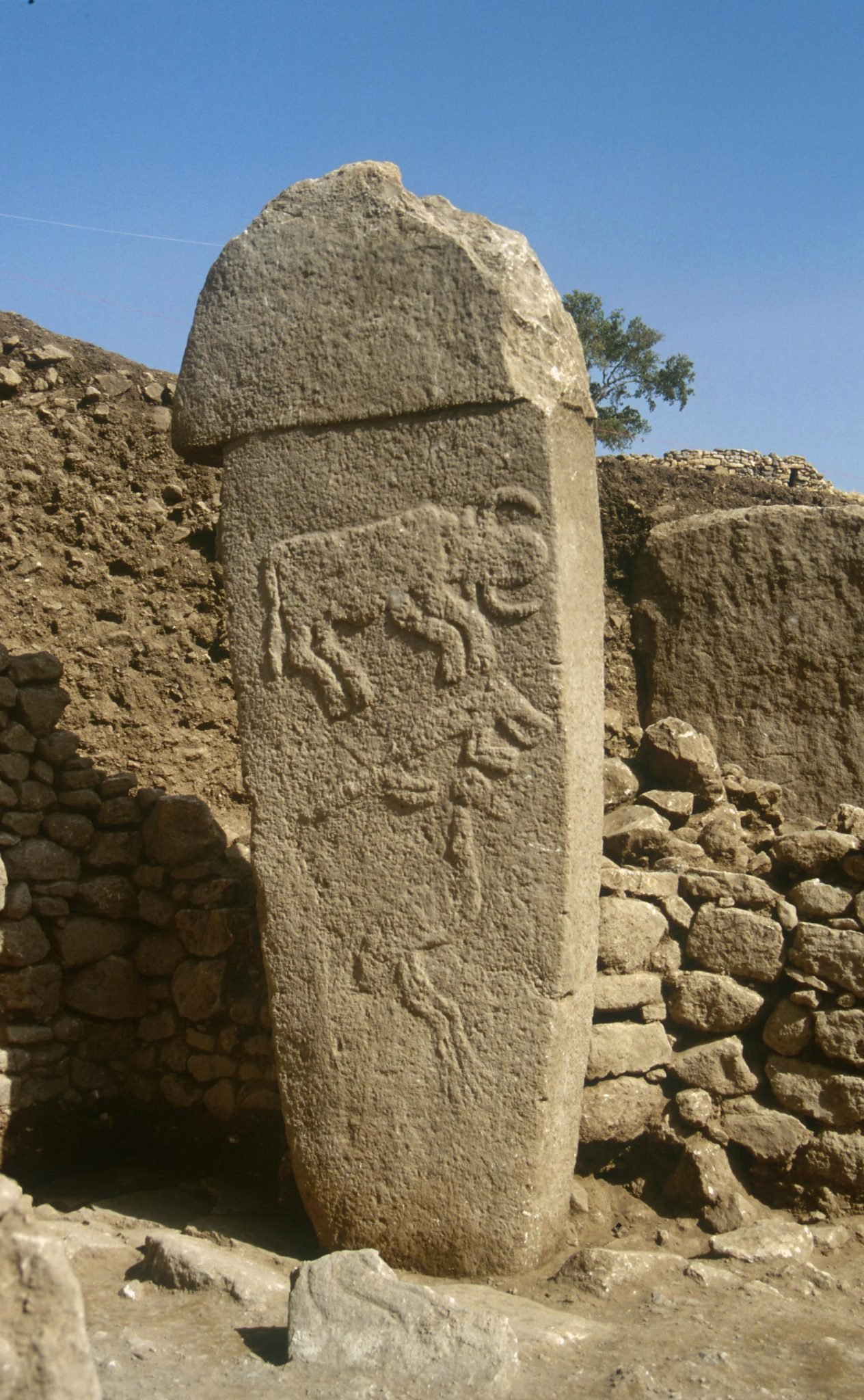
The most argued-over stone at the site
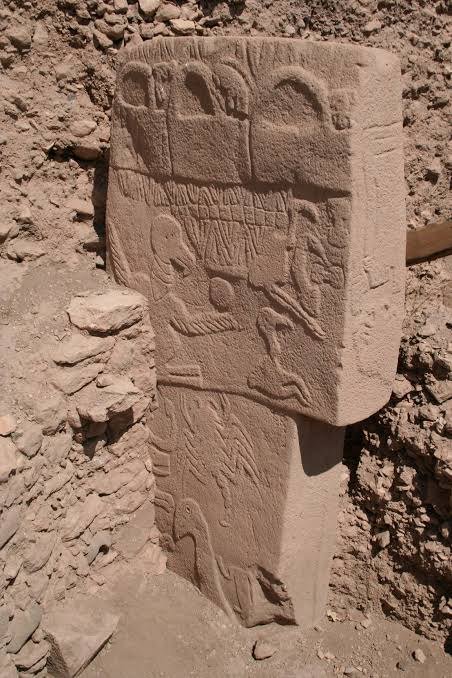
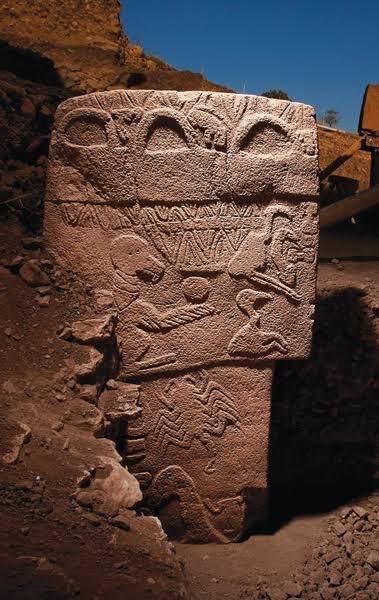
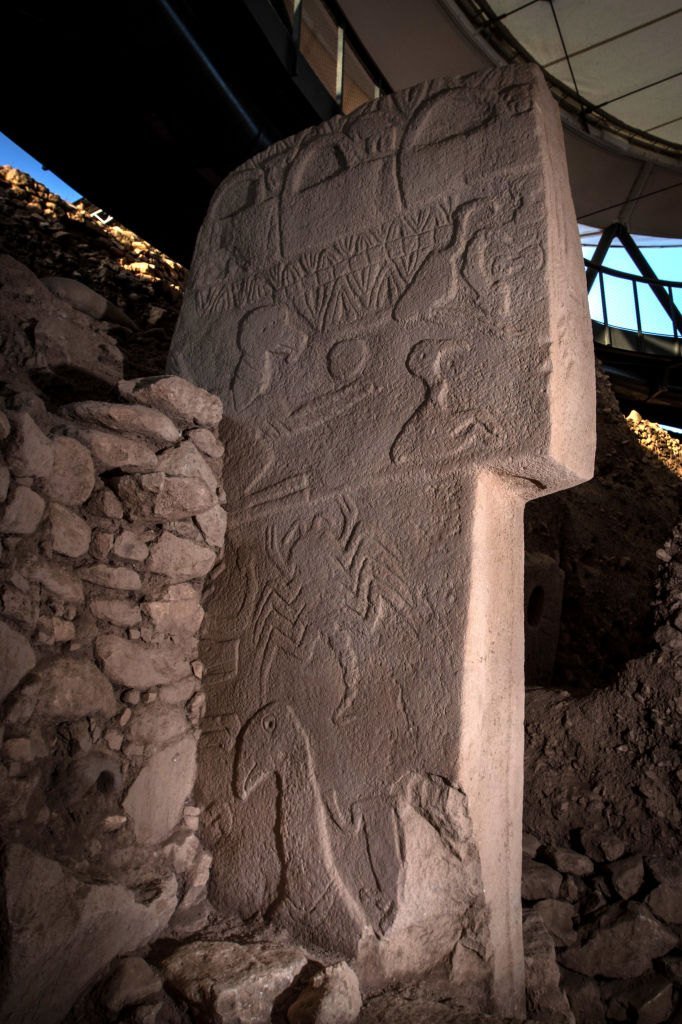
Pillar 43 in Enclosure D is the single most famous carved pillar at Göbekli Tepe. In a post on the German Archaeological Institute's Tepe Telegrams, the excavation team walked through it themselves: birds and a large vulture with an upraised wing near the top, a disc above the wing, a scorpion and snakes below, a row of three bag-shaped objects — and, at the bottom, a small figure with no head.
Why the missing head matters
Headlessness runs right through Göbekli Tepe's art, and the site has produced human skulls that were deliberately worked. The team reads the headless figure not as damage but as meaning: Pillar 43 is most likely a scene about death and the dead, with vultures — birds that strip the flesh — carrying the story. The disc above the wing they treat cautiously; it is not obviously a sun or a comet.
Evidence first, wonder intact
What makes the team's own reading valuable is its restraint: they describe exactly what is carved, then offer the death interpretation as the best fit with the rest of the site — while leaving the 'bags' frankly unexplained. It's a model for how to look at a stone that rewards wonder and resists easy answers.
A guided look at a crowded stone
Pillar 43 in Enclosure D is the single most famous carved pillar at Göbekli Tepe, and it has attracted more speculation than any other stone at the site. What the excavation team offered on the DAI's Tepe Telegrams was something quieter and more useful: a walk-through of what is actually carved, before any theory about what it means.
Read from the top down, the pillar holds birds and a large vulture with an upraised wing near the top, a disc set above that wing, a scorpion and snakes below, a row of three bag-shaped objects, and at the very bottom a small figure with no head. That inventory is the solid ground. The carvings themselves are secure; almost everything about their meaning is open.
Describing before interpreting is the method the post models. Rather than deciding in advance that the pillar is a map or a myth and then finding those things in the stone, the team catalogues the elements first, which leaves room to say honestly where the reading is confident and where it is not. On this crowded a surface, that discipline is what separates a careful account from a projection.
Why death, and why restraint
The interpretation the team reaches for is death. Their reason is not the vulture alone but the pattern the whole site shows: headlessness runs through Göbekli Tepe's art, and the excavations have produced human skulls that were deliberately worked. Against that background, the small headless figure at the bottom of Pillar 43 reads not as accidental damage but as deliberate meaning, and the vultures — birds that strip the flesh from the dead — carry the theme.
What makes the reading persuasive is how much it declines to claim. The disc above the wing is treated with open caution: the team explicitly refuses to call it a sun, and rejects the idea that it is a comet. The three bag-shaped objects are described and then left frankly unexplained. Even the death reading is presented as the best fit with the rest of the site, not as a caption the pillar itself supplies.
That restraint is the point. Whether Pillar 43 is a single composed scene or an accumulation of separate motifs is itself debated, and the headless figure's relationship to the birds above it is inferred from position rather than stated. Offered as one careful reading among several the stone allows, the death interpretation is a model for looking at a carving that rewards wonder and resists easy answers.
For some interpreters the vulture and the headless man belong together as a scene about death and excarnation — the stripping of the body and the freeing of the head — a reading developed at book length by Lewis-Williams and Pearce. The excavation team regards it as suggestive rather than proven, which is the right note to end on.
What is uncertain
The carvings are secure; almost everything about them is open. The disc above the vulture's wing has no agreed meaning — the team explicitly declines to call it a sun, and it is not a comet either — and the three 'bag' or basket shapes are described but left unexplained. Even the 'death' reading, though it fits the site's headless figures and worked skulls, is the best-fit interpretation, not a caption the pillar supplies.
Whether Pillar 43 is a single composed scene or an accumulation of separate motifs is itself debated, and the small headless figure's relationship to the birds above it is inferred from position, not stated. This is one careful reading among several the stone allows.
Common questions
What is the Vulture Stone at Göbekli Tepe? It is Pillar 43 in Enclosure D, the site's most famous carved pillar — crowded with birds, a large vulture, a scorpion, snakes, three bag-shaped objects and a small headless figure.
Why does the headless figure matter? Headlessness runs through Göbekli Tepe's art, and the site has yielded worked human skulls. The excavation team reads the headless figure as a sign that the pillar is a scene about death and the dead.
What is the disc above the vulture's wing? There is no agreed meaning. The excavation team explicitly declines to call it a sun, and it is not a comet either — it is one of the pillar's unexplained details.
Key takeaways
- Headlessness runs through Göbekli Tepe's art, and the site has produced deliberately worked human skulls.
- The team reads the headless figure not as damage but as meaning — a scene carried by vultures, birds that strip the flesh.
- The disc above the wing is treated cautiously: not obviously a sun, and not a comet.
- The strength of the reading is its restraint — describe what is carved, then leave the 'bags' frankly unexplained.
Sources
- DAI Tepe Telegrams — 'Of animals and a headless man. Göbekli Tepe, Pillar 43'
- DAI Tepe Telegrams — 'Dances with Cranes' (the birds of Pillar 43)
This article is written from the primary literature and excavators' reports cited above. Interpretations are attributed; uncertainties are stated in the text.