What is a 'skull cult' — and did the Taş Tepeler have one?
'Skull cult' is archaeology's shorthand for something real and widespread in the Neolithic Near East: the dead were not simply buried and forgotten. Their heads, especially, were removed, kept, modified and handled long after death. But the phrase hides a lot of variety — different regions did genuinely different things — and it is worth separating the hard finds from the label.
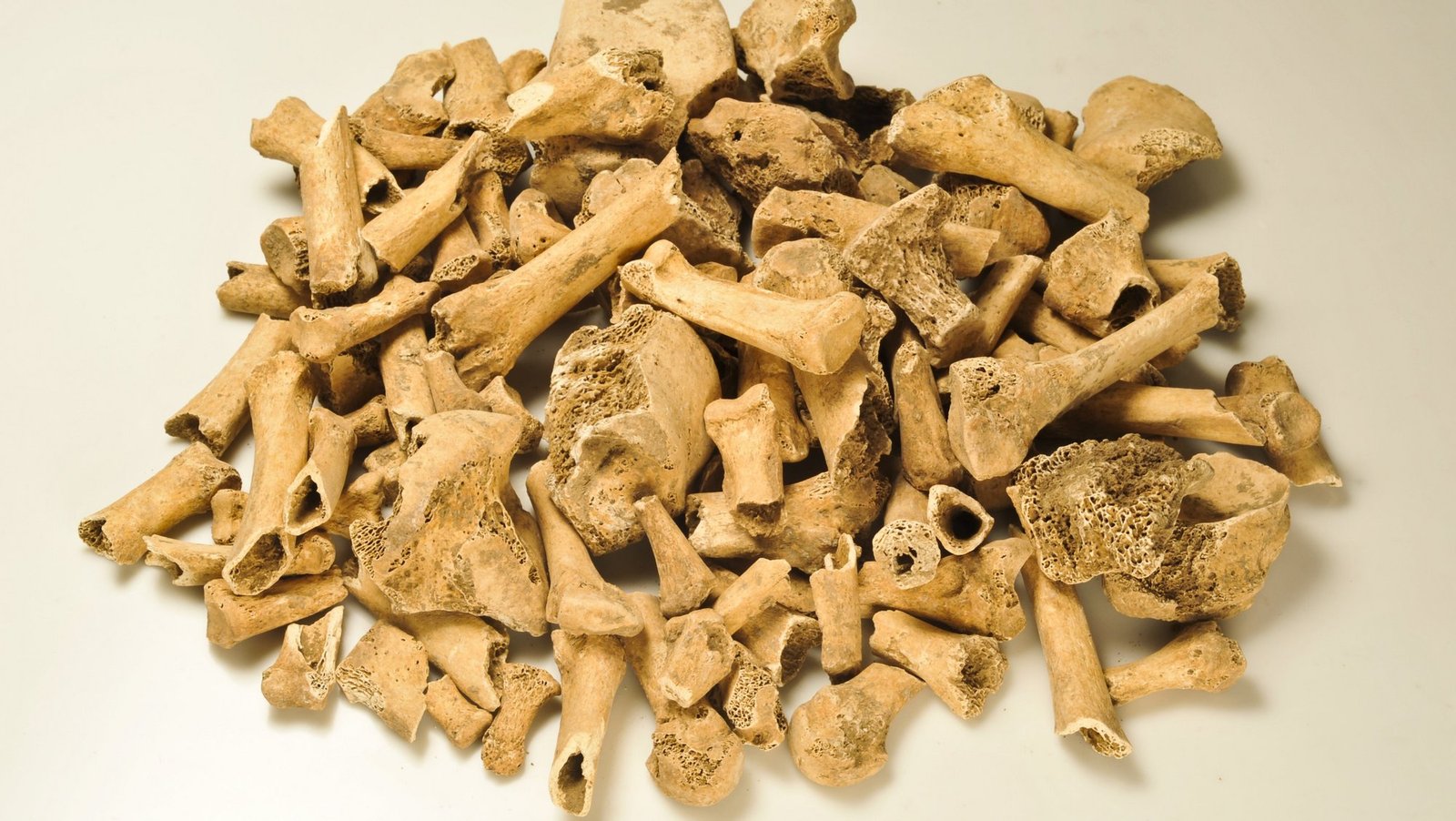
At Göbekli Tepe, the puzzle is stark. The site has yielded around seven hundred fragments of human bone, but almost no ordinary graves. The dead were present, but not laid to rest in the usual way. And among those bones are three skulls that were unmistakably worked by human hands.
The Göbekli skulls: what was actually found
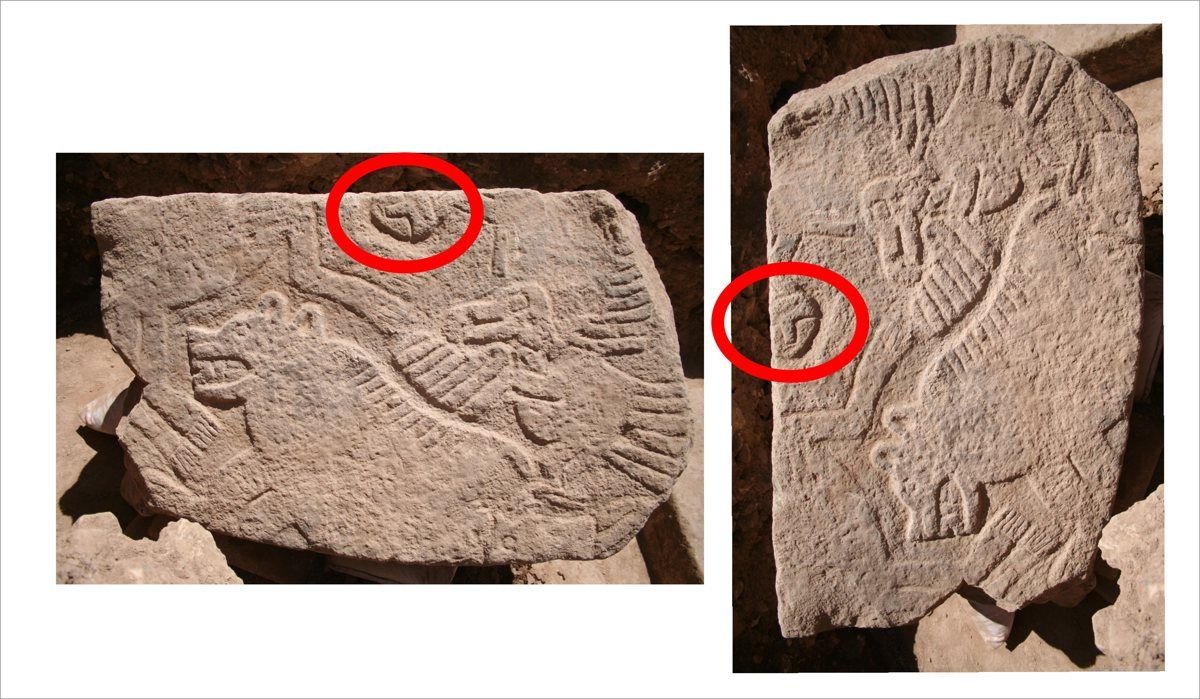
In a study published in Science Advances in 2017, Julia Gresky, Juliane Haelm and Lee Clare described fragments of three adult human skulls carrying deliberate modifications. After the heads had been defleshed — fine cut-marks show this — someone carved deep grooves running front-to-back along the top of each skull with a flint tool. On the best-preserved skull there is also a drilled perforation in the left side, made after death and far too small to be surgery. One skull kept traces of red ochre.
This was, the authors wrote, 'the very first evidence for the treatment of the dead at Göbekli Tepe' — and the first evidence anywhere for this particular way of working a skull. It was new to the record.
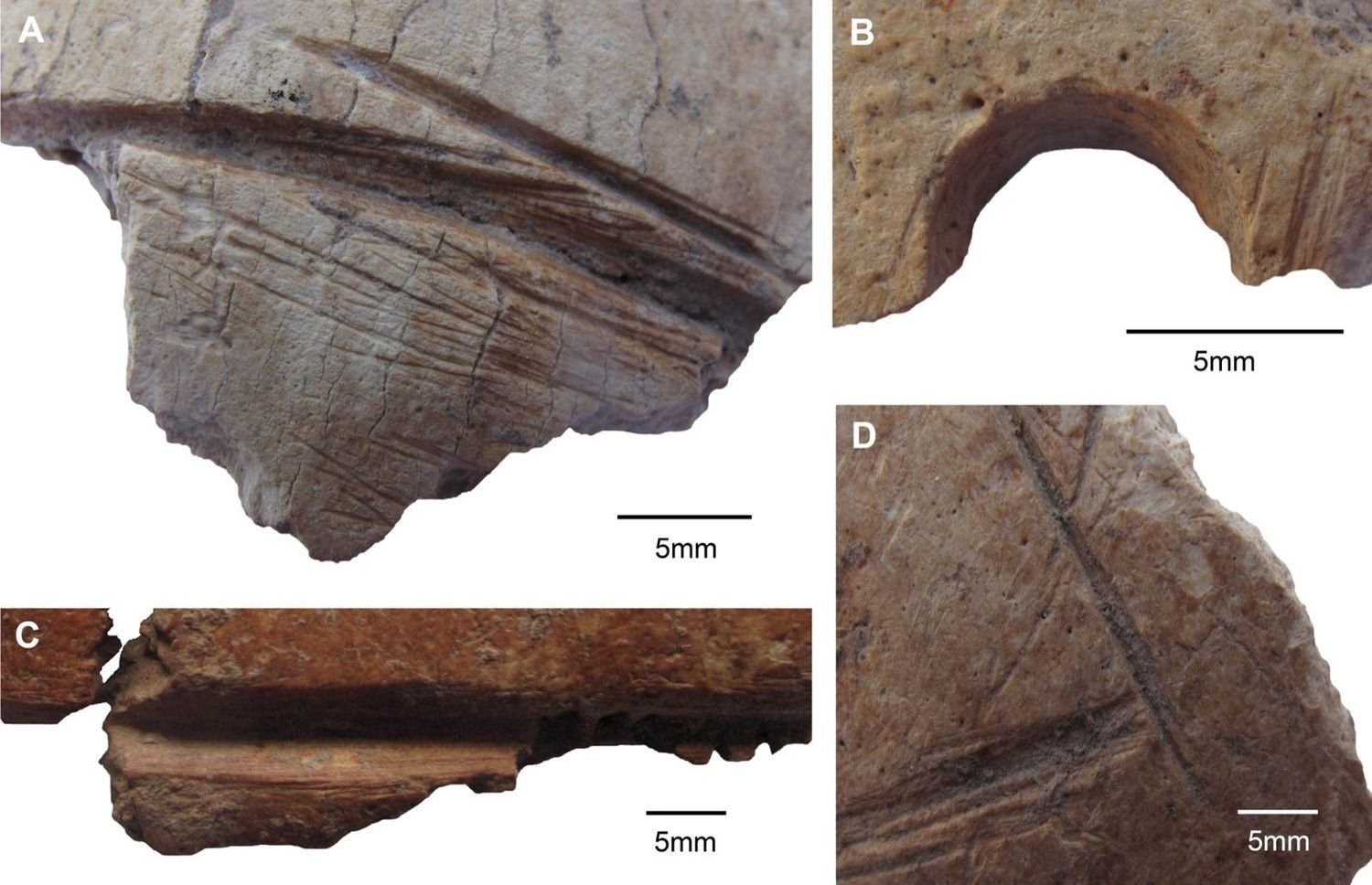
German Archaeological Institute, Göbekli Tepe Project, Modified human skull fragments, Göbekli Tepe, Copyright: DAI — used with permission, via .
There are hundreds of human bones at Göbekli Tepe and almost no graves. The dead were not simply buried here. They were kept, worked, and — it seems — put on show.
How do we know the marks were deliberate?
Because the team checked. Under the microscope, the grooves show the signatures of stone-tool cutting, and natural causes — animal gnawing, weathering, root damage — were ruled out. The grooves are also too deep to be scalping, which was tested and discounted. These were not accidents of burial. They were made on purpose, with care, along a consistent line.
The drilled hole tells the same story: a single, deliberate perforation, placed where a cord could pass through. Taken together, the grooves and the hole point to skulls that were prepared to be fixed to something and shown.
What were the skulls for?
The honest answer is that the excavators offer a strong hypothesis and two rival meanings. The hypothesis: the grooves and hole were for decoration and suspension — the skulls were hung and displayed, perhaps from a post or beam, perhaps even from one of the great T-pillars. The imagery supports a world in which the severed head mattered: carved figures carry heads, and headless bodies appear among the animals.
The two meanings the study cannot yet decide between are the ones that haunt every skull cult: were these the heads of honoured ancestors, kept close and venerated — or of enemies, displayed as trophies? The same practice can carry opposite meanings, and here the bones alone will not settle it.
The heads that were broken off
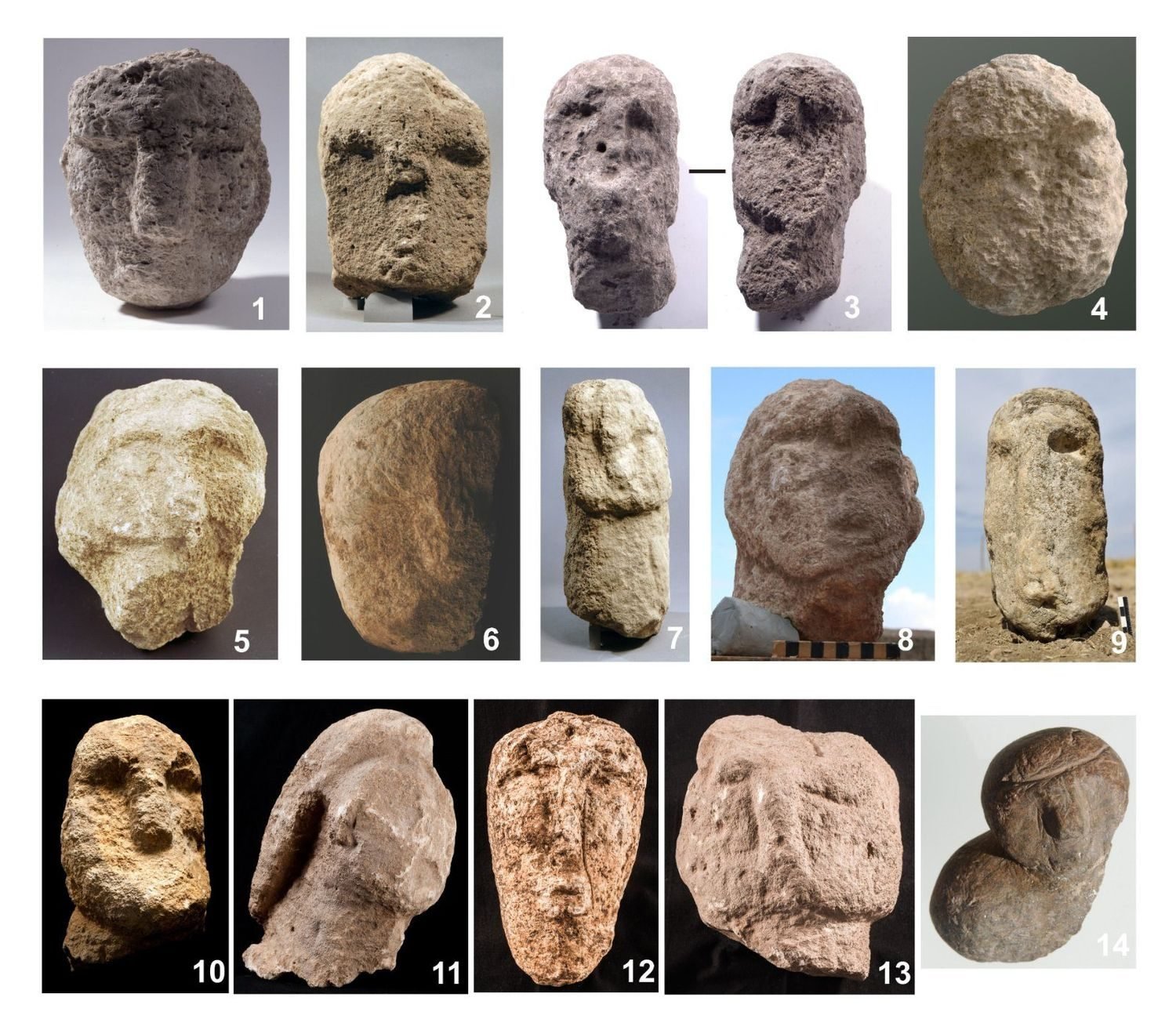
The concern with the head was not confined to real skulls. Across Göbekli Tepe and its neighbours, sculptors carved human heads by the dozen — and then, again and again, the heads were broken off. Excavators have recovered numerous detached limestone heads whose necks show clean, deliberate breaks, and several composite statues and pillar-figures survive decapitated, the head removed and the body left behind. The DAI team has argued that this was not accidental damage but a repeated, intentional act — a decapitation of the image that mirrors the handling of the real dead.
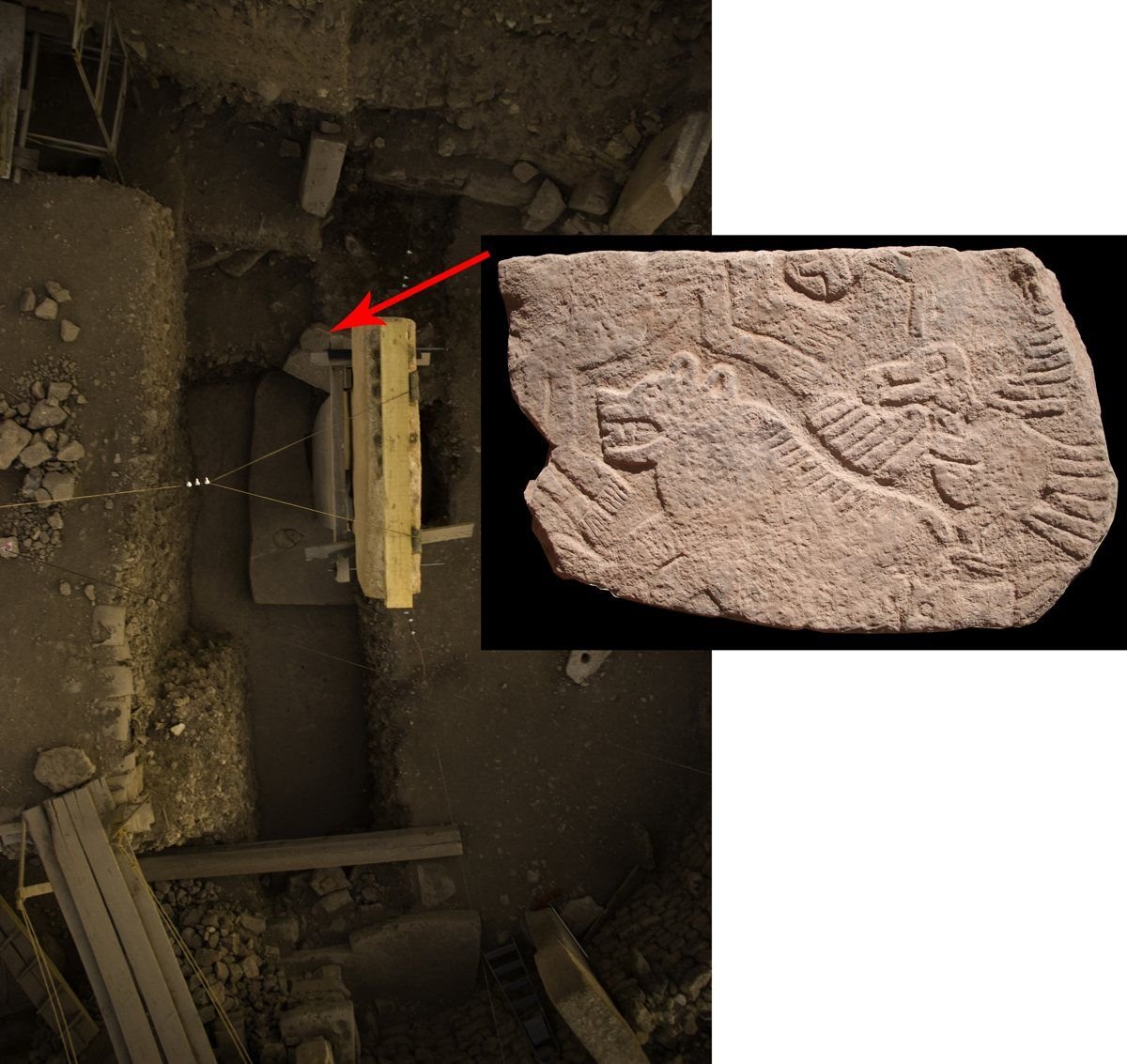
The pattern reaches beyond stone people. On one relief a figure holds out a head; on the 'totem pole' from Göbekli, beings are stacked with heads emphasised and, in places, later removed. Whatever the belief behind it, the message of the material is consistent: at these sites the head could be separated from the body — in bone and in stone alike — and then kept, carried or set apart. The carved heads are the durable echo of what was being done to the skulls.
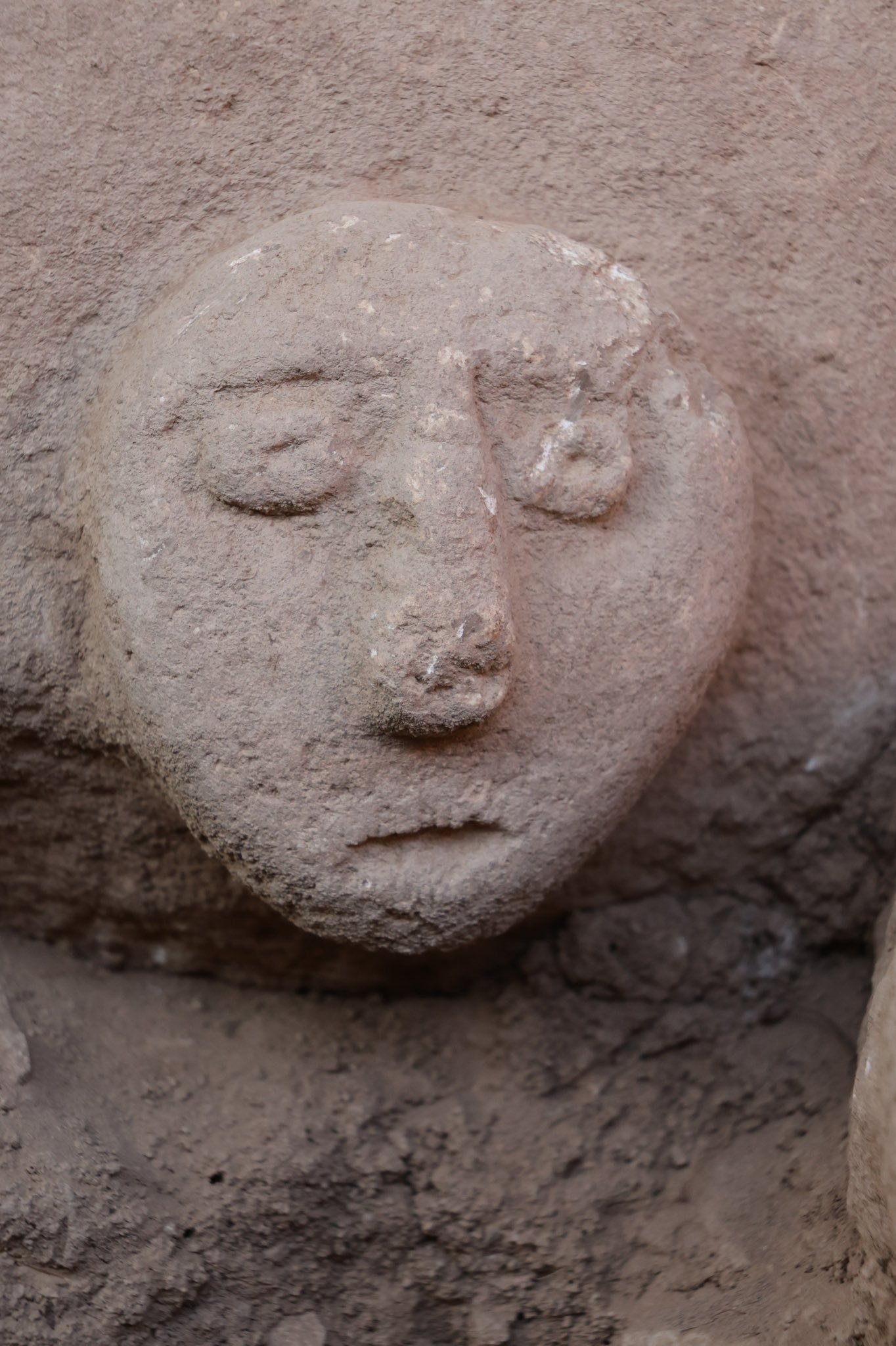
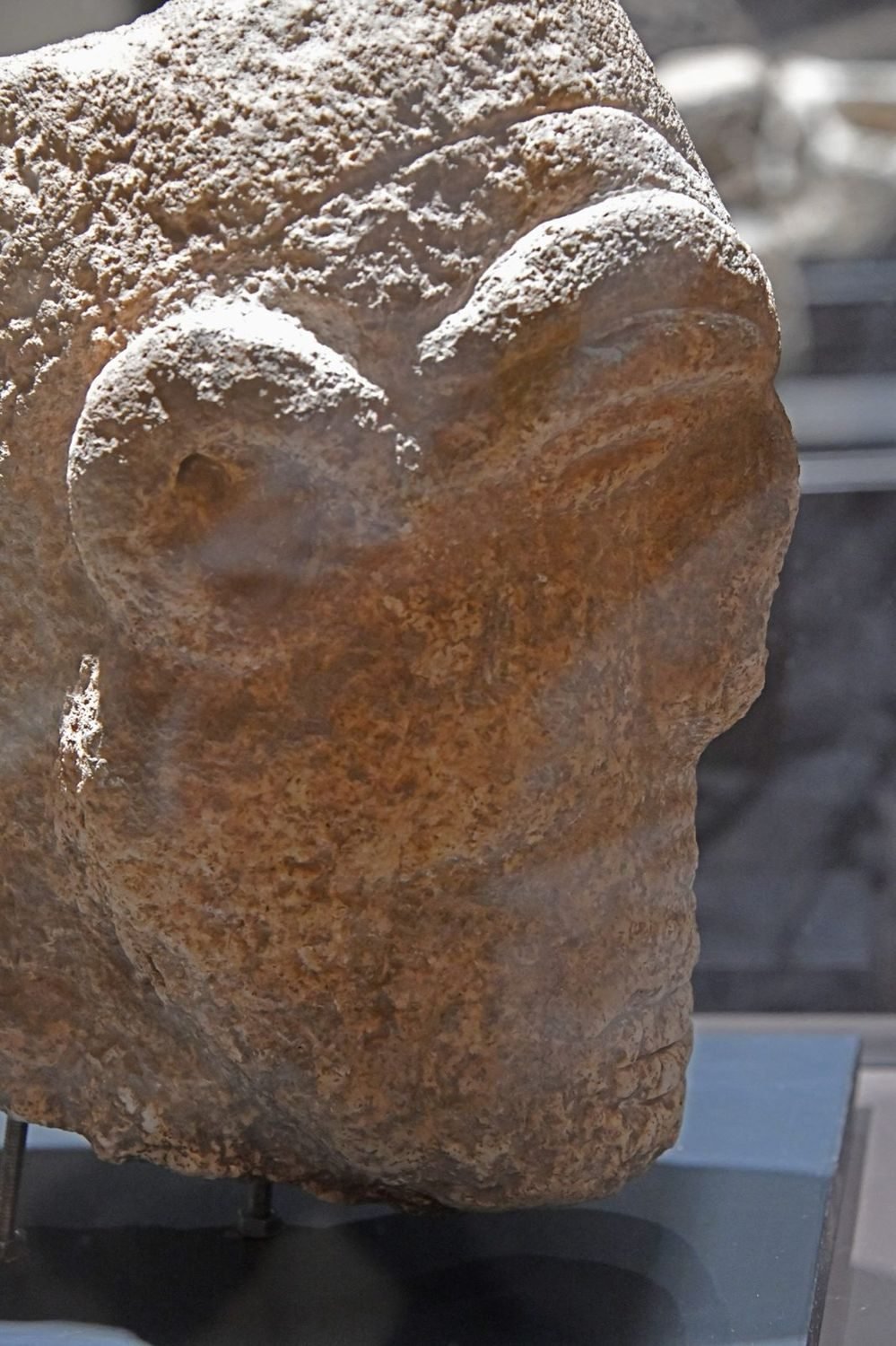
Dosseman, Urfa museum Karahantepe Human statue head Neolithic Age in 2024 7370, CC BY-SA 4.0, via Wikimedia Commons.
Were they really hung from the pillars?
The most vivid version of the story has the drilled skulls suspended from the great T-pillars, staring down into the enclosures. It is an unforgettable image, and it is a real hypothesis offered by the excavators — the single drilled hole is exactly what you would need to pass a cord. But it is a hypothesis, and it deserves to be labelled as one.
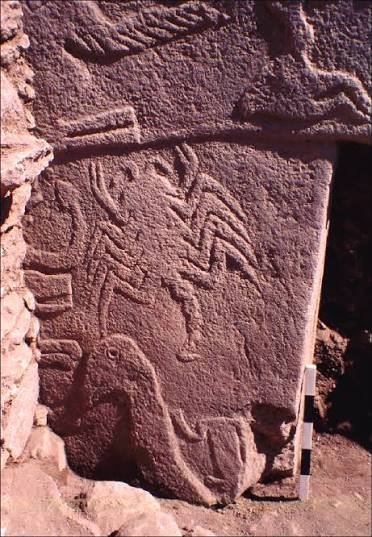
What supports it is the wider imagery: the site is saturated with the severed head. A carved figure on one relief appears to present or carry a human head; the famous Pillar 43 sets a headless human figure beneath its vultures; detached stone heads were deliberately placed against central pillars. In a world this preoccupied with the head, a worked skull hung for display is not a wild guess.
What tempers it is context. As the excavator Lee Clare has stressed, the modified skull fragments came from building fill and eroded deposits, not from a neat ritual arrangement, and may well have arrived where they were found by erosion rather than deliberate placement. So the carving and drilling of the skulls is certain; where and how they were finally displayed is reconstruction. The honest picture keeps both halves: a definite, deliberate treatment of the skull, and an open question about the theatre around it.
A different tradition to the south: the plastered skulls
It is tempting to fold every Neolithic skull into one story, but the evidence resists it. Far to the south, in the Levant, sites like Jericho and 'Ain Ghazal practised something genuinely different: the skull was removed after the body decomposed, and a face was modelled over it in plaster, often with shell inset for the eyes, before being cached beneath a house floor. Kathleen Kenyon's Jericho finds are the classic examples; 'Ain Ghazal produced more than a dozen treated heads.
This is a separate technique and a separate tradition — modelling a face in plaster, not carving grooves into bare bone — and it belongs to a slightly later phase. The Göbekli team were careful to present their skulls as a new, previously undocumented variation, related to the Levantine practice only in the broad sense that both are fixated on the skull. Lumping them together flattens a real difference.
How far the practice spread — and what it might have meant
The Levantine plaster tradition was not a local quirk either. Plaster-faced skulls turn up at Jericho, Beisamoun, Kfar HaHoresh, Tell Aswad and Tell Ramad, and the broader habit of removing and curating skulls reaches north into central Anatolia at sites like Köşk Höyük. A concern with the head ran across the whole Neolithic Near East for millennia — but expressed through several distinct techniques.
As for meaning, the debate is old and unresolved. Kathleen Kenyon, excavating Jericho, already saw the two poles: the skulls might be venerated ancestors or slain enemies. More recently the archaeologist Ian Kuijt reframed the whole practice as being less about worship than about social memory — communities using the dead to remember, and deliberately to forget, renewing the bonds of the living in the process. On this reading a curated skull is not a relic of belief so much as a tool of a community managing its own past. It is a powerful idea, and — like the ancestors-or-enemies question at Göbekli — it cannot be settled from the bones alone.
Körtik Tepe and Nevalı Çori: the dead handled, in other ways
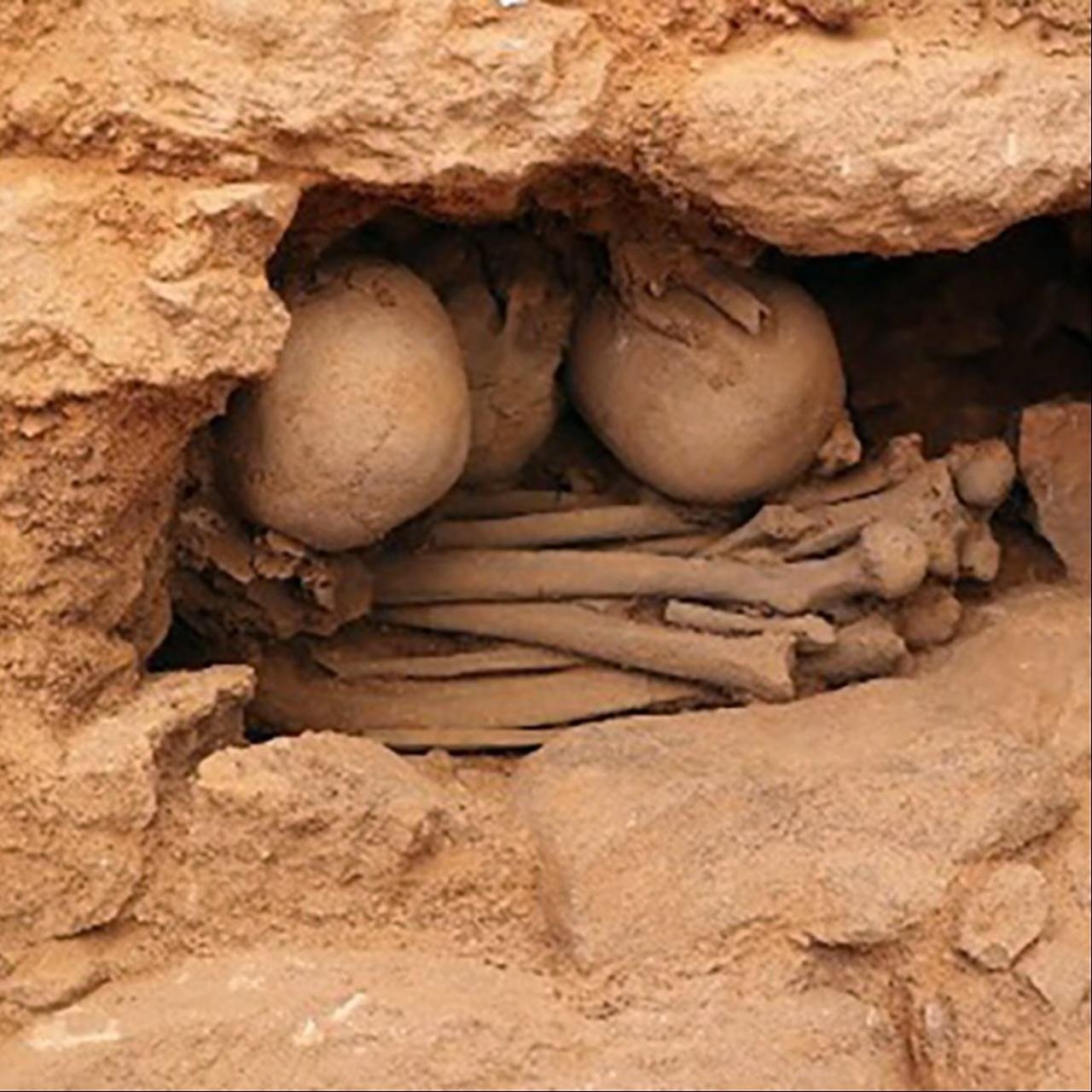
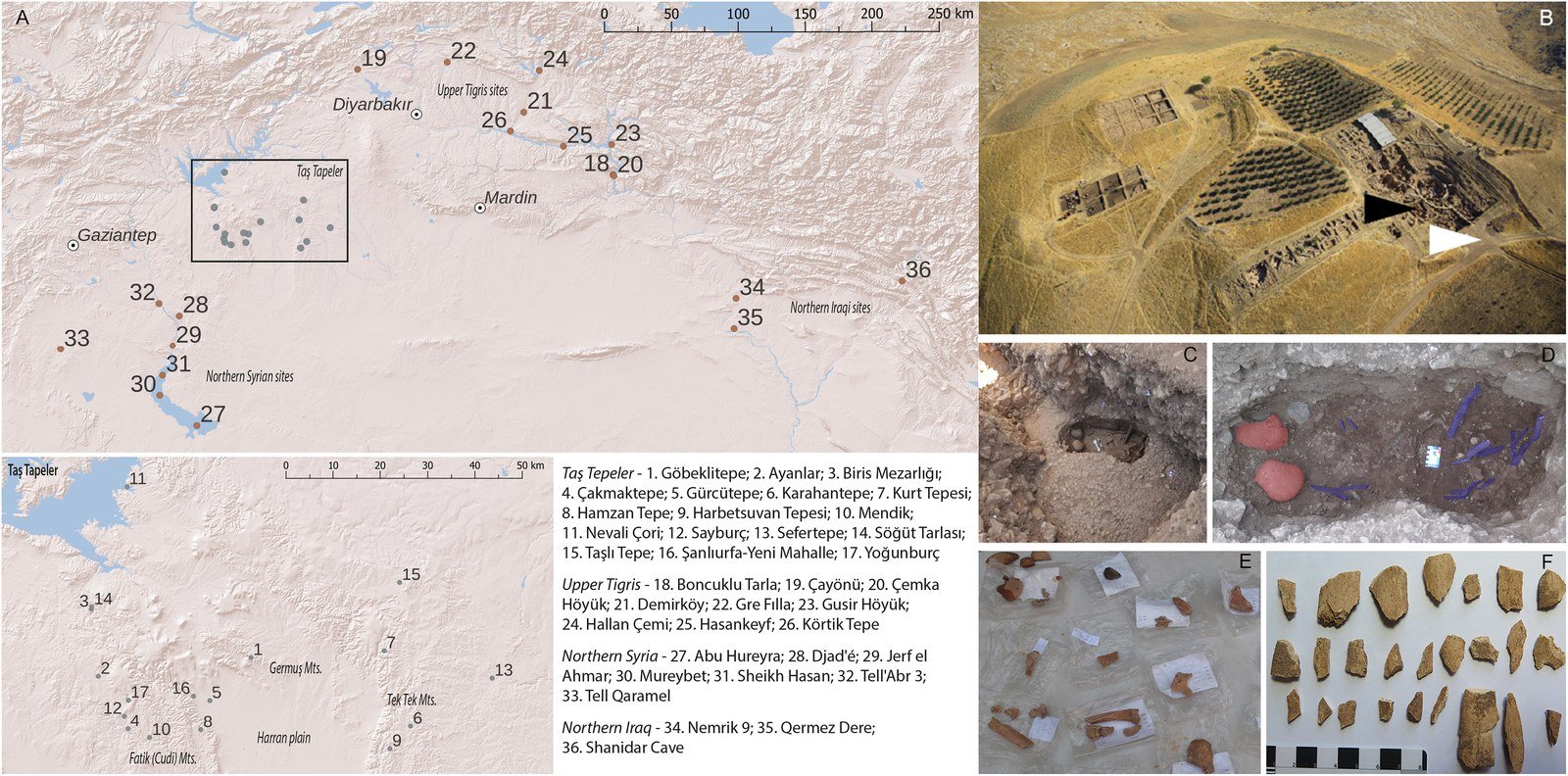
Closer to home, other Taş Tepeler and Upper Mesopotamian sites treated the dead elaborately, each in their own idiom. At Körtik Tepe, on the upper Tigris and among the very oldest sites in the group (around 10,000 BCE), the dead were buried beneath the house floors, many in a tightly flexed position. Some bodies were coated in gypsum plaster — in one celebrated double burial the two skeletons were completely encased in it — and sometimes in several layers with paint between them, which can only mean the graves were reopened and re-plastered over time. Human bones were reddened with red and black colorant, and the dead were sent off with some of the finest objects the site produced: chlorite bowls incised with snakes, scorpions and flowing geometric designs, deliberately broken and scattered over the body.
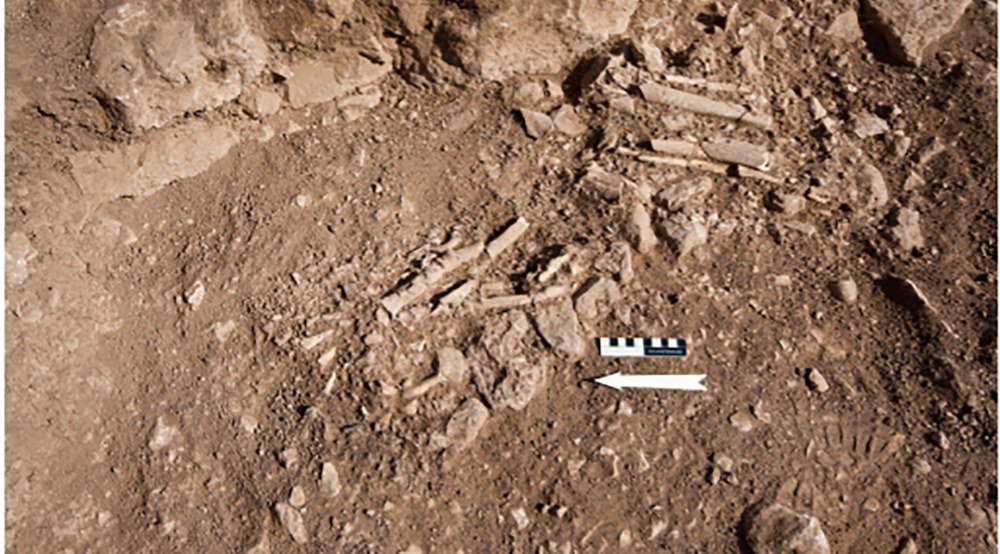
At Nevalı Çori, on the Euphrates, there were forty to fifty inhumations, again largely under floors and between houses. Here the signature act was secondary burial: after the flesh had gone, skulls and long bones were removed and, in some houses, gathered together as deposits — with one skull found covered in clay. Different techniques from site to site, but the same underlying idea keeps surfacing: the dead were not finished business. They were returned to, moved, unwrapped, re-wrapped and reworked, sometimes for years.
Why keep the dead so close?
It is worth asking why. These are the first communities in the world to build monuments and, soon after, to settle down and farm — and they did it while keeping their dead literally underfoot, or their skulls above ground where they could be seen. That is not an accident of poor cemeteries. It looks like a choice.
One influential answer, from the archaeologist Ian Kuijt, is that keeping and handling the dead was how these societies managed memory at a moment of enormous change. As small mobile bands became larger settled villages, the bonds that held people together had to be actively maintained; the dead — especially named, remembered individuals — became a way of anchoring a community's identity across generations, of deciding who was remembered and who was allowed to fade. On this view a curated skull is less an object of worship than a social instrument, a way of saying this is who we are, and these are the people we come from.
It fits the Taş Tepeler picture. The same centuries that produced the great enclosures produced the carved skulls, the headless figures on the pillars, the plastered bodies at Körtik. Building monuments and keeping the dead close may have been two faces of the same project: holding a new kind of community together.
Heads built into the walls — and a reported 'skull room'
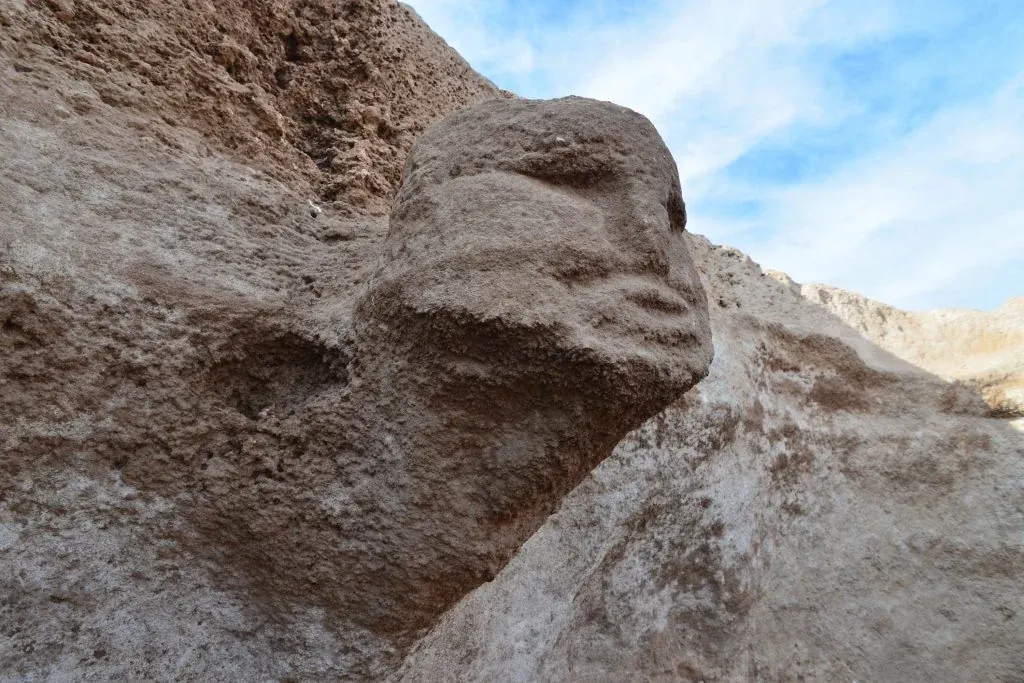
The clearest sign that the head was meant to be seen comes from the architecture. At Karahan Tepe, in the subterranean room known as Structure AB, a life-size human head was carved directly out of the living bedrock so that a face appears to lean out of the rock wall, looking across a chamber of pillars. This is not a portable object that happened to end up in a building; the head is the building. Other heads at the Taş Tepeler were set into walls or placed against pillars in the same spirit — the dead, or their images, given a fixed place among the living stone.
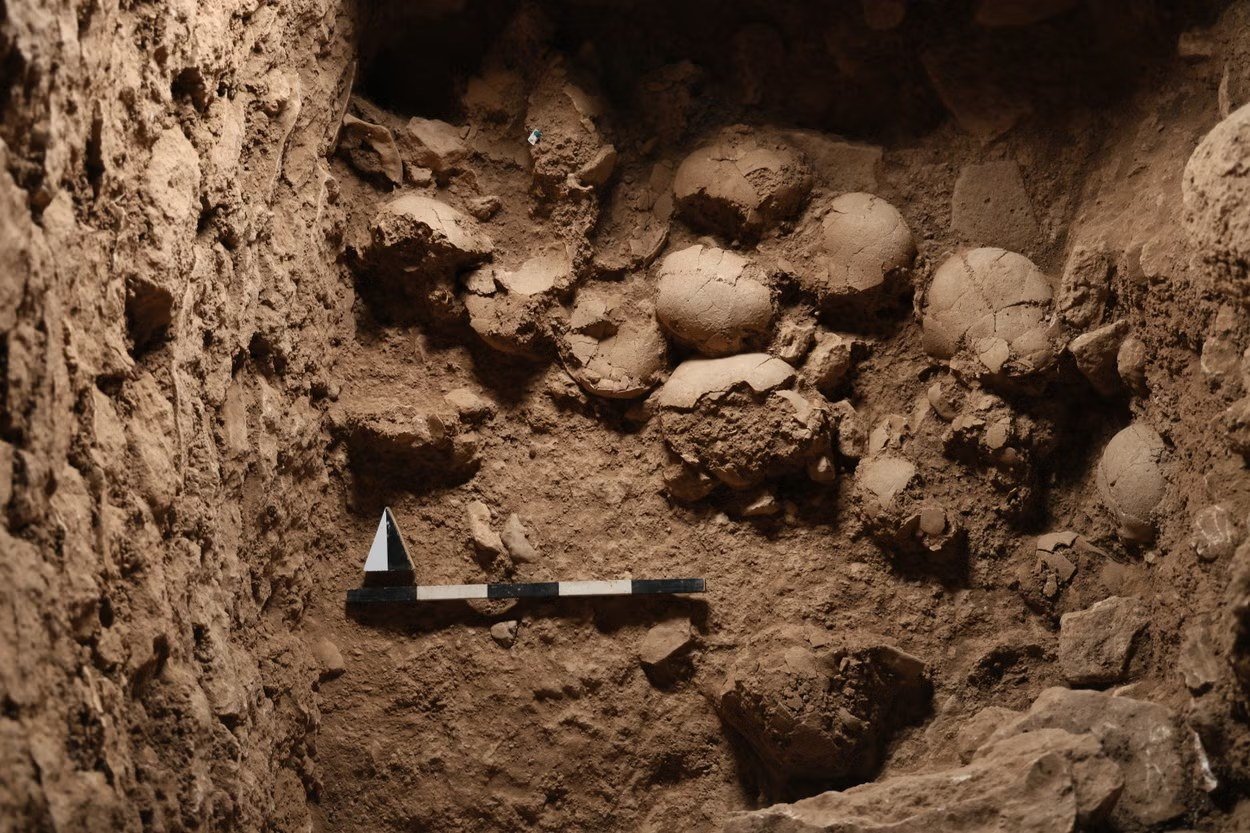
The pattern may extend further. At Sefertepe, a small mound in the Taş Tepeler cluster, excavators have reported a concentration of human skulls associated with a special building — a possible 'skull room'. It is a tantalising find and it fits everything else here, but it comes from field reporting rather than a peer-reviewed excavation report, and the deposit has not been published in detail. We flag it as a promising lead, not a settled fact — exactly the caution the honest version of this story requires.
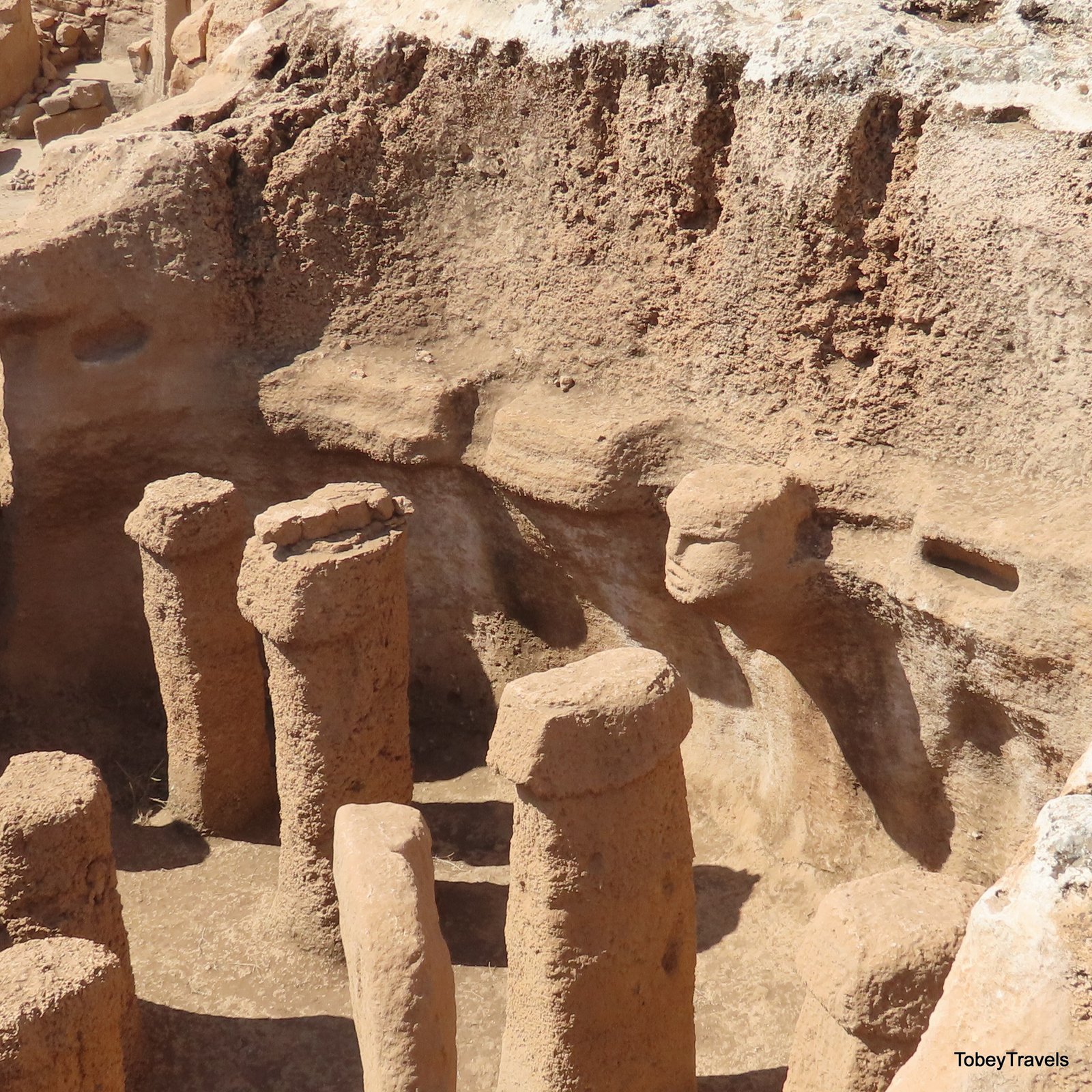
tobeytravels, Structure AB, Pillars Shrine with Porthole Window to AD and Carved Head, Karahantepe (Karahan Tepe), Turkey, CC BY-SA 4.0, via Wikimedia Commons.
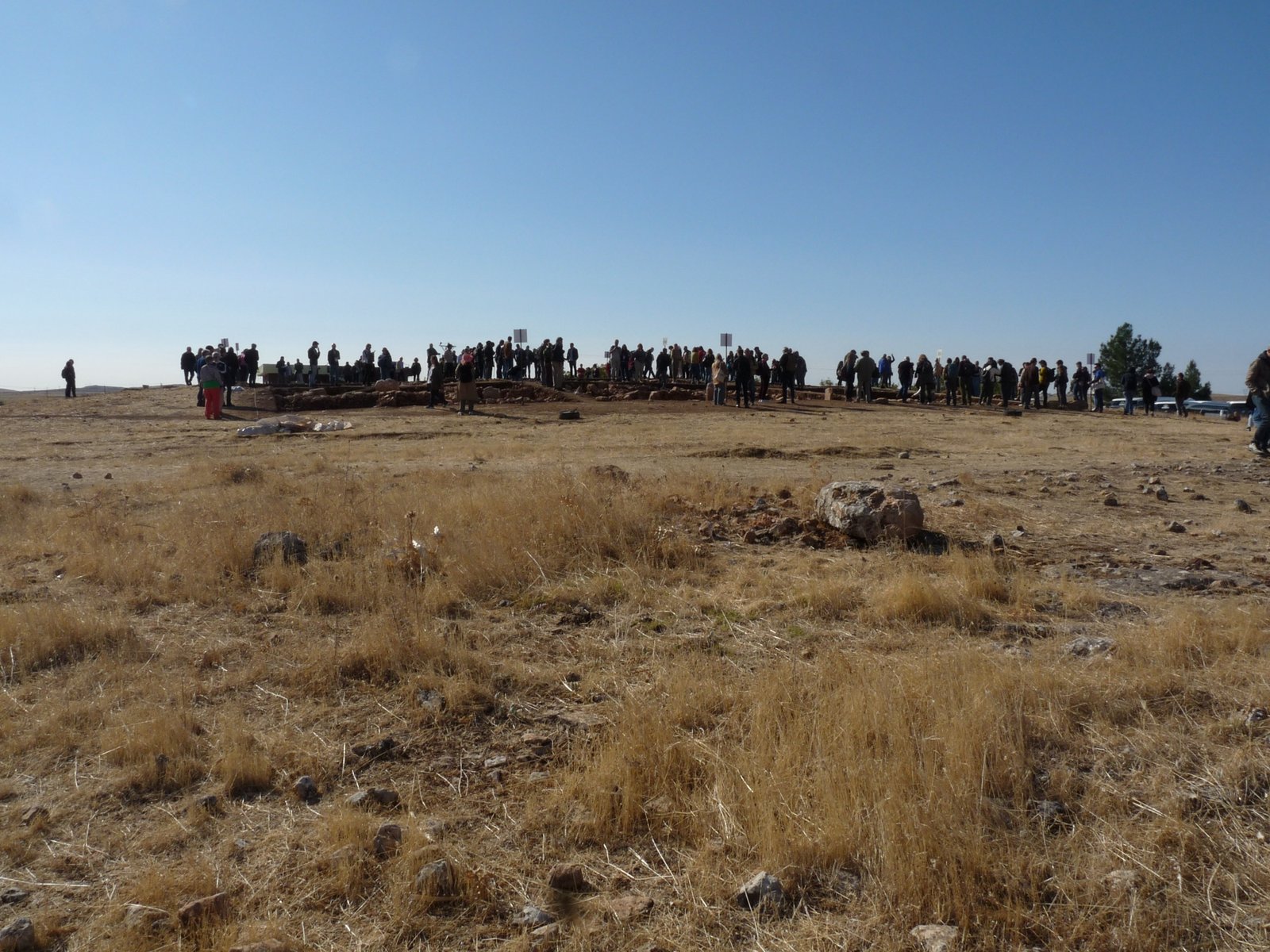
Frantisek Trampota, Sefer Tepe, Public domain, via Wikimedia Commons.
The newest and least certain: burnt and cut heads
The current digs are adding to the picture, but this is where caution is most needed. At Karahan Tepe, the physical anthropologist Yılmaz Selim Erdal has been reported describing more than ten human skull fragments, some exposed to fire and bearing cut-marks resembling those at Göbekli Tepe. At Çakmaktepe, deposits of burnt animal skulls have been reported. Both are striking, and both fit the regional pattern.
But neither has yet appeared in a peer-reviewed publication — they come from press interviews and site reporting — so we present them as preliminary leads, attributed to the named researchers, not as settled facts. And the Çakmaktepe skulls are animal, not human: relevant to a broad concern with heads, but a different thing from the human skull cult.
The science, and its limits
It is worth being clear about how much — and how little — these skulls can be made to say, because the honest limits are part of the story. The modification is certain: microscopic analysis established that the grooves were cut with stone tools, ruled out gnawing and weathering, and showed the marks were too deep for scalping. That is as solid as this kind of evidence gets.
Everything past that runs into the poor preservation of the bone. Only three skulls out of some seven hundred fragments carry the modifications, so we cannot say how common the practice was, or how many people are represented. Attempts to radiocarbon-date the fragments failed, because the collagen needed for dating had not survived — which means the skulls can only be placed broadly within the site's long life, not pinned to a phase. And for the same reason, ancient DNA is effectively unrecoverable: we will probably never know the sex, ancestry or family relationships of the people whose heads were carved. The find is vivid and certain in what it shows, and permanently modest in what it can prove. Good archaeology holds both of those at once.
Is it really one 'cult'?
Step back and the pattern is undeniable at one level and slippery at another. Undeniable: across the Pre-Pottery Neolithic, from the Taş Tepeler to the Levant, people were preoccupied with the human head and with keeping the dead in play. Slippery: they did it in technically distinct ways — carving at Göbekli, whole-body plastering at Körtik, plaster faces in the Levant, skull removal at Nevalı Çori — that may not share a single belief at all.
'Skull cult' is a convenient banner, and we use it. But it is closer to a family of related practices than a single religion, and the best scholarship treats it that way.
What is uncertain
Several things, and they matter. First, the meaning: ancestors, enemies, or — as Ian Kuijt has argued for the Levant — a way of managing social memory, remembering and deliberately forgetting the dead. The evidence does not choose.
Second, a caution from the excavators themselves. Lee Clare has noted that the Göbekli skull fragments came from building fill and eroded contexts, with no clear spatial pattern, and suspects many arrived where they were found through erosion rather than deliberate deposition. So while the carving of the skulls is certain, strong claims about elaborate ritual placement should be softened. The skulls could not be precisely radiocarbon-dated, and ancient DNA is not recoverable — real limits on how much more they can tell us.
Third, the suspension-from-a-pillar image, evocative as it is, is a hypothesis, not a demonstrated fact. What is solid is smaller and stranger than the legend: three skulls, defleshed, grooved and drilled by careful hands, eleven thousand years ago.
Why it matters
Strip away the word 'cult' and what remains is still remarkable. Eleven thousand years ago, before pottery, before farming was fully established, before writing, the first people to raise monumental architecture were also doing something deliberate and skilled with the heads of their own dead: defleshing them, carving grooves along the crown, drilling a hole to hang one up. Three skulls prove the technique; the seven hundred stray fragments, the headless figures on the pillars, the head held out on the gift-bearer slab, the stone heads snapped from their statues, the bedrock face at Karahan and the reported skulls at Sefertepe all show that the head — kept, worked and displayed — sat at the centre of how these communities thought about the dead and about themselves.
That is why the skull cult is not a lurid footnote but a key to the whole phenomenon. The same impulse that made people gather to move ten-tonne pillars seems to have made them keep their dead close and visible — two halves, perhaps, of a single project: binding a new and larger kind of community together, and deciding, through the dead, who its members were. It is worth holding this beside the region's obsession with the living face — the possibility that many of the carvings show masked people, explored in our companion piece — because the two threads run in opposite directions from the same fixation on the head: the mask animates a living face, the skull cult preserves a dead one.
And it matters how we know it. The honest version — certain about the carving and the drilling, cautious about the theatre of suspension, careful to keep Göbekli's grooved bone separate from Jericho's plaster faces, and clear that the newest Karahan and Sefertepe finds are still unpublished — is more convincing than the legend of skulls swinging from the pillars, not less. The real thing is stranger, and better attested, than the myth.
Common questions
What is the Göbekli Tepe skull cult? The practice, evidenced by three carved-and-drilled human skulls (Gresky et al. 2017), of modifying and probably displaying human skulls — the oldest known evidence of its specific kind.
Were the skulls of ancestors or enemies? Unknown. The study offers both as possibilities — venerated ancestors, or displayed enemies — and does not resolve which.
Is it the same as the plastered skulls of Jericho? No. The Levantine tradition modelled plaster faces over removed skulls; Göbekli's skulls were carved and drilled on bare bone. They are related in theme but are distinct practices.
Did other Taş Tepeler sites treat the dead like this? Yes, in their own ways — gypsum-plastered bodies and broken grave goods at Körtik Tepe, skull removal at Nevalı Çori, human heads carved into the bedrock and a reported 'skull room' at the smaller sites (Karahan Tepe, Sefertepe) — with the newest of those still awaiting formal publication.
Is the skull cult the same thing as the 'masked people' idea? No — they are two sides of the same fixation on the head. The skull cult concerns the dead (worked and displayed skulls); the mask hypothesis concerns the living (carvings that may depict people wearing masks). We treat them as separate but related threads.
Key takeaways
- Göbekli Tepe has ~700 human bone fragments but almost no graves — and three skulls carved with deliberate grooves, one drilled, most likely to be displayed (Gresky et al. 2017): the oldest evidence of its kind.
- It belongs to a wide Neolithic concern with the dead, but the regional practices are technically distinct — Göbekli's carving is not the same as the Levant's plaster-faced skulls or Körtik Tepe's whole-body plastering.
- The meaning stays open: honoured ancestors or displayed enemies, the evidence doesn't decide.
- Be careful with the newest claims (cut/burnt skulls at Karahan, burnt animal skulls at Çakmaktepe) — reported from current work, not yet formally published — and with strong 'ritual placement' readings, since many Göbekli fragments likely moved by erosion.
Sources
- Gresky, J., Haelm, J. & Clare, L. (2017). Modified human crania from Göbekli Tepe provide evidence for a new form of Neolithic skull cult. *Science Advances*
- Clare, L. (2017). Evidence for a skull cult at Göbekli Tepe (with the author's Q&A on dating and context). Tepe Telegrams (DAI)
- Schmandt-Besserat, D. The plastered skulls ('Ain Ghazal project, Univ. of Texas)
- Özkaya, V. & Coşkun, A. (2009). Körtik Tepe, a new PPNA site in south-eastern Anatolia. *Antiquity* (project gallery)
- Kuijt, I. (2008). The Regeneration of Life: Neolithic structures of symbolic remembering and forgetting. *Current Anthropology* 49(2)
This article is written from the primary literature and excavators' reports cited above. Interpretations are attributed; uncertainties are stated in the text.
Go deeper
The missing heads: the skull cult, site by site →Why were Neolithic people so obsessed with heads? →Were the Göbekli Tepe carvings masked people? (the living face, not the dead) →The strangest things ever dug up at the Taş Tepeler →Is Göbekli Tepe a star map? Why archaeologists say no →Was there shamanism at Göbekli Tepe? →