A different kind of Neolithic site
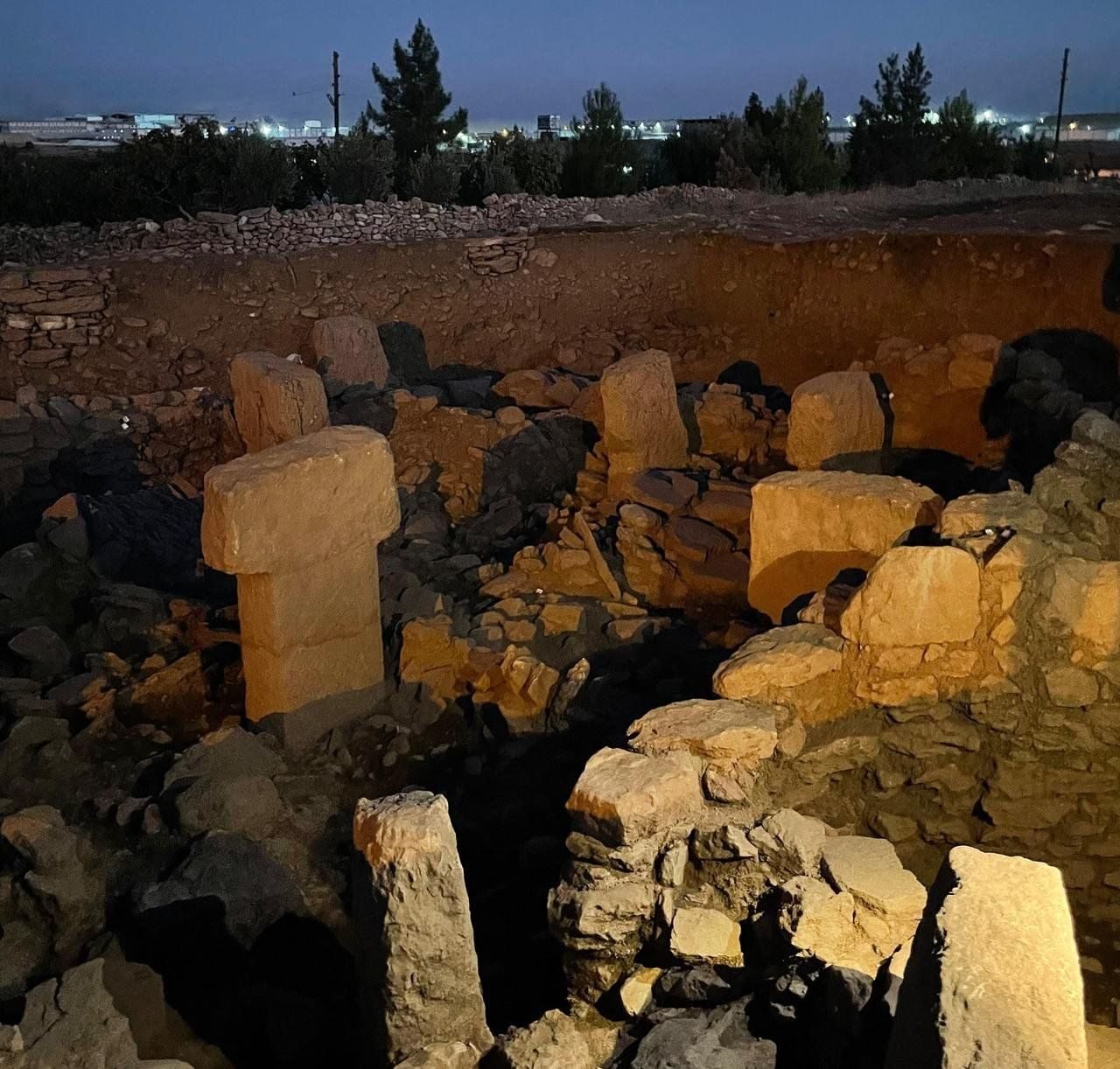
The popular image of the first monuments is Göbekli Tepe: a bare hilltop crowned with carved enclosures, with the ordinary business of life kept somewhere else. In her 2024 report on Sayburç, the site's director Eylem Özdoğan describes something that does not fit that picture at all. Here the carved 'special buildings' — the ritual rooms with their pillars and reliefs — sit right among the houses.
Sayburç lies in the foothills of the Eastern Taurus, on the Şanlıurfa Plateau, and has been excavated since 2021 as part of the Taş Tepeler project. The Neolithic settlement is small — about 3,000 square metres — and part of it still lies under a modern village, so the dig works the southwest edge. What that compact space shows is a community in which, as Özdoğan puts it, the sacred and the everyday were intertwined.
Two rooms, carved into the rock
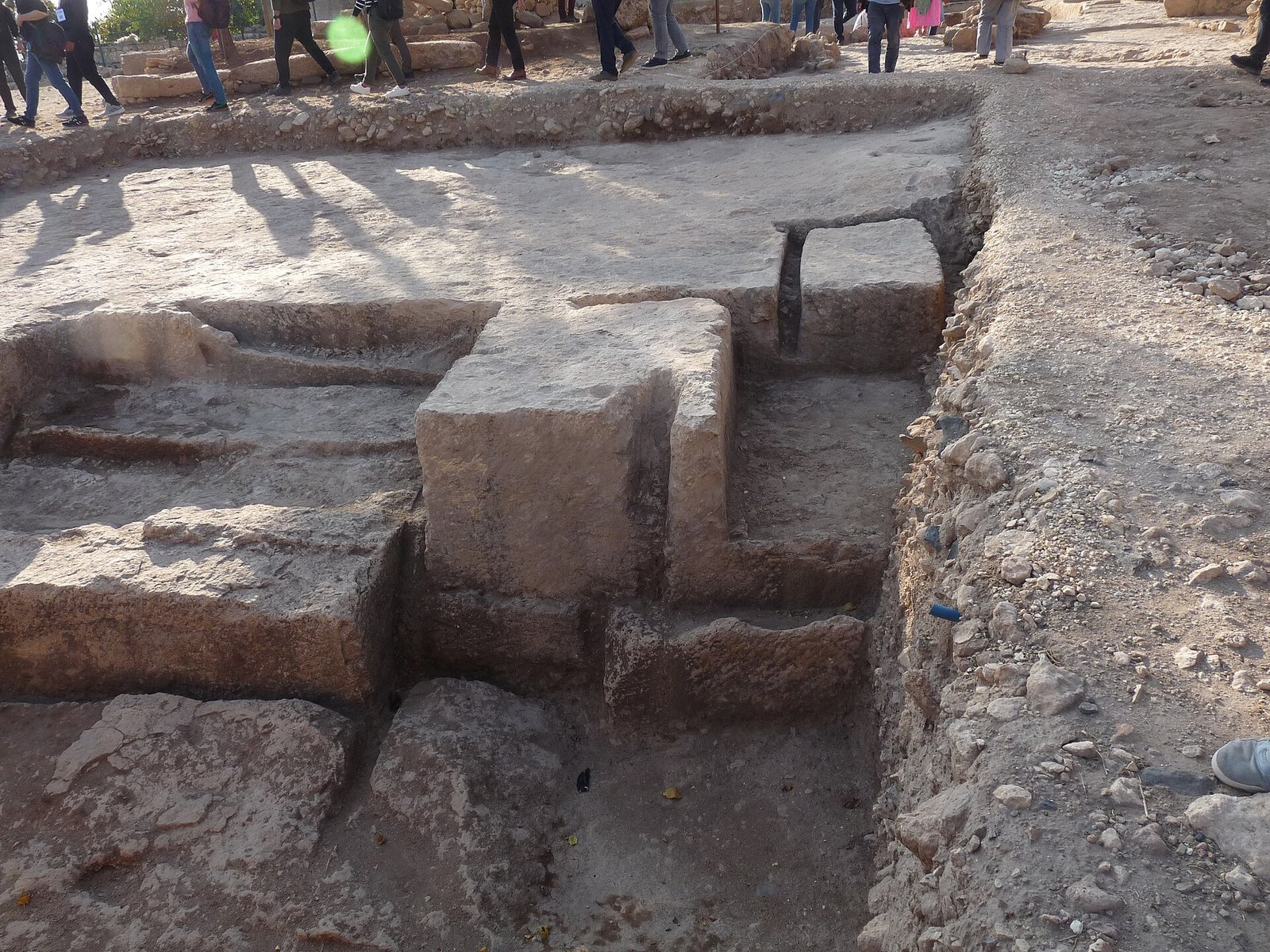
Two special structures have been exposed so far. Structure AA is an oval room cut down into the bedrock, freestanding, with a bench of living rock running along the inside of its wall and a floor that was carefully smoothed and levelled. Structure AB, just to the east and badly damaged by the slope of the hill, is the one that made Sayburç famous — because its bench is carved.
The point Özdoğan stresses is where these rooms are. When the first special building turned up in the northern part of the site, everything around it was assumed to be houses. As digging went on it became clear that the ritual rooms and the dwellings belonged to the same fabric — and that even some of the domestic houses have pillars of their own. The special building was not a temple people travelled to; it was part of the neighbourhood.
A story told on a bench
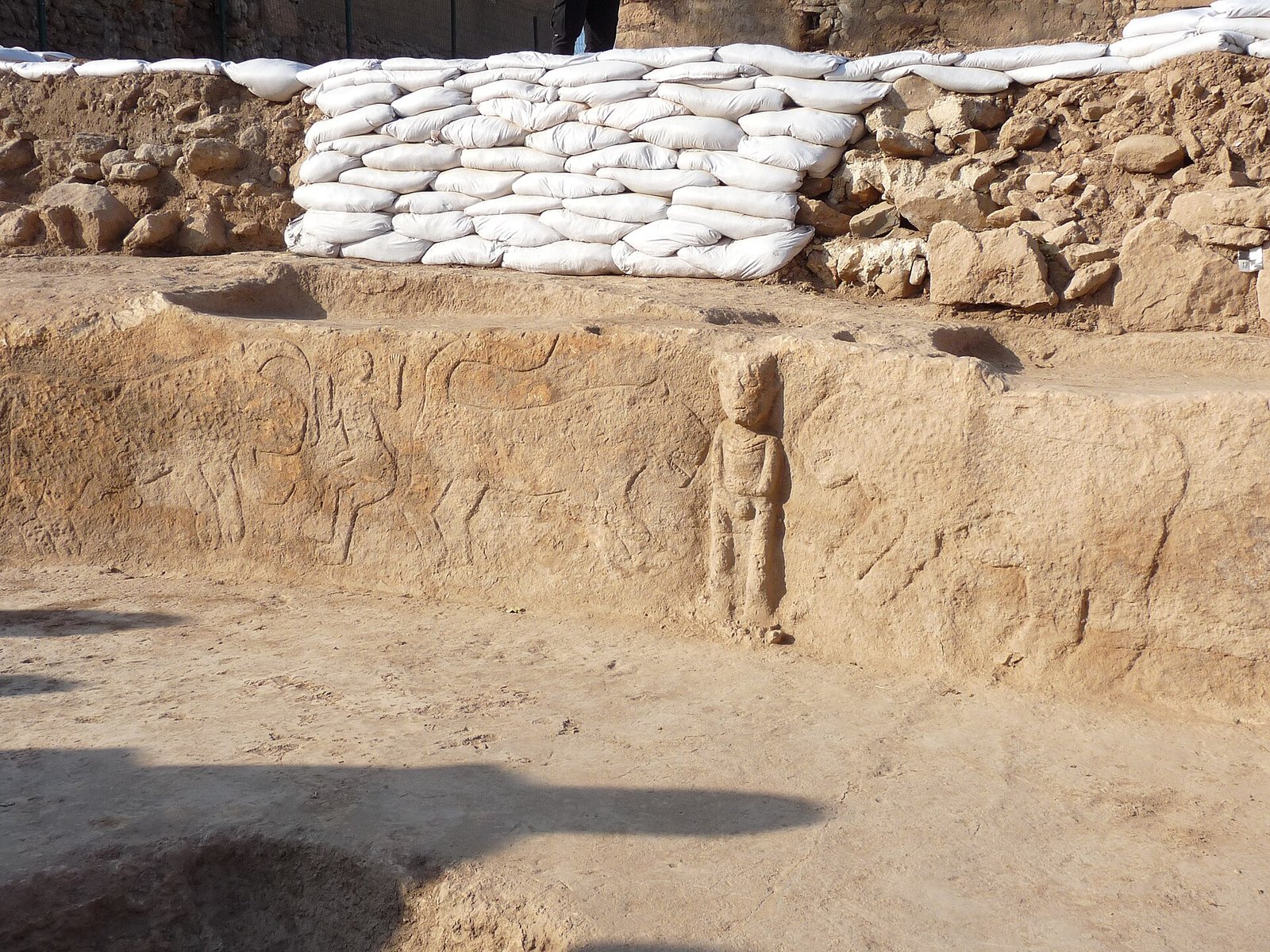
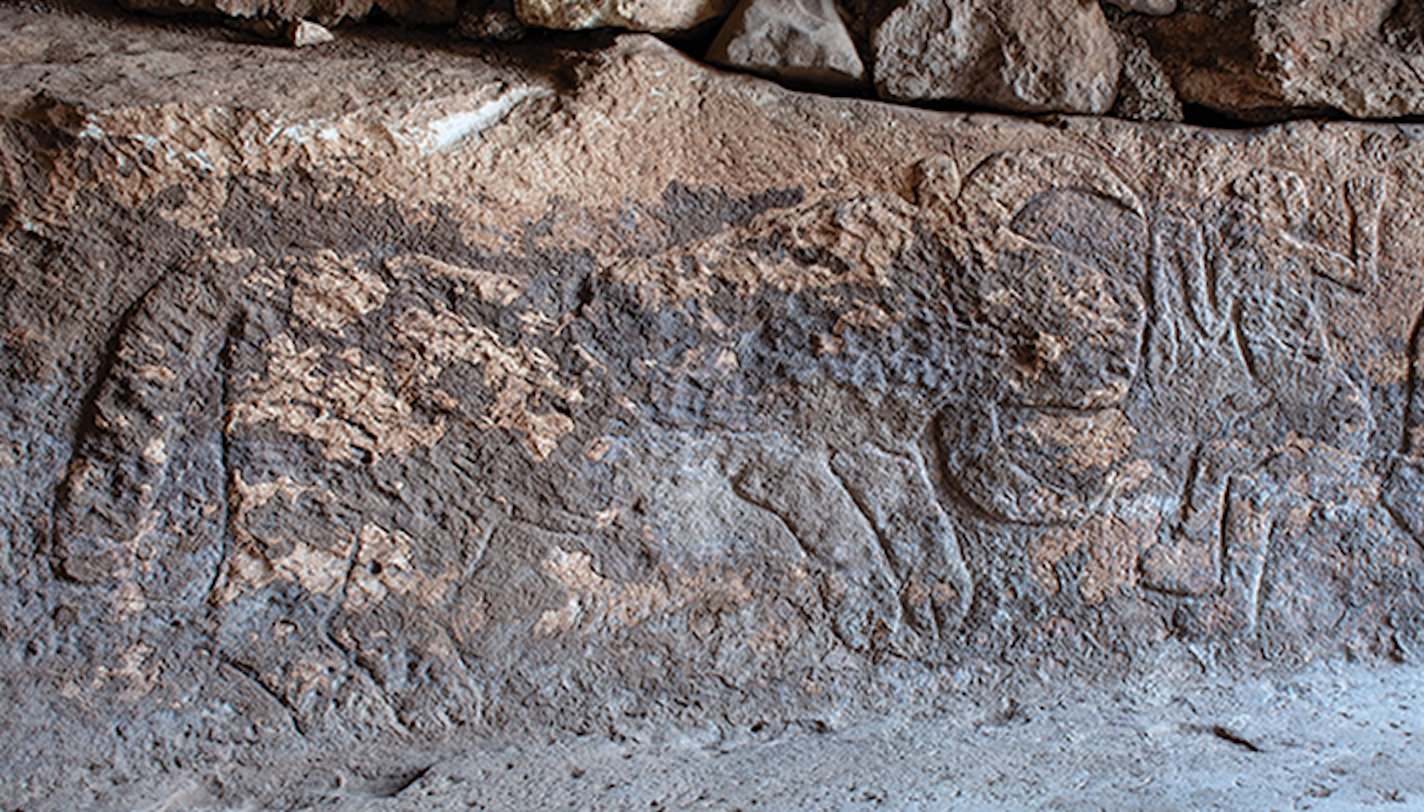
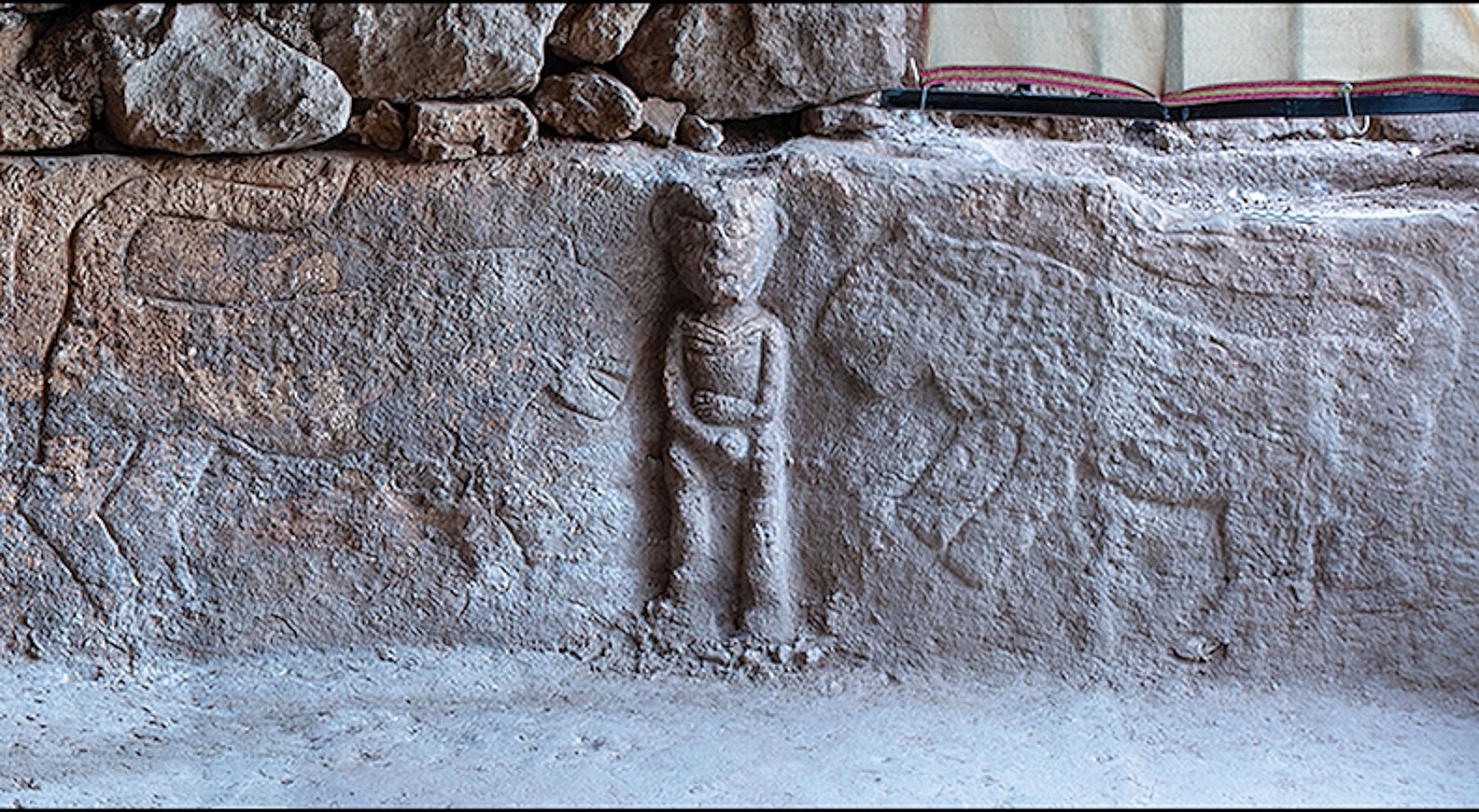
The carved bench in Structure AB carries what is often called one of the world's earliest narrative scenes — figures arranged in a deliberate left-to-right sequence, most of them incised, one lifted into high relief. Read as Özdoğan sets it out, it falls into two linked scenes.
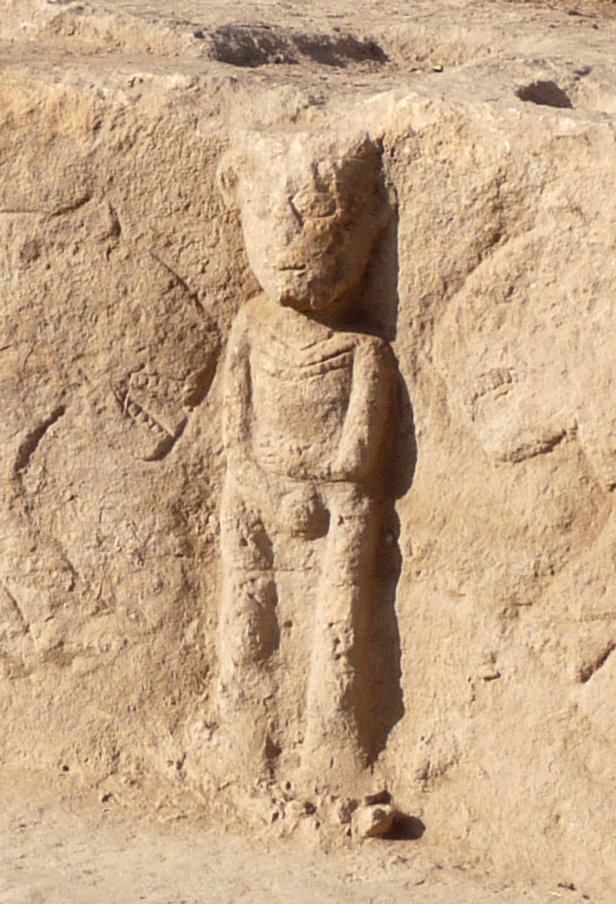
On the left, a bull and a male figure face each other. On the right, three figures: two leopards and, between them, a male — the one carved in high relief, and the only one who breaks the scene to look straight out at us while the animals fix on each other. Whatever the story is, it is composed, not scattered: a real attempt to set beings in relation to one another and to the viewer.
Why 'sacred beside everyday' matters
This is more than a floor-plan detail. One of the biggest questions about the Taş Tepeler world is whether its great carved buildings were set-apart sanctuaries or woven into daily life — and Sayburç, small and densely built, gives an unusually clear answer for at least one community: the two were not separated. Ritual, symbolism and narrative sat in the middle of where people cooked, slept and worked.
Özdoğan's wider argument is that this is exactly how these early sedentary societies took shape — that rituals, symbols and shared stories were part of the glue that held the first villages together, rather than a specialist activity kept at a distance. Sayburç is the place where you can see that glue in the plan of the settlement itself.
What is uncertain
This is a preliminary report on the first three years of work, and Özdoğan is careful about its limits. Only a handful of dwellings have been fully excavated, so how the ritual and domestic buildings relate in detail — whether they differ in function, or belong to slightly different phases — is still being worked out. Parts of the site sit under the modern village and cannot be dug.
The reading of the carved bench, too, is description rather than decoding: we can say a male stands between two leopards and faces us, but not what the scene meant to the people who cut it. What is firmly established is the dating (the mid-9th millennium BC), the layout (special buildings among dwellings), and the fact that Sayburç's imagery belongs to the same symbolic world as Göbekli Tepe and Karahan Tepe.
Common questions
How old is Sayburç? It dates to the mid-9th millennium BC — the Early Pre-Pottery Neolithic B — which is roughly 10,500 years ago. It has been excavated since 2021 under Eylem Özdoğan of Istanbul University.
What is the Sayburç relief? A carved bench inside Structure AB showing figures in a left-to-right sequence: a bull facing a male on the left, and two leopards flanking a male (carved in high relief, looking outward) on the right — one of the earliest narrative scenes known.
What makes Sayburç different from Göbekli Tepe? At Sayburç the carved 'special buildings' sit right among the houses, and even some dwellings have pillars — so the sacred and the everyday are intertwined, rather than set apart as the classic image of Göbekli Tepe suggests.
How big is the site? The Neolithic settlement covers only about 3,000 square metres, and part of it lies beneath a modern village, so excavation works the southwestern edge.
Key takeaways
- In her 2024 report, director Eylem Özdoğan shows Sayburç's carved ritual buildings sitting right among the houses — sacred and everyday intertwined.
- The settlement is small (~3,000 m²) and densely built, and even some dwellings have their own pillars.
- Structure AB's carved bench holds one of the earliest narrative scenes: a bull and a male, then two leopards flanking a male in high relief.
- It is firmly dated to the mid-9th millennium BC — a primary-source anchor from the excavator herself.
Sources
- Özdoğan, E. (2024). Sayburç: a mid-9th millennium BC site in the foothills of the Eastern Taurus. Documenta Praehistorica 51.
- Özdoğan, E. (2022). The Sayburç reliefs: a narrative scene from the Neolithic. Antiquity 96(390).
This article is written from the primary literature and excavators' reports cited above. Interpretations are attributed; uncertainties are stated in the text.