A symbol that travelled a thousand kilometres
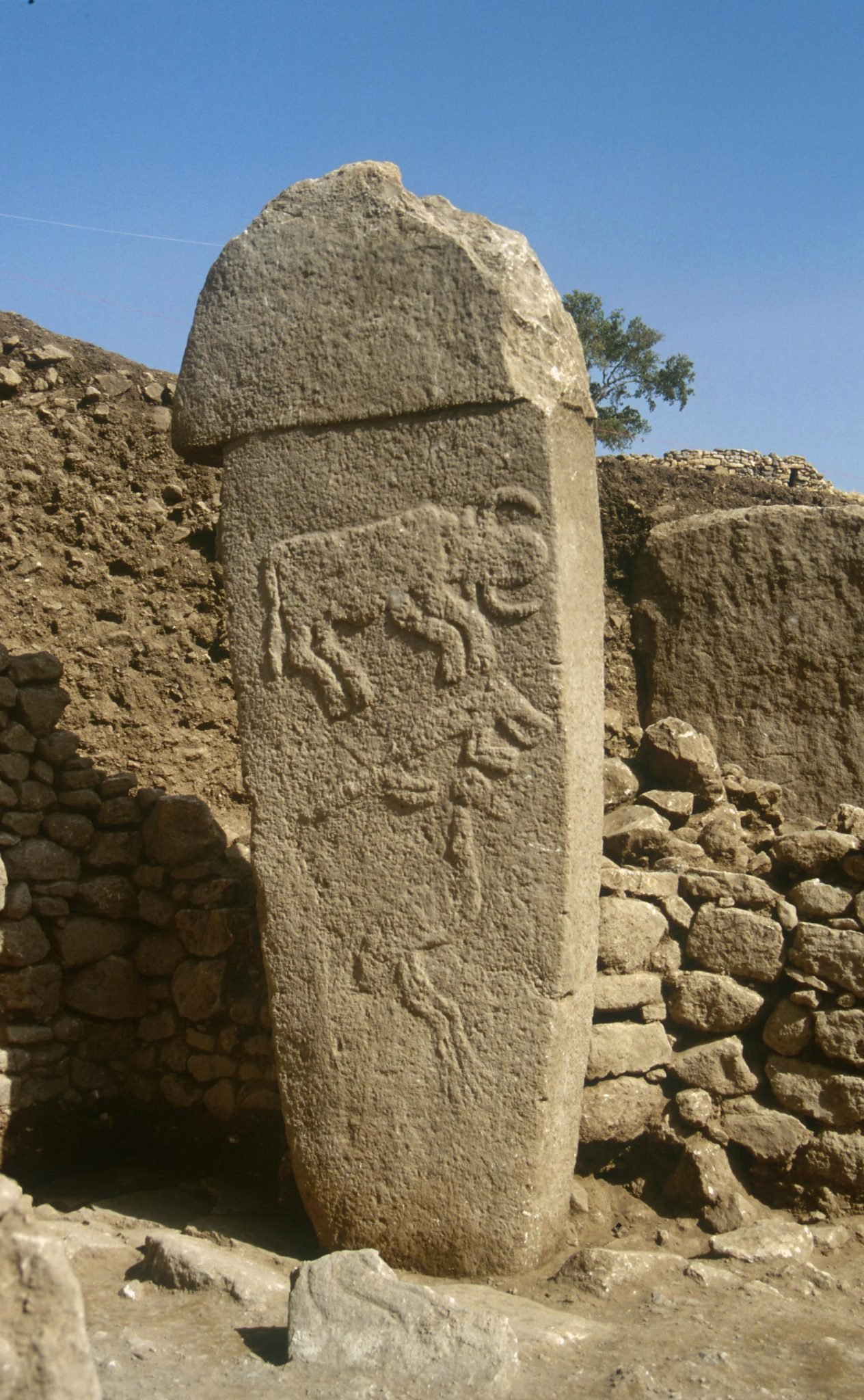
It is easy to think of Göbekli Tepe as a world of its own — a hill in southeastern Türkiye where hunter-gatherers raised carved stone pillars before anyone farmed. A 2023 study in the journal Antiquity by Steven Mithen, Amy Richardson and Bill Finlayson argues that it was nothing of the kind. The distinctive imagery carved at Göbekli Tepe, they show, reappears at WF16, a Pre-Pottery Neolithic site at the head of the Wadi Faynan in southern Jordan — more than a thousand kilometres away.
The title of their paper is 'The flow of ideas', and that is the claim: not that pots or tools were traded south (though some things were), but that ideas and symbols moved across enormous distances, carried through the social networks that linked scattered Neolithic communities.
The same cast of characters
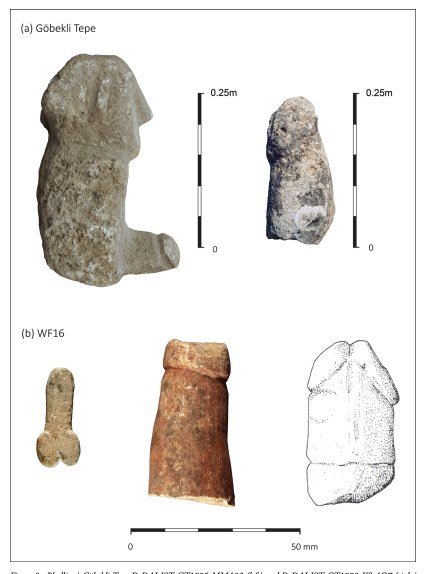
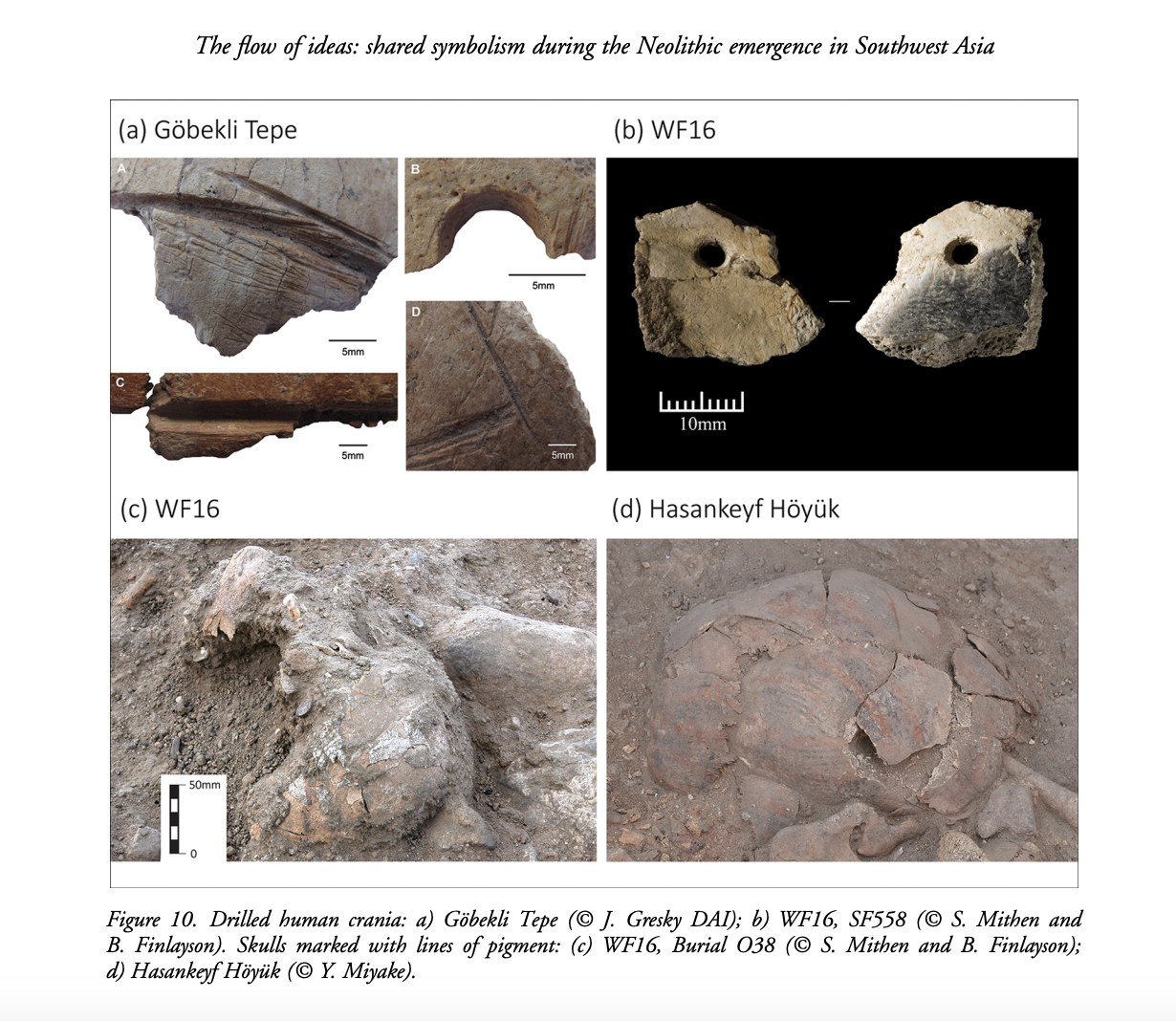
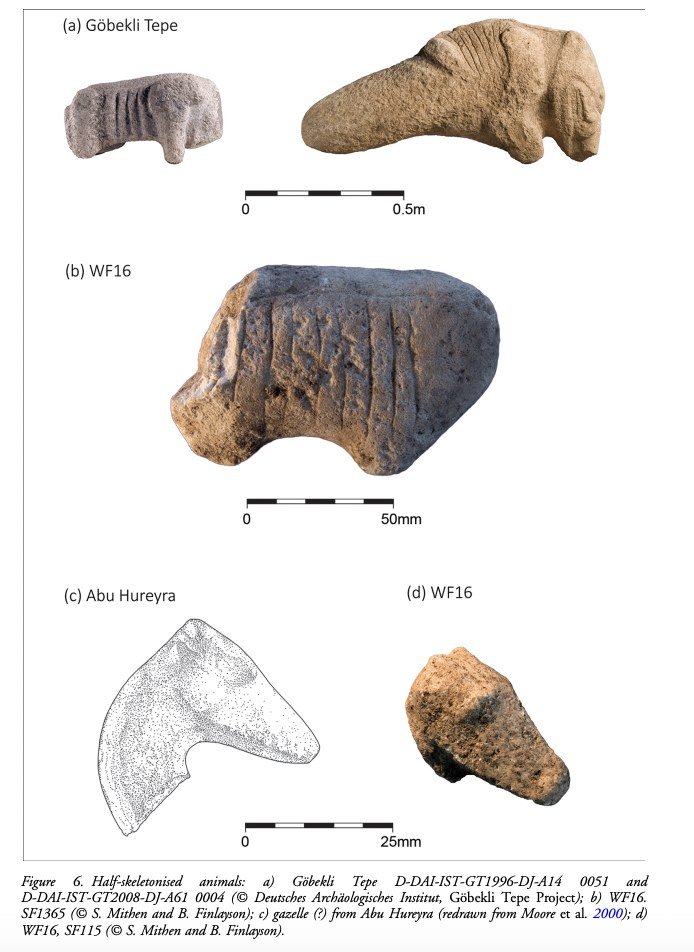
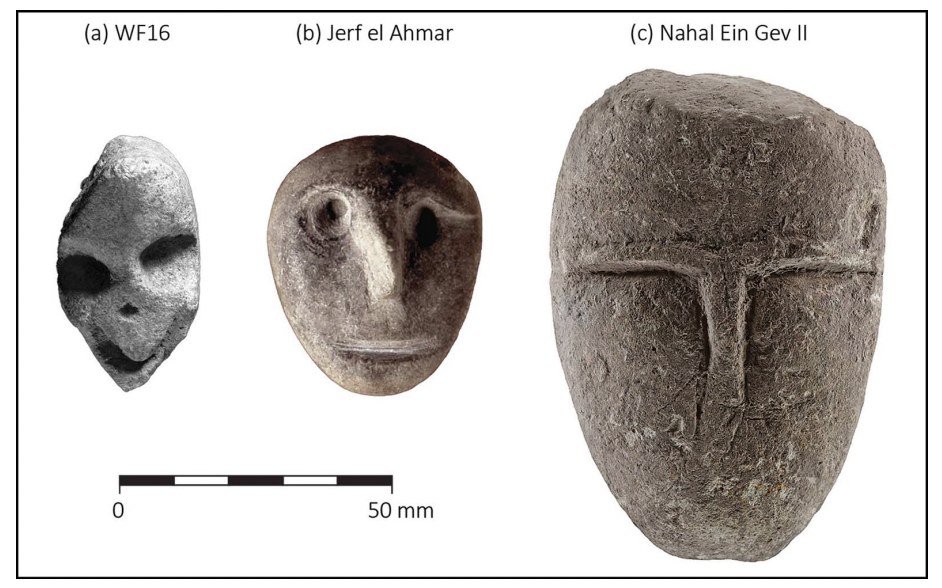
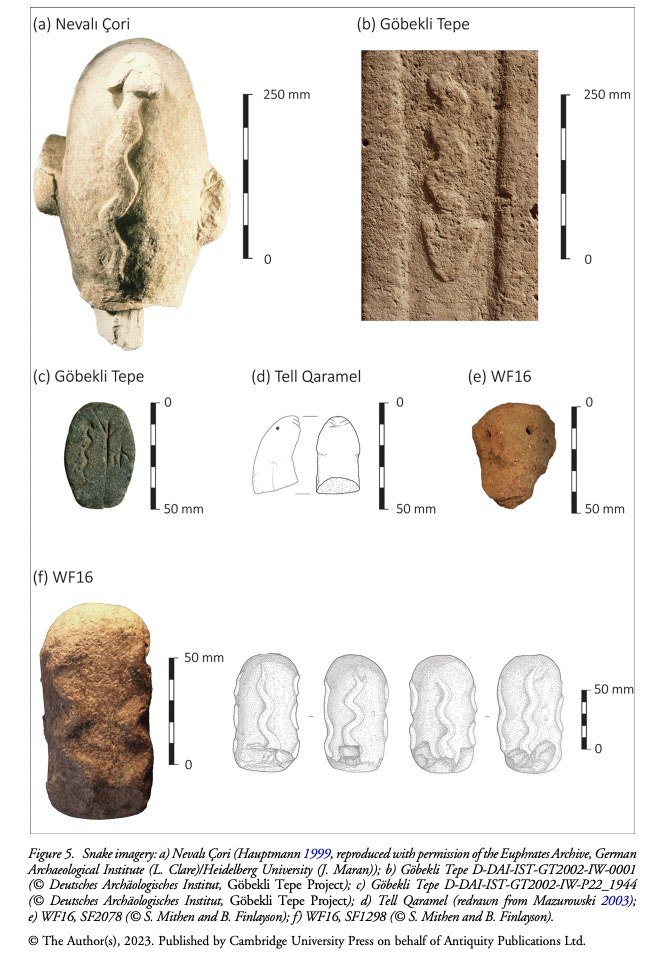
What makes the argument hard to wave away is not any single motif but the combination. At WF16, excavated between 2008 and 2010, the team found the same recurring cast that runs through the northern sites: snakes, birds of prey, phalli, a half-skeletonised animal, incised zigzag and cross-hatched geometric designs, small carved stone faces, a decorated bench, batons, a perforated human cranium, and a shared concern with the treatment of the dead.
Any one of these could be a coincidence. Snakes are carved on standing stones and stone vessels across the Northern Levant and Upper Tigris; zigzags are among the simplest patterns a person can cut. But finding the same cluster of them together, a thousand kilometres south, is a different matter — as the authors put it, cultural convergence (each community inventing the same set independently) becomes unlikely.
Two gathering places, far apart
Both sites also seem to have done the same job. Göbekli Tepe is widely read as a gathering place — somewhere dispersed groups came together, periodically, for ceremony and feasting. WF16 has its own version: a large amphitheatre-like communal building the excavators call Structure O75, with a decorated bench and space for performance, ceremony and ritual.
There is even a link to one of Göbekli's stranger ideas. Birds of prey dominate the bird bones at WF16, and the excavators suggest people there may have dressed using bird skins, feathers and talons — the same kind of animal costume proposed for the crane imagery at Göbekli Tepe. If so, two communities a thousand kilometres apart were not just carving the same creatures but perhaps performing as them.
How an idea crosses a thousand kilometres
The mechanism, the authors argue, is the scale of Neolithic social networks. Drawing on studies of recent hunter-gatherers, they estimate that the networks of the Late Epipalaeolithic and Pre-Pottery Neolithic could have connected people across roughly 1,200 km north to south and 800 km east to west — much of Southwest Asia knitted into a single web of contact, marriage, exchange and gathering.
Objects prove the reach directly: WF16 yielded greenstone beads and more than 400 marine shell beads, materials that only arrive through long-distance exchange. Ideas would have travelled the same routes, moving with people between gathering places. Crucially, this did not erase local character — communities followed similar trajectories while keeping their own identities, which is why the southern versions echo the north without simply copying it.
What is uncertain
The authors are unusually candid about the limits of their case. Whether a small stone face from WF16 really matches one from the northern site of Jerf el Ahmar, they write, 'remains in the eye of the beholder' — and the same honesty applies to the snakes, the phalli and the rest. Symbol-matching across such distances is subjective, and the paper says so.
There is a deeper caution too: the same symbol need not carry the same meaning. A snake in Jordan and a snake in Türkiye might belong to quite different stories. The study's careful conclusion is not that these communities shared one religion, but that the combination of shared motifs, materials and practices makes long-distance connection — a genuine flow of ideas — far more likely than coincidence. It is a strong, well-argued case, not a closed one.
Common questions
What is WF16? WF16 is a Pre-Pottery Neolithic site at the head of the Wadi Faynan in southern Jordan, excavated between 2008 and 2010. It includes a large amphitheatre-like communal building, Structure O75, and is read as a gathering place — a southern counterpart to Göbekli Tepe.
How far apart are Göbekli Tepe and WF16? More than a thousand kilometres. Göbekli Tepe is in southeastern Türkiye and WF16 is in southern Jordan; the study estimates Neolithic social networks could span roughly 1,200 km north to south.
What symbols do the two sites share? The same combination recurs at both: snakes, birds of prey, phalli, a half-skeletonised animal, incised zigzag and cross-hatched designs, small stone faces, a decorated bench, and a shared treatment of the dead — plus long-distance exchange of beads.
Does this mean they shared the same religion? Not necessarily. The authors stress that the same symbols need not carry the same meaning. Their claim is that ideas were flowing across the networks — not that a single belief system stretched across Southwest Asia.
Key takeaways
- A 2023 Antiquity study argues Göbekli Tepe's carved symbols reappear at WF16 in southern Jordan, over 1,000 km away.
- It is the combination — snakes, raptors, phalli, zigzags, stone faces, treatment of the dead — recurring together that makes coincidence unlikely.
- Both sites were gathering places; WF16's raptor-costume hint even echoes Göbekli's animal-masquerade imagery.
- The mechanism is the sheer scale of Neolithic social networks, proven by long-distance beads — though the authors admit some symbol-matching is subjective.
Sources
- Mithen, S., Richardson, A. & Finlayson, B. (2023). The flow of ideas: shared symbolism during the Neolithic emergence in Southwest Asia: WF16 and Göbekli Tepe. Antiquity 97(394), 829–849.
- Göbekli Tepe — site overview and current research (background)
This article is written from the primary literature and excavators' reports cited above. Interpretations are attributed; uncertainties are stated in the text.