The find
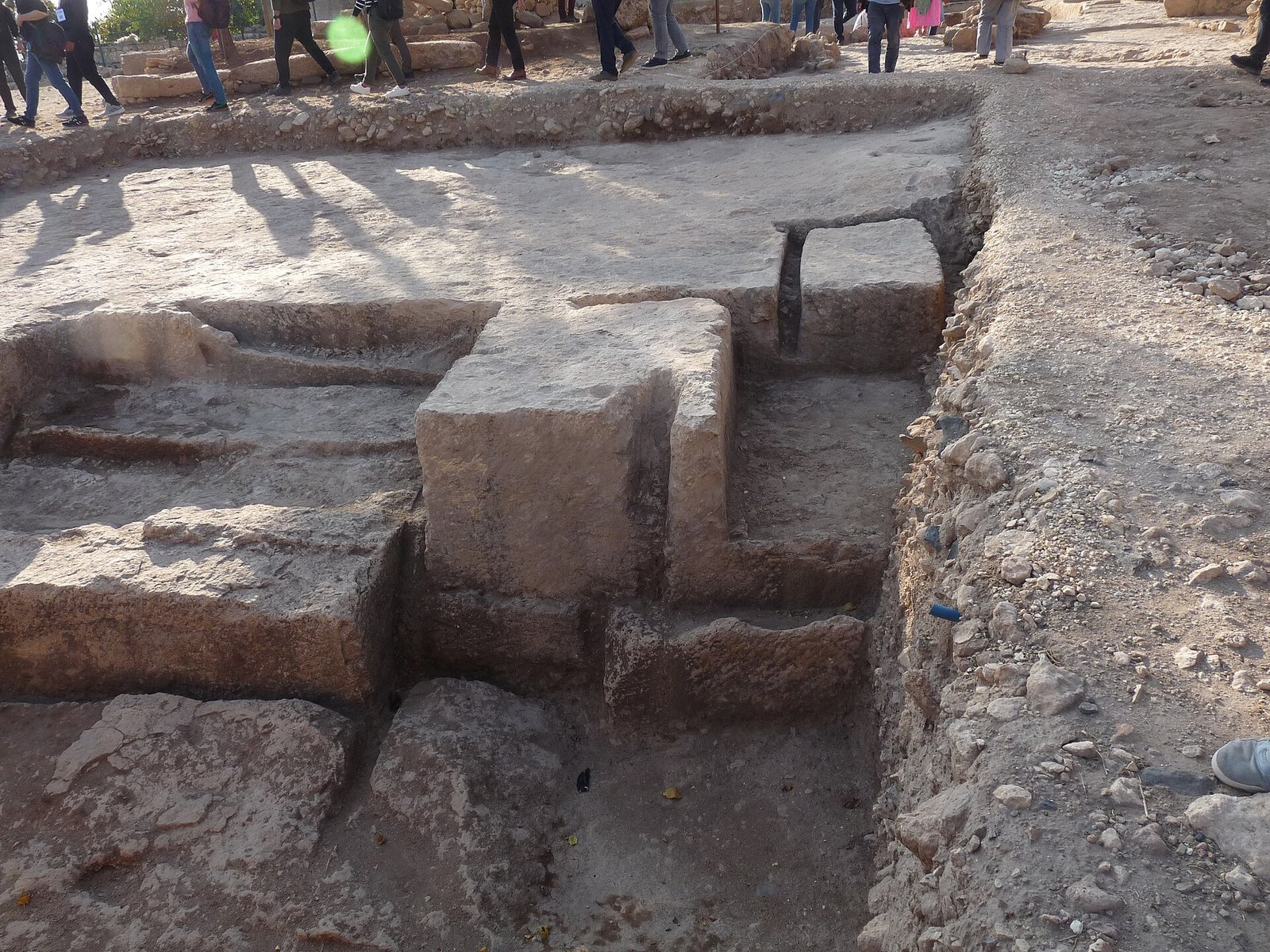
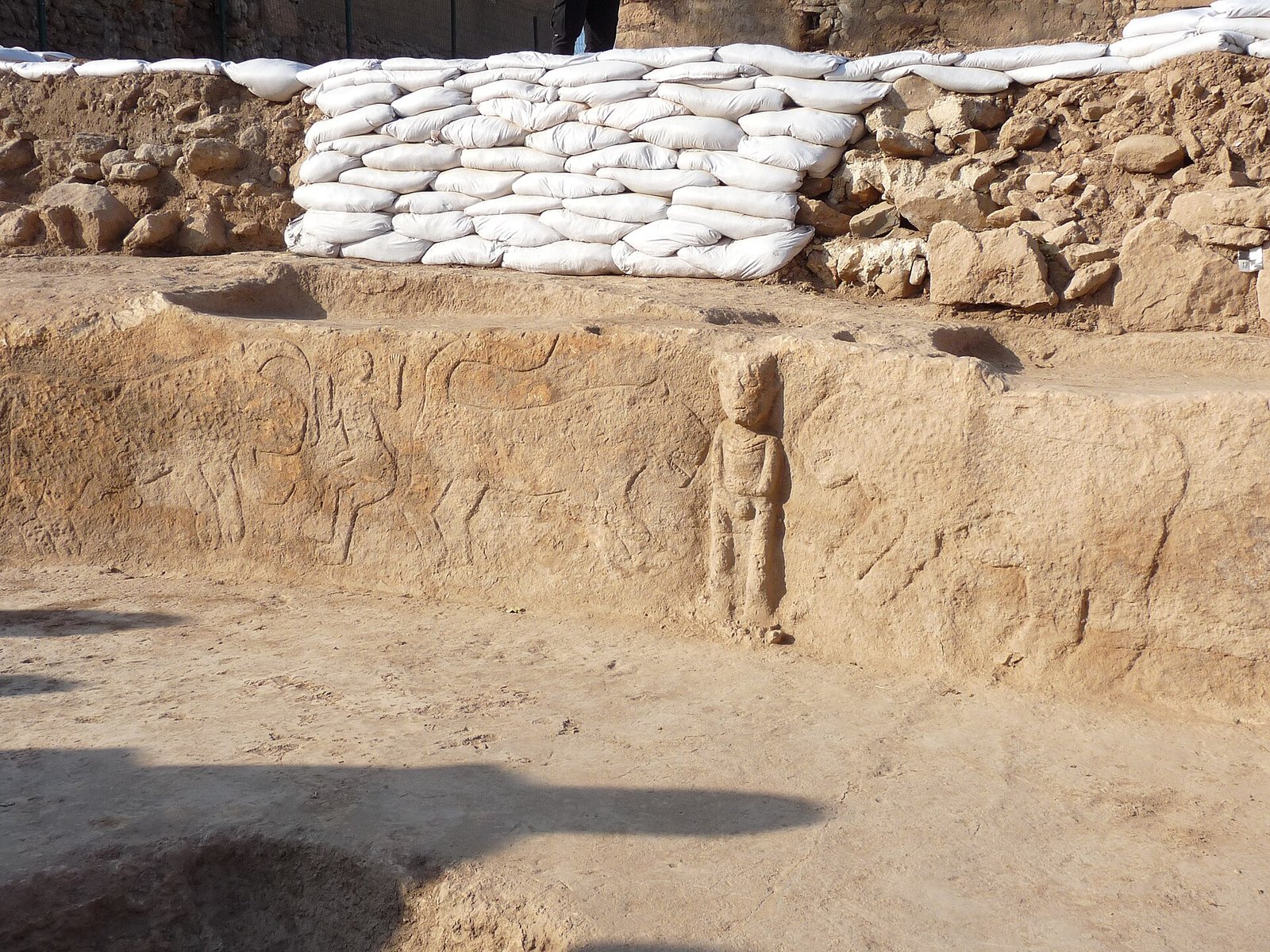
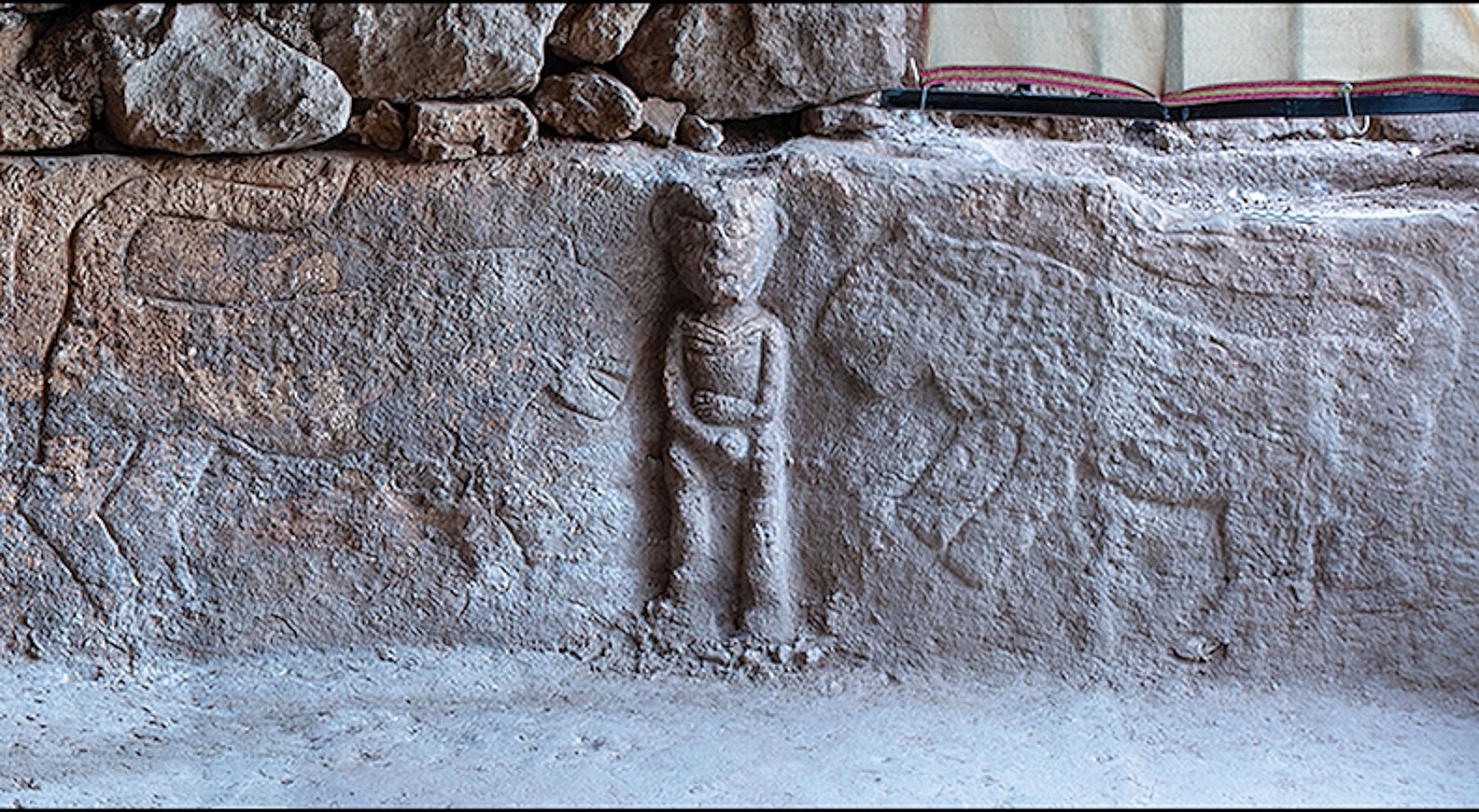
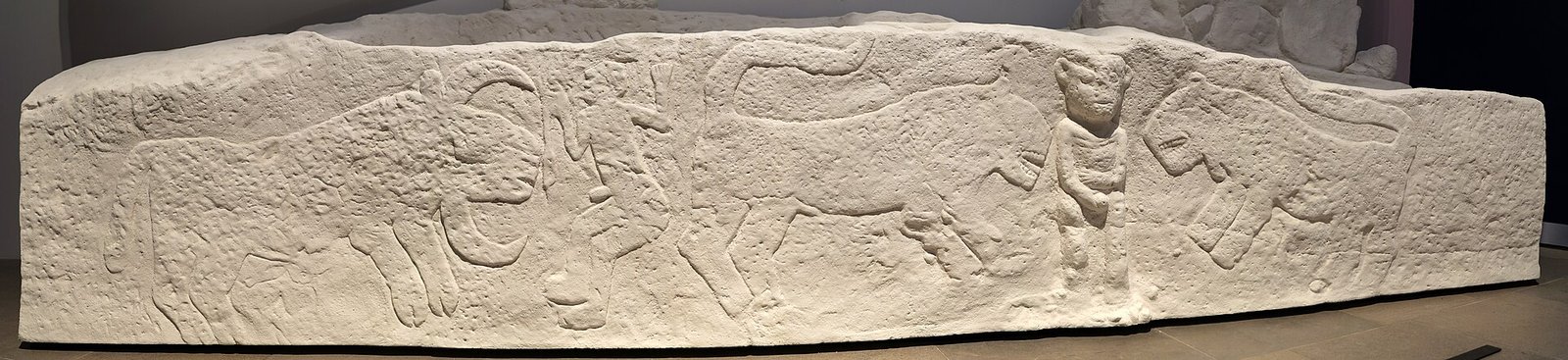
In late 2022, Eylem Özdoğan published the Sayburç reliefs in the journal Antiquity. Along a bench inside a communal building runs a scene of five figures: a man holding his phallus flanked by two leopards, and a squatting figure with a rattle or snake facing a charging aurochs.
Özdoğan argued this is not a set of separate images but a single connected scene — the earliest known depiction of a 'narrative' in art, dating to the mid-ninth millennium BCE.
Why it matters
If the reading holds, Sayburç marks a shift: from a Neolithic art of isolated symbols toward something like storytelling. It deepens what these carvings could do, and it did so with a relief found in place, on the wall it was made for.
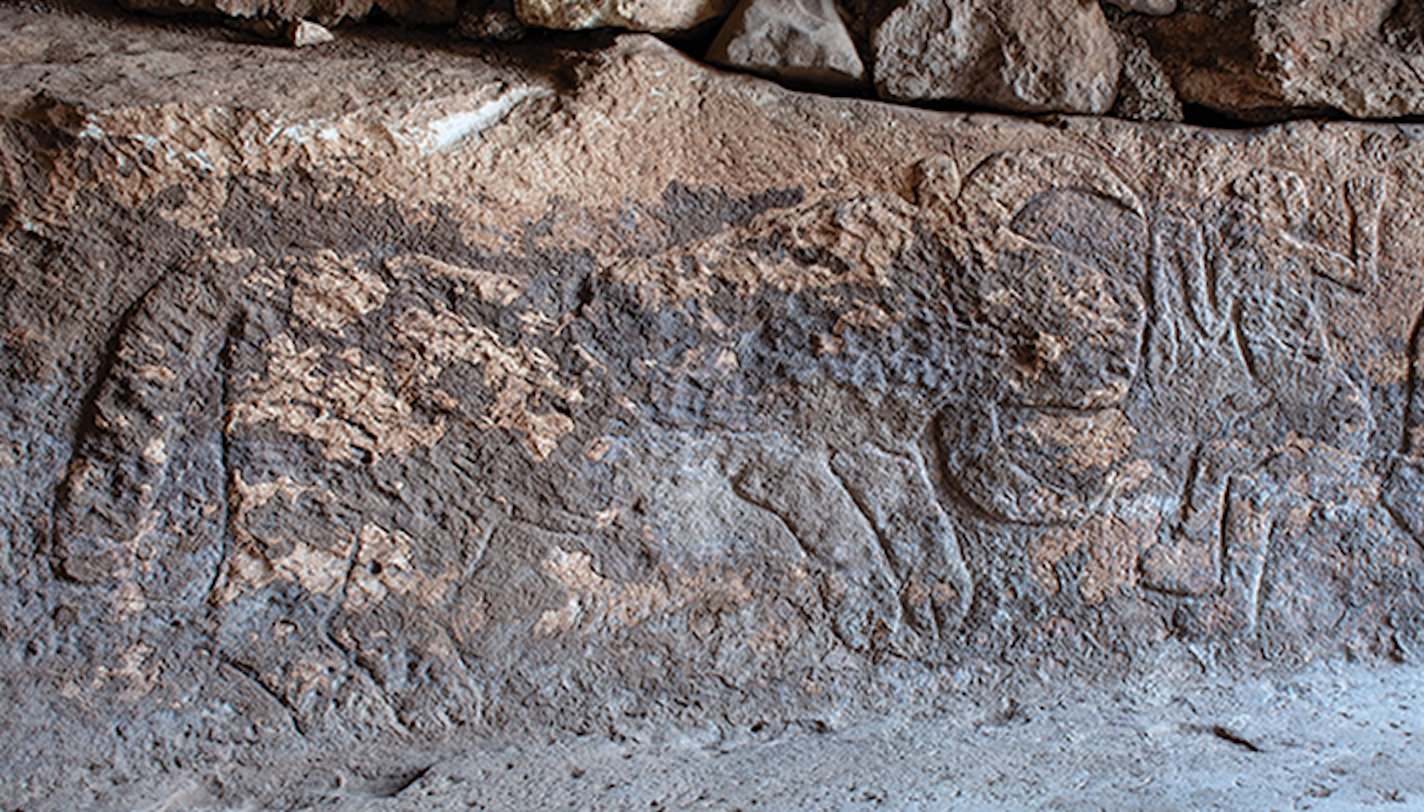
In her 2024 report, Eylem Özdoğan describes the scene in unusual detail. It reads left to right as a horizontal sequence — a real break from the vertical, isolated figures usual on T-pillars. On the left a male crouches in a near dance-like pose before a bull; on the right the central male, alone carved in high relief, sits holding his phallus and looks straight out at us while the two leopards fix on him. Both men, and the bull, are ithyphallic — a charged, deliberate emphasis, not an incidental one.
Why 'in place' matters
Much Neolithic imagery reaches us dislodged — pillars re-set, statues in fill, figurines out of context. The Sayburç relief is different: it runs along a bench inside a communal building, on the wall it was carved for, so its figures can be read as an intended composition rather than a chance grouping. That is a large part of the case for reading them as one connected scene.
The two halves also share a logic. A man between two leopards and a squatting figure facing a charging aurochs are both humans confronting dangerous animals — the leopards' teeth and claws, the aurochs' horns are emphasised — which is what lets Özdoğan argue the panel depicts related actions, the raw material of a story.
From symbols to a story
The significance of the Sayburç relief lies in a shift it may capture. Much Neolithic art is a matter of isolated symbols — a single animal, a lone figure, an emblem. Özdoğan's argument is that this bench shows something more: not a set of separate images but one connected scene, figures whose actions relate to each other, the raw material of storytelling. If that reading holds, Sayburç marks a move from an art of symbols toward something like narrative.
The two halves of the panel share a logic that supports the reading. A man stands between two leopards whose teeth and claws are emphasised; a squatting figure faces a charging aurochs whose horns are picked out. Both are humans confronting dangerous animals, and that common thread is what lets Özdoğan argue the panel depicts related actions rather than unrelated pictures side by side.
Why 'in place' carries the argument
The case rests heavily on context. Much of the region's imagery reaches us dislodged — pillars re-set, statues tumbled into fill, figurines lifted from unknown findspots. The Sayburç relief is different: it runs along a bench inside a communal building, on the wall it was carved for, in a Pre-Pottery Neolithic village in the Şanlıurfa region of southeastern Türkiye. Because it was found where it was made, its figures can be read as an intended composition rather than a chance grouping — which is a large part of the case for calling them a single scene.
The claim is bold and honestly bounded. 'The earliest narrative' rests on one relief and one reading, and even granting a scene, the story itself is unrecoverable: we can see that humans and threatening animals are shown together, but not what event, myth or role they depict. The relief is peer-reviewed and widely cited, yet it remains an argument about meaning — which is exactly why finding it in place matters so much.
What is uncertain
'The earliest narrative' is a strong claim resting on one relief and one reading. That the five figures form a single connected scene — rather than two juxtaposed images or a set of separate symbols — is Özdoğan's interpretation; it is peer-reviewed and widely cited, but it is an argument about meaning, and other scholars can read the same wall as non-narrative.
Even granting a scene, the story itself is unrecoverable: we do not know what event, myth or role the figures depict, only that humans and threatening animals are shown together. The mid-ninth-millennium-BCE date and the identification of the held objects (a rattle? a snake?) are also open to refinement.
Common questions
What is the Sayburç relief? A scene of five figures carved along a bench inside a communal building at Sayburç — a man holding his phallus between two leopards, and a squatting figure with a rattle or snake facing a charging aurochs.
Why is it called the earliest narrative? Özdoğan argues the figures form a single connected scene rather than separate images, which would make it the earliest known depiction of a narrative in art, in the mid-ninth millennium BCE.
Why does being found 'in place' matter? Much Neolithic imagery reaches us dislodged; this relief was found on the wall it was carved for, so its figures can be read as an intended composition rather than a chance grouping.
Key takeaways
- A scene of five figures runs along a bench inside a Sayburç communal building — read by Özdoğan as one connected story, not separate symbols.
- If the reading holds, it is the earliest known narrative scene in art, dating to the mid-ninth millennium BCE.
- It was found in place, on the wall it was made for, which is much of the case for reading it as an intended composition.
- Both halves share a logic — humans confronting dangerous animals — the raw material of a story rather than a chance grouping.
Sources
- Özdoğan, E. (2024). Sayburç: a mid-9th millennium BC site in the foothills of the Eastern Taurus. Documenta Praehistorica 51.
- Özdoğan, E. 2022. The Sayburç reliefs: a narrative scene from the Neolithic. Antiquity 96(390)
- Taş Tepeler (official project) — Sayburç
This article is written from the primary literature and excavators' reports cited above. Interpretations are attributed; uncertainties are stated in the text.