Flipped over, a scene appeared
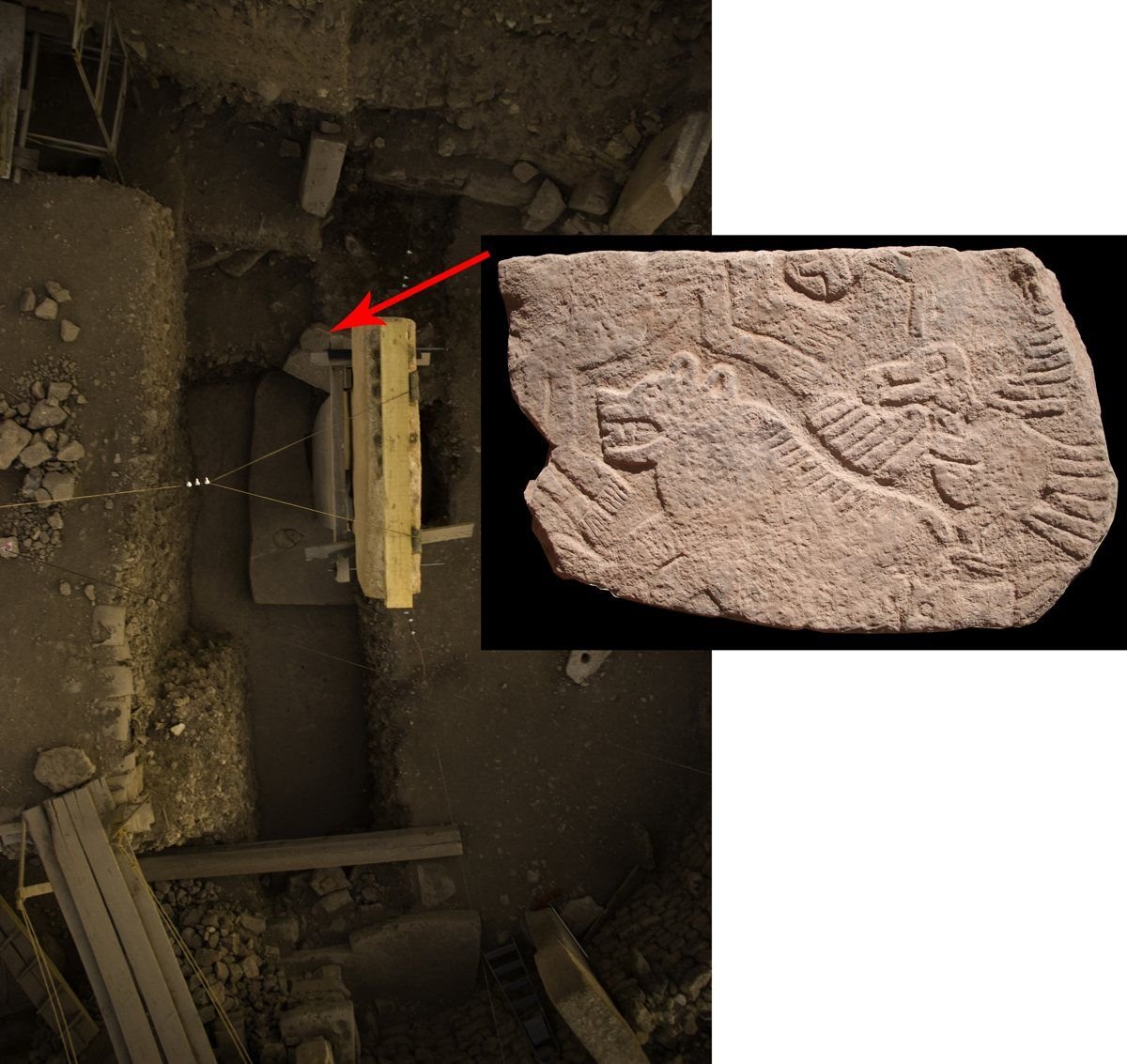
In 2009 the excavators reached the last metre of fill inside Enclosure D, the best-preserved of Göbekli Tepe's great early buildings. They already knew the enclosures had been deliberately backfilled, with special objects — including the detached heads of stone sculptures — placed against the pillars. So when a very large stone slab appeared immediately north of Pillar 18, one of the two central pillars, it was watched closely.
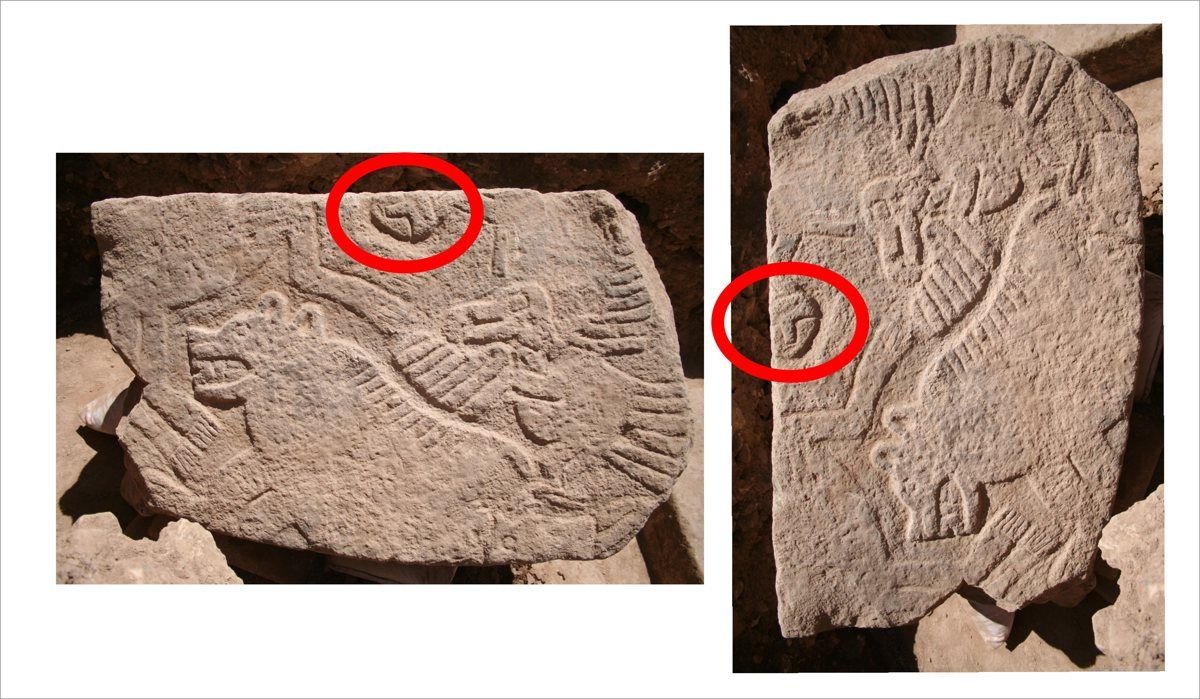
Its underside carried reliefs. When the slab was finally turned over, a detailed scene came into view: a large predator, tentatively read as a hyena; behind it a vulture with a pronounced beak, wings spread; the legs and bodies of two more animals — and, right at the broken edge, an apparently severed human head.
Heads and birds
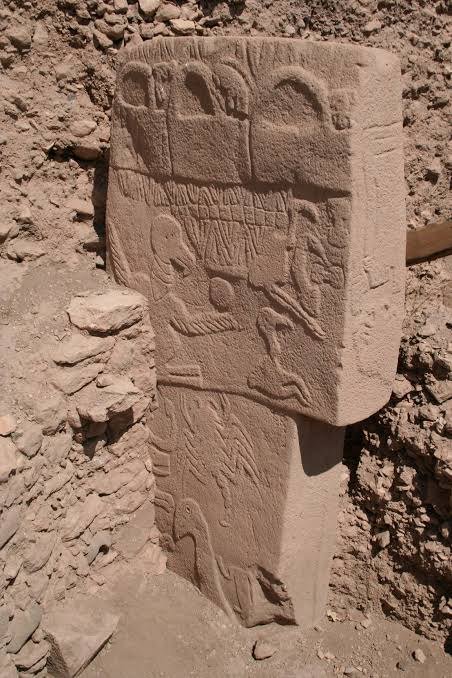
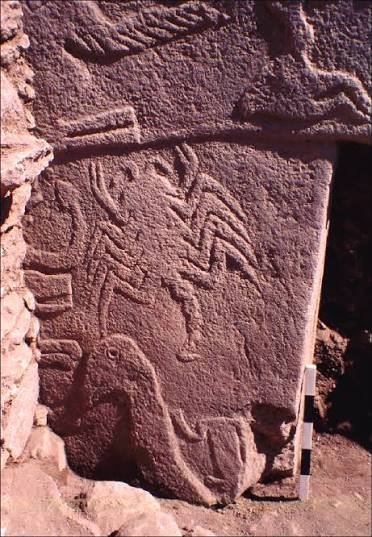
A head parted from its body, set among animals, is not a one-off at Göbekli Tepe. The site has produced several images of human heads held in the claws of birds or carried by animals, and Pillar 43 — the famous 'Vulture Stone' — shows a vulture beside a small headless figure. A severed head on this slab would slot straight into that repertoire.
It also connects to the hard evidence under the floor. Göbekli Tepe yielded fragments of human skull bearing deliberate cut-marks and drilled holes — the basis for the 2017 description of a Neolithic skull cult. Whether the slab shows a specific myth or a general preoccupation with the head as the seat of the person, it belongs to a culture that clearly treated the human skull as something to be separated, kept, and shown.
Buried with care, not discarded
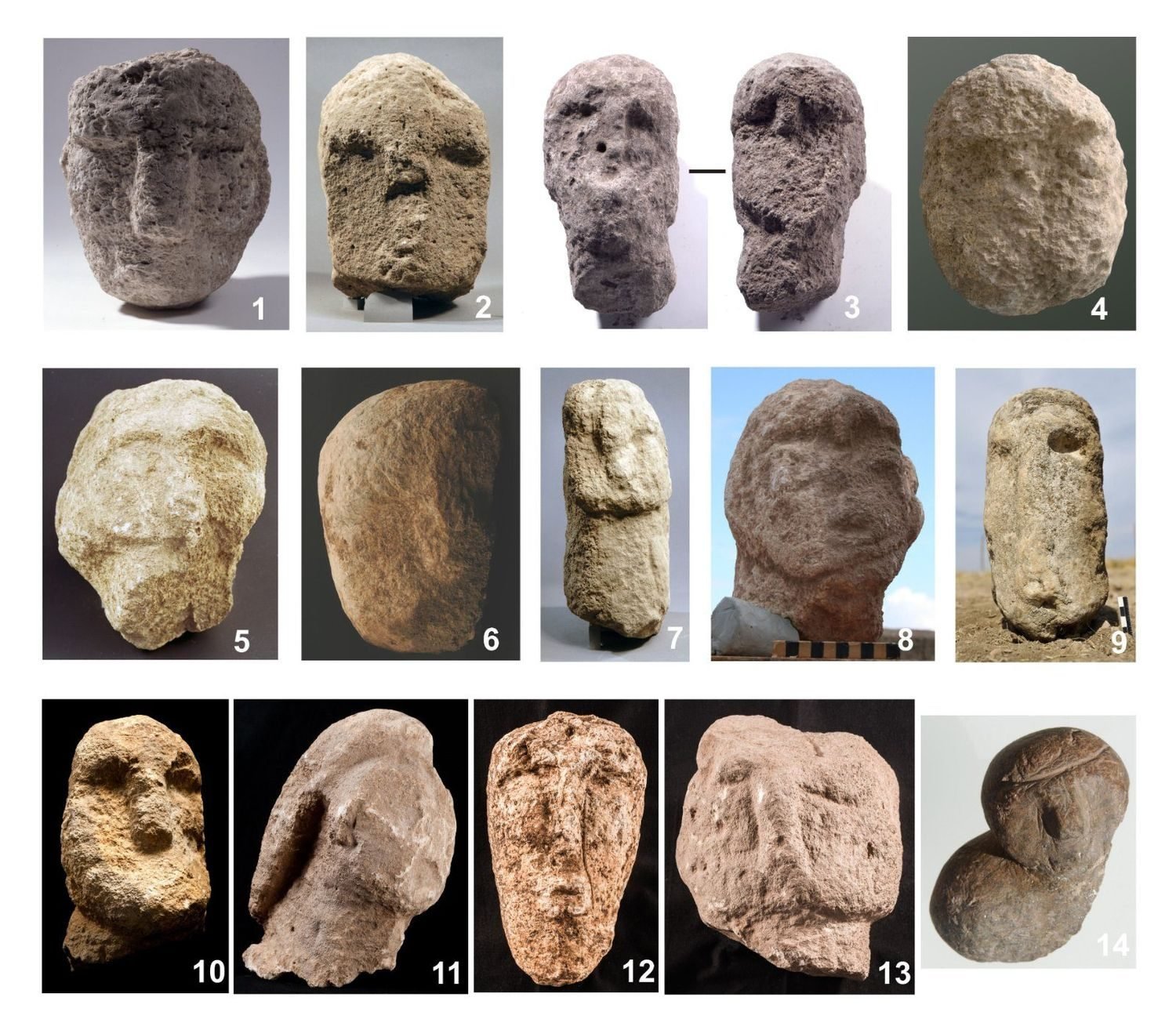
The slab's find-spot matters as much as its imagery. It did not turn up in random rubble; it lay face-down, right beside a central pillar, inside the deliberate fill that sealed Enclosure D. That is the same treatment given to the detached stone heads and other special objects tucked against the pillars when these buildings were closed. In other words, the slab was not thrown away — it was placed, as part of the careful decommissioning of the enclosure.
That context turns a fragment into a statement. Whoever filled Enclosure D chose to set this particular image — predators, a vulture, a severed human head — against the great stone at the heart of the room, and then cover it. The scene mattered enough to be kept close to the pillars at the very end of the building's life.
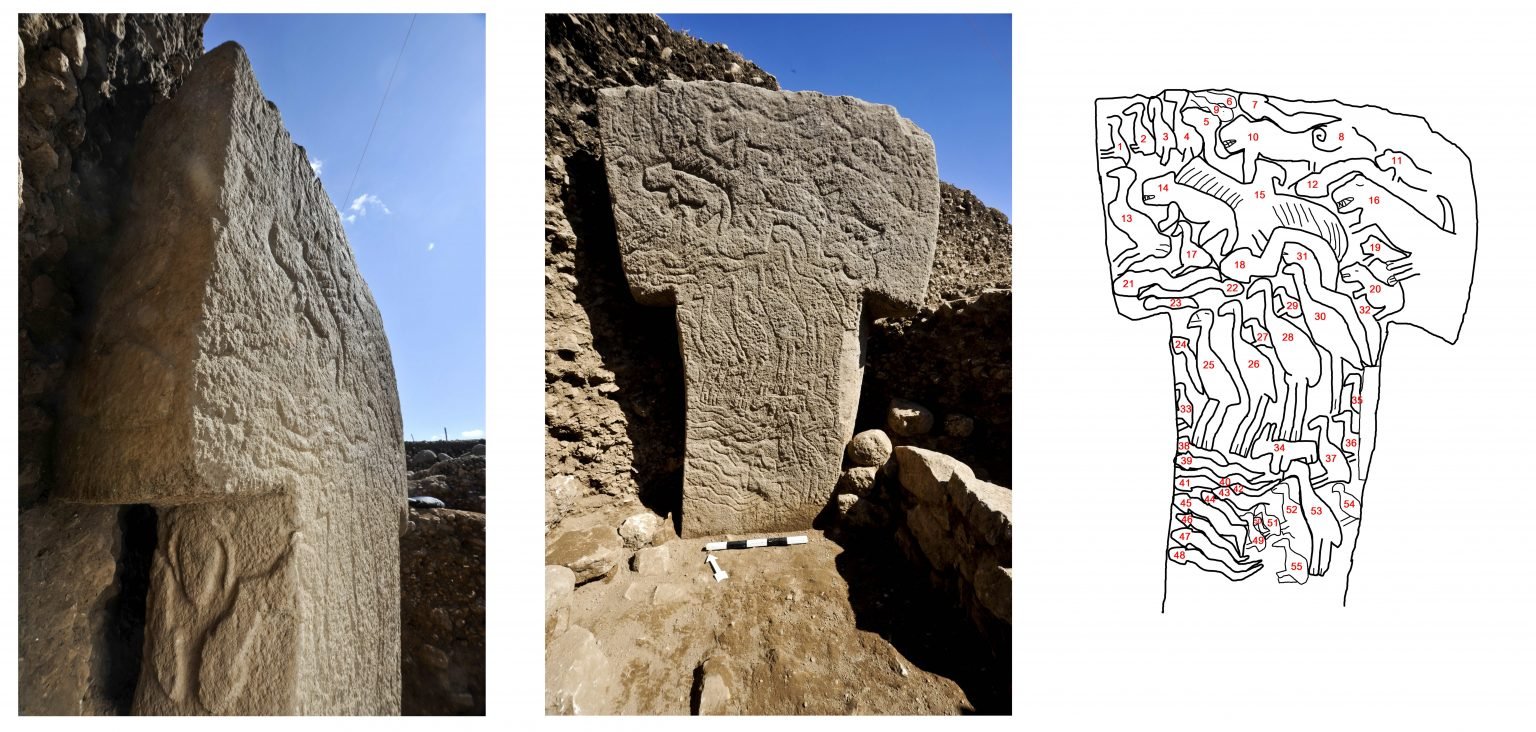
German Archaeological Institute, Göbekli Tepe Project, Pillar 56, Enclosure H, Göbekli Tepe, Copyright: DAI — used with permission, via .
The same idea, in stone and in bone
Put the slab beside the rest of the evidence and a single preoccupation comes into focus. In carving: the headless man on Pillar 43, the heads-in-claws motif, and now a severed head among beasts. In bone: real human skulls, cut and grooved, one drilled so it could hang. In architecture: detached stone heads set against pillars, and at nearby Karahan Tepe, sculpted heads built into the walls. Across media and across sites, the head is removed, kept, and shown.
This is why a damaged slab is worth an article. It is one more data point in the best-attested shared idea of the Neolithic Near East — that the head carries the person, and is owed particular treatment after death. The slab does not stand alone; it is a sentence in a much longer regional text.
What is uncertain
The slab is fragmentary, and whether the head was part of a single narrative scene with the animals — a story — or simply one motif among several is, in the excavators' own words, unclear. The 'hyena' identification is tentative, made from a damaged relief.
How the slab was used before it was buried is also unknown: it may have stood, lain, or been set into a structure. What is firm is the association it captures — human head, vulture, predators — repeated across Göbekli Tepe in stone and in bone.
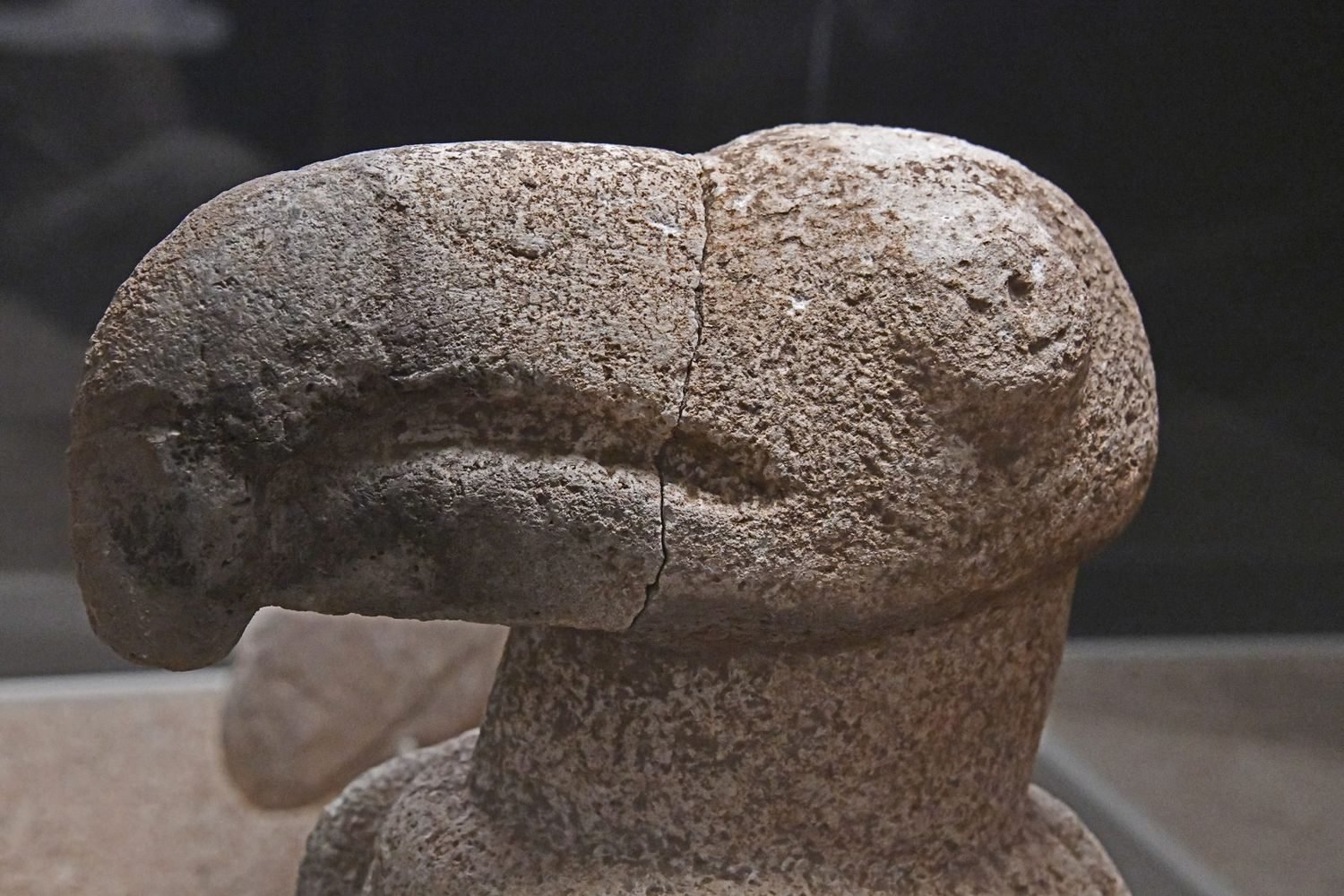
Dosseman, Urfa museum Karahantepe Head of Vulture Neolithic age in 2024 7309, CC BY-SA 4.0, via Wikimedia Commons.
Common questions
What is the 'skull cult' at Göbekli Tepe? Fragments of human skull from the site carry intentional cut-marks and, in one case, a drilled hole — interpreted as evidence that skulls were defleshed, modified and perhaps displayed or suspended, a practice the excavators named a Neolithic skull cult in 2017.
Why are vultures shown with human heads at Göbekli Tepe? Vultures recur beside headless or beheaded human figures (most famously on Pillar 43). Many researchers link this to 'excarnation' — exposing the dead so birds strip the body — though the exact belief behind it is unknown.
Where was the severed-head slab found? In Enclosure D, lying face-down immediately north of Pillar 18 (one of the two central pillars), within the deliberate fill that sealed the building in 2009.
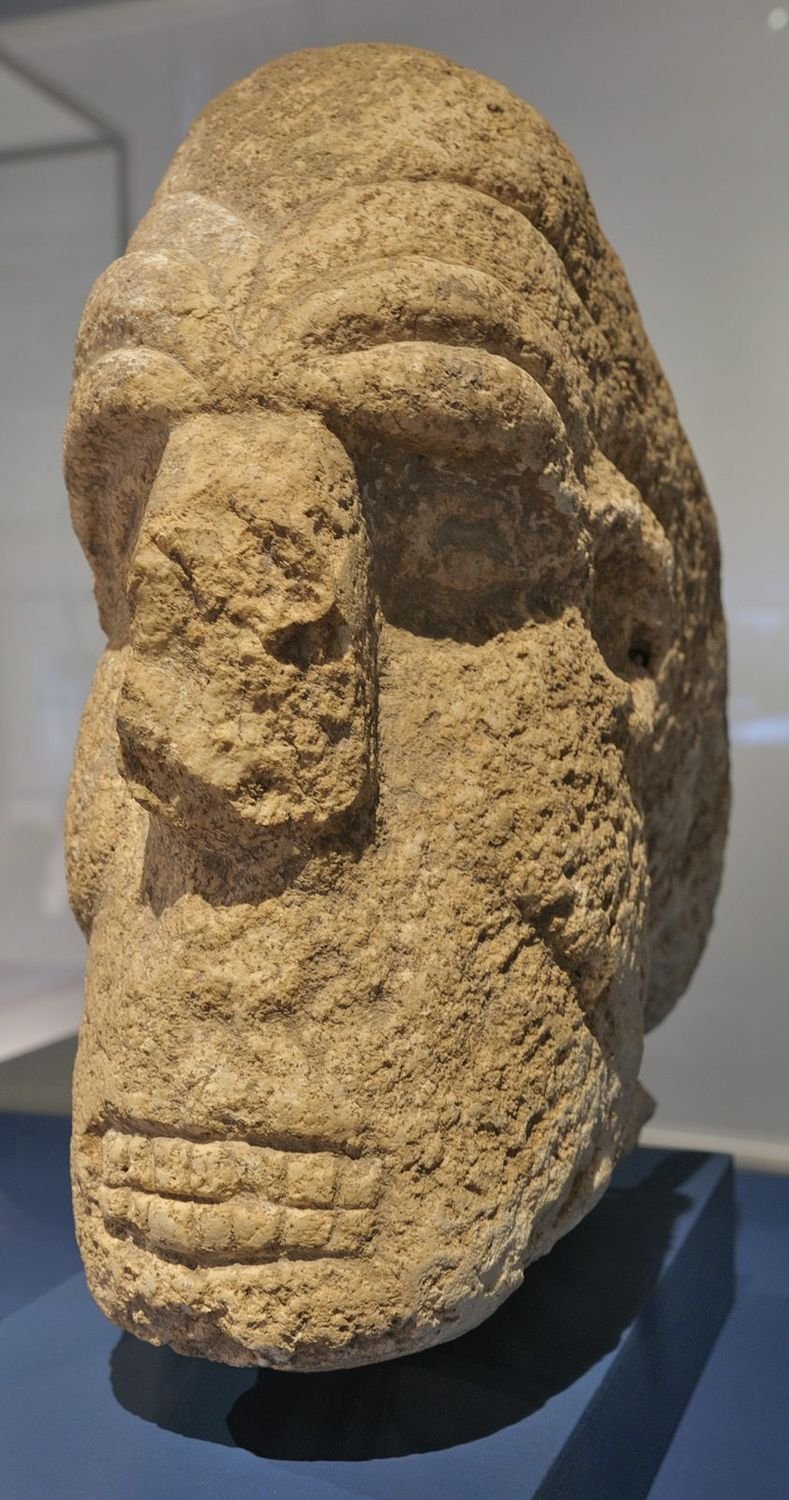
Bautsch, Menschenkopf.Karahantepe.MNR.25362.P1067685, CC0, via Wikimedia Commons.
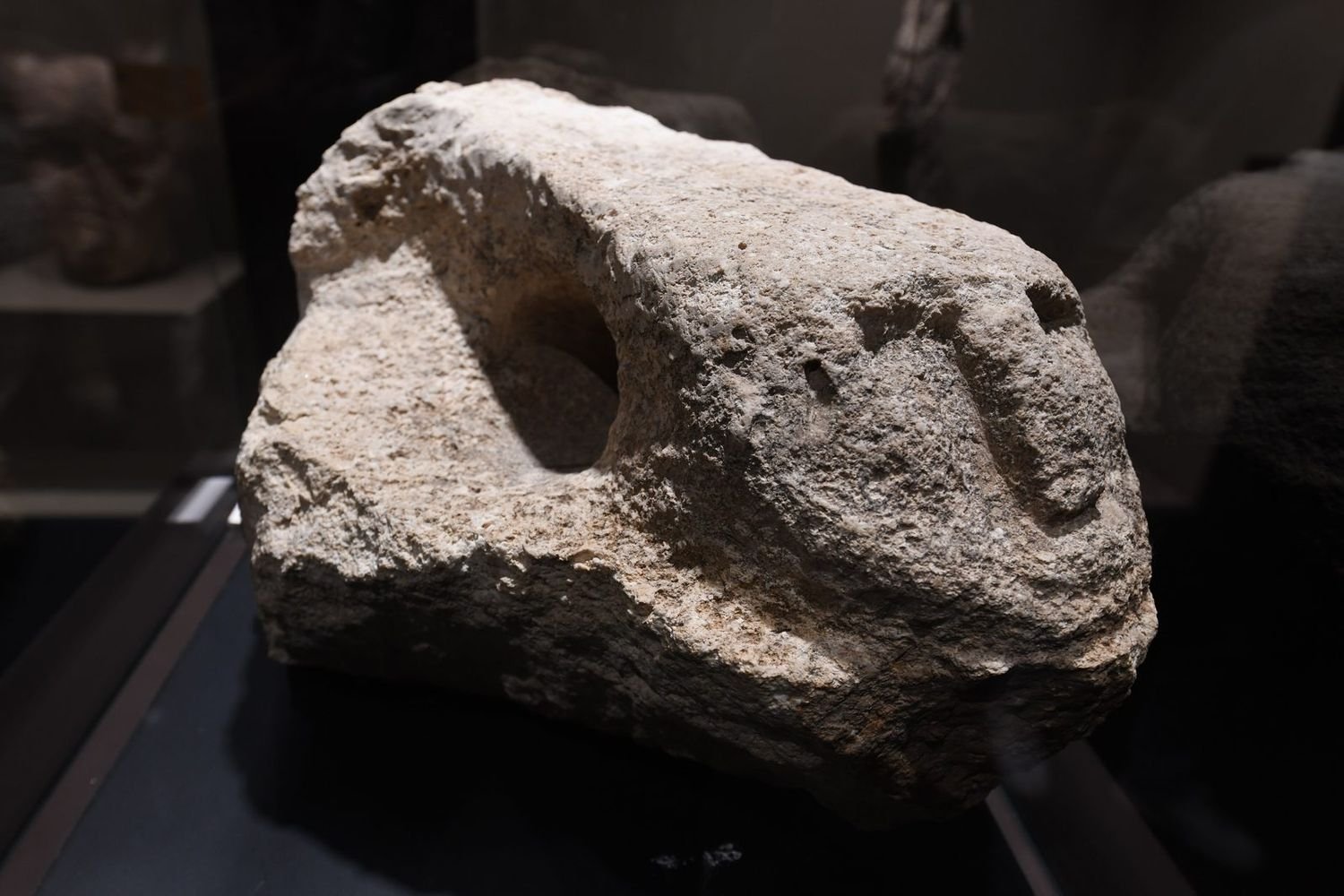
Dosseman, Urfa museum Karahantepe Pillar fragment with human head depiction in 2025 1214, CC BY-SA 4.0, via Wikimedia Commons.
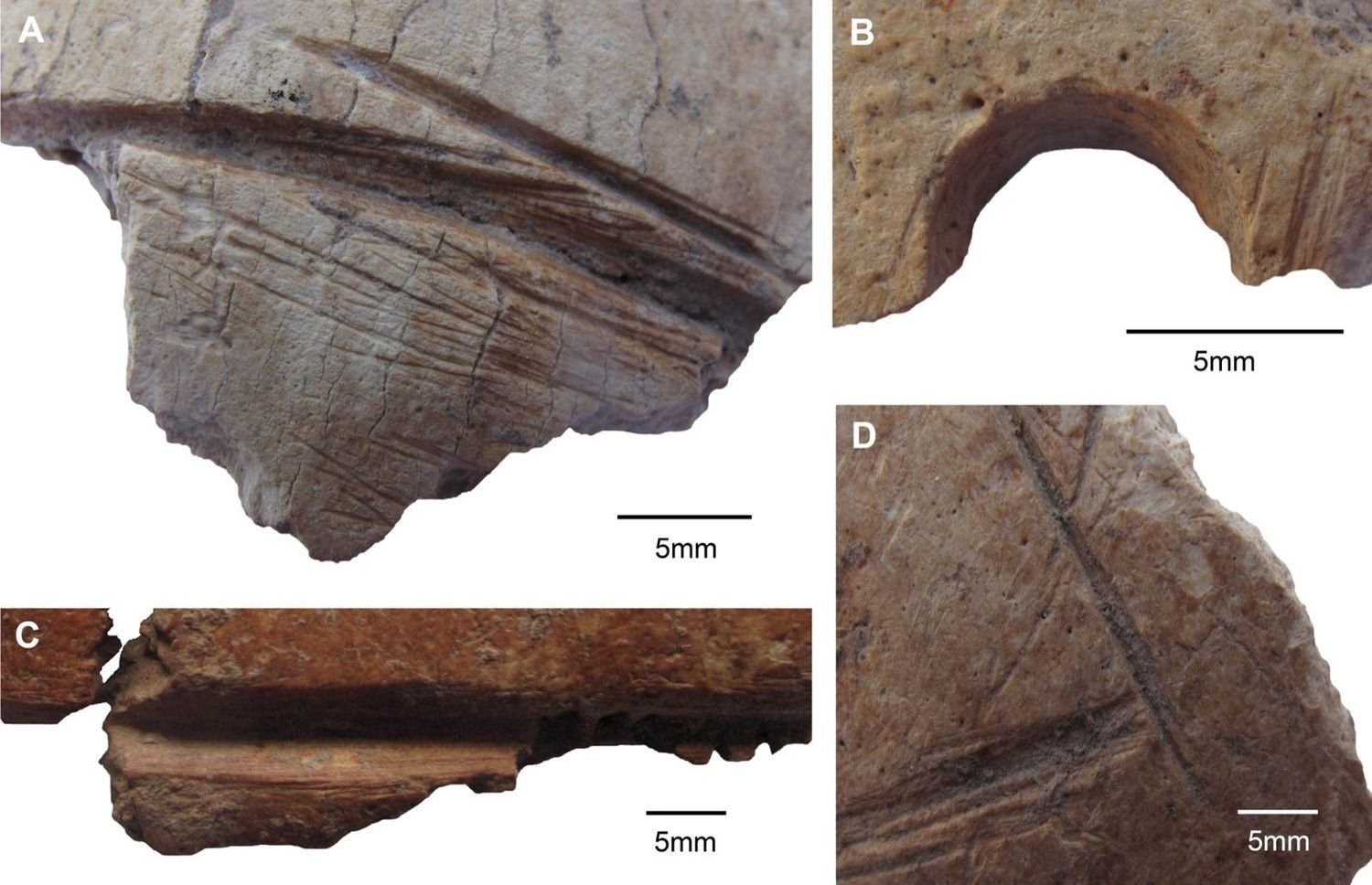
German Archaeological Institute, Göbekli Tepe Project, Modified human skull fragments, Göbekli Tepe, Copyright: DAI — used with permission, via .
Key takeaways
- A relief slab was found deliberately buried face-down beside a central pillar of Enclosure D.
- Turned over, it shows predators, a vulture and other beasts — and a severed human head at the break.
- Its careful placement links Göbekli Tepe's carved imagery to its skull cult — the head removed, kept and shown.
- Whether the head is part of a story or one motif among several is still open.
Sources
- DAI Tepe Telegrams — A separated head between animals on a stone slab from Göbekli Tepe
- Gresky, J., Haelm, J. & Clare, L. (2017). Modified human crania from Göbekli Tepe provide evidence for a new form of Neolithic skull cult. Science Advances 3(6).
- Becker, N., Dietrich, O., Götzelt, T., Köksal-Schmidt, Ç., Notroff, J. & Schmidt, K. (2012). Materialien zur Deutung der zentralen Pfeilerpaare… ZORA 5, 14-43 — discussed in the DAI Tepe Telegrams post linked here.
This article is written from the primary literature and excavators' reports cited above. Interpretations are attributed; uncertainties are stated in the text.