A crowded stone
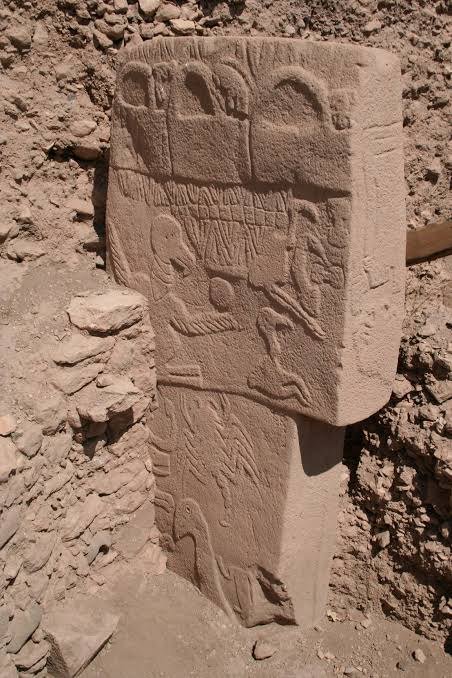
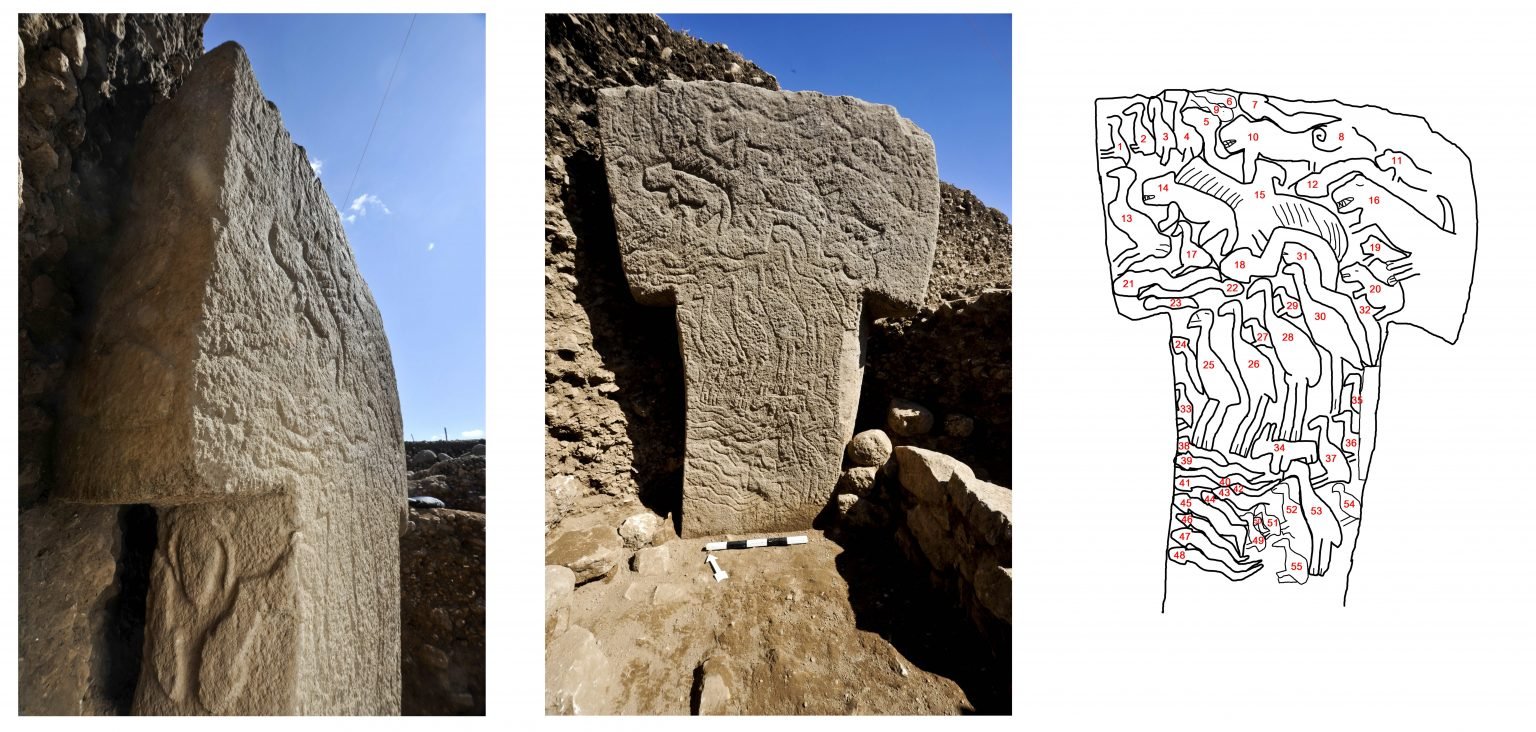
In Enclosure H stands Pillar 56, one of the most densely decorated pillars at Göbekli Tepe. Writing on the DAI's Tepe Telegrams, the team counted animals crowded across nearly its entire surface — snakes above all, but also birds and other creatures, packed together with almost no empty stone.
Not decoration — density with intent
Pillars like this push back on the idea that the carvings are simple ornament. The sheer concentration of snakes and birds, arranged deliberately rather than scattered, suggests these animals carried specific meaning the carvers wanted massed together. What that meaning was, we still can't fully read — but the effort is unmistakable.
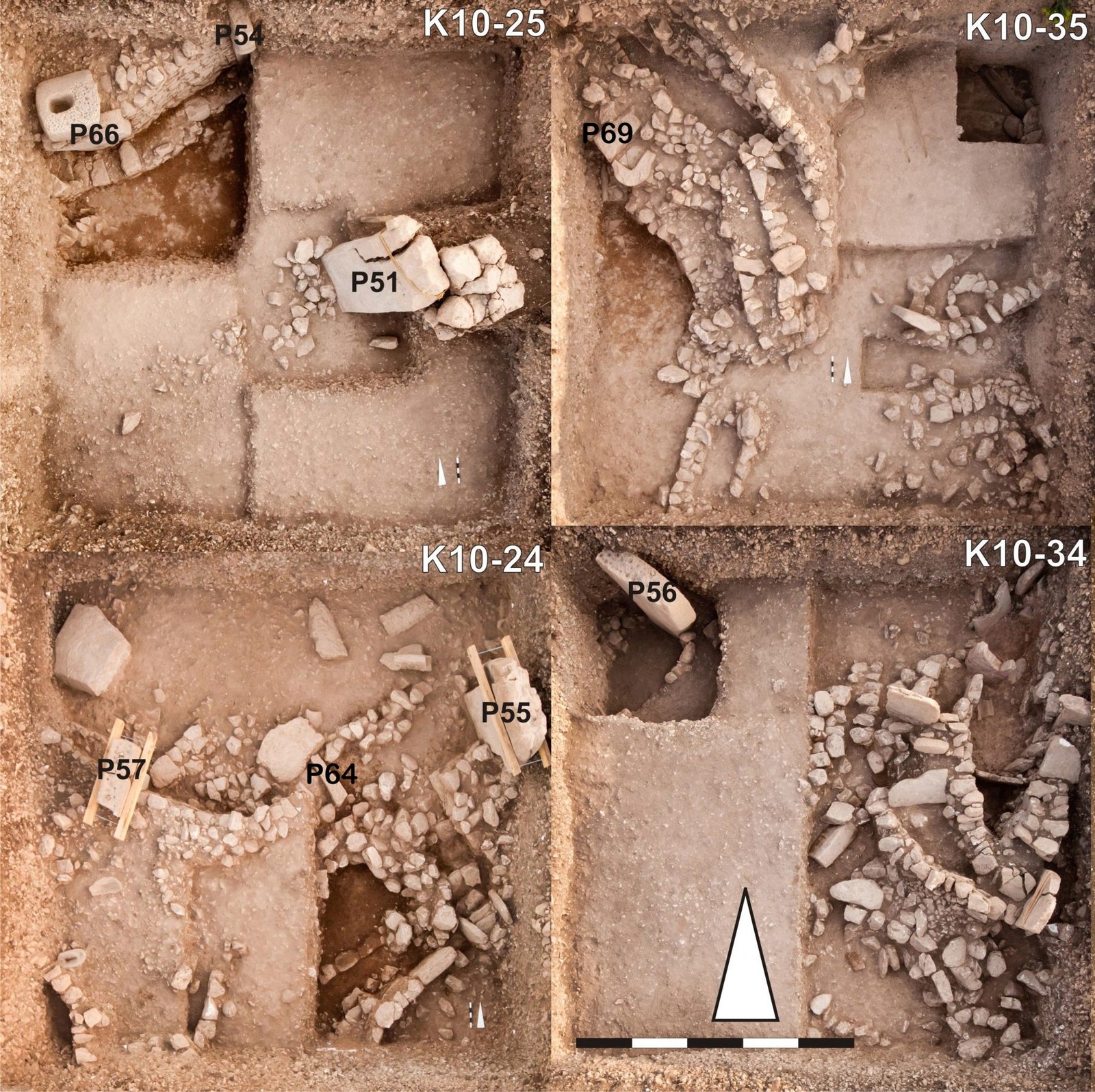
German Archaeological Institute, Göbekli Tepe Project, Enclosure H, Göbekli Tepe, Copyright: DAI — used with permission, via .
Where it stands, and why that helps
Pillar 56 belongs to Enclosure H, on the northwestern slope of the mound — one of the areas excavated more recently, which is part of why it is less familiar than the pillars of Enclosures C and D. The DAI team was able to catalogue its animals in detail precisely because the surface is so crowded and comparatively well preserved.
The dominant creature is the snake, repeated many times over, with birds and other animals worked into the gaps. That preference for one animal, multiplied, is a pattern seen elsewhere at Göbekli Tepe — different enclosures and pillars seem to favour different creatures — and Pillar 56 is one of the clearest cases of a single motif massed across a whole face.
A pillar with almost no empty stone
Many of Göbekli Tepe's carvings are spare: a single fox, a lone snake, one animal given room on the shaft of a T-pillar. Pillar 56, in Enclosure H, is the opposite. Writing on the DAI's Tepe Telegrams, the team counted animals crowded across nearly its entire surface, packed together with almost no empty stone — one of the most densely decorated pillars at the whole site.
That density is itself an argument. It is hard to look at a surface worked this completely and call the carvings simple ornament, filler or decoration. The concentration reads as deliberate — animals massed on purpose rather than scattered — which points to these creatures carrying specific meaning the carvers wanted gathered together in one place.
It is worth being honest that counting on so crowded a surface is interpretive work. Eroded or overlapping figures can be read differently, so the exact tally of snakes and birds is an estimate rather than a fixed number, and the claim that the density is intentional rather than accreted over time is a reasonable reading of the composition, not an independently dated fact. What is not in doubt is the effort the pillar represents.
One animal, many times over
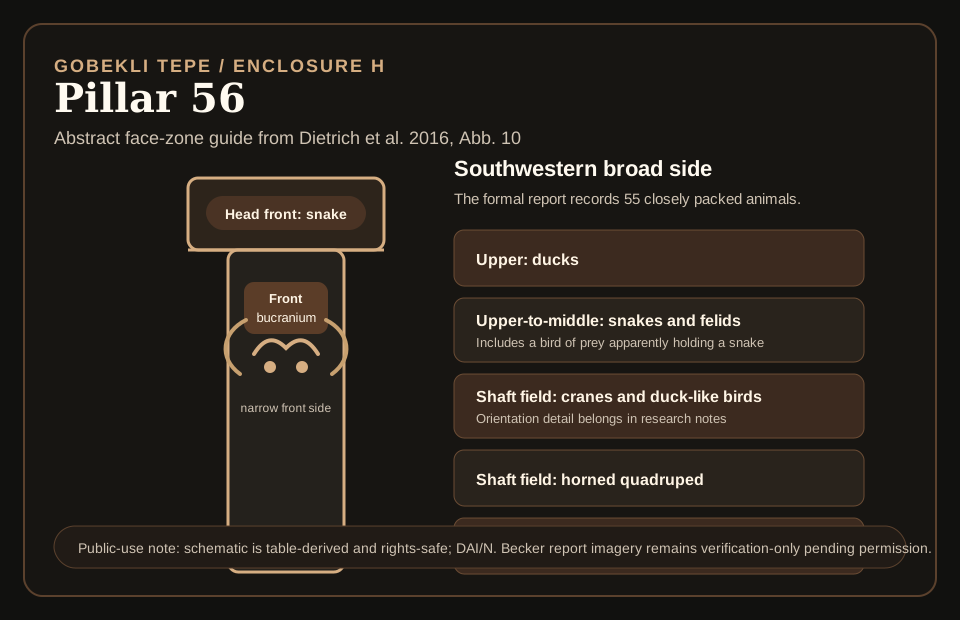
The dominant creature on Pillar 56 is the snake, repeated many times over, with birds and other animals worked into the gaps between them. That preference — one animal multiplied across a face — is a pattern seen elsewhere at Göbekli Tepe, where different enclosures and pillars seem to favour different creatures. Pillar 56 is one of the clearest cases of a single motif massed across a whole surface.
Part of why the pillar is less familiar than the celebrated stones of Enclosures C and D is simply where it sits. Enclosure H lies on the northwestern slope of the mound, one of the areas excavated more recently, so its carvings entered the conversation later. The team was able to catalogue its animals in such detail precisely because the surface is so crowded and comparatively well preserved.
For all that detail, the central question stays open. The meaning of the massed snakes and birds is unknown: that they mattered is clear from the sheer labour of carving them, but what they signified — protection, a story, some property of the enclosure itself — the pillar does not tell us, and the excavation account does not claim to. Pillar 56 is a vivid demonstration that these stones could be almost overwhelmingly full, and that fullness was intended, even where we cannot yet read it.
What is uncertain
Counting and identifying animals on so dense a surface is itself interpretive: eroded or overlapping figures can be read differently, so the exact tally of snakes and birds is an estimate, not a fixed number. The claim that the density is 'deliberate, with intent' rather than accreted over time is a reasonable reading of the composition, but the carving history of the pillar is not independently dated.
Above all, the meaning of the massed snakes and birds is unknown. That they mattered is clear from the effort; what they signified — protection, a story, a property of the enclosure — the pillar does not tell us, and the DAI account does not claim to.
Common questions
What is carved on Göbekli Tepe's Pillar 56? Animals crowded across nearly its entire surface — snakes above all, plus birds and other creatures packed together with almost no empty stone.
Why does the density matter? It pushes back on the idea that the carvings are simple decoration. The deliberate concentration of animals suggests they carried specific meaning the carvers wanted massed together.
Do we know what the snakes and birds mean? No. That they mattered is clear from the effort, but what they signified — protection, a story, a property of the enclosure — the pillar does not tell us.
Key takeaways
- Pillar 56 is one of the most densely decorated pillars at Göbekli Tepe.
- The sheer concentration pushes back on the idea that the carvings are simple ornament.
- One animal, multiplied — a pattern where different enclosures seem to favour different creatures.
- The effort is unmistakable, even though the meaning of the massed animals still can't be fully read.
Sources
- DAI Tepe Telegrams — 'A tale of snakes and birds: Göbekli Tepe, Pillar 56'
- DAI Tepe Telegrams — 'Of animals and a headless man. Göbekli Tepe, Pillar 43' (animals on the pillars)
This article is written from the primary literature and excavators' reports cited above. Interpretations are attributed; uncertainties are stated in the text.