The question every visitor asks
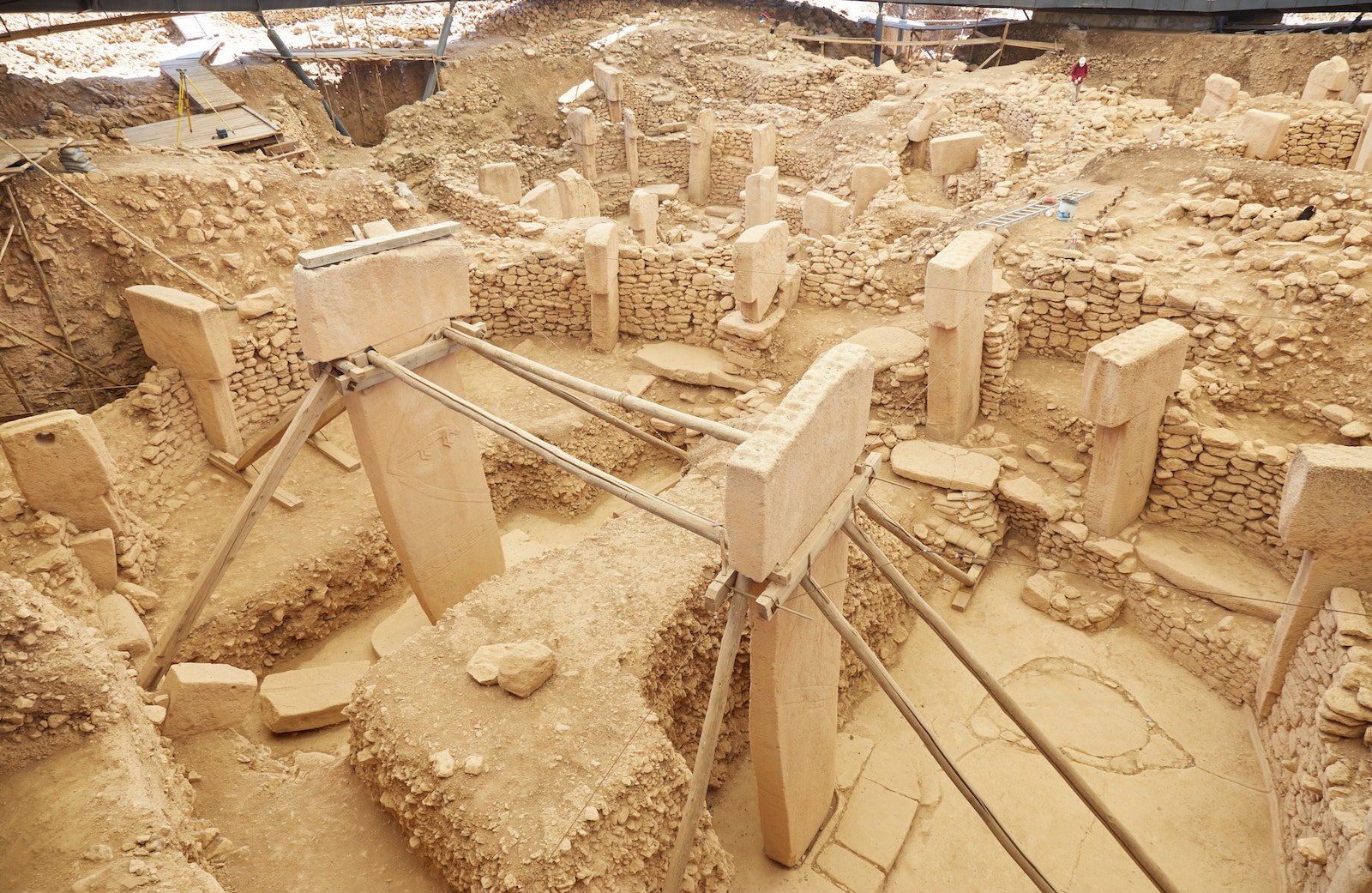
Stand in front of the central pair of Enclosure D and the scale hits you. Each of those two T-pillars is about 5.5 metres tall and weighs an estimated eight to ten tonnes; the pillars ringing the wall are smaller but still reach around 4 metres. Faced with stones like these, raised eleven thousand years ago by people without metal, wheels or draught animals, almost everyone asks the same thing: how? — and, not far behind it, who could possibly have done this?
It is exactly that gap between the monuments and our assumptions about Stone Age people that has made Göbekli Tepe a magnet for 'lost civilisation' theories. But the excavators can answer most of the how, and the answer is more impressive than any lost technology: ordinary people, good rock, and organised effort.
We know where they came from
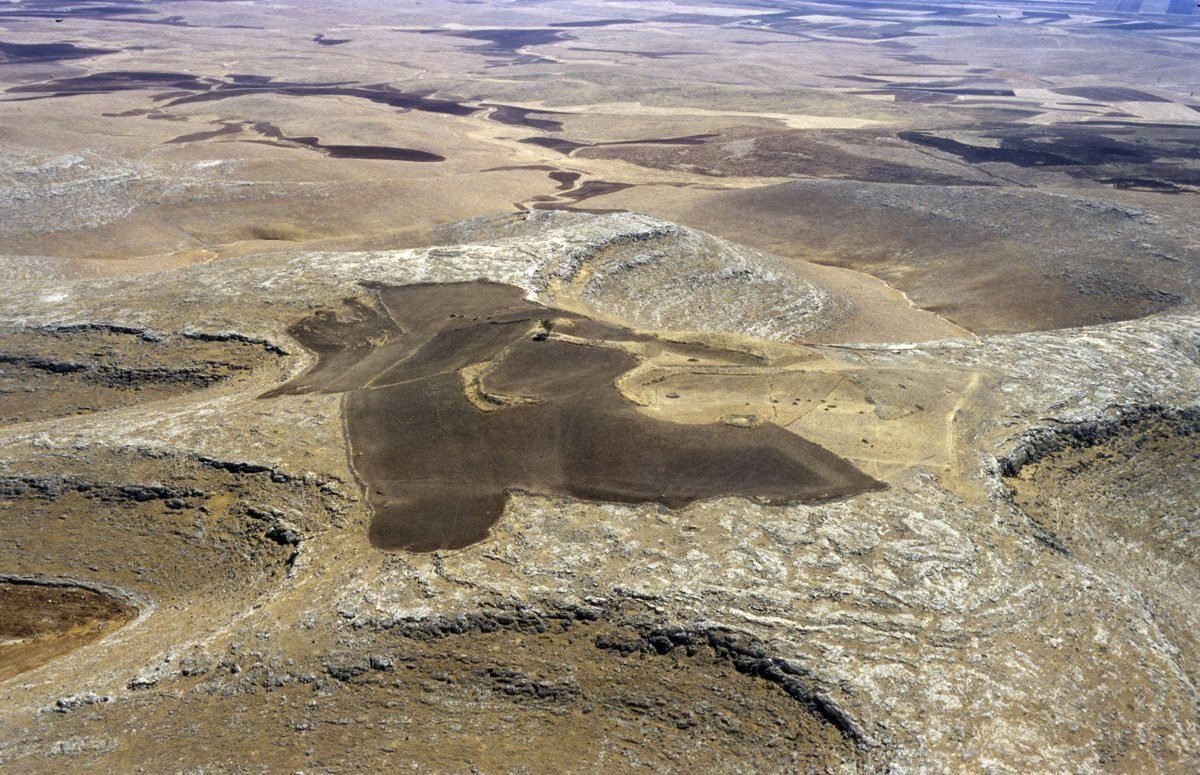
The single most important fact is that the quarries survive. Göbekli Tepe sits at the highest point of the Germuş range, on a bare limestone plateau, and that plateau — within a few hundred metres of the enclosures — is where the pillars were cut. The quarry areas are so rich in traces of the work that they are part of the protected archaeological site.
The geology did half the job. The limestone is banked — laid down in natural layers roughly 0.6 to 1.5 metres thick, separated by horizontal fault lines. To free a pillar, the masons only had to cut a channel around the shape they wanted, not underneath it: the fault line beneath gave them a ready-made base to lever against. The stone itself is hard and crystalline — first-class material for carving and for standing up under its own weight — yet soft enough to be worked with flint picks and, probably, wooden tools. No copper, no iron, no diamond saws required.
Half-made pillars, frozen in the rock
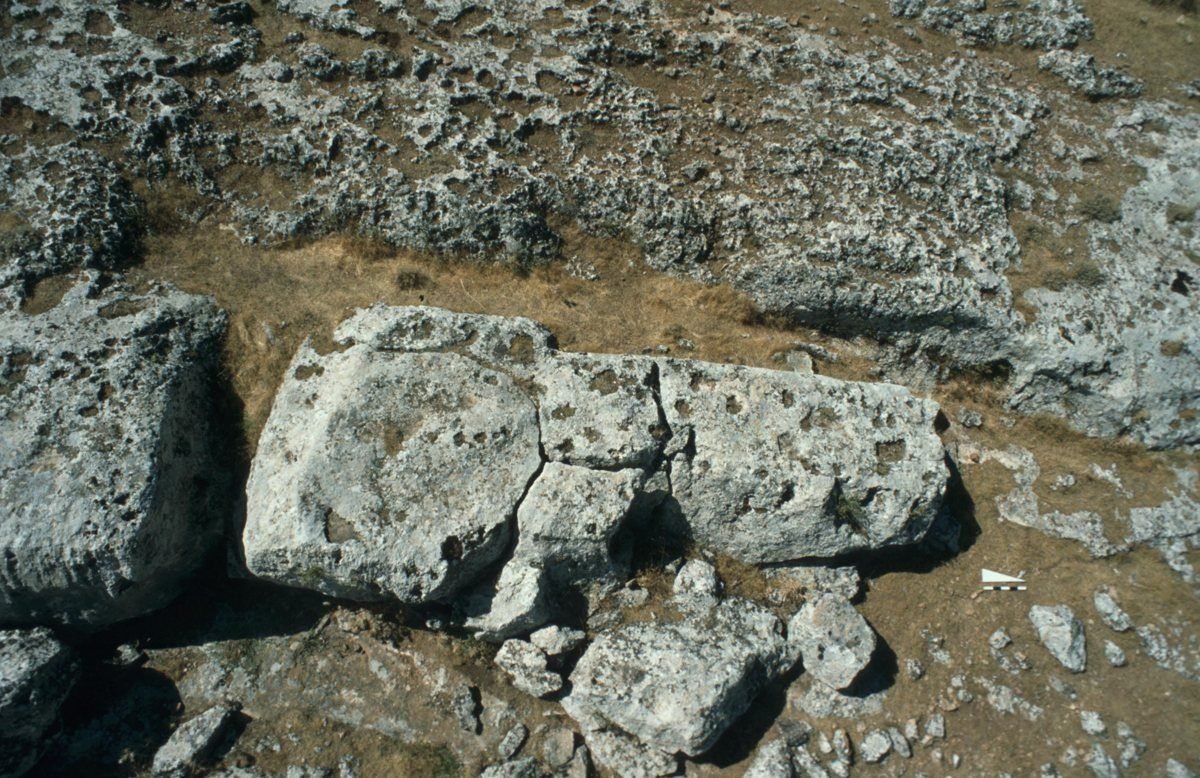
The best evidence is the failures. In several places on the plateau, near-finished pillars, wall blocks and stone rings were abandoned in the quarry — cracked at the wrong moment, or flawed, and simply left where they lay. For an archaeologist this is a gift, because you can read the technique directly off the rock: choose a bank of the right thickness, cut the channels in the outline of the piece, then drive wooden beams and wedges into the fault line and lever the workpiece free.
One unfinished T-pillar out on the western plateau is about 7 metres long — larger than any pillar actually raised in the enclosures. It shows both the ambition and the risk of the work: someone set out to make a giant, and it never left the quarry.
Levers, ropes, and a crowd
Moving the finished stones was a question of people, not machinery. The enclosures lie only a few hundred metres from the quarries, and mostly downhill. With levers, wooden rollers or sledges, ropes of plant fibre, and a large enough group hauling together, shifting an eight-tonne monolith over that distance is well within reach of a determined community — the same one that could carve it in the first place.
Ethnographic parallels make the point vivid. On the Indonesian island of Nias, moving a single megalith was recorded taking hundreds of people hauling on ropes — organised, crucially, around the promise of a feast. Göbekli Tepe fits that model: the labour was social. Gathering, feeding and motivating a crowd was the real technology, and the growing evidence for large-scale feasting at the site is probably the other half of this story.
Common questions
How big are the Göbekli Tepe pillars? The two central pillars of Enclosure D stand about 5.5 m tall and weigh an estimated 8–10 tonnes each; the surrounding pillars reach roughly 4 m. All were cut as single monoliths.
How did they cut the pillars without metal tools? The local limestone is layered and relatively soft. Masons cut channels around a pillar with flint picks, then levered it off a natural horizontal fault line using wooden beams and wedges — no metal needed.
How were the pillars moved and raised? Over a few hundred metres of mostly downhill ground, using levers, rollers or sledges, fibre ropes, and the coordinated effort of a large group — the same 'work-feast' labour seen at other megalithic sites.
What is uncertain
The exact moving method — sledges versus rollers, timber tracks, precisely how many people and how long — is not directly preserved. It is reconstructed from the quarry evidence, the terrain, and comparisons with other megalithic traditions. These are reasonable estimates, not certainties.
What is certain is the origin. The pillars were not brought from far away or raised by unknown means: they were cut, on site, from the very rock the sanctuary stands on, with Stone-Age tools — and some were left half-finished for us to find. The mystery isn't the method; it's the motivation.
Key takeaways
- The pillars were cut on site from the layered limestone plateau the sanctuary stands on — the quarries are still there.
- Layered rock and natural fault lines meant masons could free a monolith with flint tools and wooden wedges, no metal.
- Half-finished pillars abandoned in the quarry — one about 7 m long — let us read the technique directly.
- Moving 8–10-tonne stones a few hundred metres downhill was a matter of organised labour and feasting, not lost technology.
Sources
- DAI Tepe Telegrams — How did they do it? Making and moving monoliths at Göbekli Tepe
- Schmidt, K. (2010). Göbekli Tepe – the Stone Age Sanctuaries. Documenta Praehistorica 37, 239-256.
- Dietrich, O. et al. (2012). The role of cult and feasting in the emergence of Neolithic communities. Antiquity 86.
This article is written from the primary literature and excavators' reports cited above. Interpretations are attributed; uncertainties are stated in the text.