What was found
Since digging began at Göbekli Tepe in 1995, human bone has turned up almost everywhere — but almost never as a grave. Broken fragments from people of every age and both sexes were scattered through the fill of the great round buildings and the soil between them, recorded one by one, impossible to reassemble into individuals.
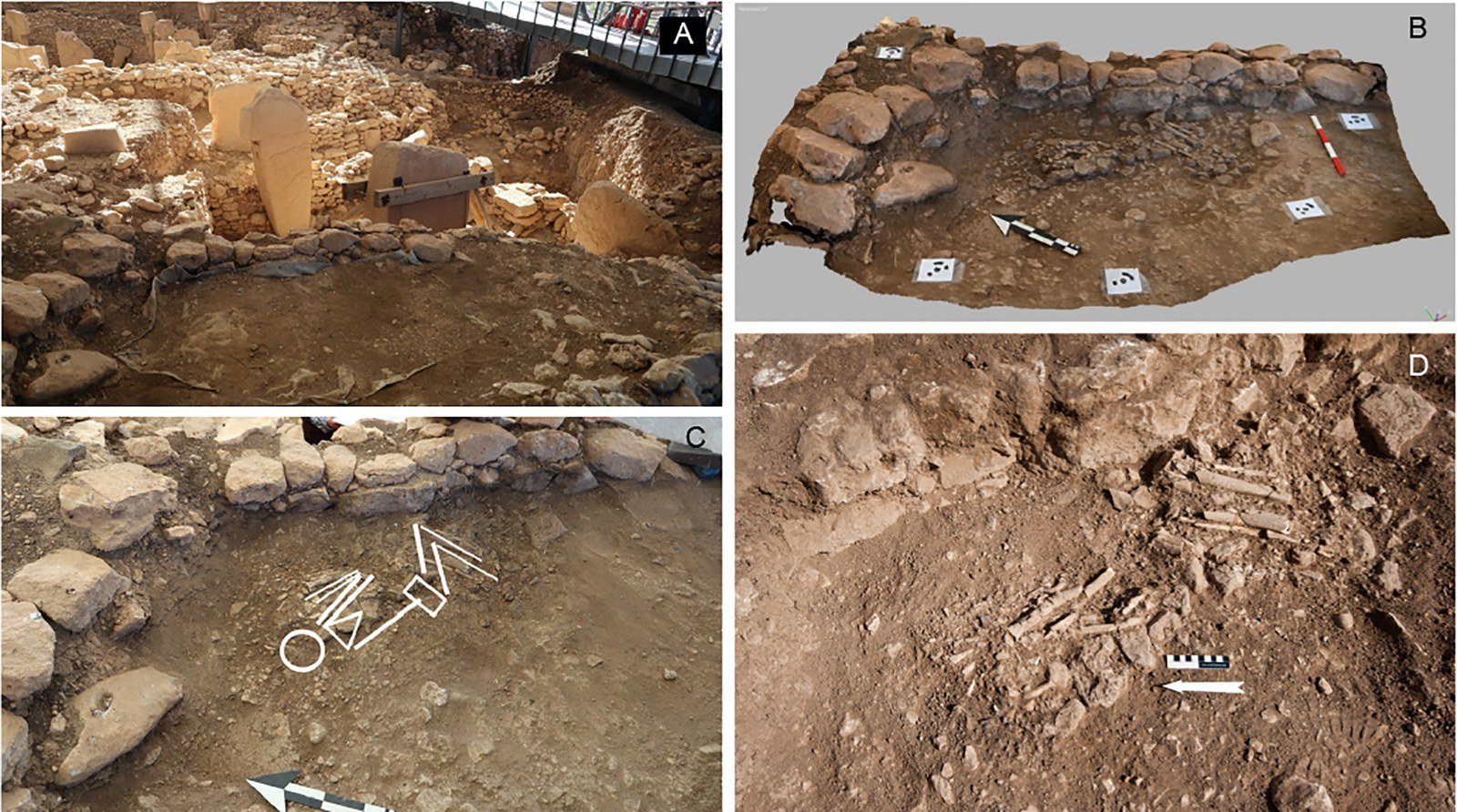
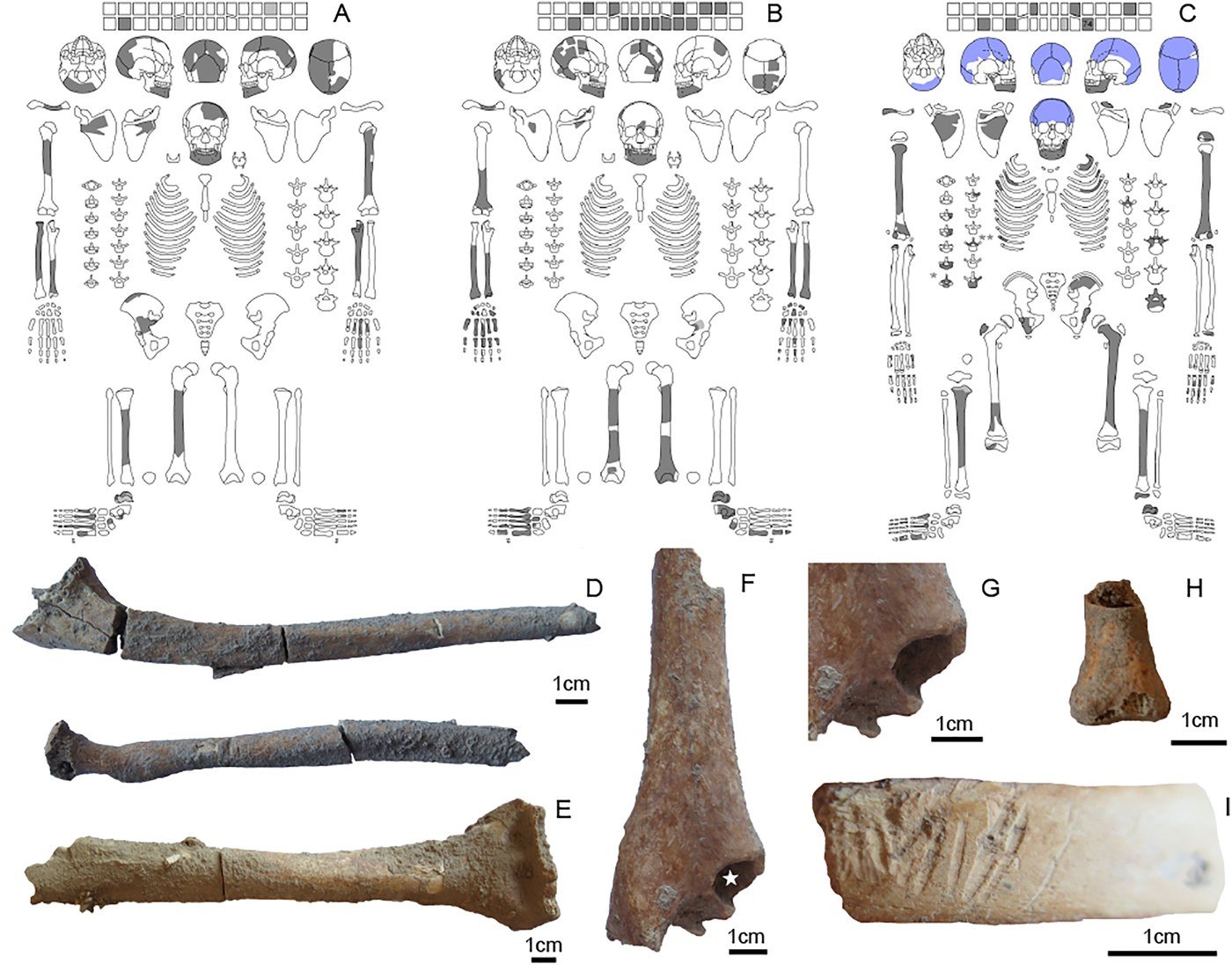
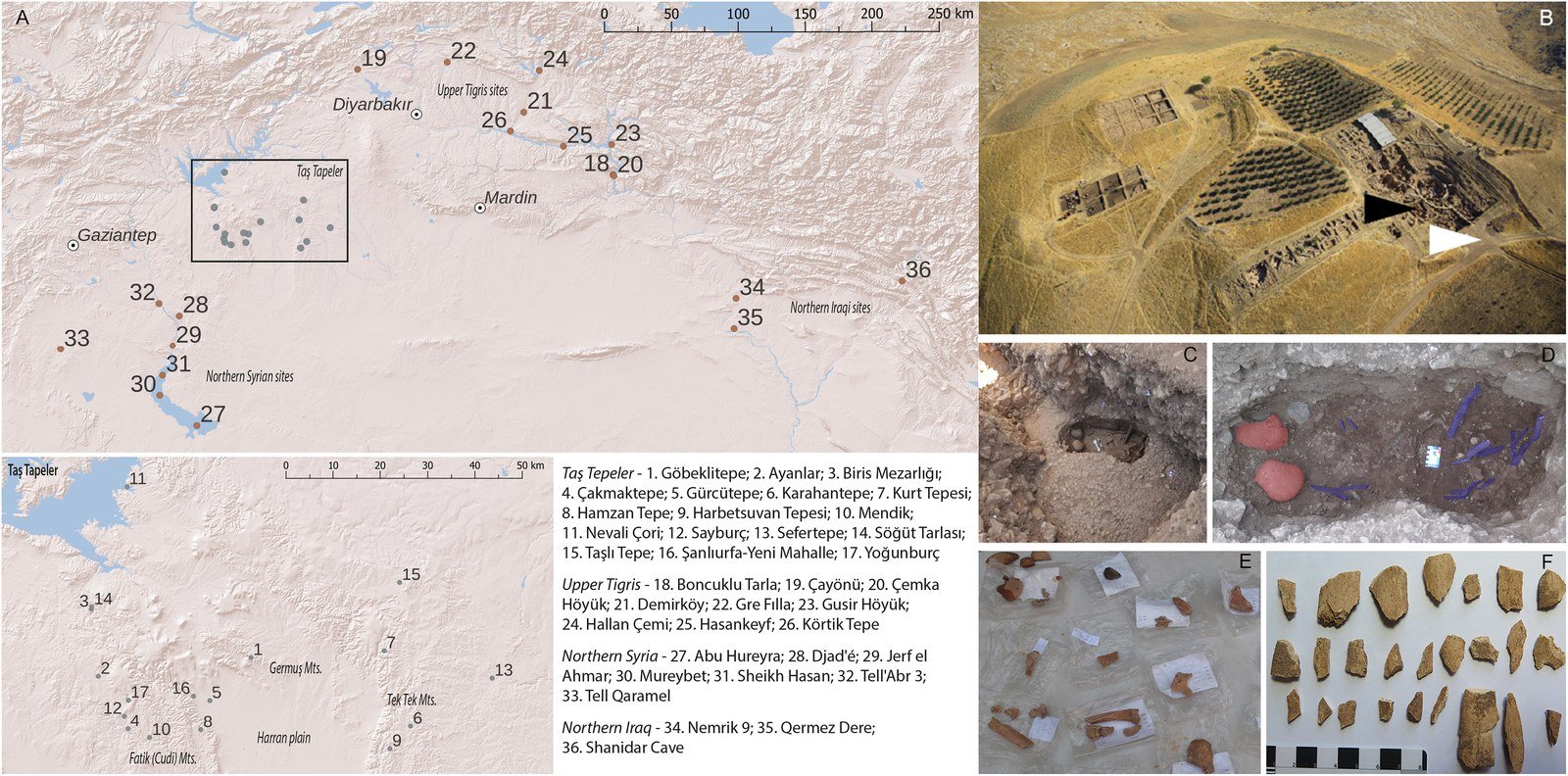
The new study, by the physical anthropologist Julia Gresky and Göbekli Tepe research head Lee Clare of the German Archaeological Institute (DAI), describes the first exception: two intact burials, both cut beneath the plaster floors of buildings in Pre-Pottery Neolithic B levels, roughly 8,700–8,000 BCE. One, in trench DR1, is a collective grave of at least three people — a woman over 35, a man of 20 to 30, and a girl of 11 to 14. The other, in trench L09-65, is a single young woman.
The 30-year mystery
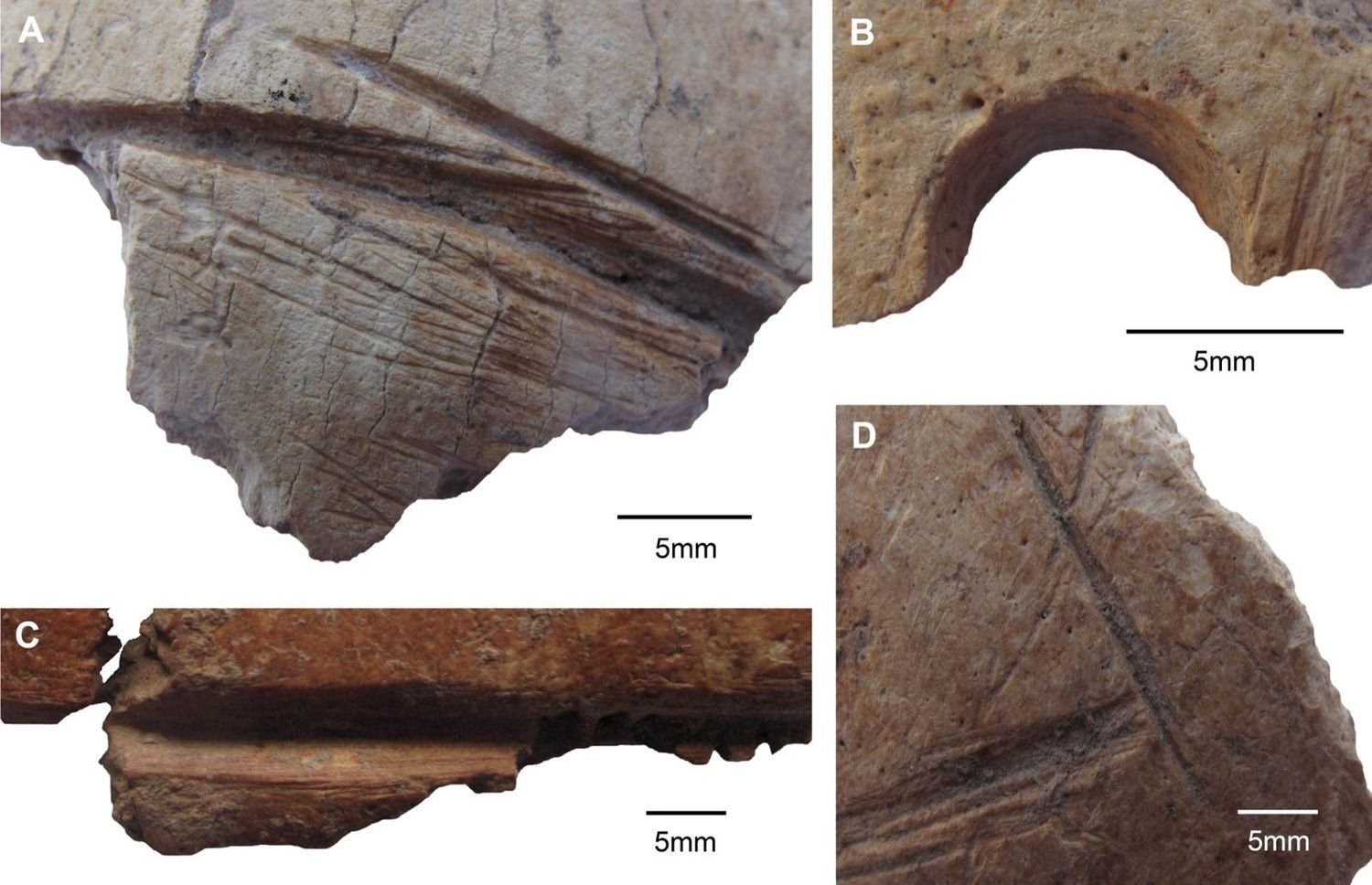
The puzzle was never the burials — it was the loose bone. Fragments were spread across some 3,000 square metres and through metres of deposit, with no graves to belong to. Skulls were oddly over-represented: the assemblage holds 408 cranial fragments to 283 from the rest of the body, and a handful of skulls carry deliberate deep incisions along the midline — the basis for Göbekli Tepe's famous, and real, 'skull cult'.
That left a hard question. Were these scattered bones placed on purpose, as some unknown rite — or had they simply ended up in the fill by accident? For years there was no good way to choose between the two.
The new answer
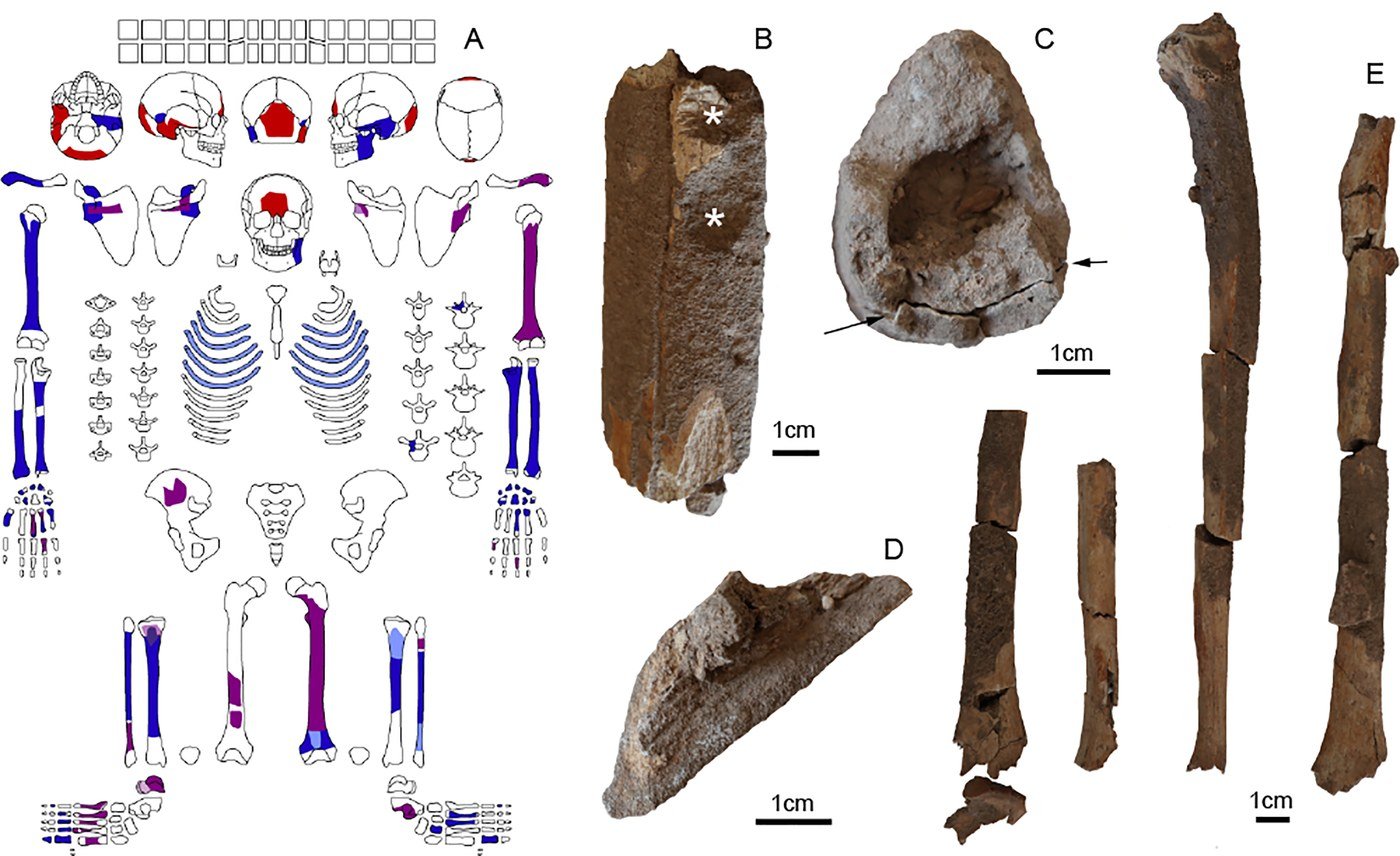
The intact burials provided a control. When Gresky and Clare examined the damage on the two skeletons — heavy fragmentation, hard calcareous crusts that crack bone from within, rodent gnawing, spiral fractures — they found it matched the damage on the scattered fragments almost exactly. Crucially, the single, undisturbed burial proved that this damage happens inside the grave itself, from crushing soil and mineral deposits, not from anyone deliberately smashing bones.
That points to a simple, undramatic explanation. Göbekli Tepe was not only a ritual centre; it was lived in, with houses whose occupants buried their dead beneath the floors — a normal Neolithic practice. Many of those sub-floor graves sat on higher parts of the mound. Over time the slopes gave way, and erosion and slope-slides carried the buried bone downhill, redepositing it, broken and out of context, into the great buildings below. A random scatter is exactly what a landslide would produce.
But the skull cult is still real
The erosion model explains the bulk of the loose bone — but the authors are careful not to let it swallow everything. The deep, deliberate cut-lines on a small number of crania are not something a landslide makes. Skulls remain over-represented. Göbekli Tepe is also unusually rich in corvids — scavenging crows and ravens appear about four times more often than at neighbouring sites — which may hint at bodies exposed in the open before burial.
The wider region shows the same mix. At Karahan Tepe, skull fragments carry incisions and burn marks; at Sefertepe, a 'skull chamber' held at least twenty-one skulls set on their bases, almost all facing southeast; the Skull Building at Çayönü held around seventy; and at Sayburç, crania and long bones from at least nineteen people were found on and around a bench. The honest picture is not one custom but several overlapping ways of treating the dead.
What is uncertain
This is a strong, plausible explanation — not a closed case. The erosion-and-redeposition model fits the taphonomy well, but the authors themselves say it does not rule out additional, deliberate mortuary practices happening at the same time or in other periods.
The skull cult is not yet dated: it cannot be pinned firmly to the earlier (PPNA) or later (PPNB) phase of the site. One of the two burials is also genuinely ambiguous — in L09-65, cranial bones recovered in 2012 suggested a male, while the body and jaw found in 2022 indicate a female, so the skull may not even belong to that skeleton. As the paper stresses, absolute dating and further osteology are still needed to sort out how many different funerary customs Göbekli Tepe really practised.
Why it matters
The finding quietly revises an old image of Göbekli Tepe as a pure temple visited by wanderers. A settlement with houses and graves beneath their floors is a place where people lived, died and were buried like their neighbours across Neolithic Anatolia — while still doing something singular with a few of their dead. It is a reminder that at these sites the most striking explanation is not always the correct one, and that patient work on bone damage can answer a question that monuments alone cannot.
Key takeaways
- Göbekli Tepe's first two intact burials have been documented — both beneath the plaster floors of houses, in Pre-Pottery Neolithic B contexts (c. 8,700–8,000 BCE).
- One is a collective grave of at least three people (an older woman, a young man and a teenage girl); the other a single young woman.
- Their bones carry the same taphonomic damage as the loose fragments long found across the site, pointing to a shared origin.
- The authors argue many scattered bones are eroded sub-floor burials that slid downslope — not a deliberate scatter — while noting a real, separate skull cult still exists.
Sources
- Gresky J, Clare L (2026). First burials give insights into mortuary rites at Göbeklitepe, Early Neolithic Türkiye. PLoS One 21(9): e0358979 (open access, CC BY 4.0)
- Göbekli Tepe Research Project (DAI) — Tepe Telegrams (project background on the human remains and 'skull cult')
This article is written from the primary literature and excavators' reports cited above. Interpretations are attributed; uncertainties are stated in the text.