The equality assumption
There is a comfortable story about the deep past: hunter-gatherers were equals, and inequality only arrived with farming, property and surplus. Göbekli Tepe seems to fit it — the people who raised the enclosures were still hunter-gatherers, and the site has produced no palaces, no rich graves, no obvious rulers' houses. That is why it is usually described as a broadly egalitarian world, and why our own summary of the evidence is titled 'no priests, no chiefs'.
A 2022 study by Orhan Ayaz, Bahattin Çelik and Fatma Çakmak — one of them, Çelik, a working Taş Tepeler archaeologist — asks whether that story is too simple. Their answer is careful, and worth hearing.
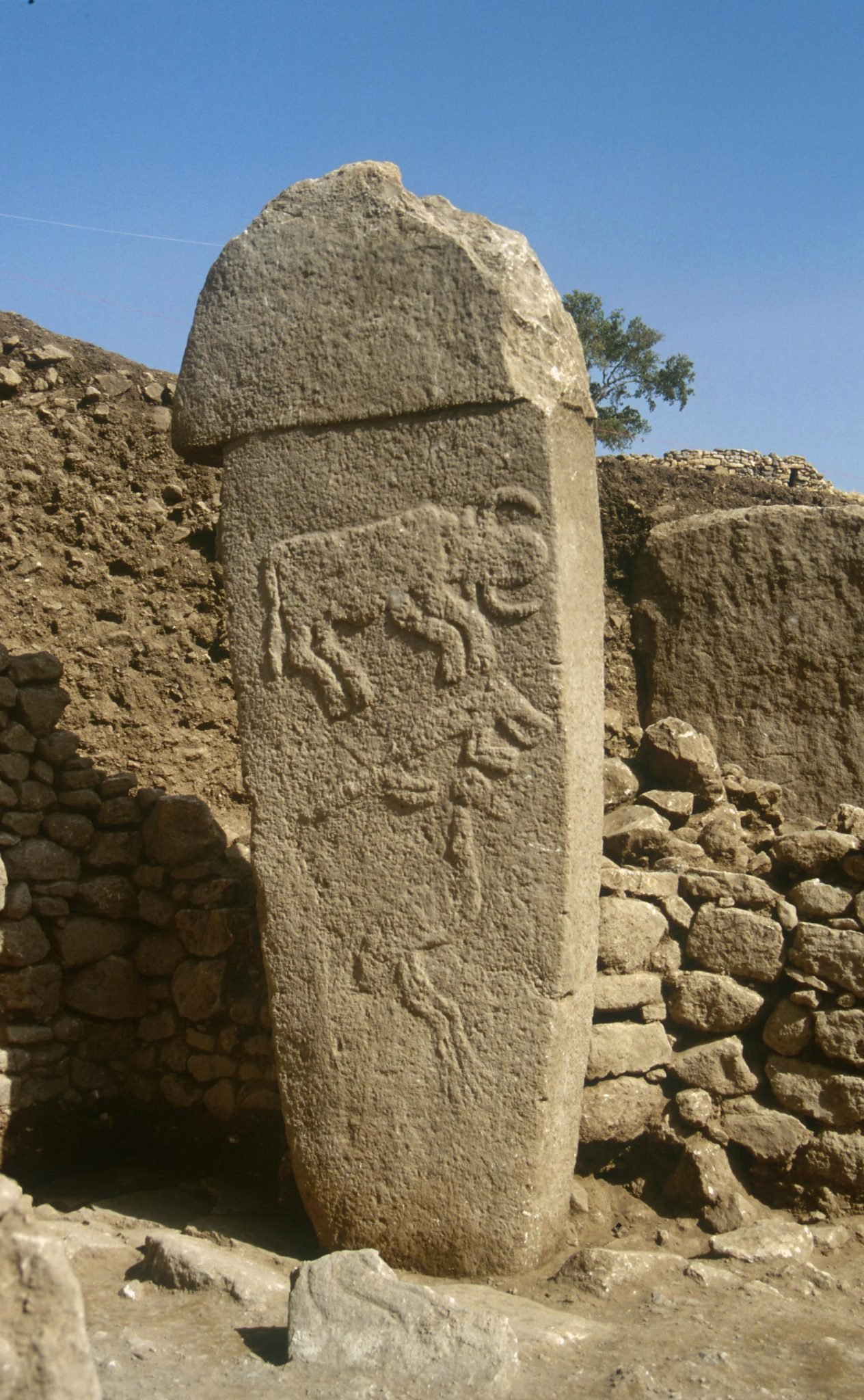
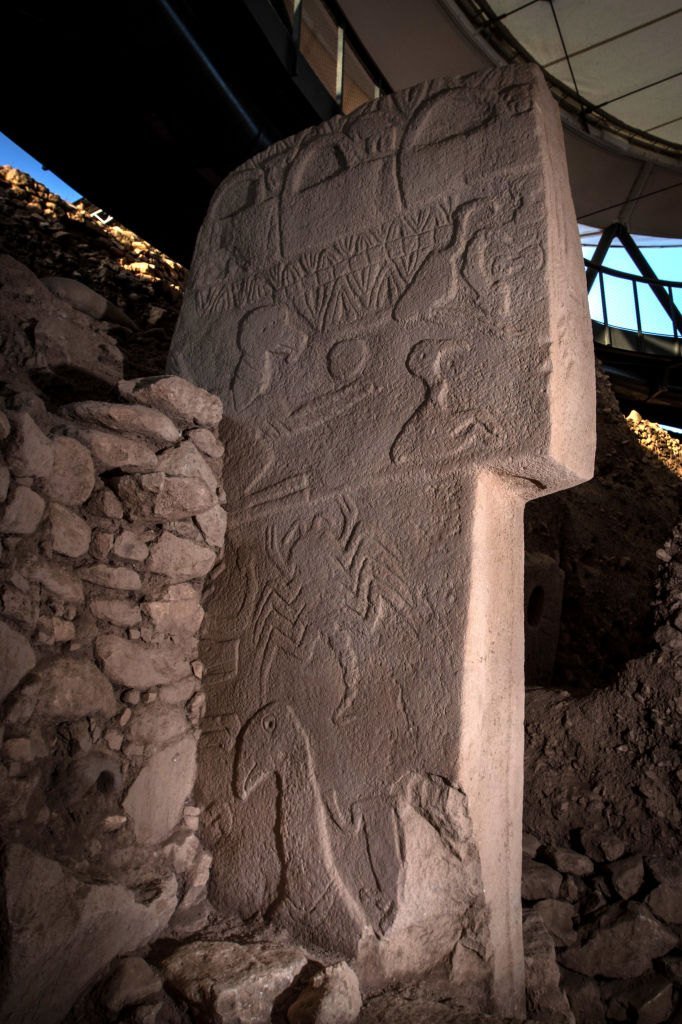
German Archaeological Institute, Göbekli Tepe Project, Pillar 2, Enclosure A, Göbekli Tepe, Copyright: DAI — used with permission, via .
Classless is not the same as equal
Their key move is to separate two ideas that everyday language runs together. Karl Marx thought of stratification as class — a division based on who owns the means of production, the economy. Max Weber added a second, different axis: status — the honour, prestige and social standing a person or group holds, which need not follow wealth at all.
On Marx's terms, the authors agree, Göbekli Tepe was classless: there is no sign of private ownership of an economy, no propertied class living off the labour of others. But that, they argue, settles only the economic question. It does not show that everyone stood on the same rung.
A hierarchy of prestige
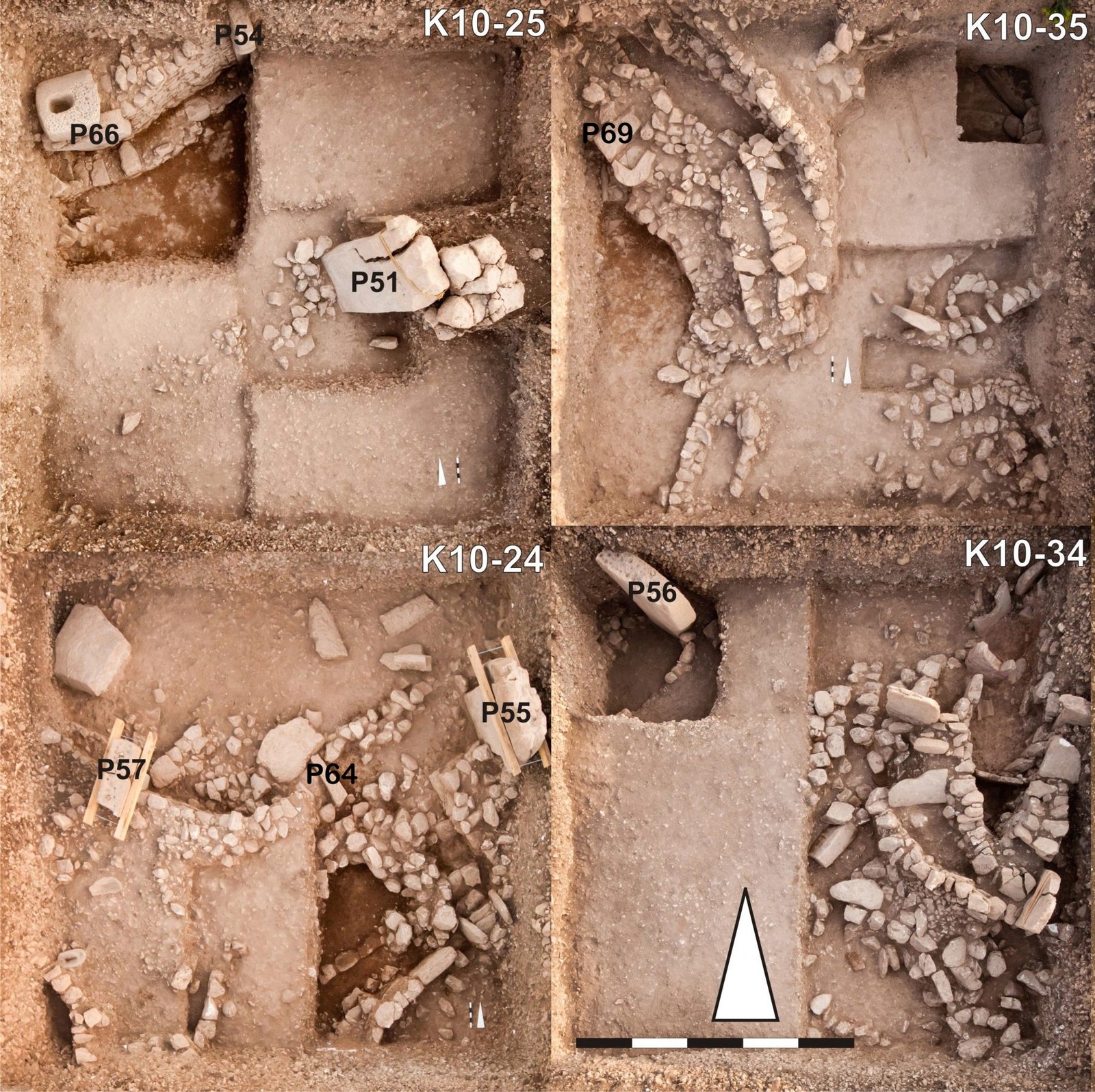
What they propose instead is a status hierarchy on an ideological basis — a ranking built out of ritual, knowledge and belief rather than goods. Raising the monumental T-pillar enclosures took organised cooperation and, on the excavators' own evidence, large work-feasts to feed the builders. Coordinating that, and holding the symbolic knowledge the carvings encode, is the kind of role that earns prestige — and prestige, sustained, becomes rank.
They point to the distinction the sites themselves draw between special buildings and ordinary domestic ones, and to the pillars and imagery as a symbolic system that 'expresses social hierarchy'. In their reading, some individuals or groups held a prestigious status — not because they were rich, but because they stood closer to the sacred. That is what they mean by a 'status society': classless, but not equal.
Why the distinction matters
This reframes the whole argument about early inequality. The question stops being the blunt 'equal or unequal?' and becomes 'which kind of inequality?' — and the answer the study offers is a form the usual checklist misses entirely, because it leaves no rich graves or grand houses to dig up. A hierarchy of prestige can be very real to the people inside it and nearly invisible to archaeology.
It also sits comfortably beside other readings on this site: if the enclosures were about ritual and the sacred (as the 'Neolithic mind' theory and the excavators' own work suggest), then a hierarchy built on access to the sacred is exactly where you would expect early rank to appear.
What is uncertain
This is a sociological reinterpretation of known evidence, not a new excavation finding — a lens (Weber's) laid over the material, and it should be read as a proposal, not a proof. The honest counter-case is strong: the Göbekli Tepe team stresses how little direct sign of hierarchy the site shows, and status ranking, by its nature, is extremely hard to demonstrate from stones and bones alone. There are no badges of rank, no chief's house, no burial that says 'this person led'.
So treat it as the best version of one side of a real debate. What is agreed is that Göbekli Tepe was not a class society in the economic sense. Whether it was nonetheless ranked by prestige is the open, and genuinely interesting, question.
Common questions
Was Göbekli Tepe an equal society? It is debated. There are no rich graves or rulers' houses, so it is usually called egalitarian — but a 2022 study argues it was 'classless but not equal', ranked by prestige rather than wealth.
What is a 'status society'? A term the study borrows from Max Weber: a society with no economic classes, but with a hierarchy of honour and prestige — here, prestige earned on an ideological and ritual basis rather than through property.
What is the difference between class and status? Class (Marx) is about ownership of the economy; status (Weber) is about social honour and standing. A society can lack economic classes and still rank people by prestige.
Is there proof of hierarchy at Göbekli Tepe? No direct proof — no insignia of rank, chief's house or 'leader' burial. The excavators emphasise how little sign of hierarchy there is; the 'status society' reading is an interpretation of the monumental building and ritual evidence, not a demonstrated fact.
Key takeaways
- A 2022 study argues Göbekli Tepe and Karahan Tepe were classless but not equal — ranked by prestige, not wealth.
- It separates Marx's class (ownership of the economy) from Weber's status (social honour): no classes here, but perhaps a hierarchy of prestige.
- The prestige would rest on an ideological, ritual basis — organising the monuments and holding the symbolic knowledge.
- It's a reinterpretation of known evidence, not a new find, and the excavators stress how little direct sign of hierarchy the site shows.
Sources
- Ayaz, O., Çelik, B. & Çakmak, F. (2022). 'Status Society': Sociological Thinking of Göbekli Tepe and Karahan Tepe in the Context of Social Stratification. Karadeniz 56, 122–142.
- Dietrich, O. et al. (2012). The role of cult and feasting in the emergence of Neolithic communities. Antiquity 86 (the work-feast evidence).
This article is written from the primary literature and excavators' reports cited above. Interpretations are attributed; uncertainties are stated in the text.