A Stone Age zoo — with a floor plan
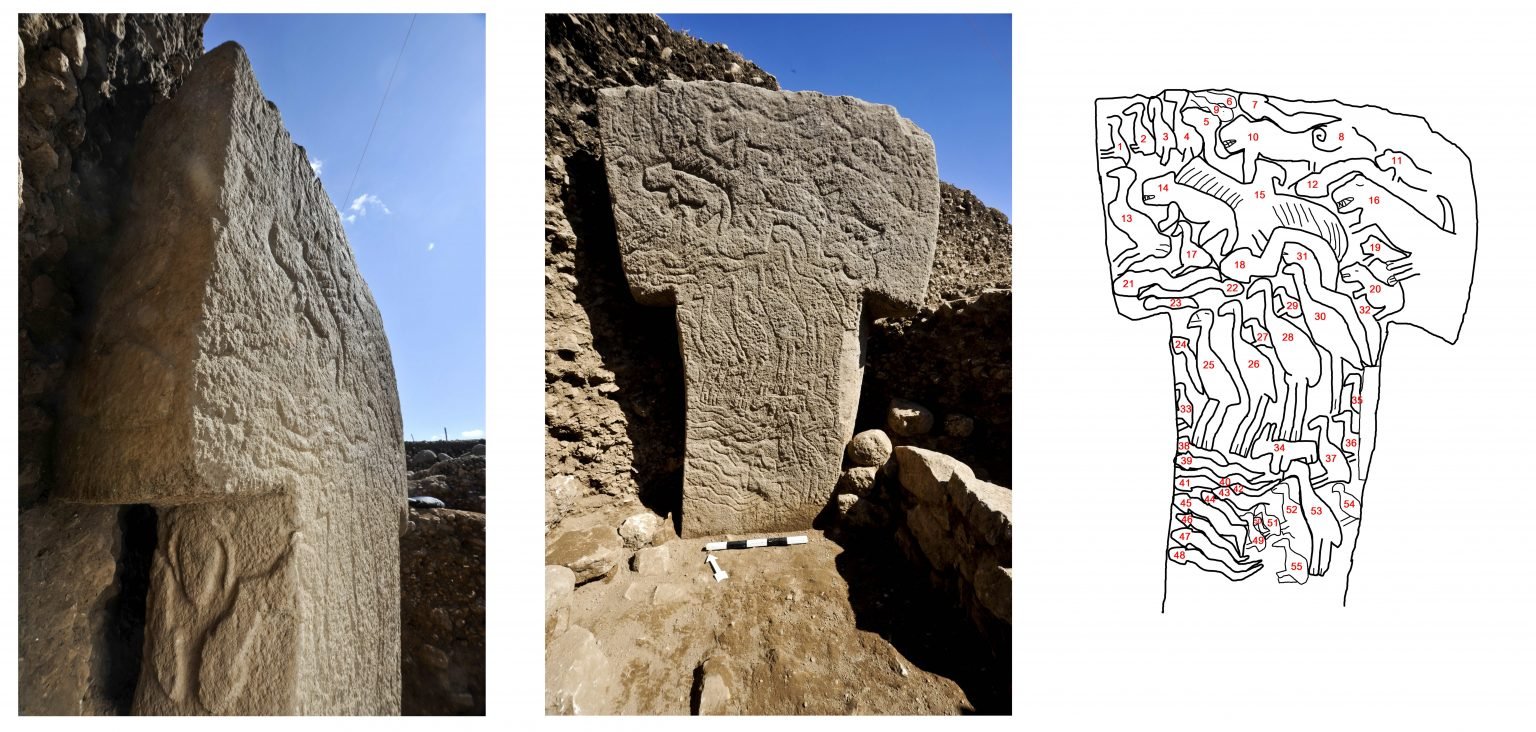
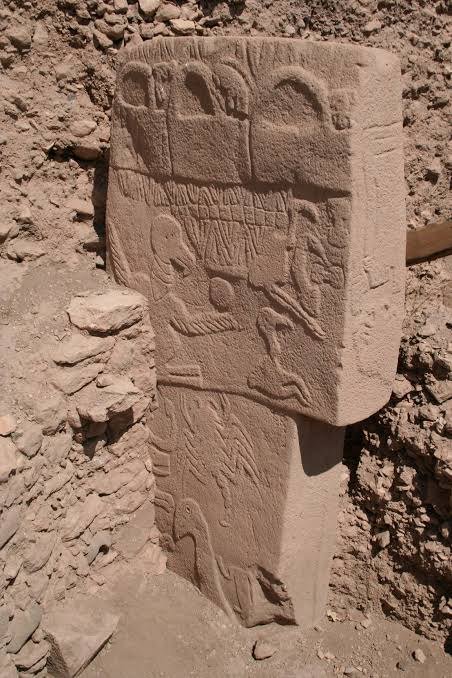
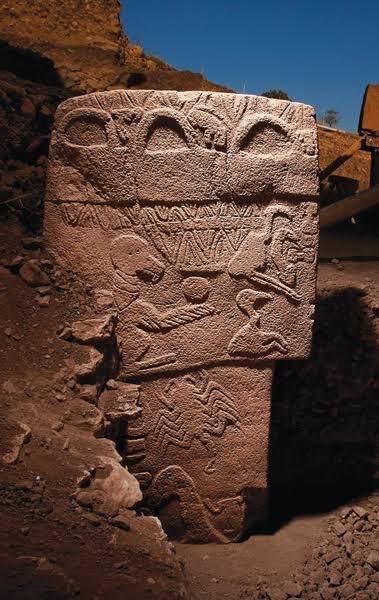
Klaus Schmidt, who dug Göbekli Tepe for two decades, once called it "a Stone Age zoo." The label fits: bears, boars, snakes, foxes, wildcats, aurochs, gazelle, birds, spiders, scorpions and more crowd the carved pillars. But the zoo is not a jumble. Look enclosure by enclosure and a pattern appears — each of the great rings is dominated by a different animal.
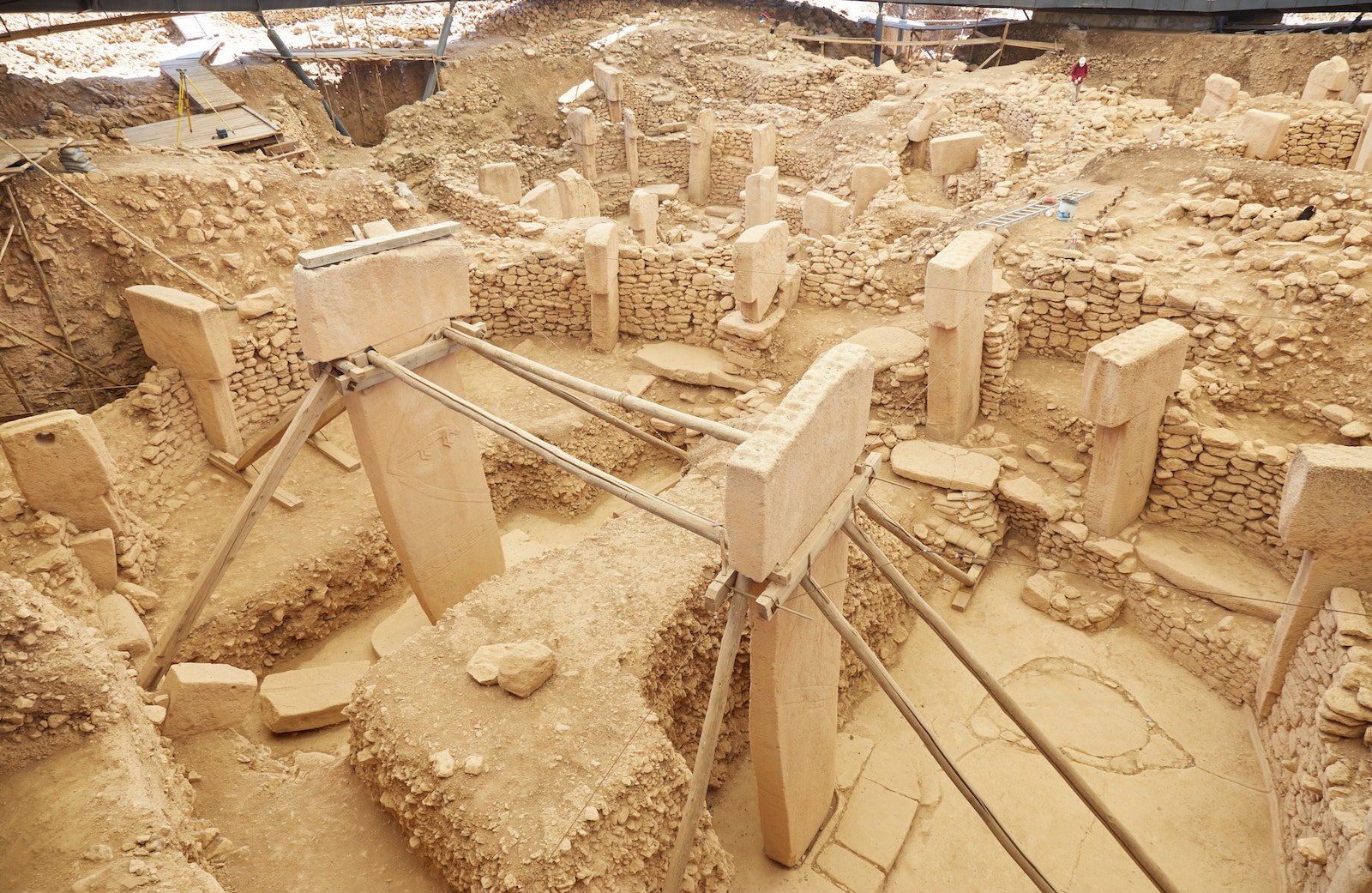
In Enclosure A, the snake prevails. In Enclosure B, the fox is everywhere. In Enclosure C, the boar takes over. In Enclosure D, birds play the leading role. The same animals turn up across the site, but each circle has its own headline creature — as if the ring had a sign hung over its door.
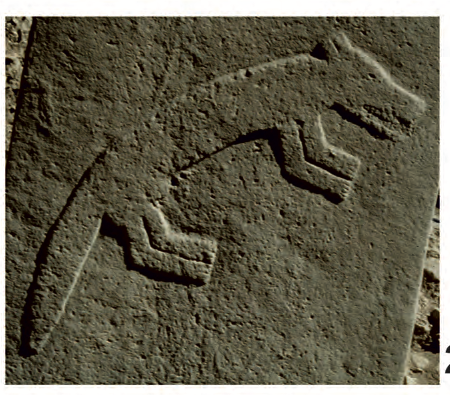
German Archaeological Institute, Göbekli Tepe Project, Fox relief, Pillar 9, Enclosure B, Göbekli Tepe, Copyright: DAI — used with permission, via .
Emblems of different groups?
The excavators' careful suggestion is that these dominant animals worked as emblems — figurative badges of the different groups of people who built and used each enclosure. On this reading, the circles were not one congregation's successive churches but the gathering places of distinct social entities, each identifying with its own beast, rather as later societies used heraldic or totemic animals.
Who those groups were — clans, lineages, communities from different valleys — is left open. But the idea gives the architecture a social shape: not one crowd, but several, each leaving its signature in stone. It also fits the wider evidence that access to Göbekli Tepe was restricted rather than open to all.
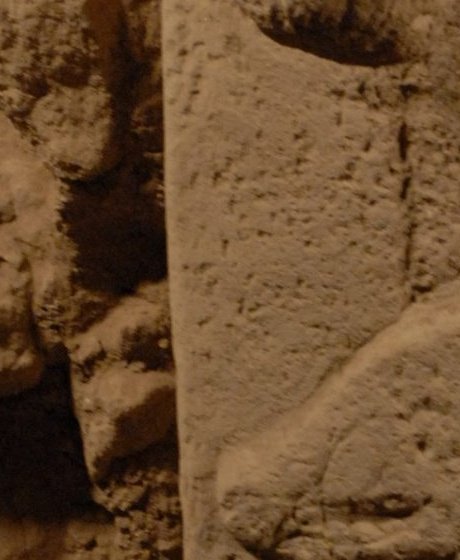
German Archaeological Institute, Göbekli Tepe Project, Boar relief, Enclosure C, Göbekli Tepe, Copyright: DAI — used with permission, via .
A place for hunters
Several clues point the same way. The iconography is exclusively male and exclusively wild — fierce, tusked, fanged, taloned creatures, and no domestic scenes. Some ordinary settlement tools are strikingly absent (bone awls and points are almost missing; clay figurines, abundant at nearby Nevalı Çori, are absent altogether), while flint-knapping happened here on a far larger scale than at any normal village, and shaft-straighteners for arrows are common.
Put together, the excavators suggest Göbekli Tepe may have been a place for only part of society — male hunters — and perhaps only a small number at a time. The enclosures are not large; if they were roofed and entered from above, kiva-like and hidden, only a few initiates or ritual specialists may have descended into them. The deadly animal imagery then reads as the backdrop to male initiation — the symbolic hunt, a descent into an otherworld, a death and rebirth as an initiate.
One site, several congregations?
If each ring really did belong to a different group, Göbekli Tepe starts to look less like a single community's temple and more like a shared meeting ground — a place where several social entities, each with its own animal badge, came together on one hilltop. The excavators leave open who those groups were: clans, lineages, or communities drawn from different valleys across the Şanlıurfa region of southeastern Türkiye.
It is worth remembering how old all of this is. Göbekli Tepe belongs to the Pre-Pottery Neolithic, roughly twelve thousand years ago, long before farming villages, writing or metal. That a community this early was already sorting its most important building into animal-marked rooms — and restricting who could enter — tells us these were not simple people huddled round a fire, but groups with structure, membership and symbols of their own.
A backdrop of dangerous beasts
The animals chosen are not the gentle ones. Fierce, tusked, fanged and taloned creatures crowd the pillars, and no domestic scenes appear. Combined with the missing settlement tools and the heavy evidence of flint-knapping and arrow-making, this led the excavators to picture Göbekli Tepe as a stage for male initiation — the deadly menagerie as the setting for a symbolic hunt, a descent into an otherworld, and a rebirth as an initiate.
What is uncertain
The emblem-and-group reading is an interpretation, not a proven fact. That each enclosure has a dominant animal is an observation anyone can check; that the animals stand for different human groups is a hypothesis, and the excavators say so plainly — the character of these "social entities" remains open to discussion.
The rest is more uncertain still. Whether the enclosures were roofed or open to the sky is debated, and the "male initiation" scenario, while grounded in the male, wild, weapon-heavy character of the finds, is a model rather than a demonstrated use. What is firm is the structure in the zoo: the animals are patterned by enclosure, not scattered at random.
Common questions
Which animal goes with which enclosure at Göbekli Tepe? In the main excavation area the dominant creatures are snakes in Enclosure A, foxes in Enclosure B, boars in Enclosure C, and birds in Enclosure D — though every enclosure contains many species.
Why are there so many animals carved at Göbekli Tepe? The animals are overwhelmingly wild and dangerous and seem to carry symbolic meaning. Their patterning by enclosure suggests they also worked as emblems, possibly of the different groups who built each ring.
Were women involved at Göbekli Tepe? The carved imagery is exclusively male, and several clues hint the site was used by only part of the community — perhaps male hunters. This is an inference from the finds, not a certainty.
Key takeaways
- Göbekli Tepe's carvings are a "Stone Age zoo" — but not a random one: each great enclosure is dominated by a different animal.
- The pattern is clear — snakes in A, foxes in B, boars in C, birds in D — even though every ring holds many species.
- The excavators suggest the dominant animals worked as emblems of the different groups who built and used each enclosure.
- The imagery is exclusively male and wild, hinting the site may have been used by only part of society — perhaps male hunters.
Sources
- DAI Tepe Telegrams — Emblematic signs? On the iconography of animals at Göbekli Tepe
- Schmidt, K. (2010). Göbekli Tepe – the Stone Age Sanctuaries. Documenta Praehistorica 37, 239-256.
- Becker, N., Dietrich, O., Götzelt, T., Köksal-Schmidt, Ç., Notroff, J. & Schmidt, K. (2012). Materialien zur Deutung der zentralen Pfeilerpaare… ZORA 5, 14-43 — discussed in the DAI Tepe Telegrams post linked here.
This article is written from the primary literature and excavators' reports cited above. Interpretations are attributed; uncertainties are stated in the text.