Not a bestiary
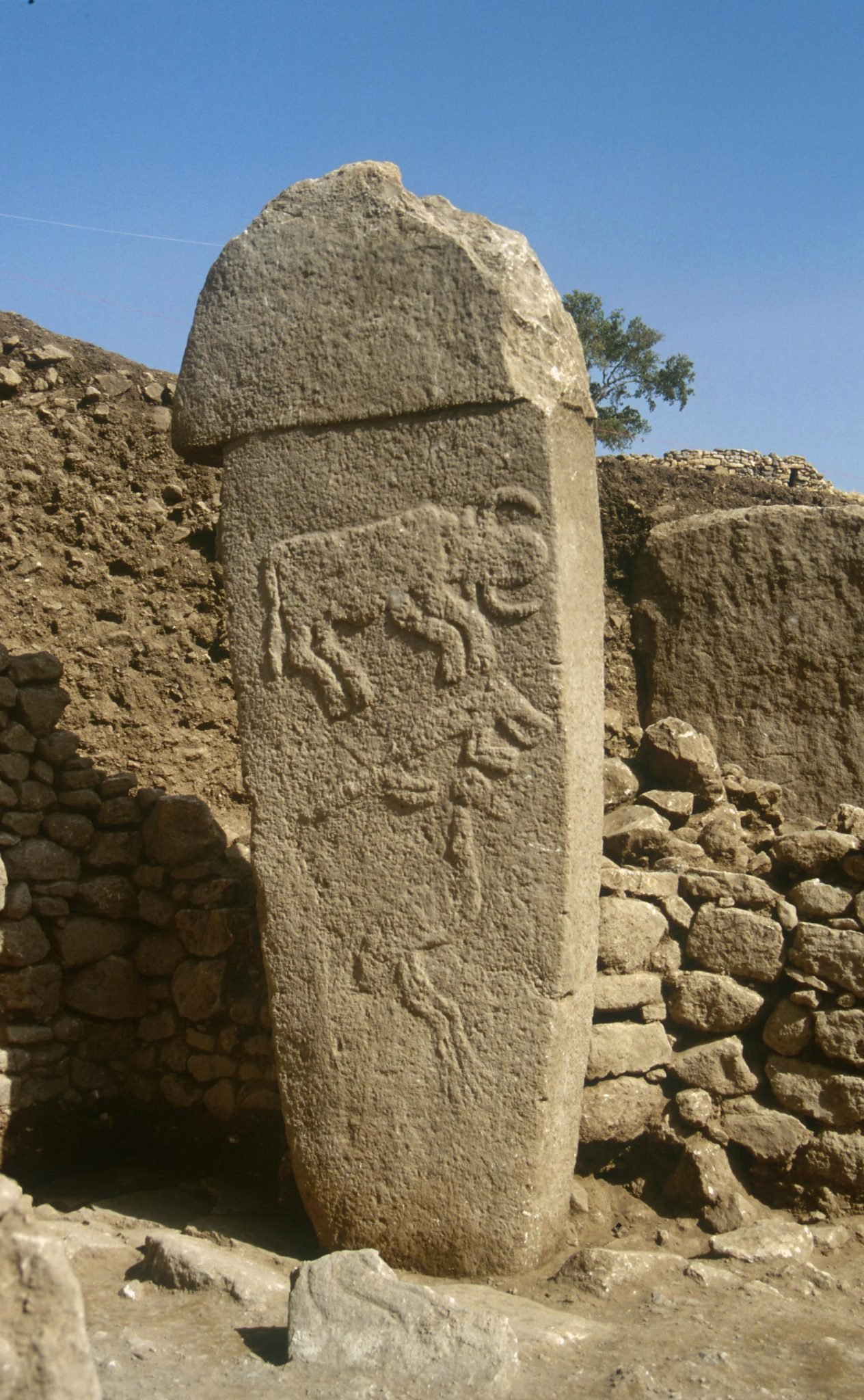
It is tempting to treat the animals on Göbekli Tepe's pillars as a catalogue of the Neolithic world — here a fox, there a crane, a boar, a snake — as if the carvers were recording the wildlife around them. The excavation's director thinks that is the wrong way to look.
Dr Lee Clare (Göbekli Tepe Project, DAI) stresses in lecture material that the pillar imagery should not be read as random animals glimpsed in the landscape. The crane, the fox, the boar are not portraits of fauna. They are figures from stories — narrative and worldview carved into the walls of a building.
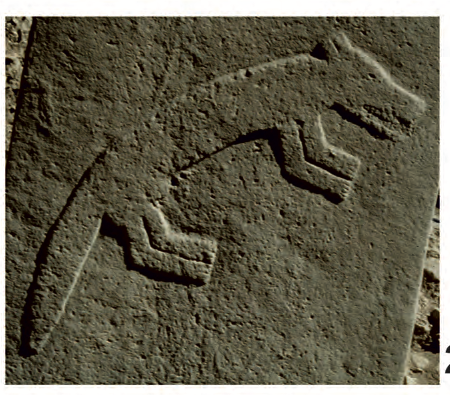
German Archaeological Institute, Göbekli Tepe Project, Fox relief, Pillar 9, Enclosure B, Göbekli Tepe, Copyright: DAI — used with permission, via .
Images that already meant something
The key word is recognisable. To the people who gathered inside these buildings, Clare argues, a particular animal in a particular pose would have called up a known story — the way a cross or a crescent does for us now, or the way a single character on a poster can stand in for an entire film. The carving is a prompt, not a picture of nature.
That reframes the whole surface of Göbekli Tepe. Instead of a zoo in stone, the pillars become something more like a built environment saturated with narrative — a place where the walls themselves rehearsed the community's myths, its dangers and its shared memory. The animals mattered not as species but as characters.
It also helps explain patterns that a wildlife reading struggles with: why certain animals dominate certain enclosures, why creatures appear in deliberate combinations and poses, and why dangerous or symbolically loaded animals recur far more than a simple census of the local fauna would predict.
Why it matters
If the carvings are stories, then Göbekli Tepe is not only the oldest monumental architecture — it is one of our earliest glimpses of people telling themselves stories in a fixed place, and building the place to hold them. The imagery stops being decoration and becomes evidence of a shared imaginative world.
It is also a caution against over-literal readings — including the modern habit of decoding single carvings as star maps or calendars. Clare's framing puts the images back where they belong: inside a narrative culture we can sense but not fully recover.
How we know they're stories, not a census
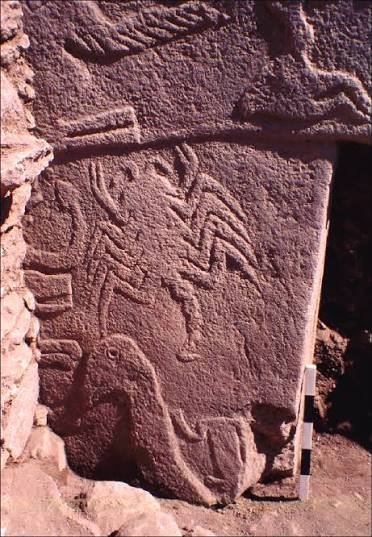
The evidence for the 'narrative, not wildlife' reading is in the patterning. If the carvings were a record of the local fauna, you would expect roughly the mix of animals the bones show people actually hunting and eating. Instead the pillars are dominated by dangerous and symbolically loaded creatures — snakes, scorpions, big cats, vultures, boar — often in deliberate poses and combinations that no naturalist would ever stage. Certain animals cluster in certain enclosures; some scenes place a human figure among beasts, or a head among birds. That is composition, not cataloguing.
A second clue is recurrence. The same creatures return again and again, across pillars and across sites, in stable roles — the fox, the crane, the snake behaving like characters rather than specimens. When an image repeats with a consistent meaning, it is working as a sign; and signs belong to stories.
Common questions
What do the animals at Göbekli Tepe mean? The excavators read them as figures from shared stories and beliefs — characters that would have called up a known myth — rather than portraits of local wildlife. The specific stories are lost to us.
Are the Göbekli Tepe carvings a calendar or a star map? The excavation rejects such literal decodings. The imagery is narrative and symbolic; attempts to read single carvings as astronomical records are not supported by those who dig the site.
Why are dangerous animals so common? Because the imagery is symbolic, not a menu: fierce, potent creatures carried meaning in the community's stories, which is why they far outnumber what the bones show people actually ate.
What is uncertain
We can argue that the imagery is narrative; we cannot read the stories themselves. The specific myths are lost, and any attempt to name them is speculation. 'Narrative, not wildlife' is an interpretation of how the images worked, not a decoding of what they said.
This position comes from spoken lecture material and may be developed further in the project's forthcoming imagery volumes. Treat it as the director's reading of the carvings' purpose, likely to be argued more fully in print.
Key takeaways
- Göbekli Tepe's animals read as characters in stories, not a record of the wildlife around the site.
- The giveaway is patterning — deliberate poses, combinations and per-enclosure clustering a census wouldn't produce.
- That makes the site one of the earliest cases of people telling stories in a fixed, built place.
- It is also a caution against over-literal decodings — star maps, calendars — of single carvings.
Sources
- Anthropozoologica (Peters & Schmidt 2004) — Animals in the symbolic world of Pre-Pottery Neolithic Göbekli Tepe
- Tepe Telegrams (DAI) — Frequently Asked Questions (what do the animals mean?)
This article is written from the primary literature and excavators' reports cited above. Interpretations are attributed; uncertainties are stated in the text.