A sealed room on the southwestern hilltop
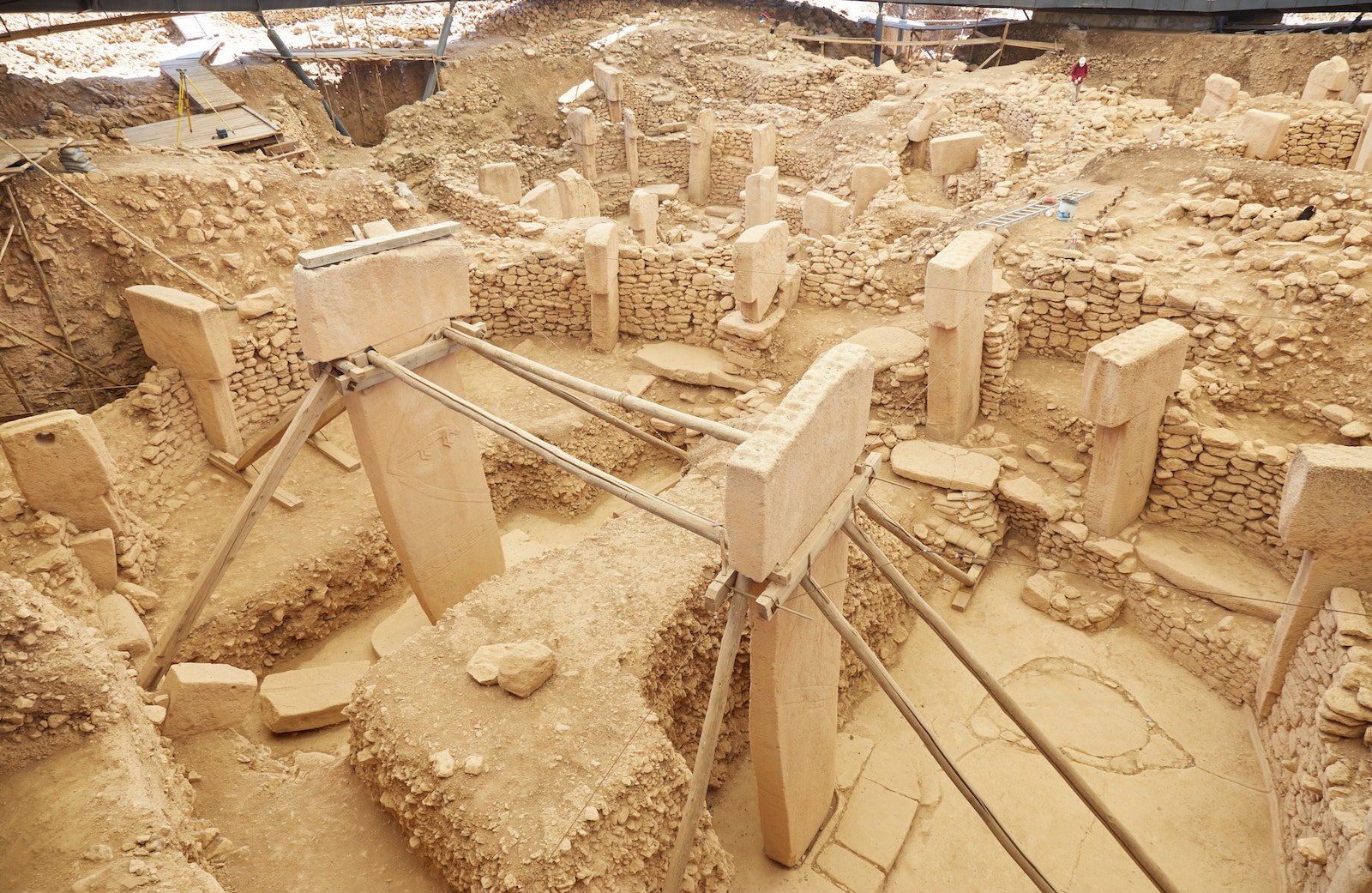
Most of what the world knows about Göbekli Tepe comes from the great round enclosures of the older Layer III. But from 2007 the excavation opened new ground on the site's southwestern hilltop, into the younger Layer II — a phase of smaller, rectangular rooms that shows the site was not only a place of monumental circles but also of more ordinary building.
One very large room here, in area L9-17, had at some point in its life been subdivided by two walls into a squarish central space and two small side chambers. The odd thing: no doorways into those chambers could be found. If they were entered at all, it was through the roof — the same closed, inward-turned architecture seen elsewhere at the site.
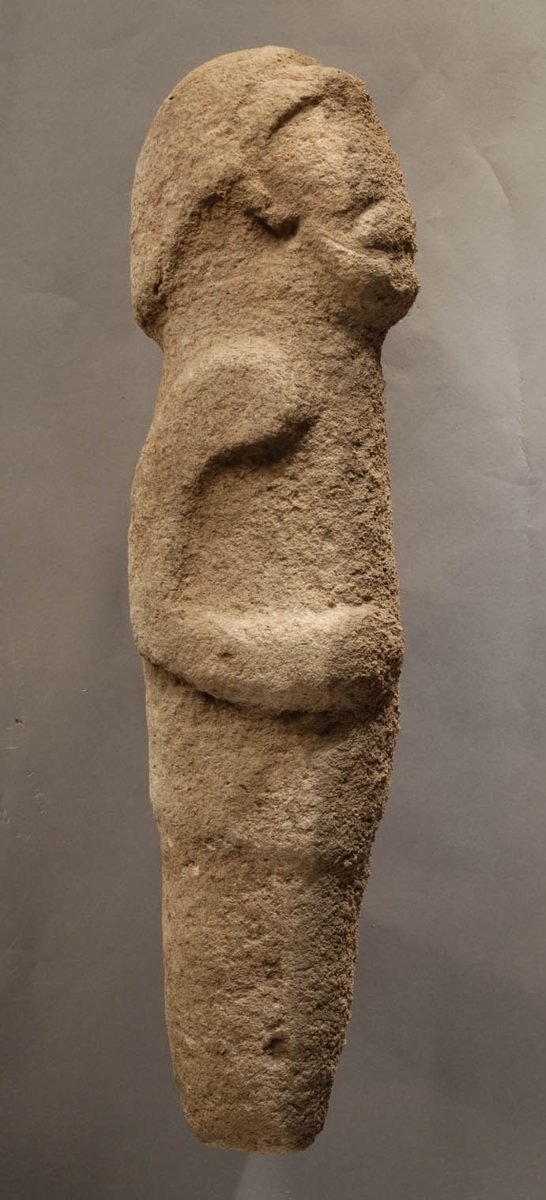
In the eastern chamber the diggers first uncovered a pillar fragment. Then, just to the north of it, they found an anthropomorphic sculpture — complete, undamaged, and lying face-down on the floor.
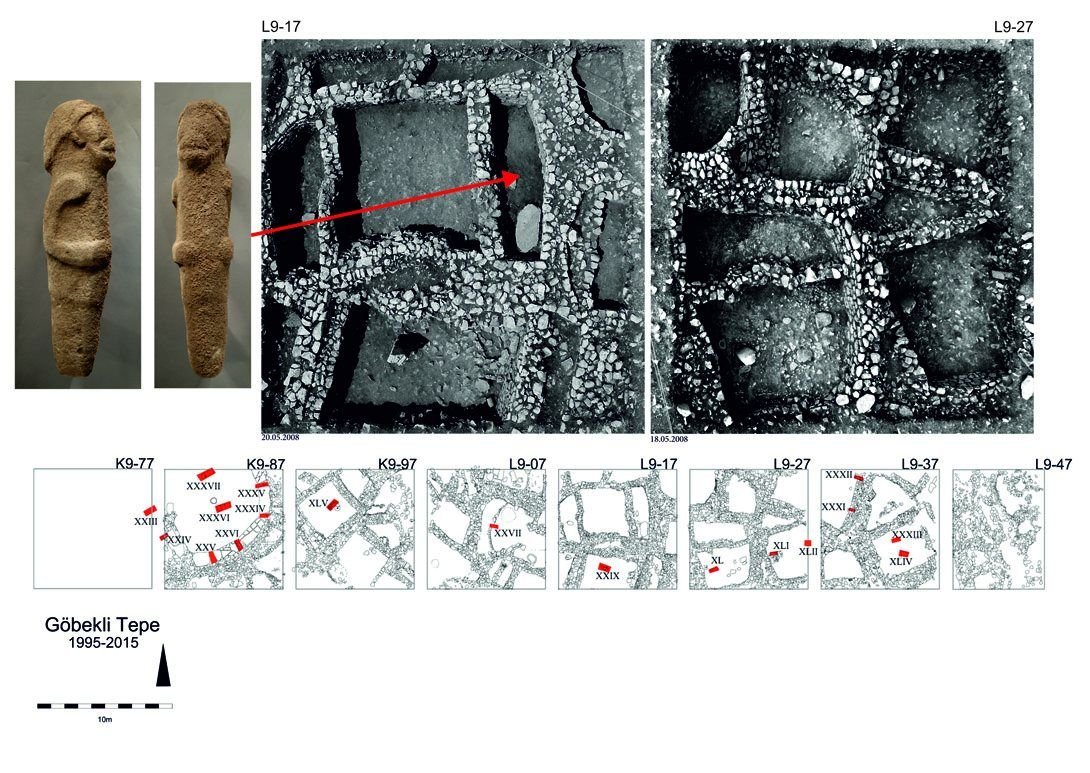
Laid down, not fallen
Nothing about this reads as an accident of collapse. Deliberately placing sculptures next to pillars is a well-attested Göbekli Tepe habit — the enclosures were full of stone heads and figures set carefully against the uprights before being buried. And here the figure's chamber had been physically sealed off from the rest of the room, which only sharpens the impression of a considered act. Someone set the statue down, face to the floor, and closed the space around it.
The figure itself is 66 cm tall. It shows a standing person with bent arms and hands brought together at the belly — the exact posture of the great T-pillars — looking upward, and wearing what appears to be a cap. It has no carved legs; instead the body tapers to a conical tap, a peg designed to be set upright into the ground. When found, its face and front were still buried under a thick crust of sinter (natural mineral crust), so its features only emerged after careful conservation. A small stone person, made to stand — then laid on its face and hidden.
Why bury a statue face-down?
This is where the find becomes haunting, because the act looks intentional and meaningful, yet its meaning is lost. Ethnography and archaeology offer several readings for the deliberate, face-down deposition of an image. It may be a retirement: a figure that had done its work, decommissioned and 'put to bed' when its building's life ended. It may be a de-activation — turning the face away so the being could no longer see or act, a way of neutralising a powerful object. It may be concealment and protection, hiding something precious. Or it may belong to the same impulse that led the community to bury its enclosures wholesale: an ending performed with care rather than neglect.
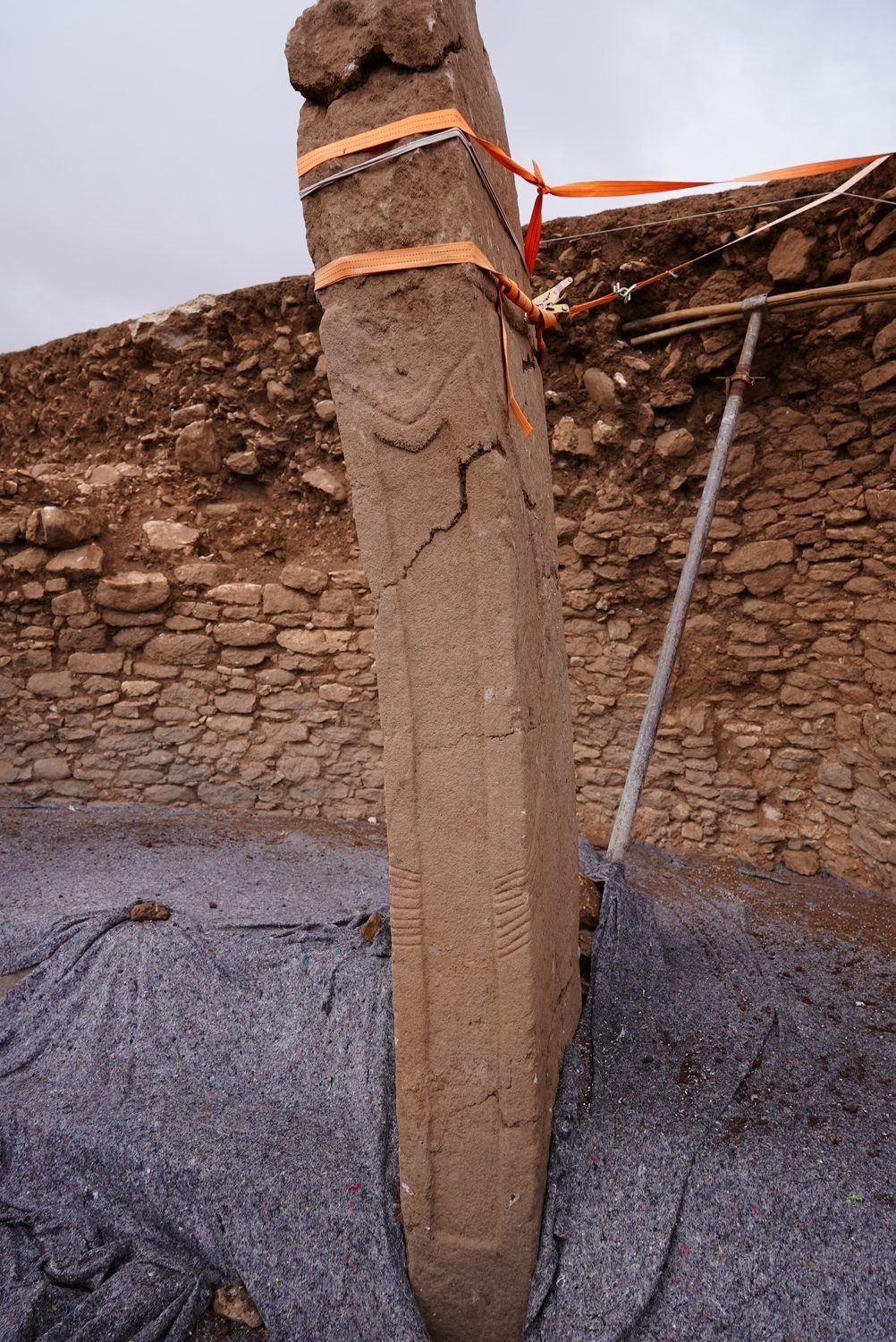
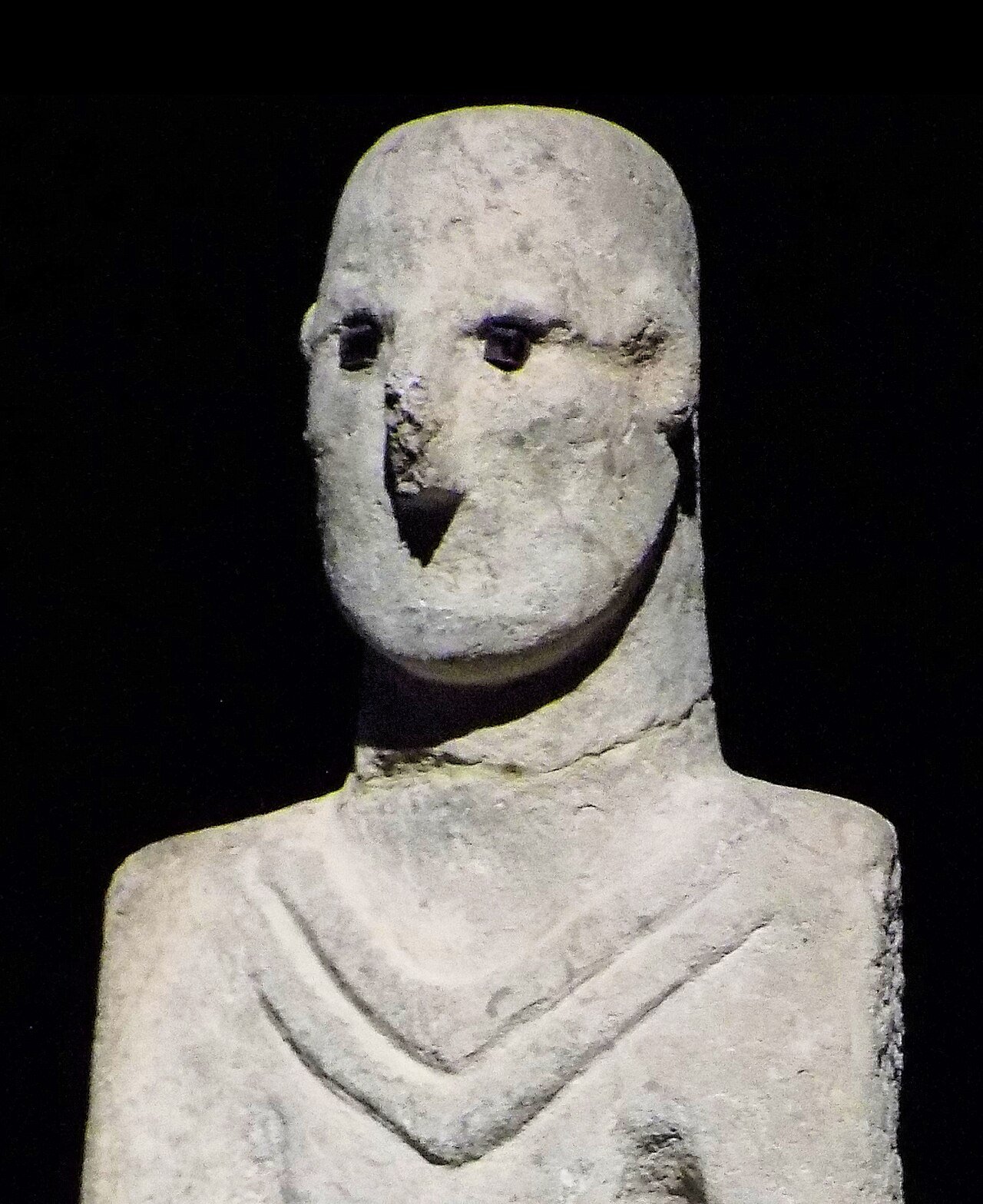
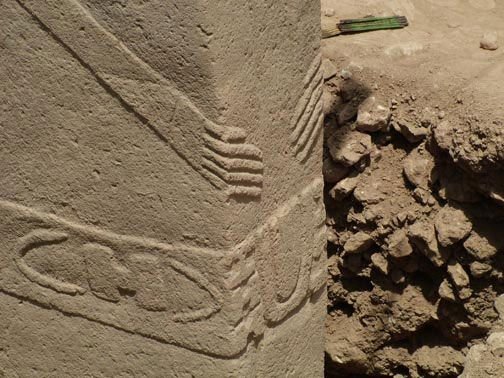
What ties it to the wider site is posture. Hands folded to the belly, standing, watchful — this is the anthropomorphic language of the T-pillars and of Urfa Man, rendered here at hand-held scale. Whatever the burial meant, the statue was one of the stone people of this world, and it was given a deliberate end.
Common questions
How big is the face-down statue from Göbekli Tepe? It is about 66 cm tall — a hand-portable figure of a standing person, not a life-size statue. Below the hands it narrows to a conical peg meant to be set into the ground.
Where was it found? In a sealed, door-less chamber in area L9-17 on Göbekli Tepe's southwestern hilltop, among the rectangular buildings of the younger Layer II, lying face-down beside a pillar fragment.
What does its posture mean? The bent arms and hands meeting at the belly copy the posture of the T-pillars — part of the same idea that the site's standing stones are stylised human, or human-like, beings.
What is uncertain
Why the statue was buried face-down, and what the act meant — retiring a figure, 'killing' it, hiding it, protecting it — is unknown. The sealed, door-less chamber invites interpretation but does not settle it, and several readings remain equally possible.
Fine details of the face and front depended on conservation and were not visible at discovery, so the earliest descriptions are partial. What is clear is the deliberate placement beside a pillar, and the statue's kinship, in posture, with the pillar-beings of the enclosures.
Key takeaways
- A complete human statue was found lying face-down in a deliberately sealed, door-less chamber, beside a pillar.
- At 66 cm with a peg base, it was made to stand upright — then laid on its face and buried, an intentional act.
- Its posture — hands to the belly, standing, watchful — is the same anthropomorphic language as the T-pillars and Urfa Man.
- Why it was buried face-down (retirement, de-activation, concealment) is unknown, and probably unknowable.
Sources
- DAI Tepe Telegrams — Buried face-down. A statue from Göbekli Tepe's southwestern hilltop
- Becker, N., Dietrich, O., Götzelt, T., Köksal-Schmidt, Ç., Notroff, J. & Schmidt, K. (2012). Materialien zur Deutung der zentralen Pfeilerpaare… ZORA 5, 14-43 — discussed in the DAI Tepe Telegrams post linked here.
- Schmidt, K. (2010). Göbekli Tepe – the Stone Age Sanctuaries. Documenta Praehistorica 37, 239-256.
This article is written from the primary literature and excavators' reports cited above. Interpretations are attributed; uncertainties are stated in the text.