A bestiary of teeth and venom
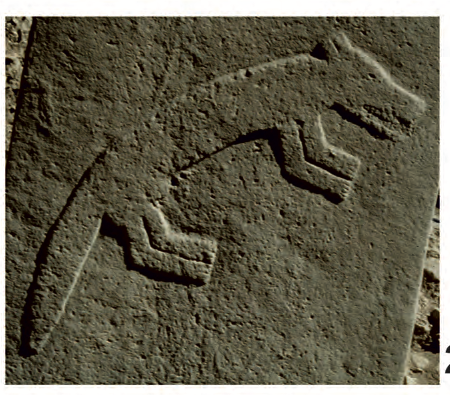
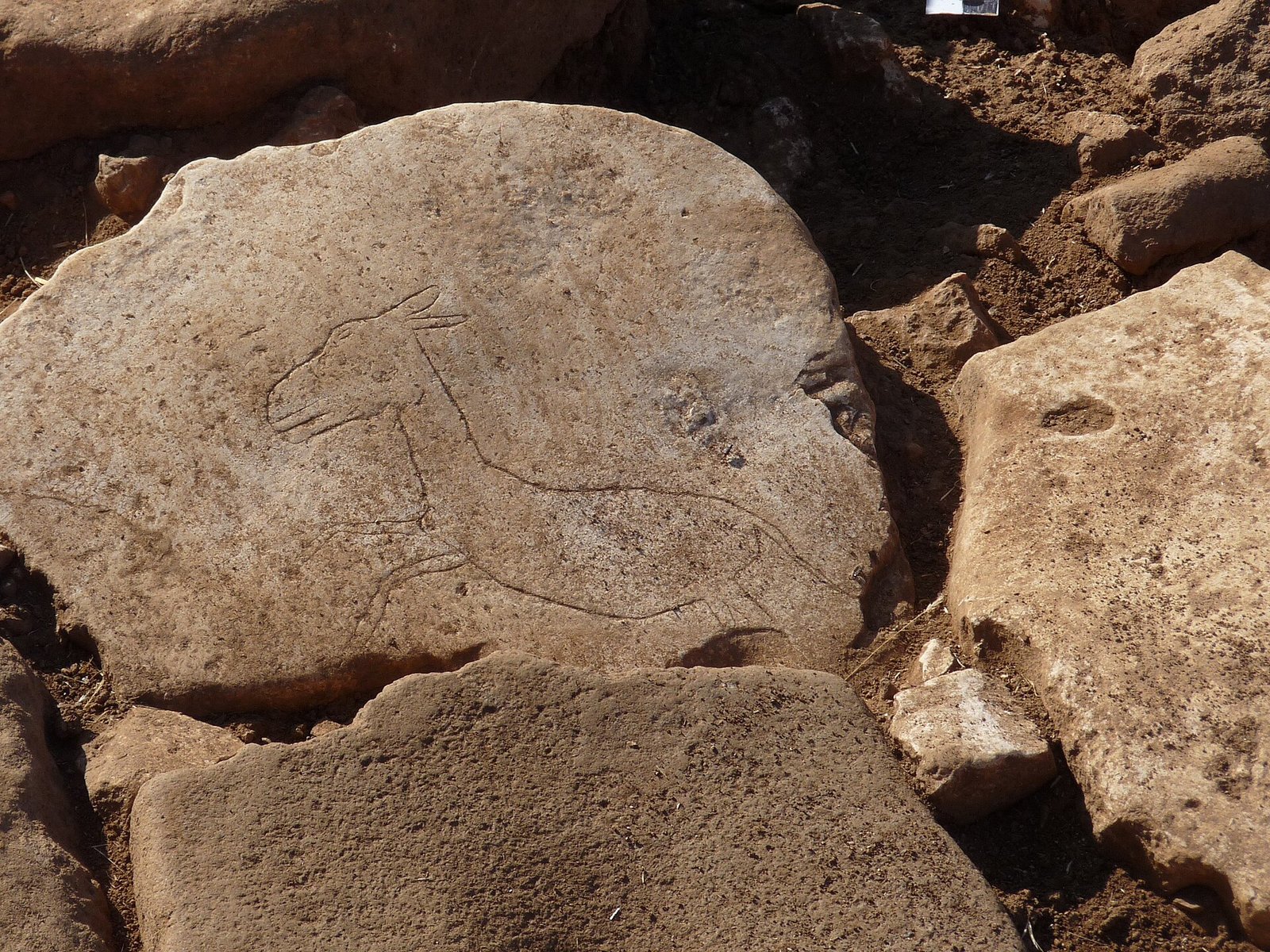
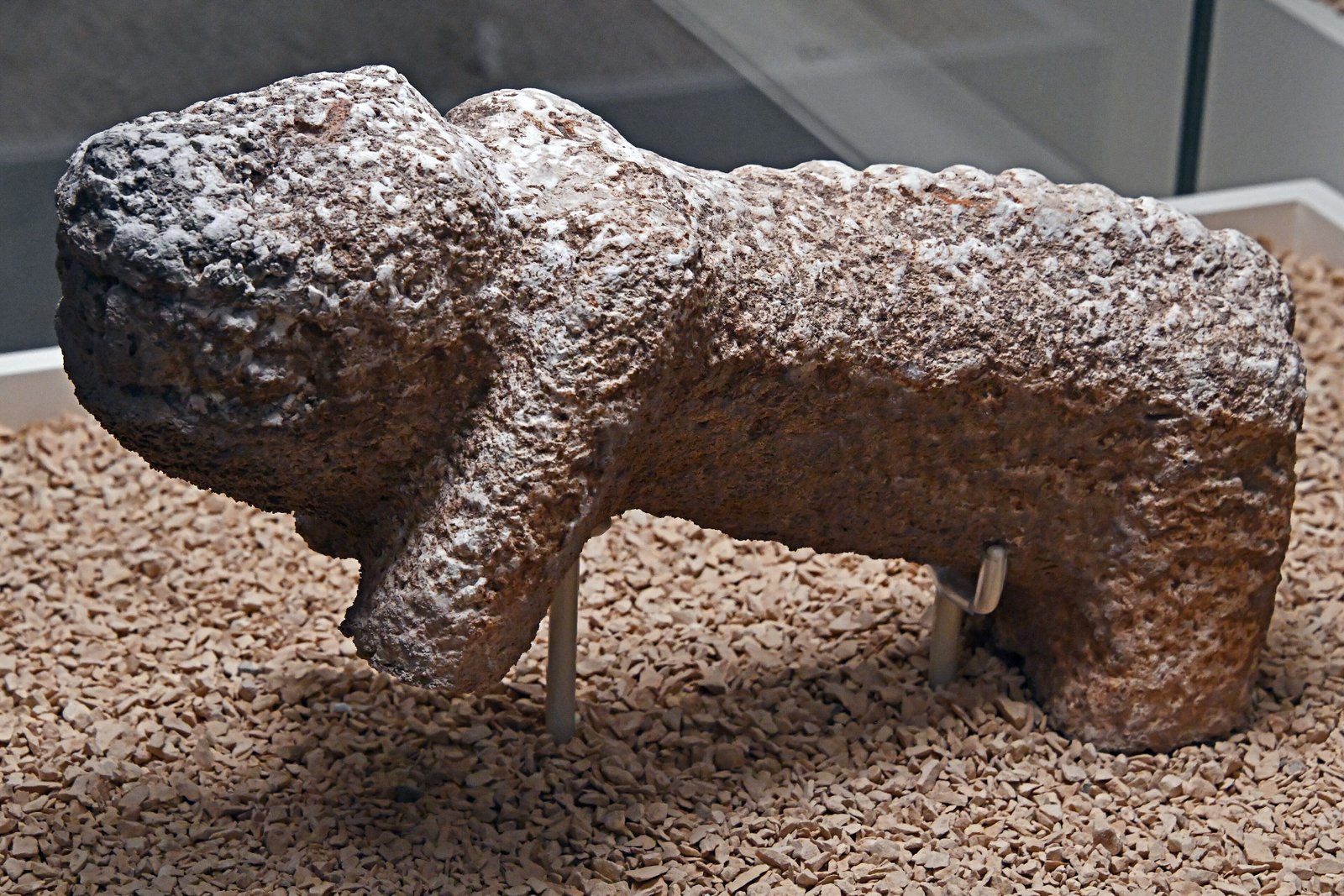
Run through the carved animals of the Taş Tepeler sites and a pattern jumps out. Snakes by the dozen. Scorpions. Vultures and other raptors. Leopards and lions. Wild boar with tusks. Aurochs — the enormous wild cattle. Foxes, cranes, spiders. What almost all of these share is that they are dangerous, venomous, scavenging, or otherwise not on the dinner plate.
The animals people actually ate are strikingly scarce in the imagery. At Göbekli Tepe the excavated bone tells a clear story: the meat came above all from gazelle, along with aurochs and wild sheep. Yet the gazelle — the single most important food animal — is almost absent from the carvings. What filled the cooking hearths did not fill the walls.
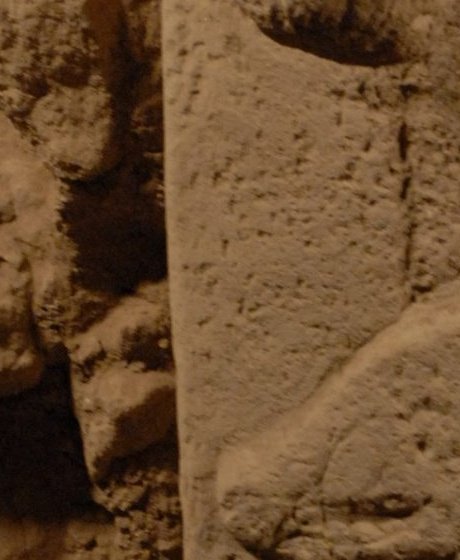
German Archaeological Institute, Göbekli Tepe Project, Boar relief, Enclosure C, Göbekli Tepe, Copyright: DAI — used with permission, via .
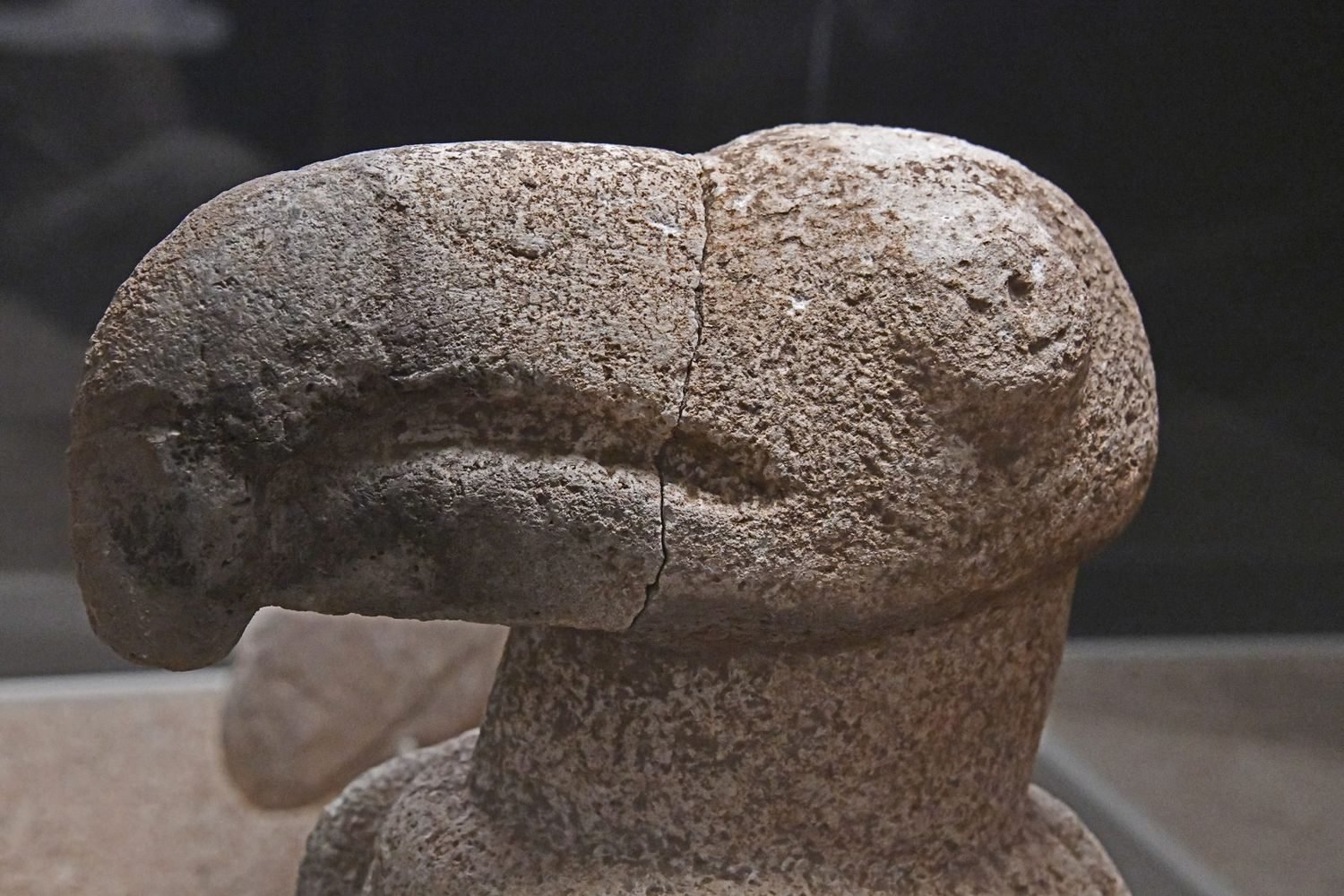
Dosseman, Urfa museum Karahantepe Head of Vulture Neolithic age in 2024 7309, CC BY-SA 4.0, via Wikimedia Commons.
Not a nature guide
That selection is exactly why the carvings cannot be read as wildlife illustration. Lee Clare, of the Göbekli Tepe project, has argued in lecture and interview material that the pillar animals belong to stories — characters in narratives a Neolithic viewer would recognise — rather than to a record of the local fauna. A menagerie skewed so hard toward the fearsome fits a world of myth and meaning, not a field guide.
It may also invert a comfortable assumption. These were hunters, but they did not fill their most important buildings with images of the hunt or the kill. They filled them with the animals that could hurt or consume a person — the snake, the scorpion, the big cat, the vulture that strips a corpse. The art is closer to a catalogue of threats and powers than of resources.
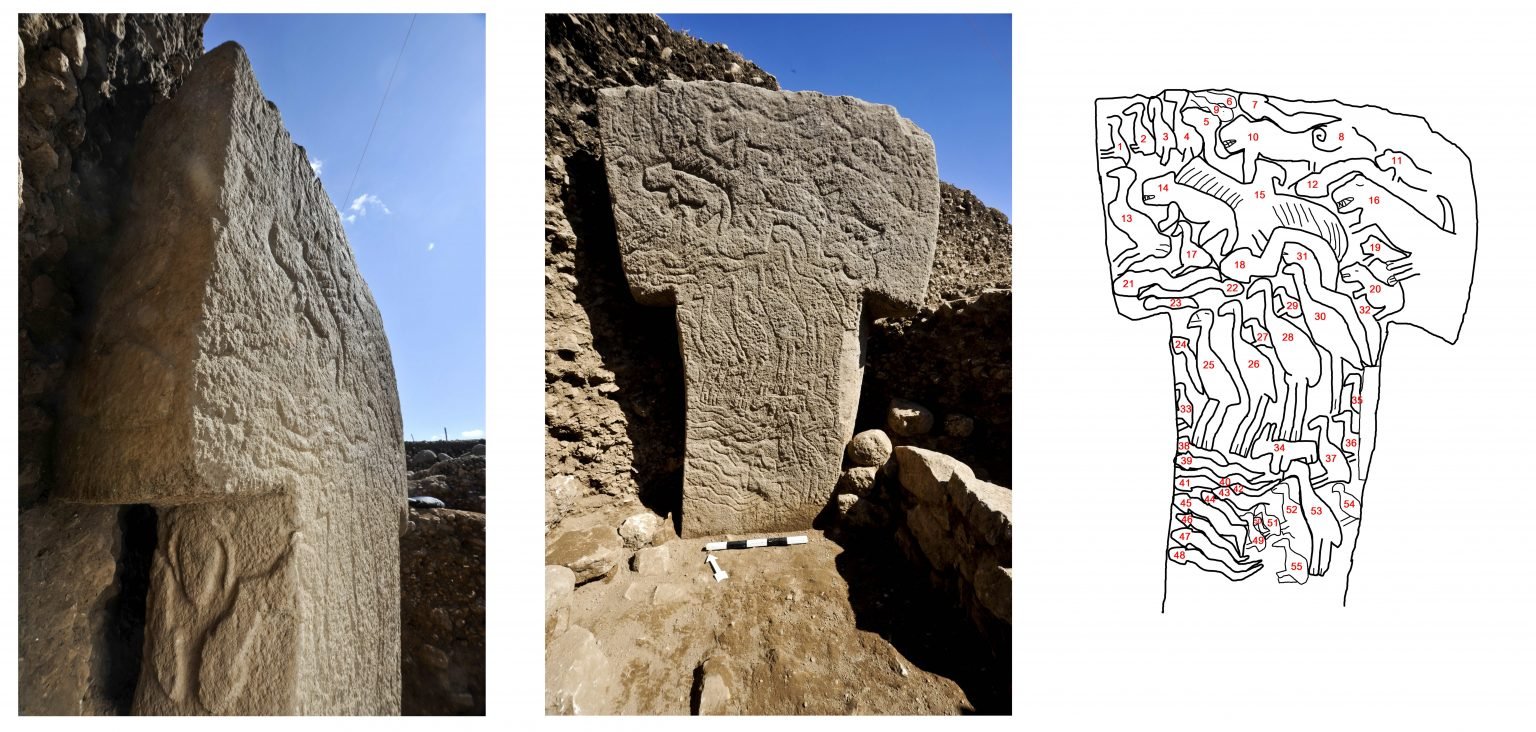
German Archaeological Institute, Göbekli Tepe Project, Pillar 56, Enclosure H, Göbekli Tepe, Copyright: DAI — used with permission, via .
Threats and powers, not resources
Turn the usual assumption around and the strangeness sharpens. These were hunters, yet they did not fill their most important buildings with images of the hunt or the kill. Instead they chose the animals that could hurt or consume a person — the snake, the scorpion, the leopard, the vulture that strips a corpse. The art reads less like a record of what was on the menu and more like a catalogue of threats and powers.
That fits the wider Taş Tepeler world: a network of sites in the Şanlıurfa region of southeastern Türkiye, built around twelve thousand years ago in the Pre-Pottery Neolithic. Across these mounds the same fierce creatures recur — a shared symbolic language of danger that any single site's carvings only hint at.
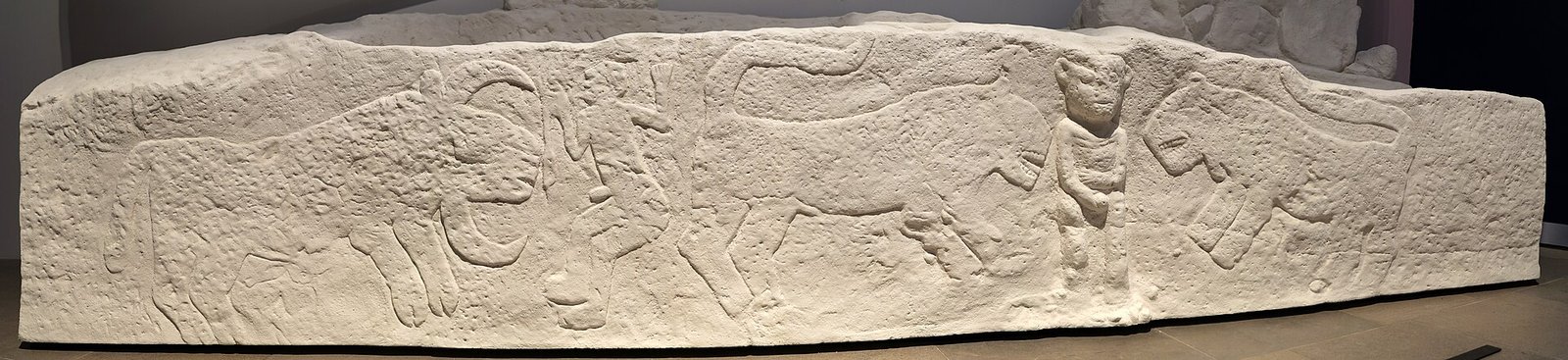
The same skew across the network
The mismatch is not a Göbekli quirk. At Karahan Tepe, recent dietary work points to gazelle and legumes as staples, while the sculpture is dominated by leopards, vultures and snakes. At Sayburç, the great relief places a human between leopards on one side and a charging aurochs on the other — a scene built entirely from powerful, threatening animals. Wherever you look, the carvers reached for the fearsome rather than the everyday.
What is uncertain
'Dangerous' is a modern sorting category, and the counts are uneven: assemblages differ site to site, most of every mound is still unexcavated, and gazelle and other prey do appear occasionally in the imagery. The link between what was eaten and what was carved is drawn from faunal studies and ongoing dietary work that are still being published.
Clare's 'animals as stories' framing comes from spoken material and may be refined in print. What is solid is the bias itself: across the Taş Tepeler sites the carved fauna leans heavily toward the dangerous and the inedible, and away from the everyday food animals — a gap that any explanation of these sites has to account for.
Common questions
What animals are carved at Göbekli Tepe? Snakes, foxes, wild boar, aurochs, vultures and other birds, big cats, scorpions and spiders dominate — overwhelmingly dangerous, venomous or scavenging creatures, rather than the gazelle people mostly ate.
Why did they carve dangerous animals instead of the ones they ate? The imagery seems to have been about meaning — power, threat and the boundary between life and death — not a record of the hunt. The excavators read the animals as characters in shared myths.
Key takeaways
- The carved animals of the Taş Tepeler sites are overwhelmingly the dangerous and the inedible — snakes, scorpions, vultures, big cats, boar and aurochs.
- The gazelle that filled the cooking pots is almost absent from the walls — what people ate did not match what they carved.
- Zooarchaeologists Joris Peters and Klaus Schmidt found the carved species were selected for danger and power, not a faithful sample of local wildlife.
- Lee Clare argues the pillar animals belong to stories — characters in shared myths — rather than to a record of the hunt.
Sources
- Peters, J. & Schmidt, K. (2004). Animals in the symbolic world of Pre-Pottery Neolithic Göbekli Tepe. Anthropozoologica 39(1).
- DAI Tepe Telegrams — Boars in Göbekli Tepe's Enclosure C: just a story of hunters and prey?
- Karul, N. (2021). Buried Buildings at Pre-Pottery Neolithic Karahantepe. Türk Arkeoloji ve Etnografya Dergisi 82.
This article is written from the primary literature and excavators' reports cited above. Interpretations are attributed; uncertainties are stated in the text.