The animal that keeps showing up
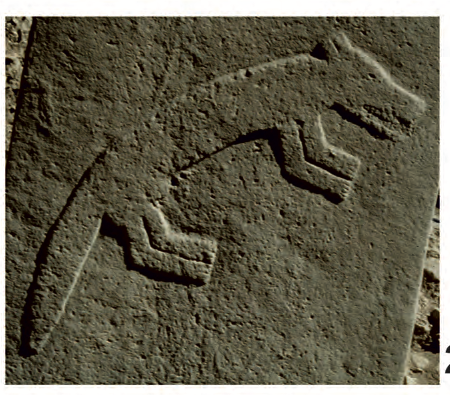
If you list the creatures carved on the great pillars, the fearsome ones stand out: aurochs, leopard, wild boar, vulture, snake. But run your eye across the whole repertoire — Göbekli Tepe, Karahan Tepe, and their neighbours — and the animal that appears again and again is the humble fox.
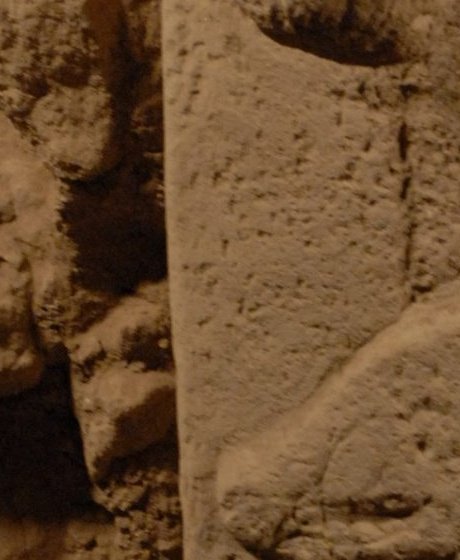
At Göbekli Tepe, foxes sit at the very centre of the buildings. Both central pillars of Enclosure B — Pillars 9 and 10 — carry fox reliefs, making the fox the visual anchor of the whole room. A fox appears again on Pillar 2 in Enclosure A, alongside an aurochs and a crane, and foxes are carried against the flanks of the tall anthropomorphic pillars elsewhere on the mound. At Karahan Tepe the animal reappears: one pillar bears a striking double-fox depiction, now in the Şanlıurfa museum, and another fox is carved in relief on a pillar in Structure AD.
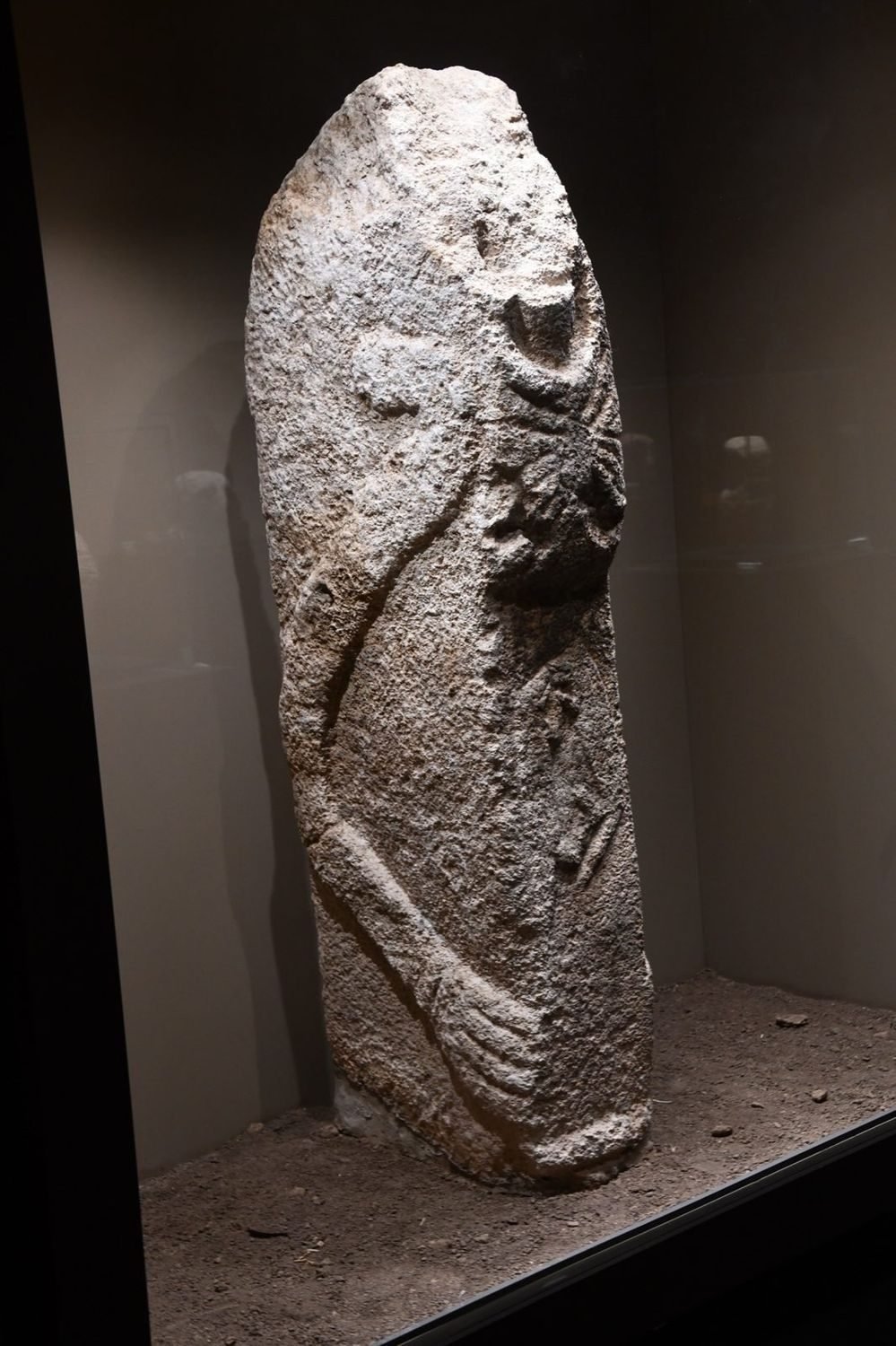
Dosseman, Urfa museum Karahantepe Pillar with a double fox depiction Neolithic Age in 2024 7355, CC BY-SA 4.0, via Wikimedia Commons.
Not just carved — buried
The fox's reach goes beyond the carvings. In the wider excavation at Karahan Tepe, the director Necmi Karul describes an unusual deposit of selected animal parts, handled with obvious care: leopard bones, vulture remains, wolf jaws — and fox paws and claws still attached to the pelt. This is reported from ongoing work and its meaning is not settled, but it is a remarkable detail: the same creature that is carved onto the most important stones was also, in another building, laid into the ground as skin and claws.
Put the two together and the fox stops looking like background wildlife. It looks like something people wanted on the pillars and in the deposits — a chosen animal, not a random one.
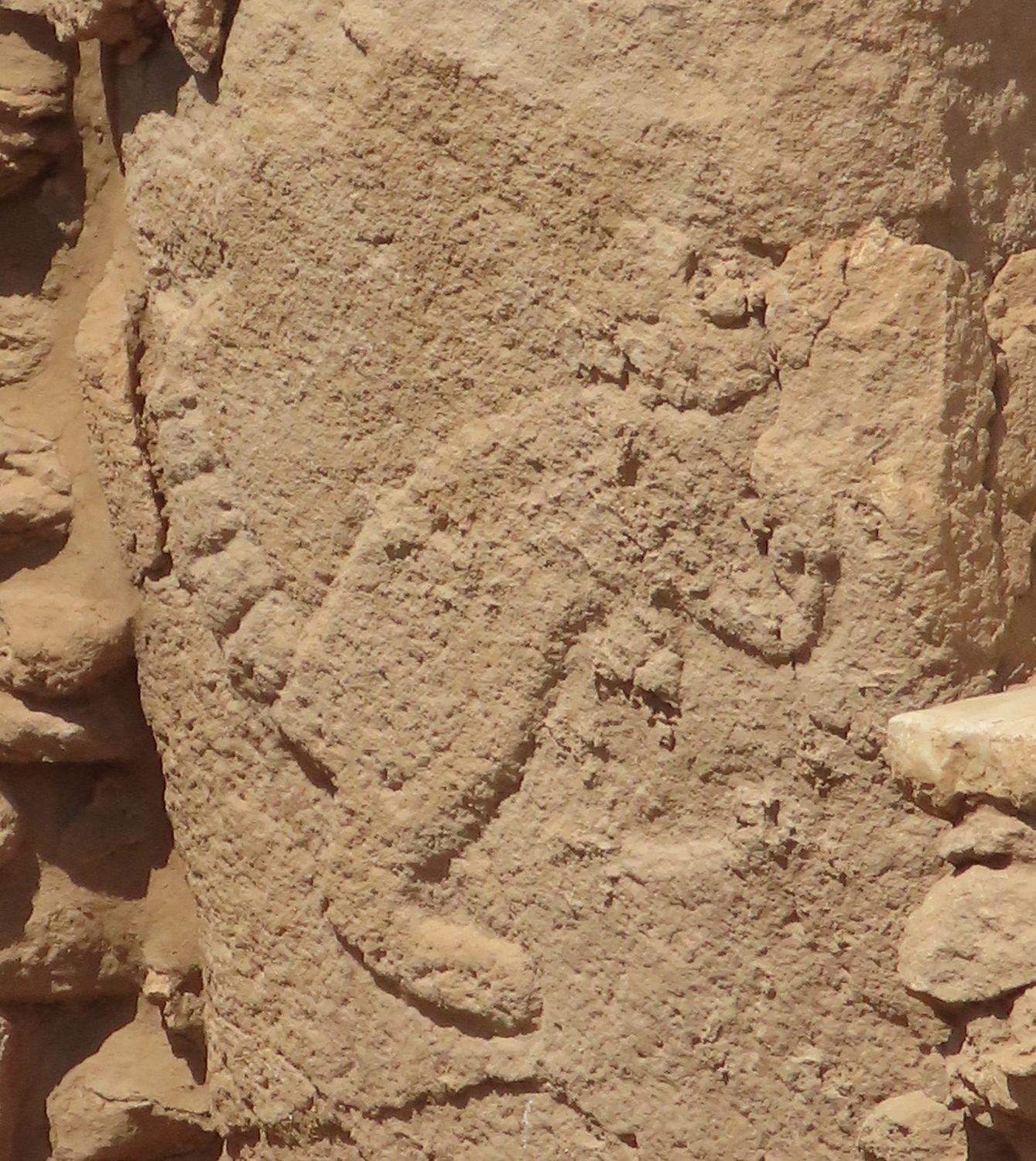
Tobey Travel, Structure AD, Pillar Carving, animal relief (Fox), Karahantepe (Karahan Tepe), Turkey, CC BY-SA 4.0, via Wikimedia Commons.
A character, not a nature guide
Why the fox? It is not dangerous, not a prestige kill, not obviously useful. That is exactly why its ubiquity is interesting. Lee Clare, of the Göbekli Tepe project, has argued in lecture material that the pillar animals should not be read as a catalogue of species people saw in the landscape; the crane, the boar and the fox more plausibly belong to stories — characters recognisable to Neolithic viewers, the way a fox is a knowing trickster in later folklore.
We cannot recover those stories. But the fox's persistence — small, clever, everywhere — is one of the clearest hints that the carvings were narrative, not natural history.
A chosen animal, not background
Why the fox? It is not dangerous, not a prestige kill, not obviously useful — which is exactly what makes its ubiquity so telling. An animal chosen this often, and placed at the very centre of the most important buildings, was chosen for a reason, even if that reason is now out of reach.
Put the carvings and the deposit side by side and the fox stops looking like scenery. The same creature that recurs on the central pillars was also, in another Karahan building, laid into the ground as skin and claws among leopard bones, vulture remains and wolf jaws. On the walls and in the earth, people seem to have wanted the fox present.
A character in a story we can't read
Lee Clare, of the Göbekli Tepe project, has argued that the pillar animals should not be read as a catalogue of species people saw in the landscape. The crane, the boar and the fox more plausibly belong to stories — characters a Neolithic viewer would have recognised, much as the fox became a knowing trickster in later folklore. We cannot recover those tales, but the fox's persistence — small, clever, everywhere — is one of the clearest hints that these carvings were narrative, not natural history. The Taş Tepeler sites sit in the Şanlıurfa region of southeastern Türkiye and date to roughly twelve thousand years ago, so the stories themselves are long lost; only their carved cast survives.
What is uncertain
Clare's 'animals as stories' framing comes from lectures and interviews, and spoken positions may be refined in print. The Karahan animal-part deposit, including the fox pelt, is described in ongoing reporting; the zooarchaeological study continues and it is not proof of any specific ritual. Any reading of what the fox meant is interpretation.
What is firm is the distribution: the fox is one of the most frequently repeated animals across the Taş Tepeler carvings, and at Karahan it crosses from image into deposited remains.
Common questions
What is the most common animal carved at Göbekli Tepe? Although the fierce beasts get the attention, the fox is one of the most persistently repeated animals across the Taş Tepeler carvings — including both central pillars of Enclosure B at Göbekli Tepe.
Why is the fox important at Göbekli Tepe and Karahan Tepe? The fox isn't dangerous, a prestige kill or obviously useful, yet it appears again and again on the pillars and even buried as paws and pelt. Researchers suspect it was a character in shared stories rather than background wildlife.
Key takeaways
- Lions and leopards get the attention, but it is the humble fox that turns up most persistently across the Taş Tepeler sites.
- At Göbekli Tepe both central pillars of Enclosure B (9 and 10) carry fox reliefs — the fox anchors the whole room.
- At Karahan Tepe the fox reappears as a double-fox pillar and again in Structure AD.
- The fox even crosses from image into deposit: paws and pelt were laid in the ground at Karahan alongside other selected animal parts.
Sources
- DAI Tepe Telegrams — Enclosure B, a short overview (fox pillars)
- DAI Tepe Telegrams — Enclosure A, a short overview (Pillar 2: aurochs, fox, crane)
- Karul, N. (2021). Buried Buildings at Pre-Pottery Neolithic Karahantepe. Türk Arkeoloji ve Etnografya Dergisi 82.
This article is written from the primary literature and excavators' reports cited above. Interpretations are attributed; uncertainties are stated in the text.