An art almost without women
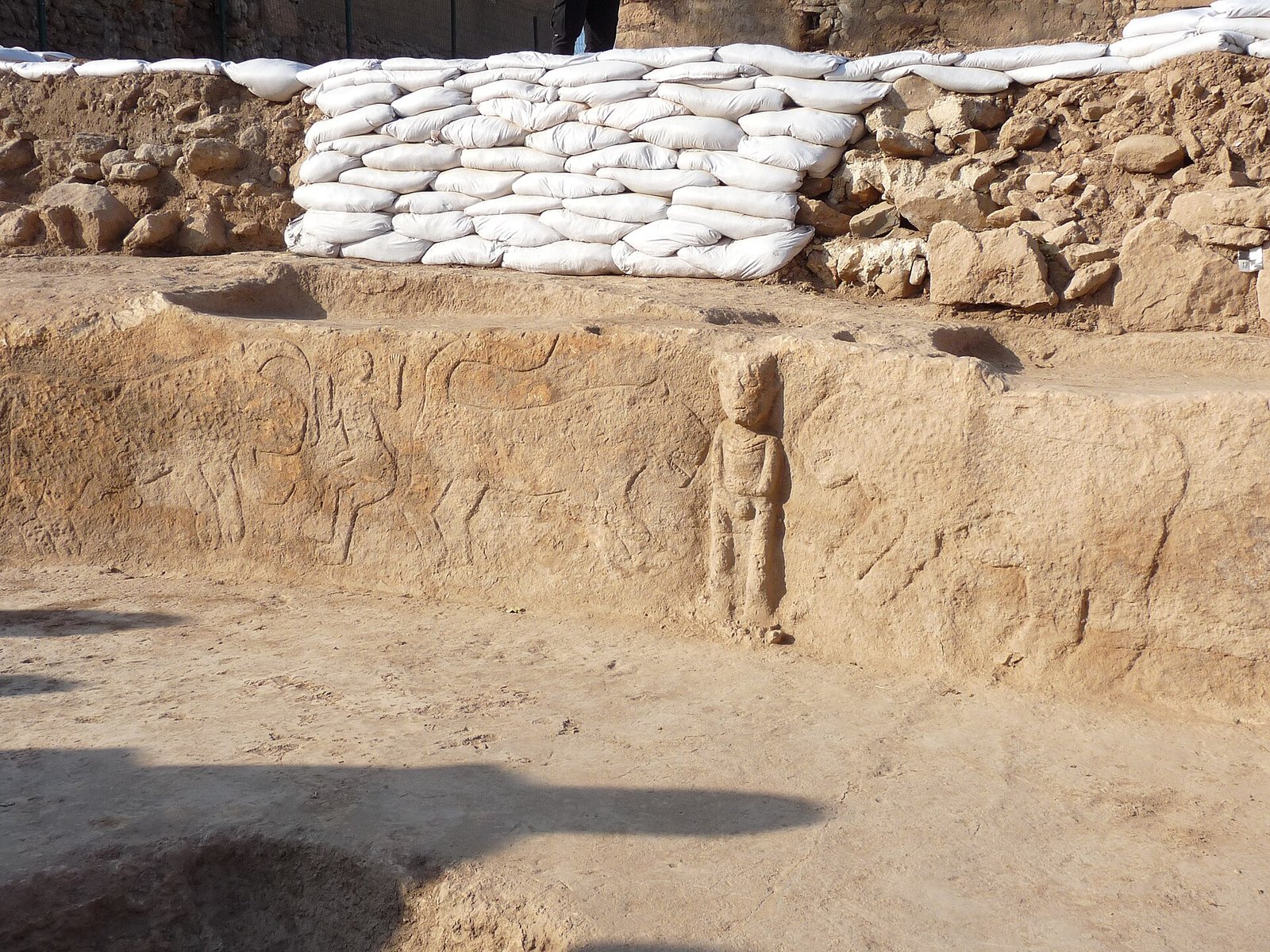
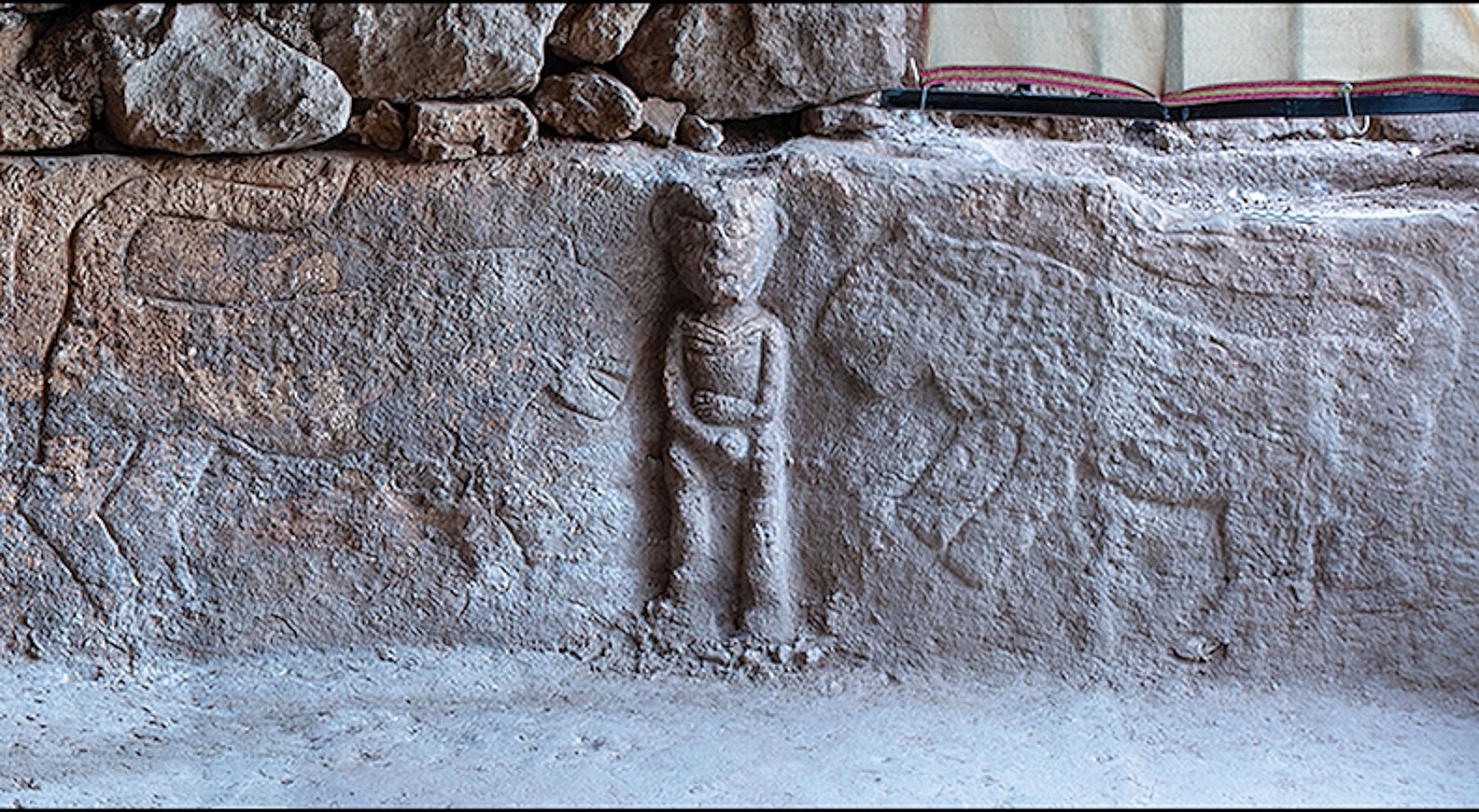
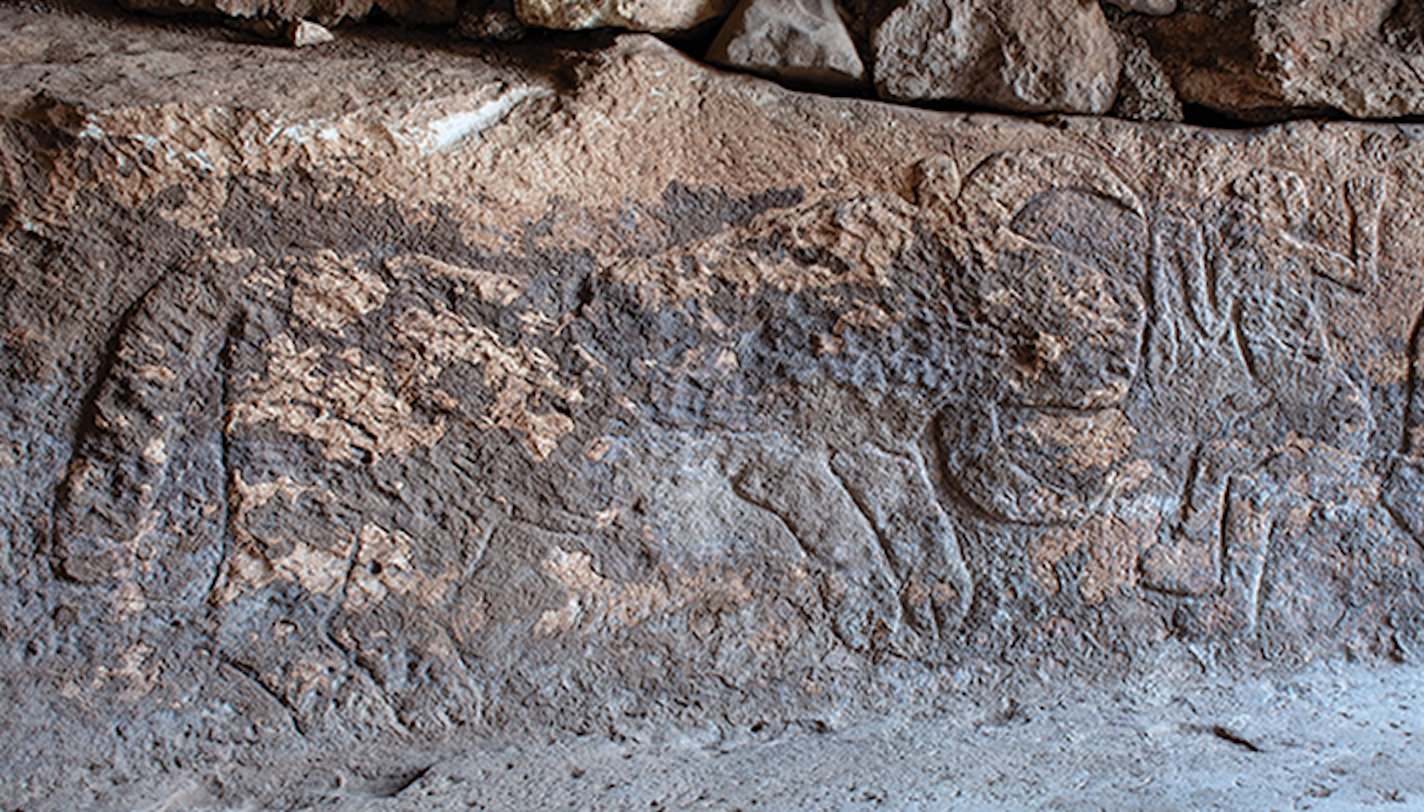
Look across the carved imagery of the Taş Tepeler sites and one absence is loud. At Sayburç, the human figures are male — the central man holds his own phallus, flanked by leopards with teeth and claws bared. At Karahan Tepe, whole rooms are lined with phallic pillars, and a seated stone man is carved with an exaggerated phallus. Across the region the recurring human is male, and explicit female imagery is strikingly rare.
The old reflex is to file all of this under 'fertility' — a fertility cult, a mother-and-father symbolism, reproduction carved in stone. The excavator of Sayburç reads it differently.
Power, not reproduction
Dr Eylem Özdoğan (Istanbul University), who excavates Sayburç, connects the emphatically male and phallic imagery to power and control, rather than to simple fertility or reproduction. On that reading, the man between the leopards is not a fertility emblem but an image of dominance — a human holding dangerous animals in check, mastery staged in stone.
That shift matters because 'fertility' quietly domesticates the imagery, turning confrontation and threat into something gentle and reproductive. The Sayburç scene is not gentle. It is a person facing predators, and it reads as being about who holds power over what.
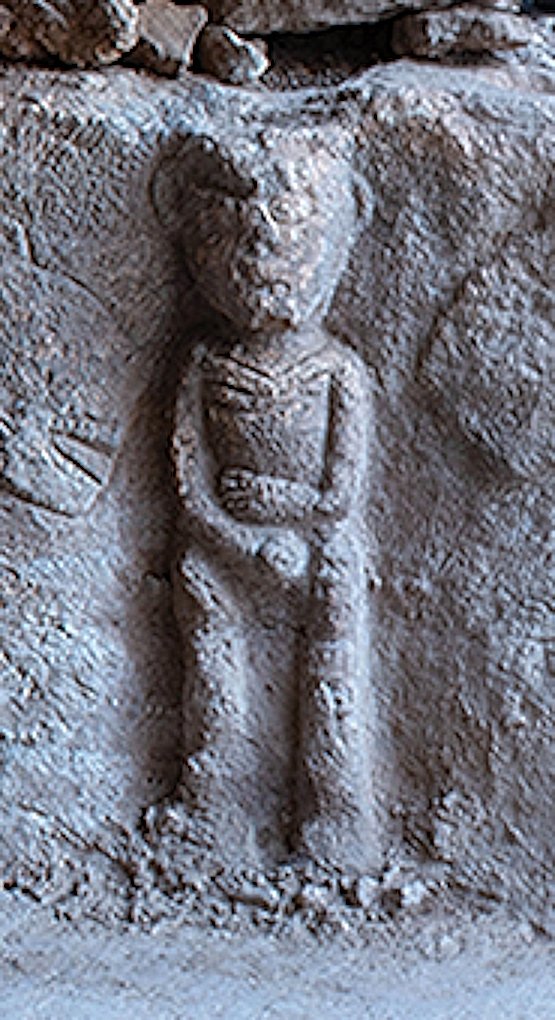
B. Köşker, Sayburç man, CC BY-SA 4.0, via Wikimedia Commons.
The caution about who is missing
Then comes the point that rarely survives into popular accounts. Özdoğan stresses that what survives is what was carved in stone. We cannot conclude that female or feminine symbolism was absent from this world simply because it is faint in the surviving record. It may have been expressed in materials that did not last — wood, fibre, textile, pigment on skin, song, dance, things that leave no trace after 10,000 years.
It is an easy discipline to state and a hard one to keep: absence of evidence in stone is not evidence of absence in life. The carved record is a partial record, skewed toward the durable, and reading a whole society's gender symbolism off it is exactly the kind of over-reach the excavators warn against.
Why it matters
The position corrects two clichés at once. It pushes back on the mother-goddess / fertility reading that has trailed Anatolian prehistory for decades, and at the same time it refuses the lazy opposite conclusion — that a male-dominated imagery proves a male-only world.
What is left is more honest and more interesting: a symbolic language that foregrounds male power and human mastery of dangerous animals, recorded on the one medium tough enough to reach us, with much of the rest of the picture simply gone.
Two clichés, and why both fail
The imagery of Taş Tepeler has long attracted a single tidy label: fertility. On that view the male and phallic emphasis is about reproduction, a mother-and-father symbolism carved in stone. Özdoğan's reading pulls in a different direction. The Sayburç man is not cradled by nature; he stands between two leopards whose teeth and claws are deliberately bared, and the scene reads as dominance — a human holding dangerous animals in check. Calling that 'fertility' domesticates a confrontation.
The opposite conclusion is just as lazy, and she heads it off too. A carved world dominated by men does not prove a world lived only by men. The two errors are mirror images: one reads gentleness where there is threat, the other reads a whole society off a partial record.
The record we don't have
The heart of the caution is a point about survival. Stone lasts; almost nothing else from eleven thousand years ago does. Wood, fibre, textile, pigment painted on skin, and the wholly invisible arts of song and dance all vanish, and with them could vanish an entire strand of symbolism. So the near-absence of female imagery in the carvings tells us about the durability of the medium as much as about the beliefs of the people.
Sayburç, a Pre-Pottery Neolithic village in the Şanlıurfa region of southeastern Türkiye, gives us one especially vivid slice of that durable record — a male figure carved almost in the round, projecting from a wall. What is left is honest and interesting on its own terms: a symbolic language that foregrounds male power and human mastery of animals, recorded on the one medium tough enough to reach us, with much of the rest of the picture simply gone.
What is uncertain
Whether the male and phallic emphasis signals 'power and control' specifically, rather than status, lineage, or meanings we cannot recover, is interpretation, not fact. And the perishable-materials argument is by its nature about things we can no longer see, so it can be stated but not demonstrated.
These positions come from interview and lecture material and from Özdoğan's 2022 discussion of the relief; they may be phrased more carefully in print. Spoken positions may be refined there.
Common questions
Does the male imagery at Taş Tepeler mean a 'fertility cult'? Özdoğan reads it differently — as an expression of power and control, a human mastering dangerous animals, rather than a gentle emblem of reproduction.
Were women absent from this world? We can't say that. What survives is what was carved in durable stone; female or feminine symbolism may have been expressed in perishable materials — wood, fibre, textile, pigment, song, dance — that leave no trace after ten thousand years.
Why does the 'power, not fertility' reading matter? 'Fertility' quietly softens confrontation into something reproductive, but the Sayburç scene is a person facing predators — it reads as being about who holds power over what.
Key takeaways
- Across Taş Tepeler the recurring human figure is male — the Sayburç man holding his phallus between bared-fanged leopards, Karahan's rooms of phallic pillars.
- Özdoğan reads that emphasis as being about power and mastery of dangerous animals, not a gentle 'fertility cult'.
- She warns that what survives is only what was carved in stone; female symbolism may have lived in wood, fibre, textile, song or dance that left no trace.
- So the imagery corrects two clichés at once — the mother-goddess reading, and the lazy idea that male imagery proves a male-only world.
Sources
- Antiquity 96(390), 2022 — Eylem Özdoğan, 'The Sayburç reliefs: a narrative scene from the Neolithic' (Cambridge Core)
- Taş Tepeler (official project) — Sayburç
This article is written from the primary literature and excavators' reports cited above. Interpretations are attributed; uncertainties are stated in the text.