The assumption worth questioning
It feels obvious that raising Göbekli Tepe — cutting, moving and carving multi-tonne pillars — must have needed someone in charge: a chief to command the labour, a priesthood to run the rituals. A lot of popular writing simply assumes such a class existed, or uses the site as proof that hierarchy appeared early.
The excavation's director pushes back on that assumption, and does it the careful way: by looking for what a ruling class would leave behind, and noting that it is not there.
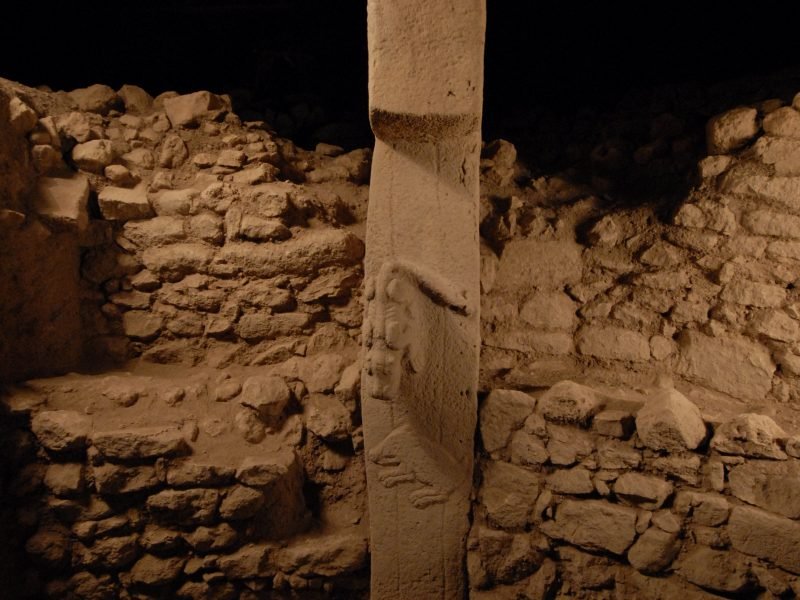
German Archaeological Institute, Göbekli Tepe Project, Pillar 27, Göbekli Tepe, Copyright: DAI — used with permission, via .
What the ground does — and doesn't — show
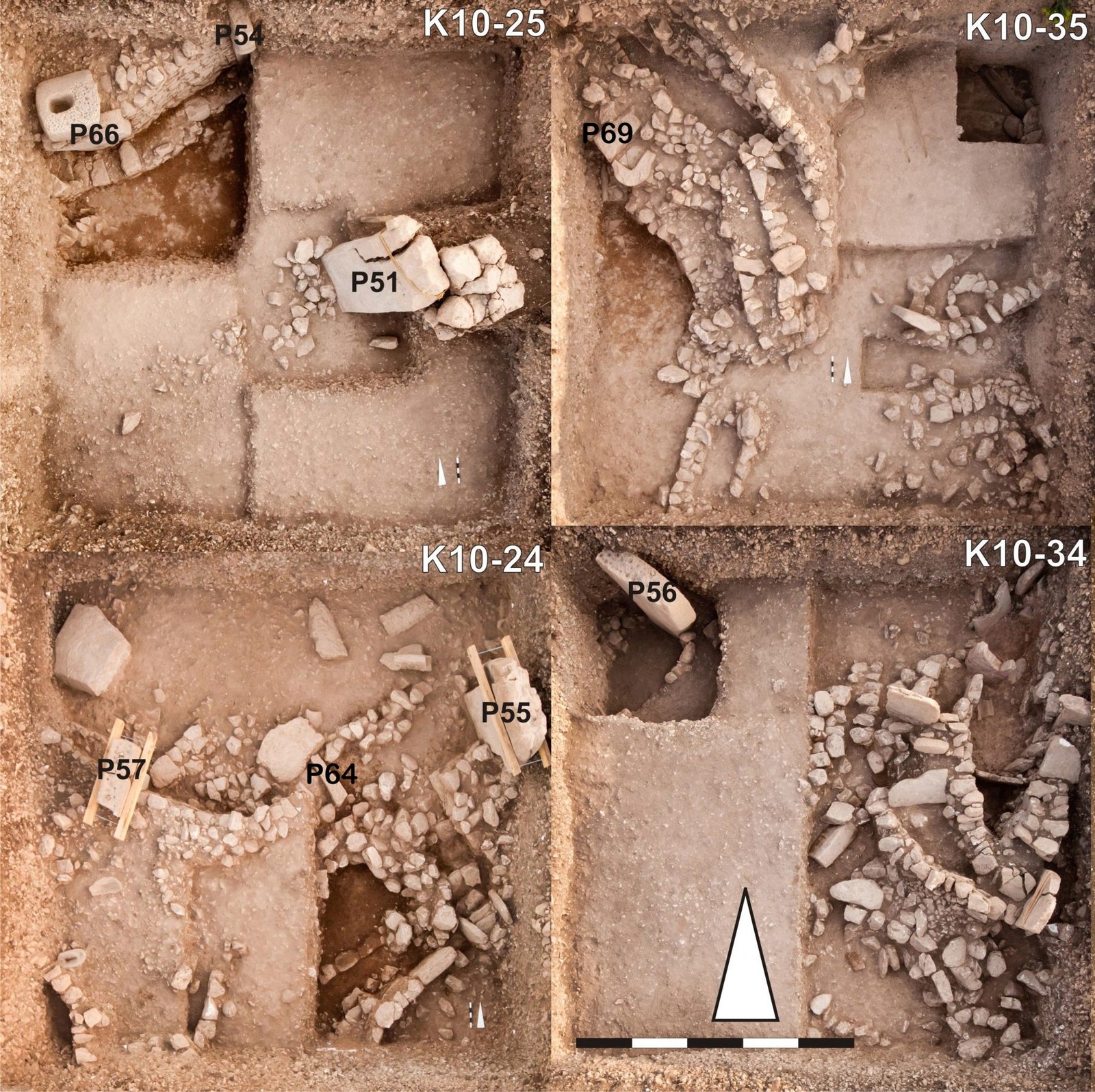
Dr Lee Clare (Göbekli Tepe Project, DAI) points out that the site lacks the usual archaeological signatures of a hard hierarchy: no rich elite burials, no obvious 'chief's house' set apart from the rest, none of the concentrated wealth that later ranked societies leave behind. And yet, plainly, decisions were made — the buildings did not organise themselves.
So who held influence? In lecture material Clare sketches a softer, more plausible cast: charismatic hunters, ritual experts, storytellers and mediators — people whose authority came from skill, knowledge, performance and the ability to bring others together, rather than from inherited rank or command of force. Influence, in this reading, was situational and personal, not institutional.
This fits the broader picture the DAI team has built of Göbekli Tepe as a place held together by cooperation and communal work-feasts rather than by a boss — large gatherings that produced the social glue and the labour without a standing chain of command.
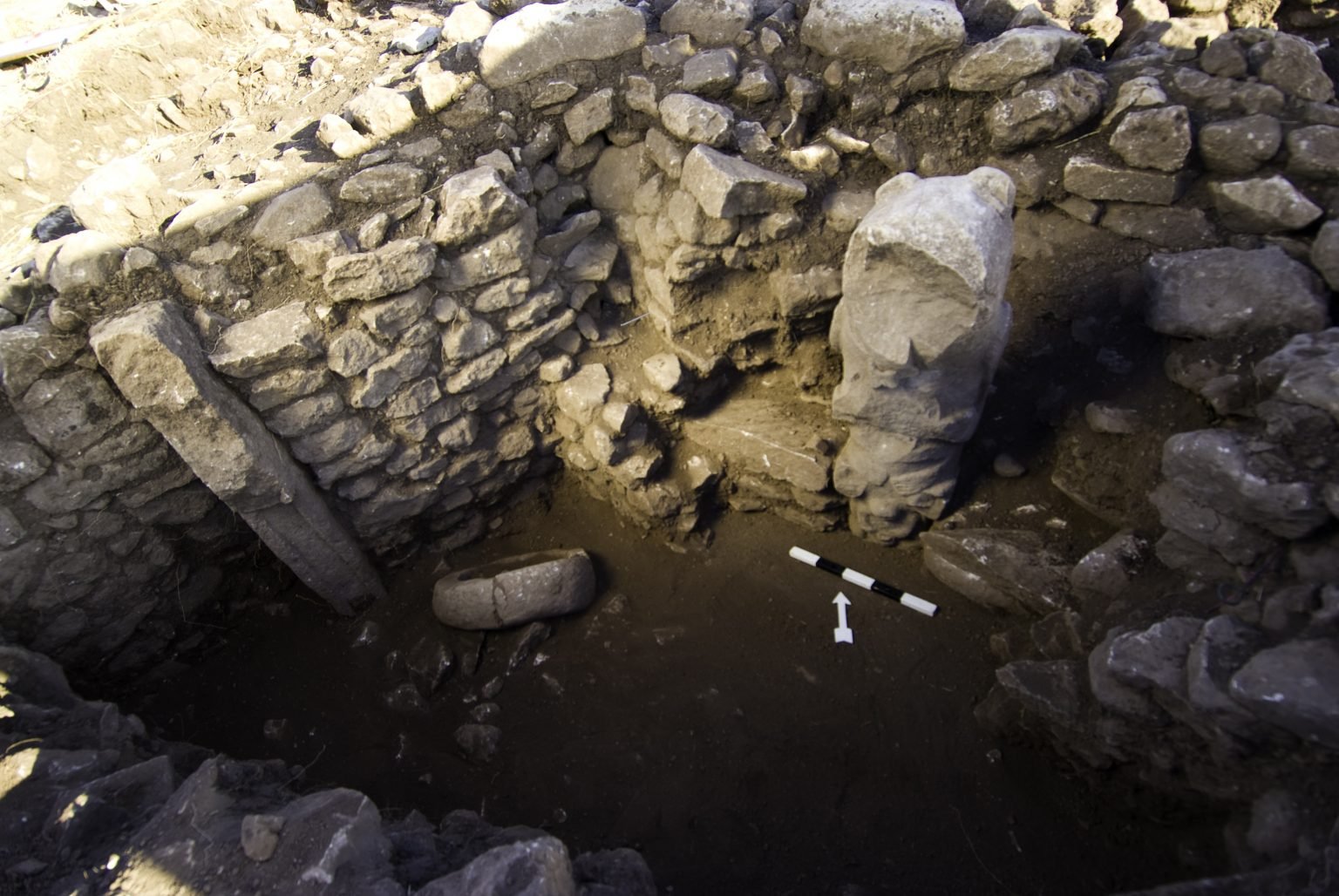
German Archaeological Institute, Göbekli Tepe Project, The Göbekli Tepe 'totem pole', find situation, Copyright: DAI — used with permission, via .
Why it matters
Göbekli Tepe is often pressed into service in big arguments about human nature — proof that hierarchy, or religion, or the state, is ancient and inevitable. The director's position is a useful brake on that. A society can undertake something monumental without rulers, through shared belief, obligation and the pull of a few compelling individuals.
It also makes the people more recognisable. Not subjects following a god-king, but a community persuaded, led at moments, and doing something hard together.
How do you build big without a boss?
If nobody was giving orders, how did anything get built? The DAI team's answer is the work-feast. Instead of command, you use invitation and obligation: a community — or several neighbouring ones — gathers for a great communal event, food and drink are laid on at a lavish scale, and the labour of quarrying, moving and raising stones happens as part of the gathering itself. The reward is not a wage but the feast, the standing that comes from taking part, and the bonds renewed by doing something hard together.
This flips the usual logic. The monument does not need a ruler to explain it; the desire to gather and feast can generate the labour on its own — and may even have helped drive the intensive harvesting of wild cereals that fed the crowds. Leadership in such a setting is momentary: the person who calls the gathering, tells the binding story, or coordinates a lift — not the holder of a permanent office. Power, in this reading, is closer to a verb than a title — something a person does in the moment of the gathering, rather than a rank they keep once everyone goes home.
Common questions
Did Göbekli Tepe have kings or priests? There is no archaeological sign of them — no elite burials, no palace or 'chief's house', no concentrated wealth. The excavators describe influence as situational, held by skilled or charismatic individuals rather than a ruling class.
Who organised the building work, then? Most plausibly charismatic hunters, ritual experts, storytellers and mediators, coordinating communal 'work-feasts' rather than commanding a standing labour force.
Does Göbekli Tepe prove hierarchy is ancient? No — if anything it points the other way: a society can raise something monumental through cooperation, shared belief and obligation, without permanent rulers.
Not everyone reads the evidence as flatly equal, though. In a 2022 study, Orhan Ayaz, Bahattin Çelik and Fatma Çakmak argue that Göbekli Tepe was classless but not equal — using Max Weber's idea of status rather than Marx's class, they propose a hierarchy of prestige earned on a ritual and ideological basis, invisible in graves and houses but real to the people inside it. It is a reinterpretation, not a new find, but it is a serious counter to the 'perfectly level' picture. (We unpack it in [Were Göbekli Tepe's builders really equals?](/news/gobekli-tepe-status-society-hierarchy/).)
What is uncertain
Absence of evidence is not proof of a flat society — softer or temporary forms of leadership can be hard to see archaeologically, which is exactly why Clare frames this as no clear sign of rulers rather than a certainty that none existed. The roles he names (charismatic hunters, ritual experts, storytellers) are informed inference, not people we can point to in the finds.
This is spoken lecture and interview material and may be stated more cautiously in publication. Read it as the director's reasoned reading of who plausibly held sway, not a settled account of Neolithic politics.
Key takeaways
- Göbekli Tepe shows none of the usual marks of a ruling class — no rich graves, no palace, no concentrated wealth.
- The director reads authority as situational and personal — skilled hunters, ritual experts, storytellers — not inherited rank.
- The building was organised through cooperation and work-feasts, not a chain of command.
- So the site is a brake on the idea that hierarchy is ancient and inevitable: you can build monuments without a boss.
Sources
- Tepe Telegrams (DAI) — Cooperative Action of Hunter-Gatherers in the Early Neolithic Near East. A View from Göbekli Tepe
- Cambridge Archaeological Journal — Relationality, Immanence, Hierarchy: The Nature and Culture of Being(s) at Göbekli Tepe
- Ayaz, O., Çelik, B. & Çakmak, F. (2022). 'Status Society'… Göbekli Tepe and Karahan Tepe. Karadeniz 56, 122–142.
This article is written from the primary literature and excavators' reports cited above. Interpretations are attributed; uncertainties are stated in the text.