What was found
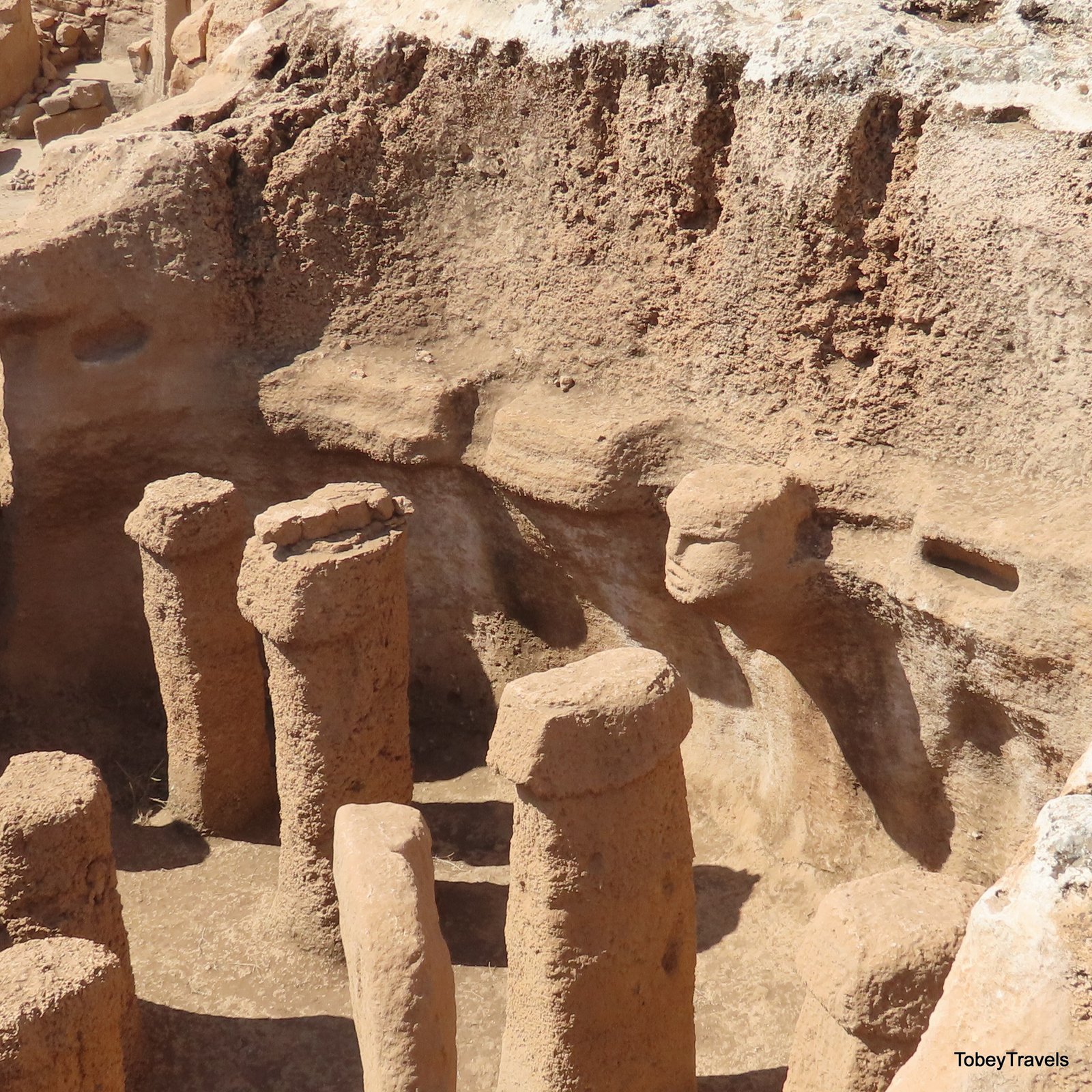
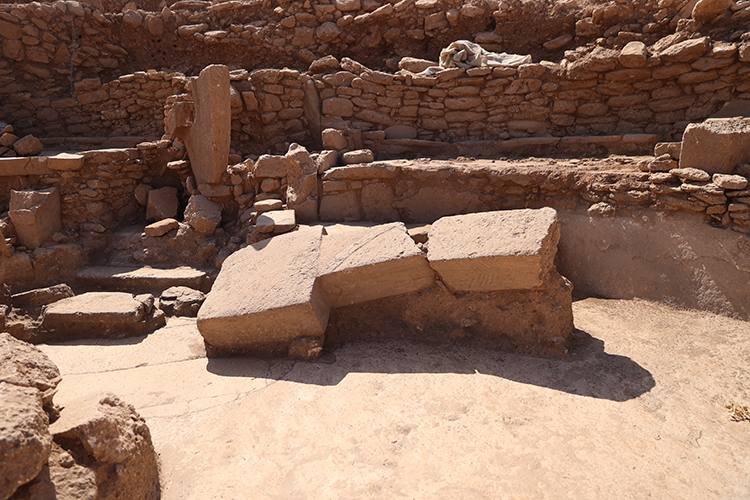
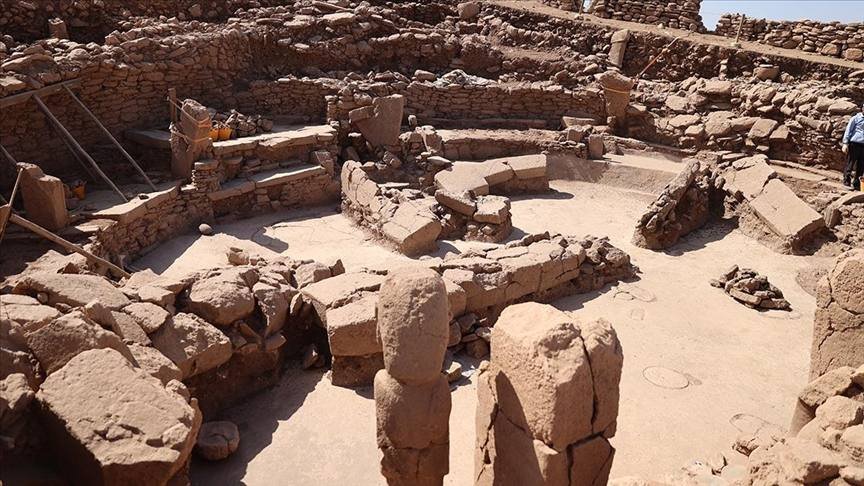
At Karahan Tepe, excavators under project director Prof. Necmi Karul have uncovered a large circular building roughly 17 metres across, its floor cut straight into the bedrock. Around a central focal point run three tiered stone benches, curving like the seating of a theatre.
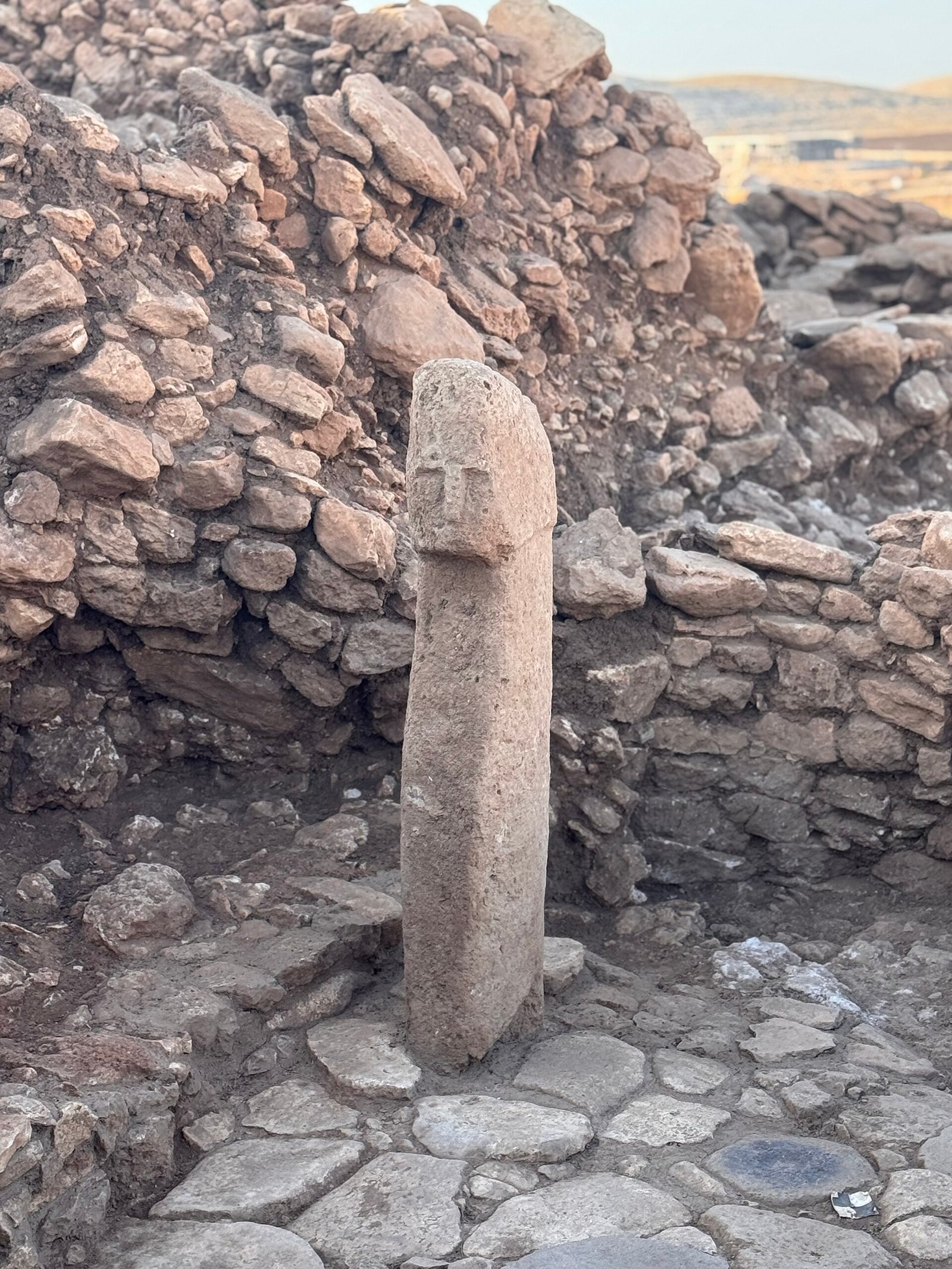
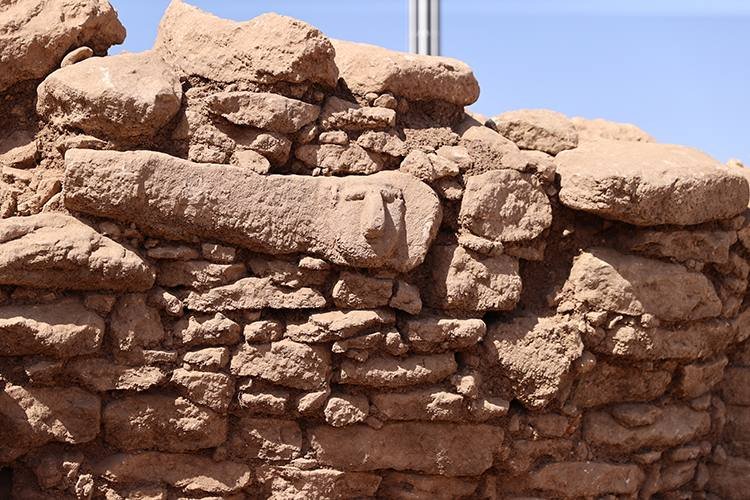
The walls carry human heads sculpted in relief, and seated human statues stand on the floor. The excavation describes the space as strongly recalling an amphitheatre or odeon, and notes that it holds one of the largest concentrations of human-face depictions known from the Neolithic anywhere.
Why a round hall of benches matters
A building shaped for people to sit and face inward, in tiers, is a building shaped for an audience — for watching something happen, together. That is a strong statement to read from stone, and the excavators are careful with it, but the architecture itself points that way: this is a space made for gathering and for looking.
Set among the carved heads and seated figures, it turns Karahan Tepe from a site of isolated monuments into something more like a staged room — where the living and the sculpted watched one another. It deepens the sense, already strong at Karahan, that these interiors were built to be experienced as much as used.
How old, and how long
The settlement is dated across roughly 1,400 years from about 9,400 BCE, through three major phases — a long occupation rather than a single moment. Karahan Tepe sits beside Göbekli Tepe as one of the two great pillared sites of the Taş Tepeler group, and this building is among its most theatrical spaces yet exposed.
A room built for gathering
At Karahan Tepe — in the Şanlıurfa region, about 35 km east of Göbekli Tepe — excavators under Necmi Karul exposed a large circular building roughly 17 metres across, its floor cut straight into the bedrock. Around a central focal point run three tiered stone benches, curving like the seating of a theatre.
A building shaped for people to sit and face inward, in tiers, is a building shaped for an audience: for watching something happen, together. That is a strong statement to read from stone, and the excavators are careful with it, but the architecture itself points that way. It turns Karahan from a site of isolated monuments into something more like a staged room — and deepens the sense, already strong here, that these interiors were built to be experienced as much as used.
Faces watching faces
The walls of the hall carry human heads sculpted in relief, and seated human statues stand on the floor — one of the largest concentrations of human-face depictions known from the Neolithic anywhere. Set among tiered benches, they make the space feel as if the living and the sculpted watched one another.
The names 'amphitheatre' and 'odeon' are analogies, borrowed from far later architecture to describe a shape; they are not claims that Karahan's people held performances as a Greek city would. What the tiers were actually for — ritual, assembly, teaching, feasting — is interpretation the building cannot settle on its own, and the dimensions and phase count remain working figures from field reports ahead of full publication.
Whatever gathered there, a room built with rising rows of seating tells us these communities thought carefully about how people would sit, watch and take part together.
What is uncertain
'Amphitheatre' and 'odeon' are analogies, borrowed from far later architecture to describe a shape; they are not claims that Karahan's people held performances as a Greek city would. What the tiers were for — ritual, assembly, teaching, feasting — is interpretation the building cannot settle on its own.
These are field reports from the excavation, ahead of full publication. The dimensions and phase count are working figures.
Common questions
Why is the building called an amphitheatre? It is a roughly 17-metre round hall with three curved tiers of stone benches facing a central point — a shape the excavators liken to an amphitheatre or odeon. The word is an analogy, not a claim of Greek-style performance.
What is carved in it? Human heads sculpted in relief on the walls, and seated human statues on the floor — one of the largest concentrations of human-face depictions known from the Neolithic.
How old is it? The settlement is dated across roughly 1,400 years from about 9,400 BCE, through three major phases — a long occupation rather than a single moment.
Key takeaways
- Tiers of benching facing inward make this a building shaped for an audience — for watching something together.
- It holds one of the largest concentrations of human-face depictions known from the Neolithic anywhere.
- 'Amphitheatre' and 'odeon' are analogies borrowed from far later architecture, not claims of Greek-style performance.
- The dimensions and phase count are working field figures ahead of full publication.
Sources
- Arkeonews — An 11,000-year-old Neolithic 'amphitheater' discovered at Karahantepe (28 November 2025)
- Türkiye Today — New Neolithic sculptures uncovered in Türkiye's Taş Tepeler
This article is written from the primary literature and excavators' reports cited above. Interpretations are attributed; uncertainties are stated in the text.