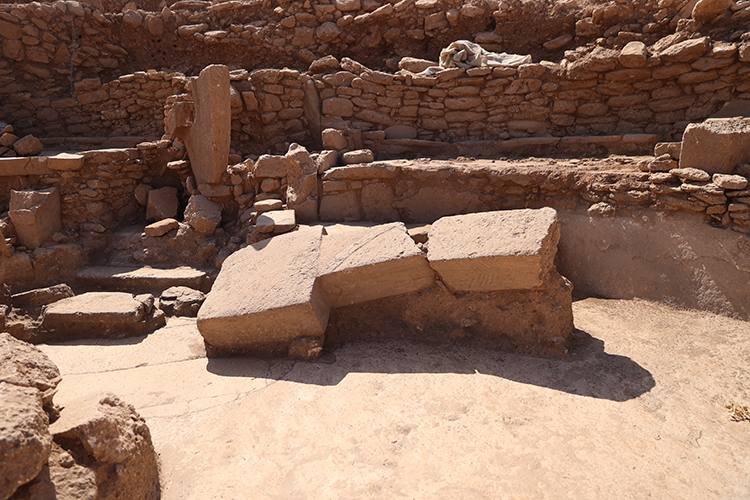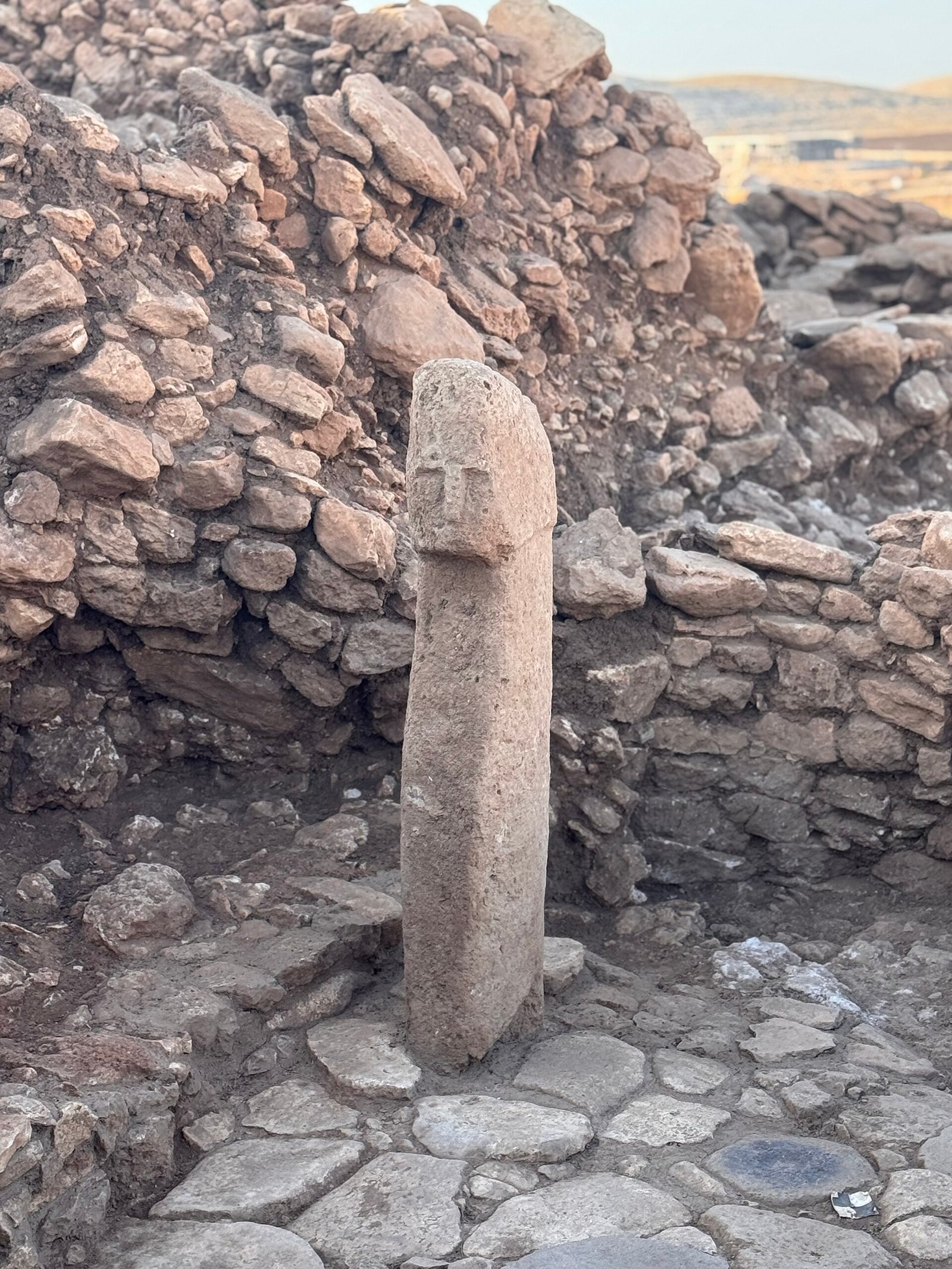
The discovery
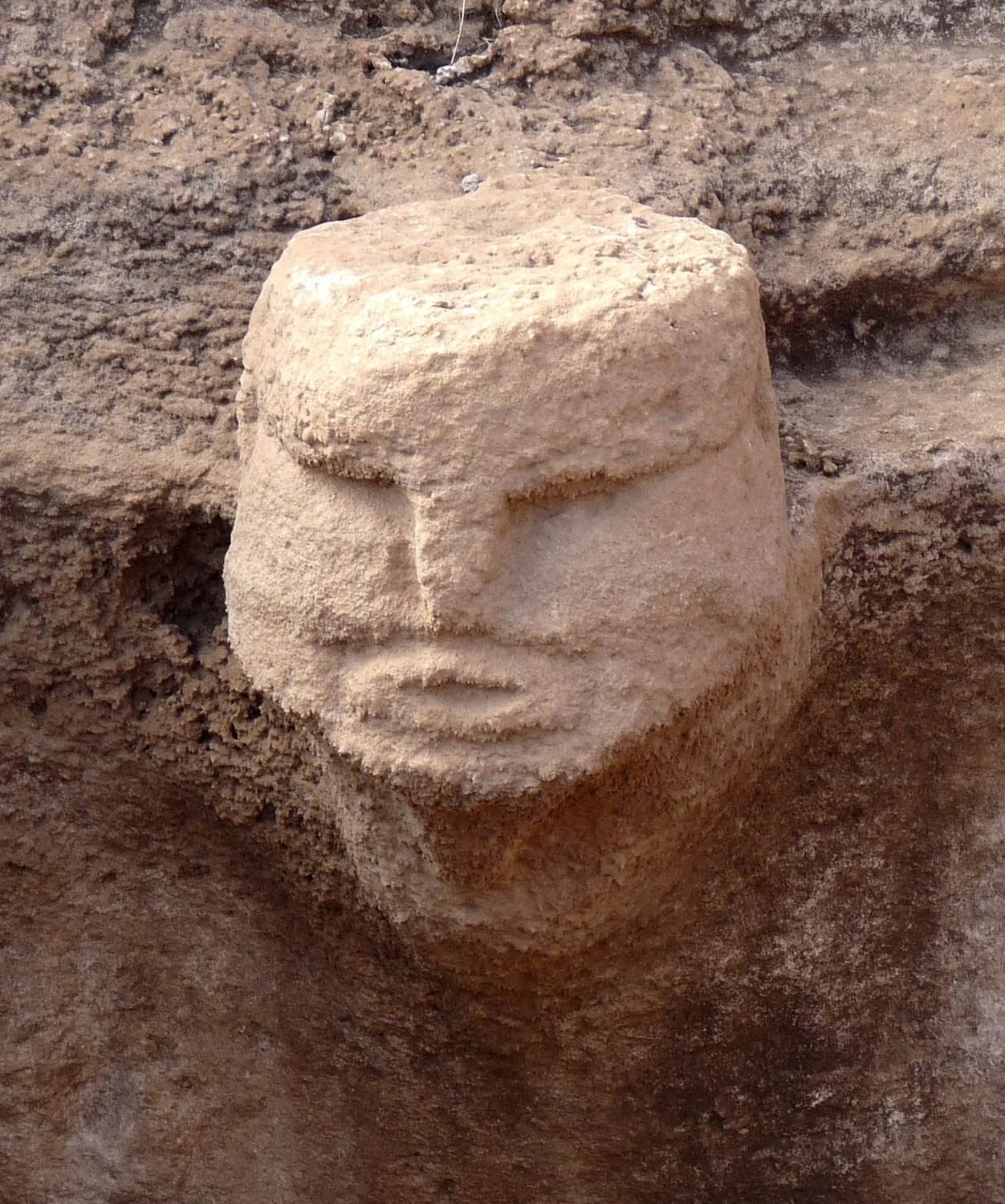
In October 2025, excavators at Karahan Tepe announced a T-shaped pillar, roughly 1.4 metres tall and about 11,000 years old, carved with a clear human face — a prominent nose, deep-set eyes, and a sharp, angular jaw. It is the first time a human face has been found carved onto one of the region's signature T-pillars.
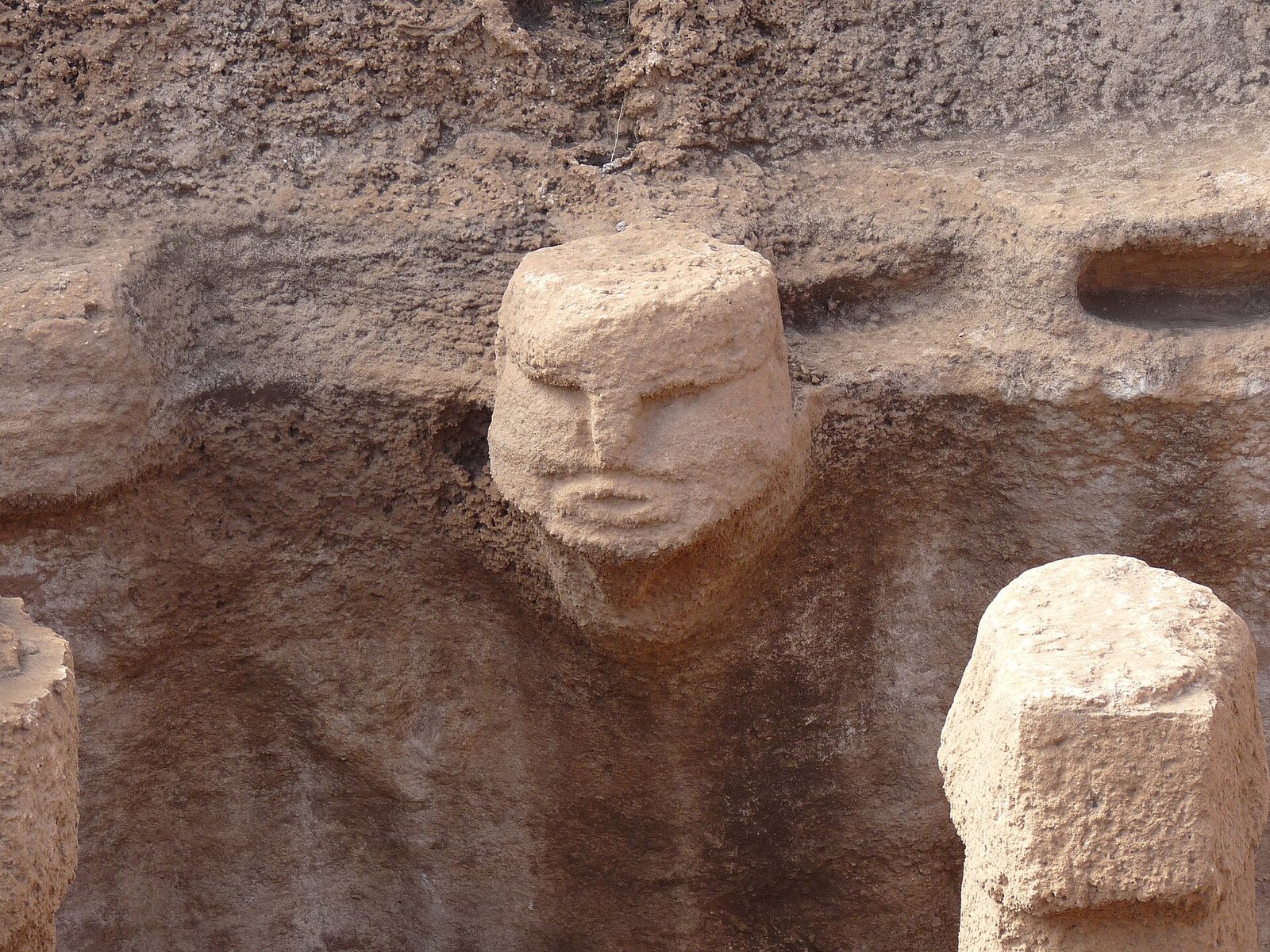
Frantisek Trampota, Karahan Tepe human face, Public domain, via Wikimedia Commons.
Why it matters
Archaeologists have long suspected the T-pillars were abstract human figures — many carry arms, hands and belts. This face turns suspicion into something close to proof. As dig leader Necmi Karul put it, the pillar gives clear evidence that T-shaped pillars symbolised humans.
Karul links the rising number of human sculptures at Karahan to settled life itself: as people began living together in one place, they seem to have made more and more images of themselves. The face on the pillar is that shift, carved in stone.
Why it closes an old argument
For years the case that T-pillars were people rested on indirect evidence: arms running down the shafts, hands folded to the front, belts and loincloths — a body implied but never a face. A pillar that carries an actual nose, eyes and jaw turns that inference into direct evidence, on the same class of monument, at Karahan Tepe rather than only Göbekli.
It also fits Karahan's own character. The site is unusually rich in human heads and seated figures, so a face on the pillar itself sits at the meeting point of two things Karahan does — raising T-pillars and carving people — and shows they were, at least here, the same subject.
Why it closes an old argument
For years the case that the T-pillars were people rested on indirect evidence: arms running down the shafts, hands folded to the front, belts and loincloths — a body implied but never a face. The great pillars at Göbekli Tepe, about 35 km west of Karahan Tepe in the Şanlıurfa region, carry exactly that grammar without ever showing a face.
A pillar that carries an actual nose, deep-set eyes and an angular jaw turns that inference into direct evidence, on the same class of monument, at Karahan Tepe. As dig leader Necmi Karul put it, the pillar gives clear evidence that T-shaped pillars symbolised humans. It also fits Karahan's own character: the site is unusually rich in human heads and seated figures, so a face on the pillar itself sits at the meeting point of two things Karahan does — raising T-pillars and carving people — and shows they were, at least here, the same subject.
Why Karahan, and why now
Karul links the rising number of human sculptures at Karahan to settled life itself: as people began living together in one place, they seem to have made more and more images of themselves. On that reading, the face on the pillar is that shift, carved in stone about 11,000 years ago.
It is worth keeping the limits in view. This is a 2025 field announcement, so the pillar's height of about 1.4 metres, its age and its context are working figures ahead of a full report. A single faced pillar shows that a T-pillar could be given a face; it does not prove that every plain T-pillar was understood as a person, which remains an argument from accumulated detail rather than a rule. And the link between more human imagery and the onset of settled life is a plausible interpretation of a trend, not a measured correlation.
What is uncertain
This is a 2025 field announcement, so the pillar's height (~1.4 m), age (~11,000 years) and context are working figures ahead of a full report. A single faced pillar shows that a T-pillar could be given a face; it does not prove that every plain T-pillar was understood as a person, which remains an argument from accumulated detail rather than a rule.
Karul's link between more human imagery and the onset of settled life is a plausible interpretation of a trend, not a measured correlation — the sculptures are real, but the causal story around them is his reading.
Common questions
What makes the human-faced pillar important? It is the first time a human face — nose, eyes and jaw — has been found carved onto one of the region's signature T-pillars, turning the long-held suspicion that the pillars stood for people into direct evidence.
How old and how big is it? Roughly 1.4 metres tall and about 11,000 years old, announced in October 2025. Those remain working figures ahead of a full report.
Does it prove every T-pillar is a person? No. It shows a T-pillar could be given a face. That every plain pillar was understood as a person is still an argument from accumulated detail — arms, hands and belts — rather than a rule.
Key takeaways
- T-pillars have long carried arms, hands and belts — a body implied but never a face, until now.
- As dig leader Necmi Karul put it, the pillar gives clear evidence that T-pillars symbolised humans.
- Karul links Karahan's rising number of human sculptures to the onset of settled life.
- A single faced pillar shows a T-pillar could be given a face; it does not prove every plain pillar was a person.
Sources
- Smithsonian Magazine — A human face was carved into this stone pillar in Turkey 11,000 years ago
- The Art Newspaper — 11,000-year-old carved face offers new insight into early human expression
This article is written from the primary literature and excavators' reports cited above. Interpretations are attributed; uncertainties are stated in the text.