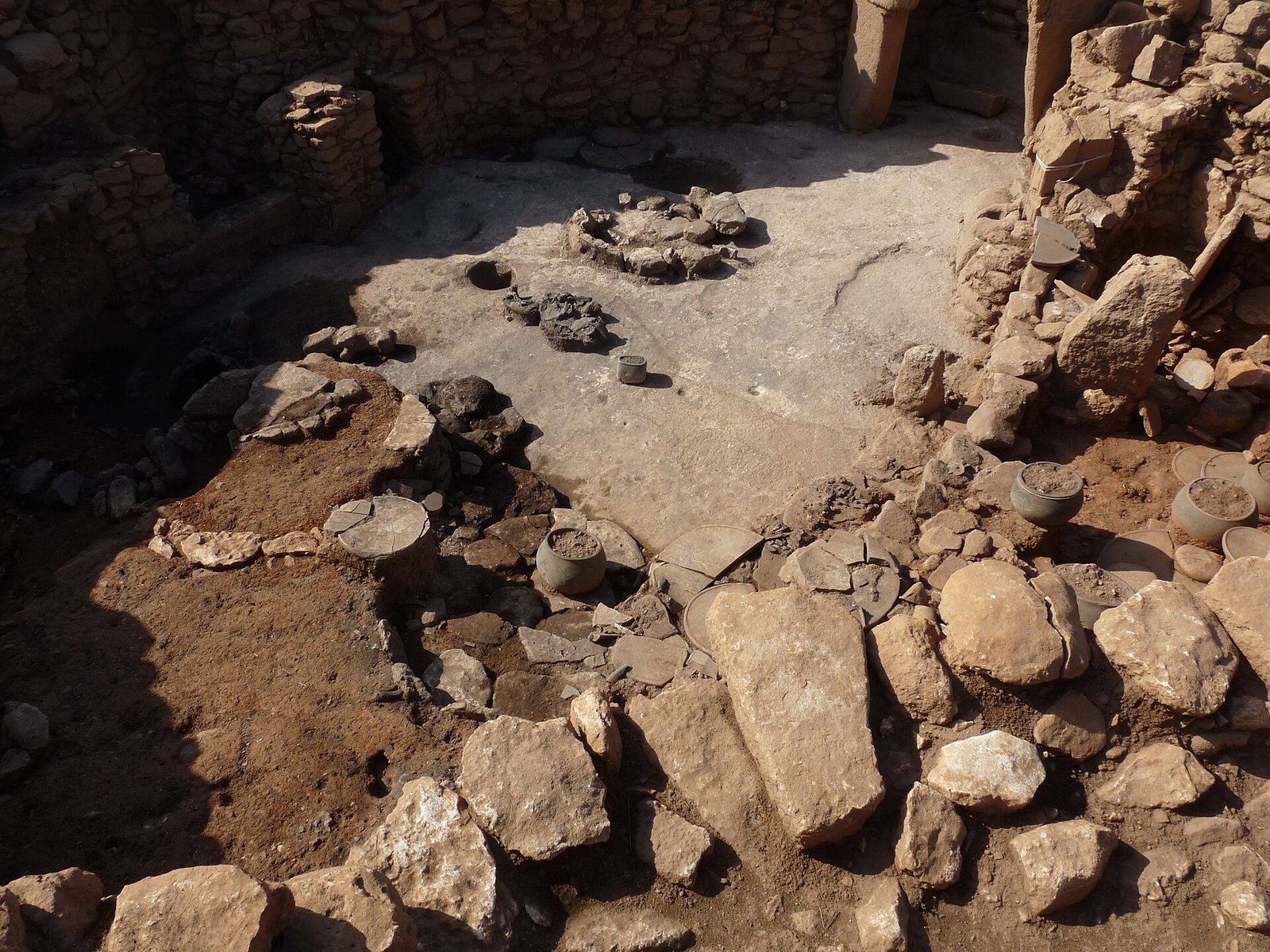
Numerous bones, almost no graves
For a site so preoccupied with the human figure — statues, carved heads, faces worked onto pillars — Karahan Tepe is oddly short of actual human remains. Karul's 2025 report describes numerous human bones and skull fragments recovered from the fill of the buildings, but almost nothing that looks like a formal grave. The dead are present as scattered, broken pieces, not laid-out bodies.
That absence is itself a pattern across the early Taş Tepeler world. At the monumental sites, human remains are fragmentary and turn up mixed into the architecture; the great majority of the dead were disposed of in some way that leaves little trace. Karahan fits that mould — with one striking exception.
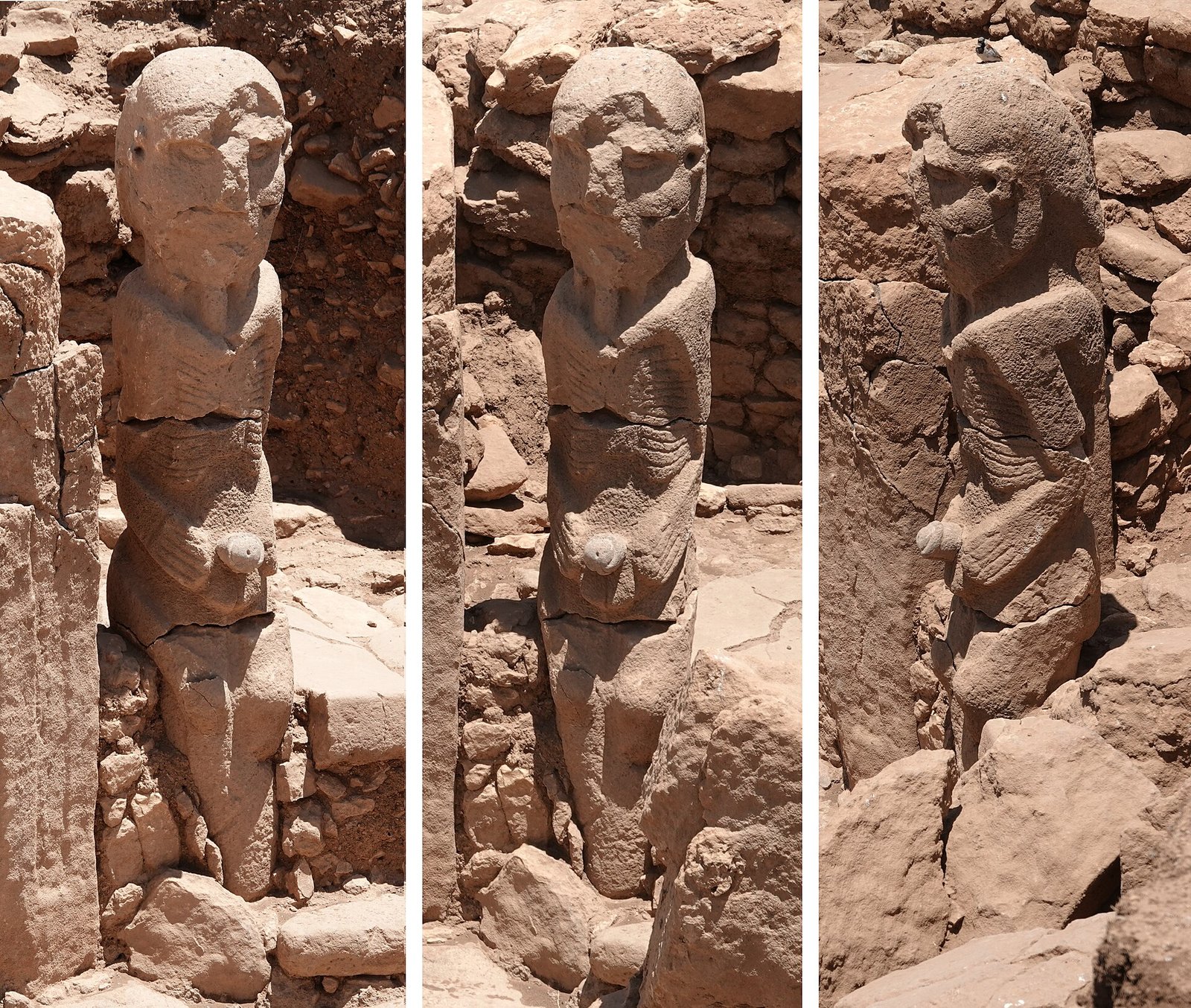
The one complete skeleton
In all the excavated area, the report records just one complete skeleton. It was not in a cemetery or even in an obvious grave pit: it had been placed inside a small chamber built into the inner corner of a building wall, and came to light in a sounding dug for the protective roof over the site. One intact individual, tucked into the fabric of a building — against a whole settlement's worth of scattered fragments.
That single burial is precious precisely because it is so rare. It shows that at least some people were kept whole and placed with care inside the buildings, even as most of the dead were handled in pieces. Why this one person was treated differently is exactly the kind of question the fuller excavation will have to answer.
A site crowded with carved heads, and almost no real ones — except as burned, scratched fragments worked into the buildings.
Burned, and scratched
The most suggestive detail concerns the skull fragments. A specific group of them had been burned at high temperature, and close study — by the physical anthropologist Yılmaz Selim Erdal, whose chapter accompanies Karul's in the same volume — found them covered in shallow, elongated, irregular scratches. The marks are consistent with the use of tools and with handling over time: skulls that were not simply buried but cleaned, defleshed, heated and kept.
Taken with the heat damage, the excavators read these skulls as having been used in a ritual context rather than discarded. At Karahan the human head was not only something to carve in stone; real heads, too, were worked on and curated.
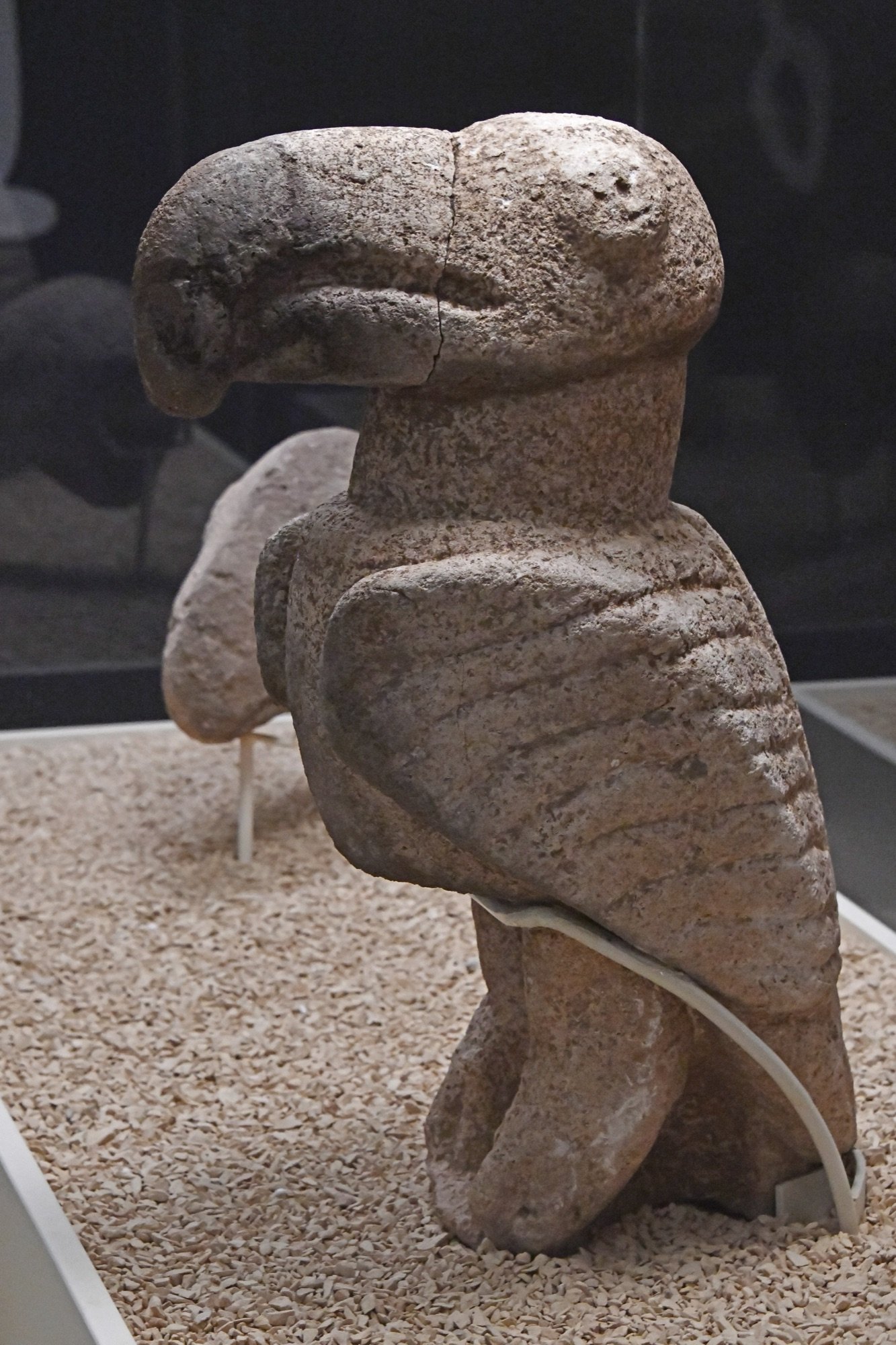
A regional cult of the head
Karahan's burned, scratched skulls do not stand alone. At Göbekli Tepe, a landmark 2017 study described human skulls carved with deep grooves and, in one case, drilled — the clearest evidence yet for a Neolithic skull cult, in which selected heads were modified and displayed. The animals reinforce the theme: the vulture, carved again and again across the region, is the bird that strips the dead.
Karahan's evidence is its own — burned and scratched rather than grooved — but it belongs to the same deep regional concern with the human head, the boundary between the living and the dead, and the keeping of ancestors close. It is one more thread tying the Taş Tepeler sites into a single world of ideas.
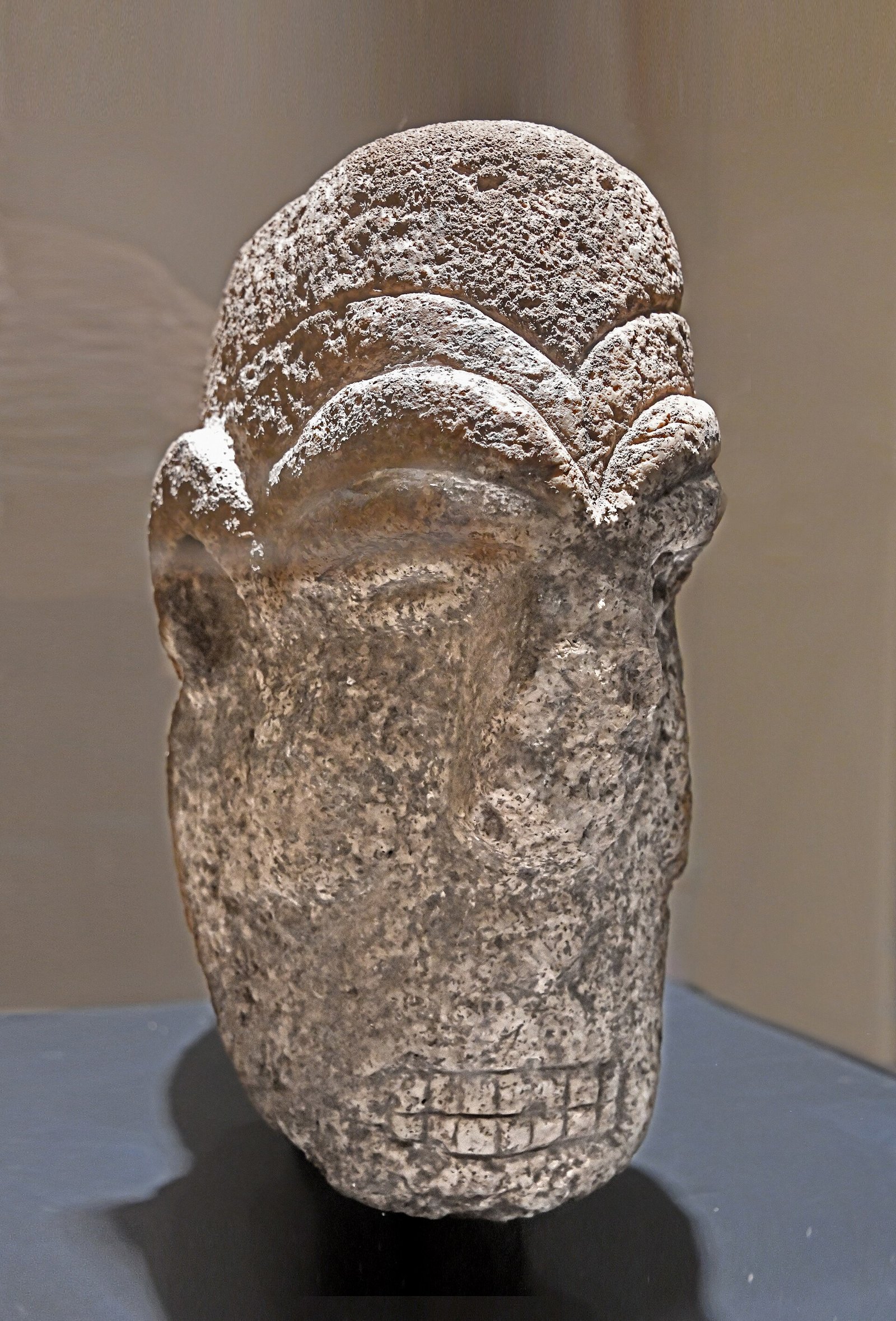
What is uncertain
What is secure is modest and real: numerous scattered human fragments, one complete skeleton placed in a wall chamber, and a set of skulls burned and finely scratched. What those acts meant — veneration of ancestors, a way of handling enemies, defleshing as a stage of burial, display of selected heads, or several of these at once — is interpretation, offered by the excavators and not yet settled.
Two cautions. The skull fragments come from the lowest levels of a deep deposit, which makes their context hard to read, and the detailed analysis is Erdal's ongoing work. And all of it rests on roughly 10% of the site, excavated only since 2019; where most of Karahan's dead actually went remains, for now, an open question. This is a sensitive topic, and the honest position is that the bones can be described far better than they can yet be explained.
Common questions
How many people are buried at Karahan Tepe? Very few formally. The 2025 report describes numerous scattered human skull fragments but only one complete skeleton across the whole excavated site, set into a chamber in the corner of a building wall.
Were the skulls really modified on purpose? A group of them were burned at high temperature and carry shallow, elongated scratches consistent with tools, which the excavators read as deliberate ritual handling — though what it meant is interpretation.
Is this the same as Göbekli Tepe's skull cult? It belongs to the same regional concern with the human head — Göbekli's grooved and drilled skulls are the best-known case — but Karahan's evidence is its own, burned and scratched rather than carved with grooves.
Key takeaways
- Karahan Tepe produced numerous human skull fragments but only one complete skeleton across the whole dig (Karul 2025).
- The single skeleton was placed in a small chamber in the inner corner of a building wall, not in a grave.
- A group of skulls were burned at high temperature and carry shallow, elongated scratches from tools — read as ritual handling (Erdal).
- It belongs to the region's cult of the head, alongside Göbekli Tepe's grooved, drilled skulls and the recurring vulture imagery.
- What the practice meant, and where most of Karahan's dead went, stay open — the evidence rests on ~10% of the site.
Sources
- Karul, N. (2025). Karahantepe, in The Neolithic in Türkiye (Archaeology and Art Publications, Istanbul): 199–238 — the burials section, with Erdal's companion chapter on the human remains. Synthesised on our Karahan Tepe profile.
- Gresky, J., Haelm, J. & Clare, L. (2017). Modified human crania from Göbekli Tepe provide evidence for a new form of Neolithic skull cult. Science Advances 3(6) — the regional skull-cult evidence.
- Karul, N. (2021). Buried Buildings at Pre-Pottery Neolithic Karahantepe. Türk Arkeoloji ve Etnografya Dergisi 82: 19–29.
- Şanlıurfa Neolithic Research Project — Taş Tepeler. Official project site (Istanbul University / Şanlıurfa Museum).
This article is written from the primary literature and excavators' reports cited above. Interpretations are attributed; uncertainties are stated in the text. This is a sensitive subject; the human remains are discussed with care.