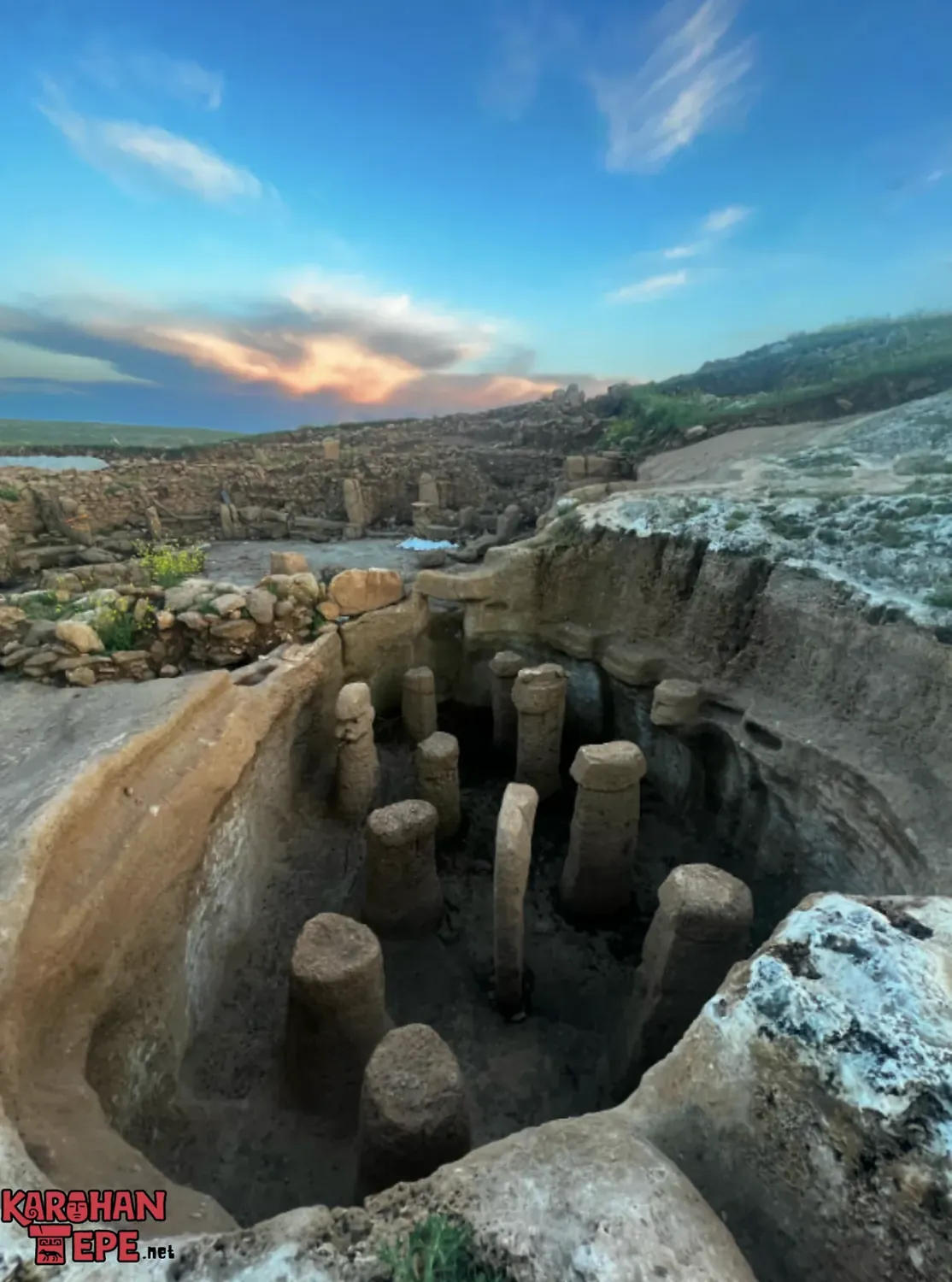
Not ruins — sealed rooms
It is natural to picture an abandoned prehistoric building slowly silting up: roof falls, walls slump, soil blows in over centuries. Karul's 2025 report on Karahan Tepe argues that, for the site's special buildings, this is not what happened. The great rock-cut chambers — the central Structure AD, the pillar room AB, the oven-and-figurine building BF — were deliberately filled in and sealed at the end of their use, as a single, intentional act.
That reframing matters. If the buildings were buried on purpose, then the burial is itself a piece of behaviour to be explained — a thing these people did, as considered as raising the pillars in the first place.
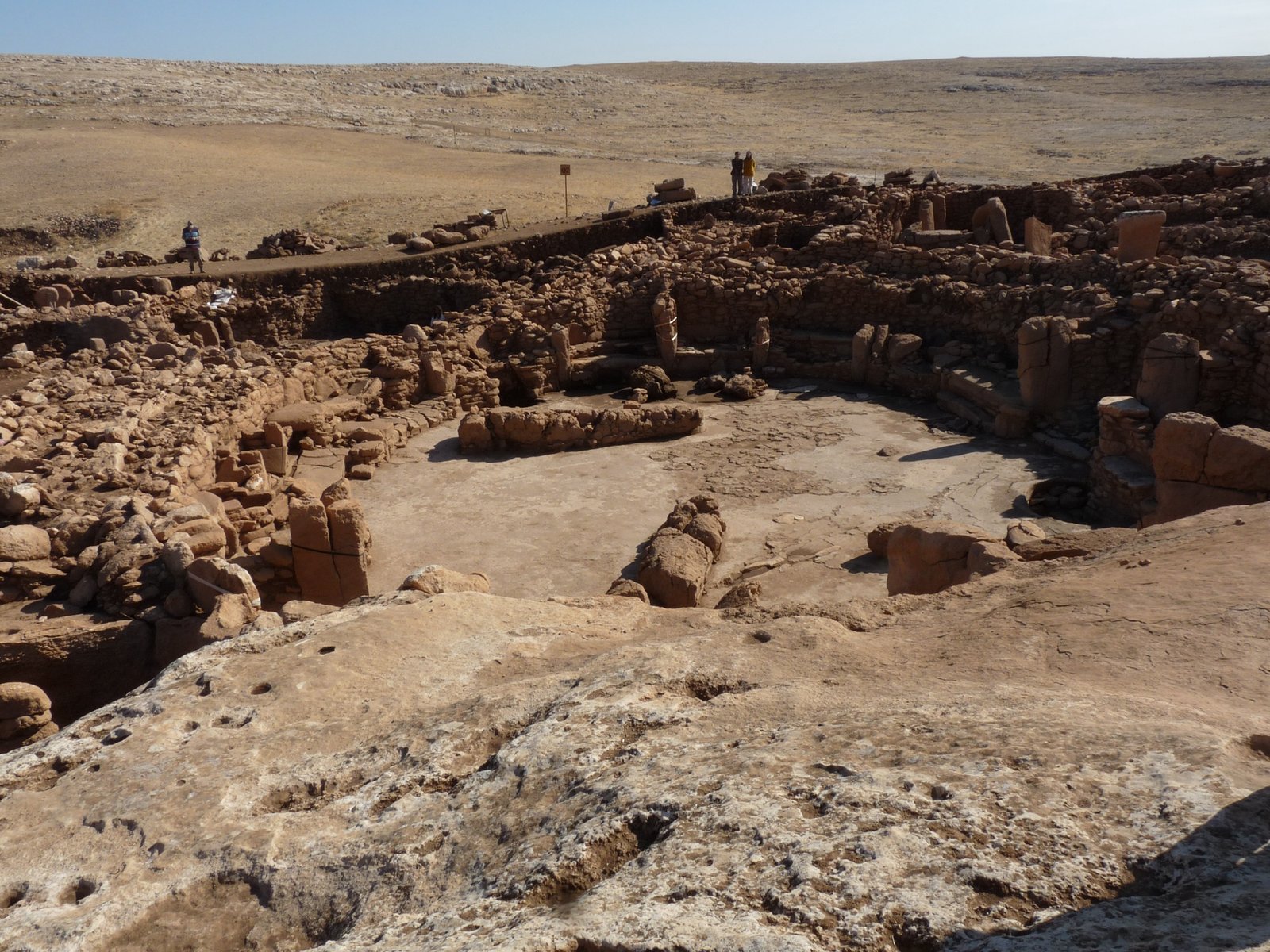
The evidence it was on purpose
Several observations point the same way. The fill inside Structure AD runs to roughly 800 m³ of earth and stone, and it is heaped from the high side against the slope — the reverse of the direction soil would wash or tumble on its own. Large stones sit deliberately on top of the pillars, as if to mark and cap them. Across the buildings, the standing stones were toppled but not reused as handy building material, and chosen objects — statues, stone vessels, animal parts — were set in place before the covering went in, some areas packed with sterile red soil carried up from the riverbed.
Karul also makes a comparative point: some Taş Tepeler settlements, such as Sefertepe and Sayburç, sit where erosion simply cannot account for the infill — so natural slumping cannot be the general explanation. Taken together, the pattern reads as curated closure, not decay.
A building was born when it was raised, lived while it was used and renewed, and died when it was filled. What was being protected was not the stone, but the memory of what happened inside.
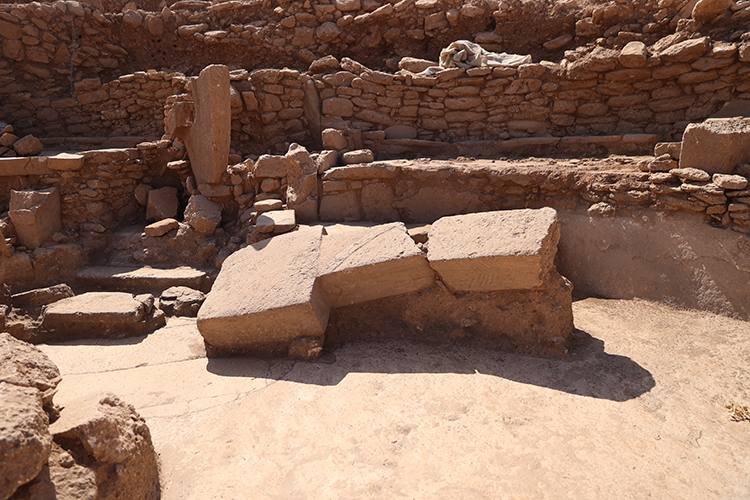
A building's life and death
What were they protecting, and why bury something you built with such effort? Karul's reading is that a building was treated as a kind of living thing with a life cycle: it was born when it was raised, lived while it was used and repeatedly renovated, and died when it was filled and closed. On this view what is being made inviolable is not the stone or even the objects, but the experiences and memories held in the space — sealed in so they cannot be disturbed.
There is an architectural echo of the same idea. Each new phase at Karahan raised its communal hall on fresh ground, a little along the slope, rather than on top of the previous one. So the older buildings stayed buried and whole beneath the surface, and the mound came to hold a memory of everything that had ever stood there — a settlement that remembered itself by keeping its past intact underground.
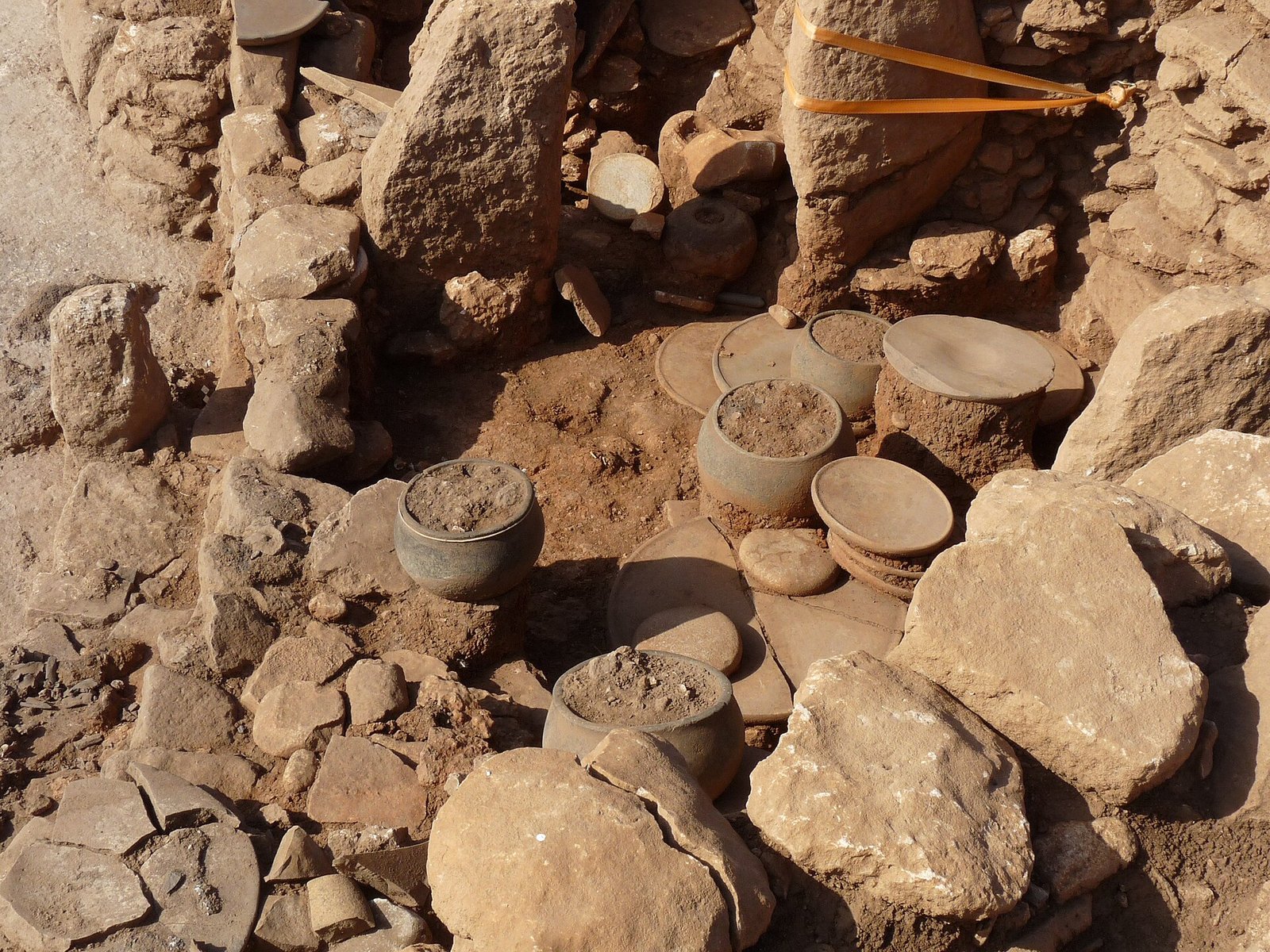
The same habit across the Taş Tepeler
Karahan is not alone in this. The great enclosures at Göbekli Tepe were famously backfilled, and buildings at Sayburç were closed in the same deliberate way — the whole region shares the practice of filling and sealing its special buildings. Karul's own earlier paper on the subject is even titled Buried Buildings at Pre-Pottery Neolithic Karahantepe.
That shared habit is one of the threads that ties the Taş Tepeler sites into a single cultural world. Whatever the burials meant, people across the Şanlıurfa plateau, over many generations, agreed that a special building's life should end by being covered over rather than left open.
What is uncertain
The honest core is this: that many Karahan buildings were intentionally filled and sealed is well supported by the fill direction, the placed objects and the capping. What those acts meant — reverence, a cult of ancestors and the dead, a way of 'retiring' a building safely, or something with no modern parallel — is interpretation, and Karul offers it as such. The 'memory of the mound' is a powerful idea, not a proven fact.
Two further cautions. The competing natural explanation — erosion and slumping — is argued against rather than ruled out everywhere, and at some buildings it may still play a part. And all of this rests on roughly 10% of the site, excavated only since 2019; the fuller picture, and the exact sequence of filling, will be refined as more is dug. This is a sensitive, still-open question, treated here as a lead worth taking seriously, not a settled conclusion.
Common questions
Did they really bury the buildings on purpose? The evidence — fill heaped against the slope, stones capping the pillars, objects placed before covering, standing stones toppled but not reused — strongly suggests a deliberate act rather than natural decay, though erosion is not ruled out everywhere.
What does the 'memory of the mound' mean? It is Karul's reading that the buildings were treated as having a life that was ended by burial, and that keeping each phase sealed and intact let the mound preserve a record of its own past. It is interpretation, not established fact.
Is this unique to Karahan Tepe? No. Göbekli Tepe's enclosures were backfilled and Sayburç's buildings were closed the same way — deliberate burial of special buildings is a regional Taş Tepeler practice.
Key takeaways
- At Karahan Tepe the special buildings were deliberately filled and sealed, not left to decay (Karul 2025).
- The signs are concrete: ~800 m³ of fill packed into Structure AD, heaped against the slope, stones capping the pillars, and chosen objects placed before covering.
- Karul reads a building as having a life cycle — built, used, then 'killed' and buried — so the mound keeps a memory of what stood there.
- Each new phase was built on fresh ground, leaving earlier buildings buried and intact beneath the surface.
- The practice is regional — Göbekli Tepe's enclosures and Sayburç's buildings were closed the same way — but what it meant stays interpretation, with erosion not fully ruled out.
Sources
- Karul, N. (2025). Karahantepe, in The Neolithic in Türkiye (Archaeology and Art Publications, Istanbul): 199–238 — the first comprehensive excavation report; the deliberate-burial argument and the 'memory of the mound'. Synthesised on our Karahan Tepe profile.
- Karul, N. (2021). Buried Buildings at Pre-Pottery Neolithic Karahantepe. Türk Arkeoloji ve Etnografya Dergisi 82: 19–29 — the earlier paper on the intentional filling and closure of Karahan's buildings.
- Banning, E. B. (2011). 'So Fair a House: Göbekli Tepe and the Identification of Temples in the Pre-Pottery Neolithic of the Near East.' Current Anthropology 52(5) — the debate over how these Neolithic buildings were used and treated.
- Şanlıurfa Neolithic Research Project — Taş Tepeler. Official project site (Istanbul University / Şanlıurfa Museum).
This article is written from the primary literature and excavators' reports cited above. Interpretations are attributed; uncertainties are stated in the text.