The odd detail
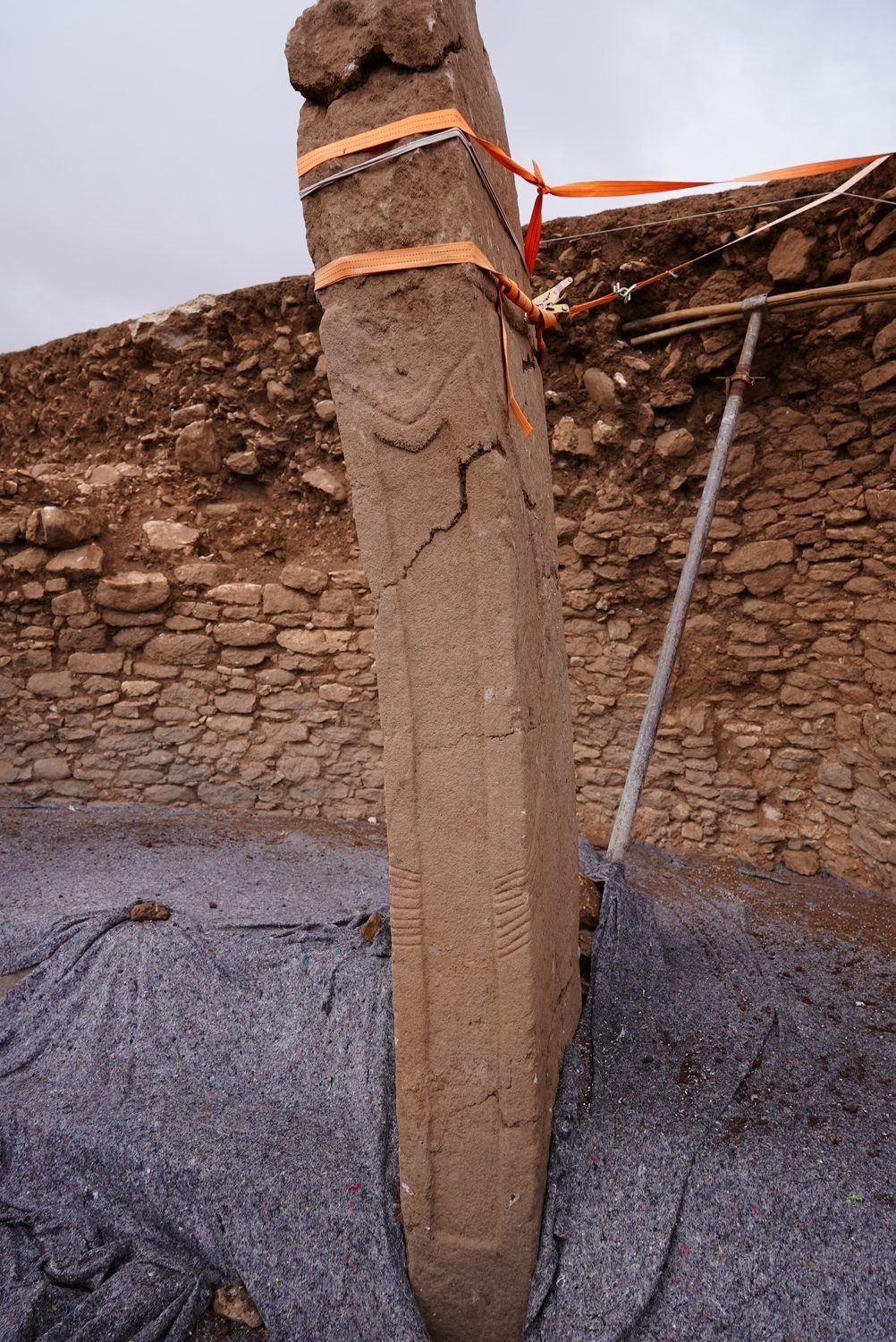
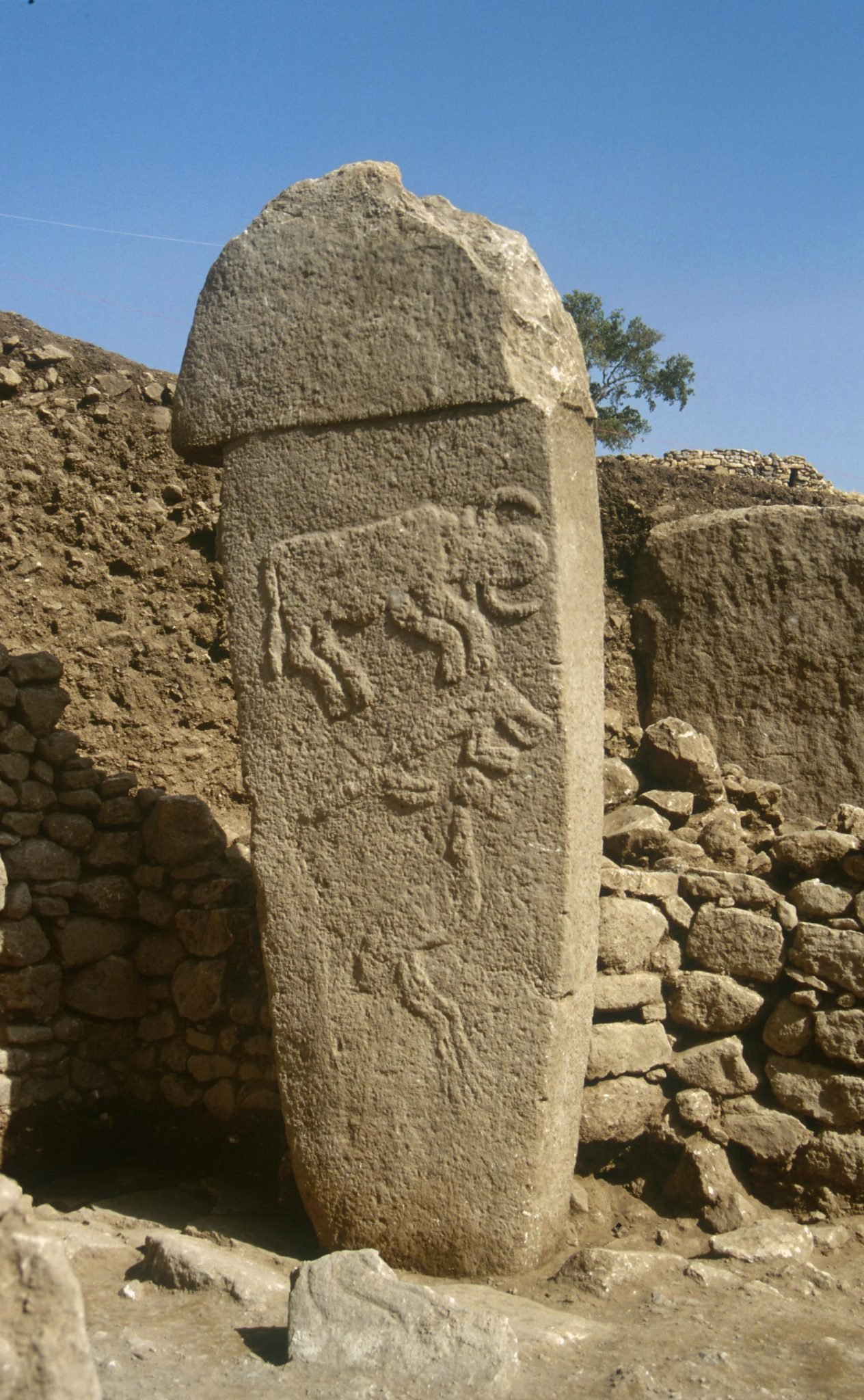
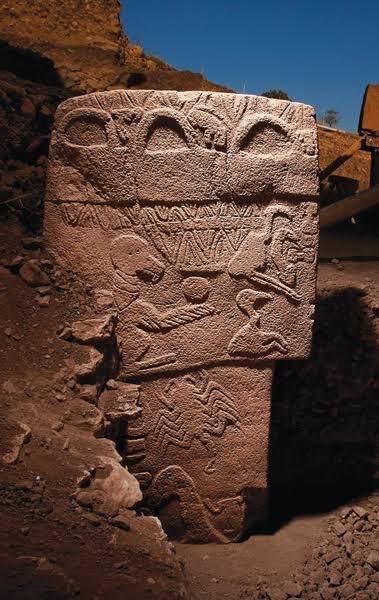
Cranes appear again and again among Göbekli Tepe's carved animals — and they are carved oddly. In several reliefs the crane's legs bend forward at the knee, like a human's, rather than backward like a real bird's. Writing on the German Archaeological Institute's Tepe Telegrams, the excavation team reads this as a possible clue: these may not be plain cranes, but people dressed as cranes.
Why a crane
Cranes are among the largest flying birds of the region; they perform elaborate courtship dances, and they arrive and depart with the seasons. Crane dances and bird costumes recur in ritual across many later cultures. If the Göbekli carvers were depicting a masquerade, it would be among the earliest hints anywhere of costumed ritual performance — of people stepping into the body of an animal.
Interpretation, flagged as interpretation
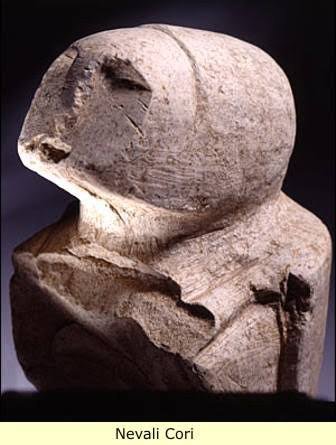
No costume survives — only the carvings and their curiously human legs. This is a reading, not a settled fact. But it comes from the site's own researchers, and it fits a theme that runs right through Göbekli Tepe's art: the line between human and animal is deliberately blurred, and some of the beasts on the pillars may be people in disguise.
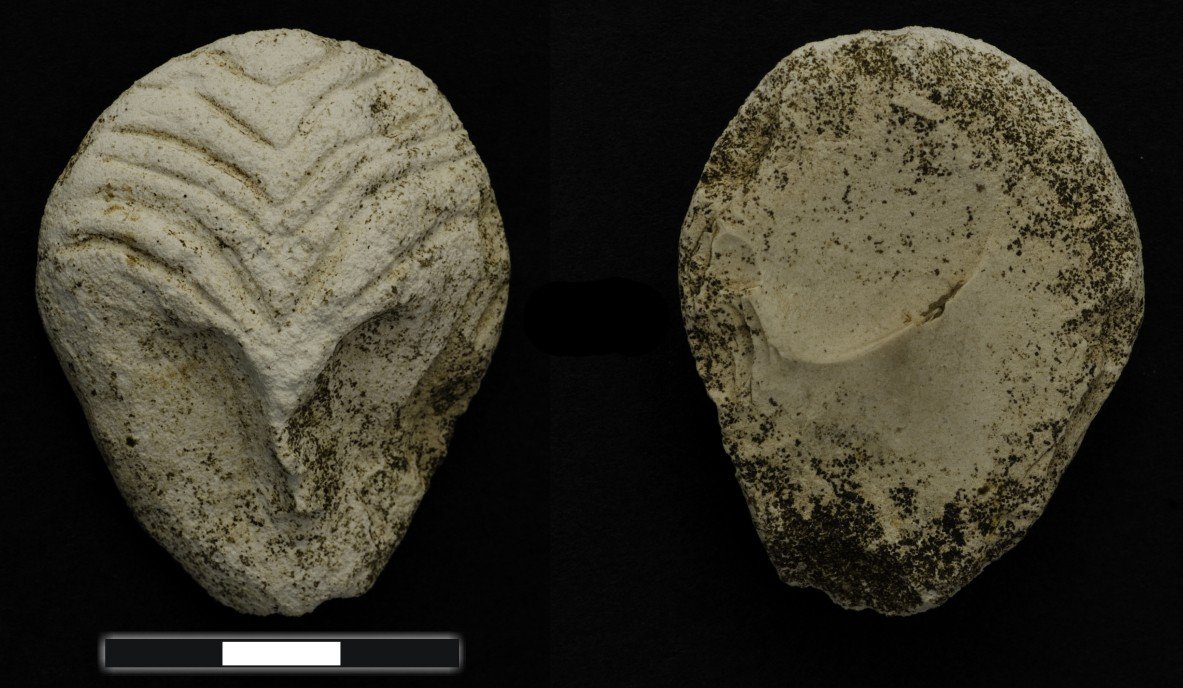
The line between human and animal, deliberately blurred
The crane reading fits a theme that runs right through Göbekli Tepe's art: the line between human and animal is repeatedly blurred. Some of the beasts on the pillars may be people in disguise, and some of the human figures carry animal features. A costumed dancer — a person stepping into the body of a crane — would sit naturally in a world where that boundary was made deliberately unstable.
If the carvers really were depicting a masquerade, it would be among the earliest hints anywhere of costumed ritual performance. That matters because Göbekli Tepe belongs to the Pre-Pottery Neolithic, in the Şanlıurfa region of southeastern Türkiye, roughly twelve thousand years ago — long before written myth or organised religion as we know it. A person dressing as an animal to enact a story would be one of the oldest traces of that very human impulse.
This blurring is exactly what one influential theory would predict: in Inside the Neolithic Mind, David Lewis-Williams and David Pearce argue that these communities understood animals as beings that move between the levels of the cosmos, so that dressing as a crane was a way of crossing that line — a reading the excavators treat with caution, but one worth knowing.
Why the crane, of all birds
Cranes are unusually good candidates for this kind of ritual. They are among the largest flying birds of the region, close to human scale; they are long-lived and socially bonded; and, famously, they dance — performing elaborate leaping, wing-spreading displays, especially in courtship. A bird that is roughly person-sized and given to dancing is an obvious partner for people imagining their own myths and origins.
They also come and go with the seasons, vanishing and returning each year — an easy natural emblem of renewal and return. Crane dances and bird costumes recur in ritual across many later cultures, which is part of why the Göbekli team floated the idea. But the comparison reaches across thousands of years and other societies, so it is offered as a suggestion — one plausible way to read the birds among several, not a demonstrated link.
Whether or not every detail is right, the idea that people once dressed as cranes captures how blurred the line between human and animal could be in this world.
What is uncertain
The whole idea rests on a stylistic detail — legs that bend forward like a human knee — and a Neolithic carver's anatomy was not a photograph. The forward bend could be a convention, a mistake, or a way of showing a crane's true backward-bending hock, rather than a deliberate signal of a costumed dancer. There is no masking equipment, no dance floor, no independent evidence of performance from the site; the masquerade reading is inference from imagery alone.
The comparison to later crane dances and bird costumes is an analogy across thousands of years and other cultures, offered by the DAI team as a suggestion, not a demonstrated link. It remains one plausible way to read the birds among several.
Common questions
Did Neolithic people at Göbekli Tepe dress up as birds? Possibly. Several crane reliefs at Göbekli Tepe are carved with human-like knees, and the excavation team suggests these may show people costumed as cranes — among the earliest hints anywhere of costumed ritual performance. It remains a reading, not a settled fact.
Why would people dress as cranes? Cranes are among the largest flying birds of the region, they perform elaborate courtship dances, and they arrive and depart with the seasons. Crane dances and bird costumes recur in ritual across many later cultures.
Key takeaways
- Some of Göbekli Tepe's cranes are carved with forward-bending, human-like knees instead of a bird's backward-bending legs.
- The excavation team reads this as a possible animal masquerade — people costumed as cranes.
- Cranes are an apt choice: they are large, they perform elaborate courtship dances, and they arrive and depart with the seasons.
- No costume survives — the idea rests on the carvings alone, and is offered as an interpretation, not a proven fact.
Sources
- German Archaeological Institute — Tepe Telegrams: 'Dances with Cranes — Animal masquerade in Pre-Pottery Neolithic ritual'
- Russell, N. & McGowan, K. J. (2003). Dance of the Cranes: crane symbolism at Çatalhöyük and beyond. Antiquity 77(297), 445–455.
This article is written from the primary literature and excavators' reports cited above. Interpretations are attributed; uncertainties are stated in the text.