Older than the famous one
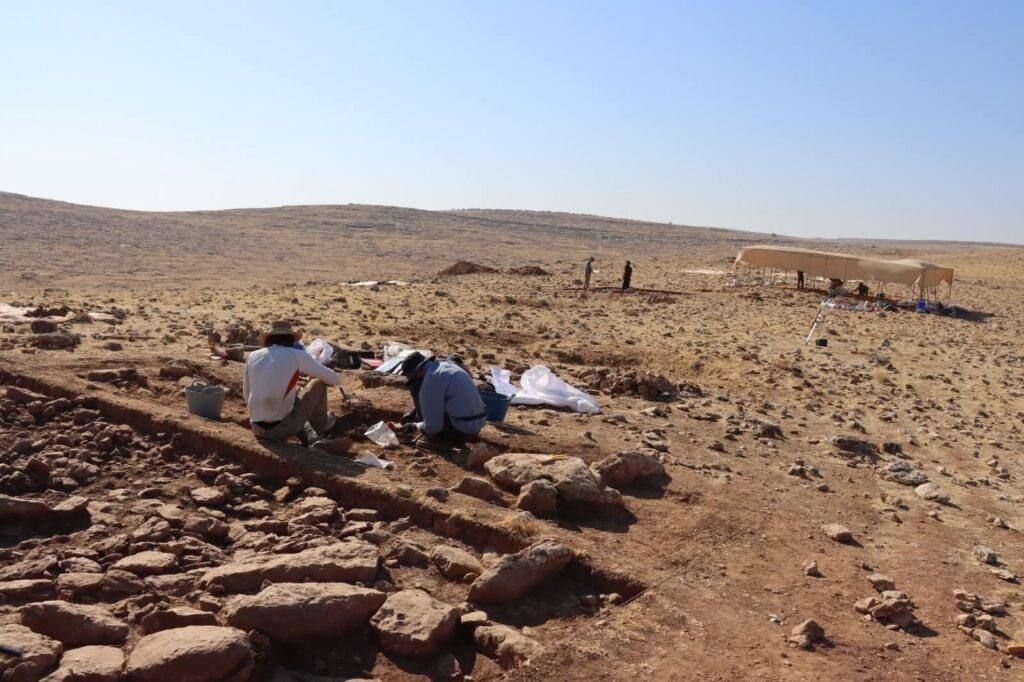
Çakmaktepe, in the Eyyübiye district of Şanlıurfa, has been excavated since 2021 under Assoc. Prof. Fatma Şahin. The chipped-stone tools point to a settlement as early as 10,000 BCE — which would make it roughly a thousand years older than Göbekli Tepe. Radiocarbon dates are still pending, so that ordering is a strong working claim rather than a fixed one.
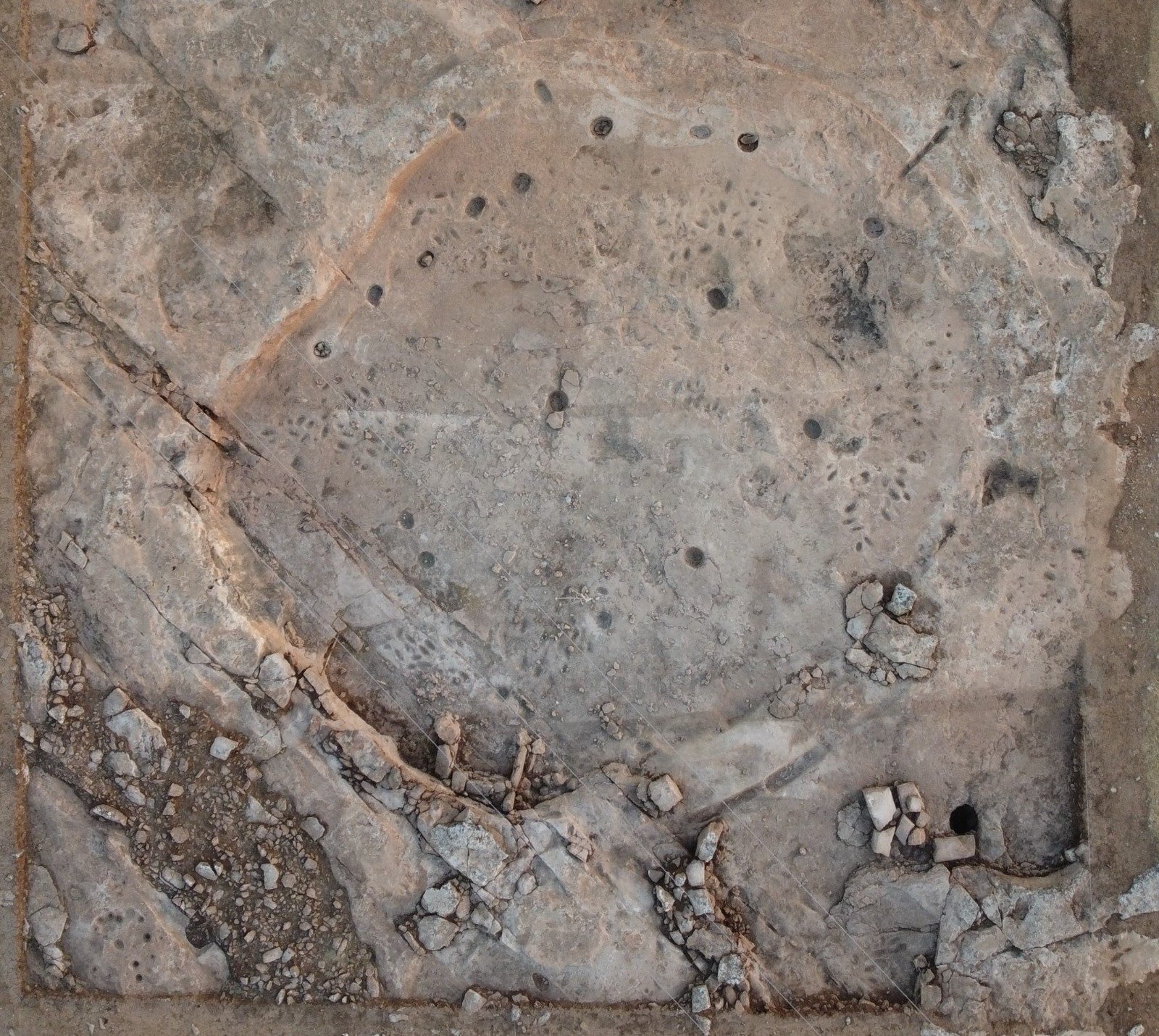
The architecture fits an early moment: round, semi-subterranean houses carved into the bedrock, alongside larger communal structures — one of them about 16 metres across, roofed, cut into the rock. Like Göbekli Tepe, buildings here were deliberately buried before the site moved on.
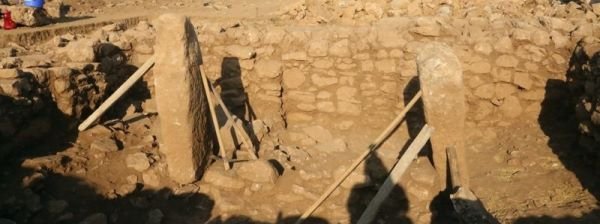
The directors' 2025 project synthesis sharpens the picture. It dates Çakmaktepe to the start of the Pre-Pottery Neolithic A (c. 9700–8800 BCE) — at least one phase earlier than the known monumental sites — and notes a telling detail: the standing stones here are not yet T-shaped. They are plain uprights, read as the precursors of the T-pillars that Göbekli Tepe and Karahan Tepe would later carve into human figures. The same houses also show some of the earliest experiments with terrazzo-style lime floors. Çakmaktepe is, in other words, a glimpse of the tradition before it became monumental.
Skulls in the wall
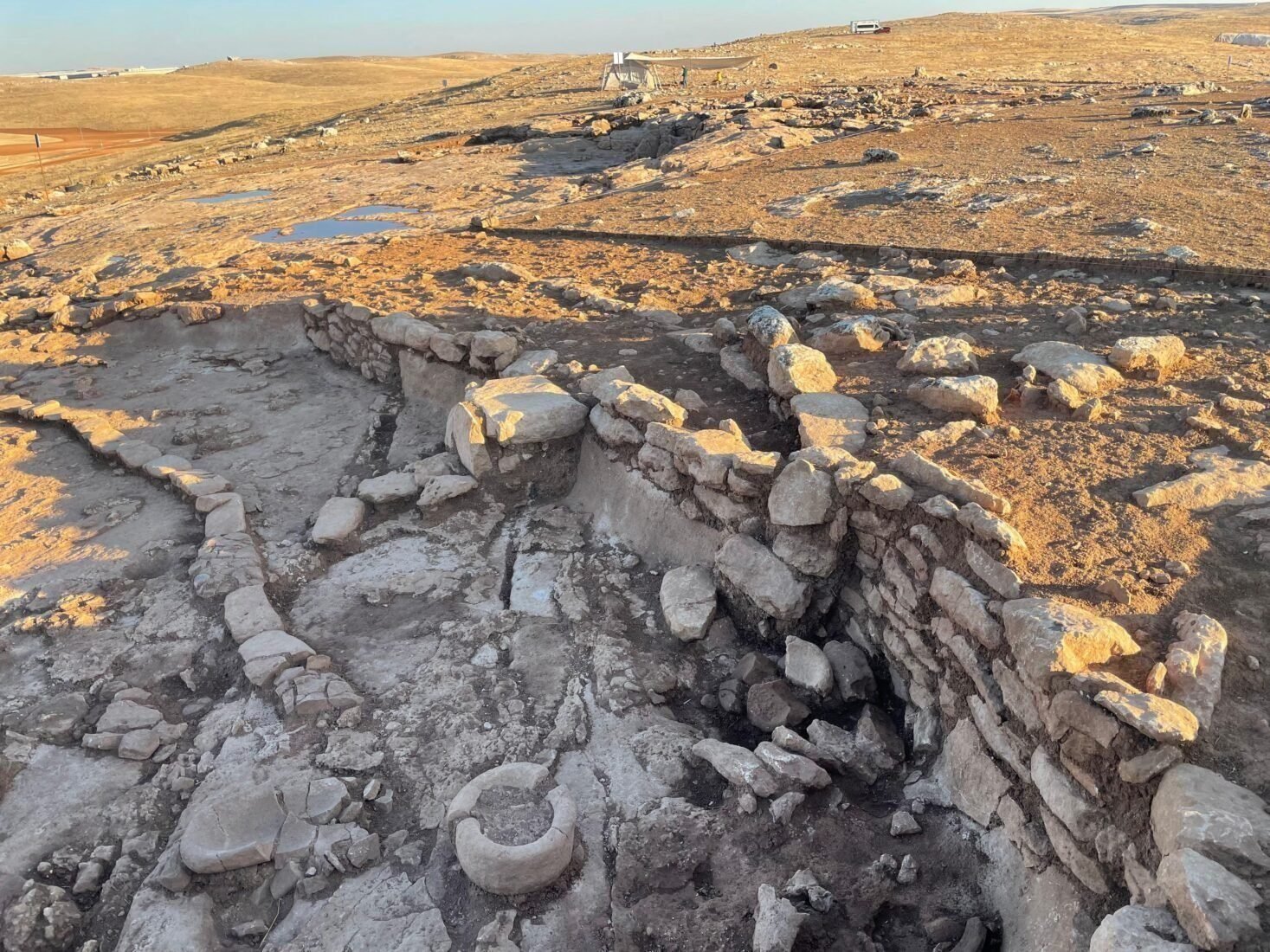
The find that stops you is ritual. Against the base of a wall, excavators uncovered burned animal skulls — wild cattle, sheep, gazelle and equids — deliberately placed. Şahin's reading: 'The skulls were placed at the base of the walls, likely burned to strengthen them — a clear ritualistic practice.'
Building the bones of hunted animals into the fabric of a house is not decoration. It ties the structure to the hunt, to the animals, perhaps to the people who took them. It is exactly the kind of act that shows symbolic life was woven into ordinary building from the very start of settling down.
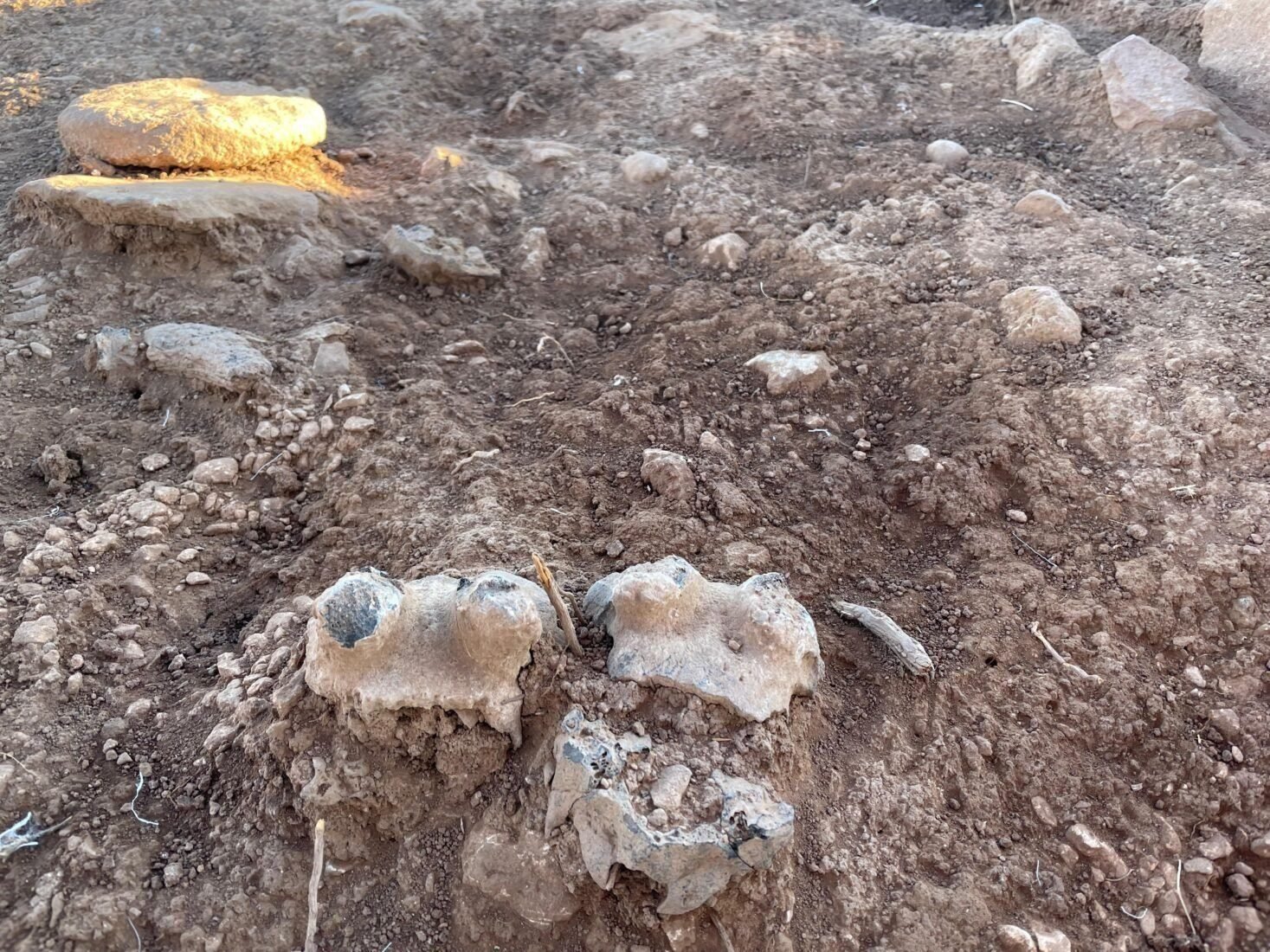
Koray Erdogan, Excavation at Cakmaktepe, Türkiye Today, via Türkiye Today.
Why it matters
Çakmaktepe, Mendik Tepe and Harbetsuvan are quietly rewriting the Taş Tepeler story. Göbekli Tepe is spectacular, but it is not the beginning — sites like this one, smaller and earlier, catch the moment mobile hunters were first settling, before the giant enclosures. If the early dating holds, Çakmaktepe is closer to that origin than the monument everyone knows.
It also puts the lie to 'primitive'. A community this early was already staging deliberate ritual in its architecture.
The tradition before it became monumental
Çakmaktepe catches the culture at an earlier moment than the famous sites. Its round, semi-subterranean houses were cut into the bedrock alongside larger communal structures — one about sixteen metres across, roofed and rock-cut — and, like Göbekli Tepe, buildings here were deliberately buried before the site moved on. The directors' 2025 synthesis dates it to the start of the Pre-Pottery Neolithic A, at least a phase earlier than the known monumental sites.
The telling detail is the stones. The standing stones at Çakmaktepe are not yet T-shaped; they are plain uprights, read as the precursors of the T-pillars that Göbekli Tepe and Karahan Tepe would later carve into human figures. The same houses show some of the earliest experiments with terrazzo-style lime floors. Çakmaktepe is, in other words, a glimpse of the tradition before it became monumental.
Ritual woven into the walls
The find that stops you is ritual. Against the base of a wall, excavators uncovered burned animal skulls — wild cattle, sheep, gazelle and equids — deliberately placed. Şahin reads them as burned to strengthen the wall, a clear ritualistic practice. Building the bones of hunted animals into the fabric of a house is not decoration; it ties the structure to the hunt and to the animals taken in it.
That matters because it puts the lie to 'primitive'. A community this early was already staging deliberate ritual in its architecture, at the very moment mobile hunters were first settling down. If the early dating holds — and it rests for now on lithic typology rather than radiocarbon — Çakmaktepe is closer to the origin of this world than the monument everyone knows.
What is uncertain
The '1,000 years older than Göbekli Tepe' claim rests on lithic typology, not yet radiocarbon. That is a real and reasonable basis, but C-14 dates could shift it. And 'to strengthen the walls' is Şahin's interpretation of why the skulls were burned and placed — plausible, but an interpretation.
This is field reporting from an active dig. We will update as dating and full publication appear.
Common questions
Is Çakmaktepe older than Göbekli Tepe? Its chipped-stone tools suggest a settlement as early as 10,000 BCE, roughly a thousand years older, but radiocarbon dates are still pending.
What is the skull ritual? Excavators found burned wild-animal skulls — cattle, sheep, gazelle and equids — deliberately placed against the base of a wall, which Şahin reads as a ritual to strengthen it.
Why do the non-T-shaped stones matter? The plain uprights are read as precursors of the T-pillars that Göbekli Tepe and Karahan Tepe later carved into human figures — a glimpse of the tradition before it became monumental.
Key takeaways
- Çakmaktepe's tools point to a settlement as early as 10,000 BCE — perhaps a thousand years older than Göbekli Tepe.
- Its standing stones are not yet T-shaped — read as the precursors of the later T-pillars.
- Builders set burned wild-animal skulls into the base of a wall — ritual woven into ordinary building.
- The early dating rests on lithic typology, not yet radiocarbon — a strong working claim, not a fixed one.
Sources
- Türkiye Today — Birthplace of Neolithic civilization? Çakmaktepe's ancient builders (17 December 2024)
- Daily Sabah — Ancient Çakmaktepe site in Şanlıurfa may be older than Göbeklitepe
- Karul, N., Baird, D., Clare, L., Erdalkıran, M., Güldoğan, E., Miyake, Y., Özdoğan, E., Shimogama, K., Şahin, F. & Uludağ, C. (2025). Şanlıurfa Neolithic Research Project – Taş Tepeler: Recent Studies, New Results.
This article is written from the primary literature and excavators' reports cited above. Interpretations are attributed; uncertainties are stated in the text.