The discovery
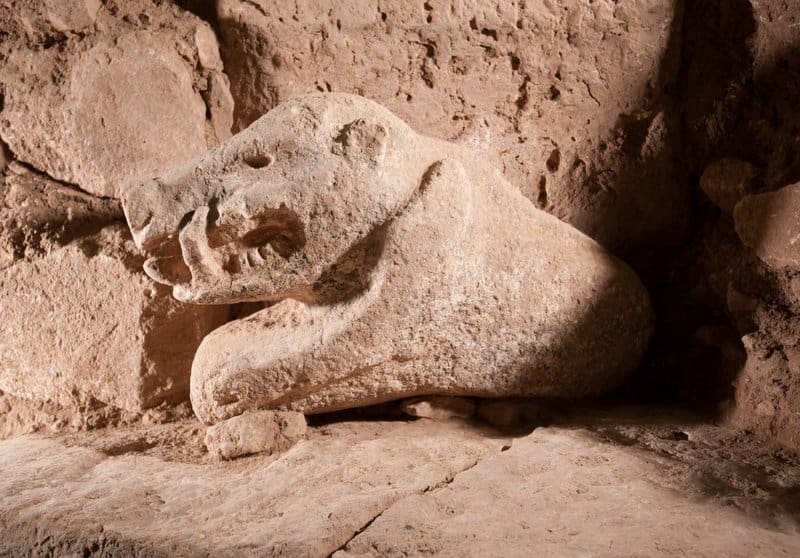
In 2023 the Göbekli Tepe Project announced a life-sized limestone statue of a wild boar, found in the northern part of Special Building D. It stood on a decorated stone bench between two pillars — and, remarkably, still held traces of red, black and white pigment, with the tongue coloured red.
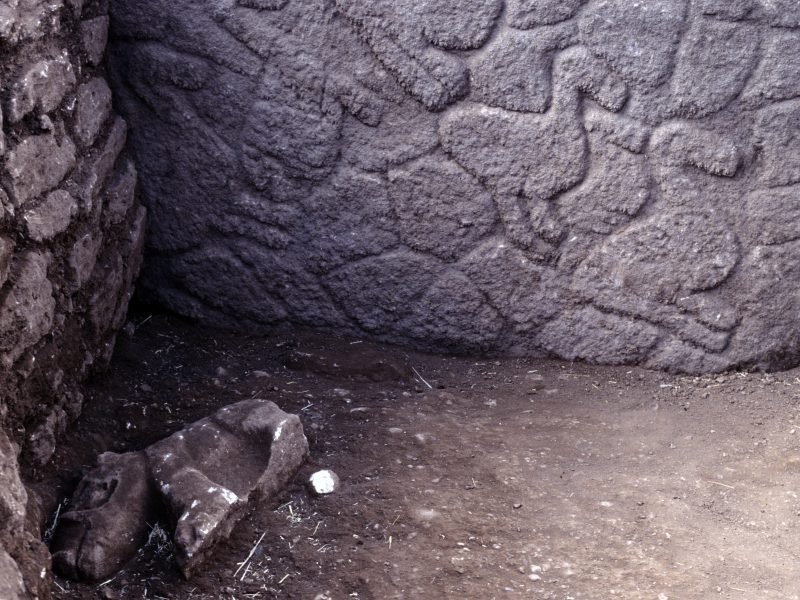
German Archaeological Institute, Göbekli Tepe Project, Boar sculpture at Pillar 12, Göbekli Tepe, Copyright: DAI — used with permission, via .
Why it's a landmark
Archaeologists had long suspected that the pillars and statues of Göbekli Tepe were once painted, but suspicion isn't proof. The boar is the first unambiguous evidence. It means the grey stone we see today is a faded version of something that may once have been vividly coloured — a very different world to picture.
German Archaeological Institute, Göbekli Tepe Project, Boar relief, Enclosure C, Göbekli Tepe, Copyright: DAI — used with permission, via .
How it was found
The boar was not loose in the fill. It stood on a decorated stone bench between two pillars in the northern part of Special Building D, in a deliberate setting — which is part of why the surviving pigment matters: the statue was recovered in a context that protected the traces of red, black and white, with the tongue picked out in red.
That arrangement — a coloured, life-sized animal placed between pillars, on a worked bench — turns the boar from a single painted object into a glimpse of how these interiors were meant to look: not bare grey stone, but figures set in place and finished in colour.
What colour would change about the picture
For most of its modern life, Göbekli Tepe has been imagined in the colour it survives in: grey limestone, weathered to a uniform pale stone, with the animals and T-shaped pillars reading as line and relief against a neutral ground. That is the version in almost every photograph, and it has quietly shaped how the site feels — austere, monumental, a little severe.
The painted boar asks us to repaint that mental image. If a life-sized animal in Special Building D still carried red, black and white, then the interior it stood in was not a gallery of grey figures but a space finished in colour, with a boar whose tongue was picked out in red facing whoever entered. The stone we call bare was, in this one preserved case, the last faded layer of something far more vivid.
That matters because so much of the argument about Göbekli Tepe is about atmosphere and intent — whether these were solemn gathering places, and what it felt like to stand inside one. Colour is part of that answer. A brightly finished animal set between pillars is a different kind of presence from a grey silhouette, and the boar is the first solid reason to picture the enclosures that way.
Why the setting preserved the paint
Pigment almost never survives twelve thousand years on exposed stone. Rain, frost, wind and burial all work against it, which is why the suspicion that Göbekli Tepe was painted stayed a suspicion for so long: the surfaces that would have carried the colour are exactly the surfaces most exposed to weathering.
The boar is the exception because of where it was found. It was not loose in the fill but standing on a decorated stone bench, in a deliberate arrangement between two pillars in the northern part of Special Building D. That context sheltered it, trapping the traces of red, black and white that open weathering would have stripped away. The colour survived because the setting did.
This is also why one painted statue cannot settle how much of the site was painted. The boar tells us that painting happened, and that a finished figure in a protected setting could be brightly coloured. It does not tell us whether every pillar, every relief and every plain wall was treated the same way, because those surfaces did not have the boar's luck. The original scheme — how vivid, how complete — is reconstructed from faint traces, and the details reported in 2023 came from the excavators' announcement ahead of full technical study, which later analysis of the exact pigments may refine.
What is uncertain
The pigment is real, but how much of Göbekli Tepe was painted is not settled by one statue. The boar preserves colour because its setting happened to protect it; most stone at the site is weathered, so we cannot say whether painting was universal, occasional, or reserved for particular figures. The original colour scheme — how vivid, how complete — is reconstructed from faint traces.
Details reported in 2023 come from the DAI's announcement ahead of full technical publication; the exact pigments, their composition and how they were applied are the kind of thing later analysis may refine.
Common questions
Was Göbekli Tepe's stone originally painted? At least some of it was. The boar statue still carried red, black and white pigment — the first hard proof that the site's sculptures were once coloured rather than the bare grey stone we see now.
Where was the painted boar found? In the northern part of Special Building D, standing on a decorated stone bench between two pillars. That deliberate setting is part of why the surviving traces of paint were protected.
Does this mean the whole site was painted? Not necessarily. One statue preserved colour because its setting happened to protect it; most stone at the site is weathered, so whether painting was universal, occasional or reserved for certain figures is not settled.
Key takeaways
- The boar is the first unambiguous evidence that Göbekli Tepe's sculptures were painted.
- The grey stone we see today is a faded version of something once vividly coloured.
- It survived with its pigment because its setting protected it — a coloured animal placed between pillars on a worked bench.
- It turns the interior from bare grey stone into a glimpse of figures set in place and finished in colour.
Sources
- German Archaeological Institute (DAI) — press release, 8 Oct 2023
- DAI Tepe Telegrams — 'A Stairway to the Circle of Boars' (boar imagery at Göbekli Tepe)
This article is written from the primary literature and excavators' reports cited above. Interpretations are attributed; uncertainties are stated in the text.