The picture in your head
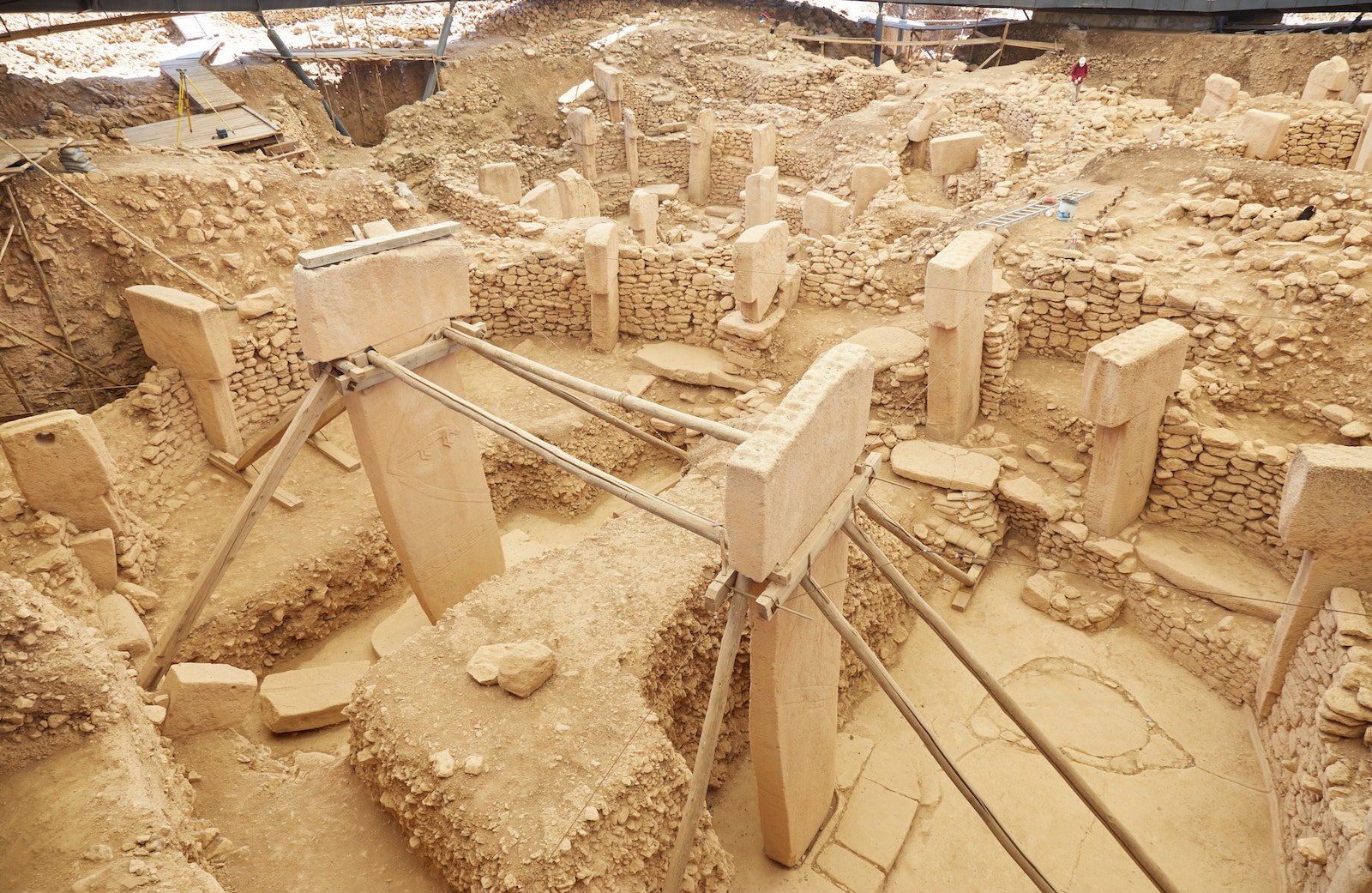
Almost every article, documentary and travel photo shows Göbekli Tepe the same way: circles of tall stones standing in the open air, like a Neolithic Stonehenge you could walk between under the sky. It is a striking image. According to the excavation's own director, it is also misleading.
The reason the open-ring picture took hold is simple — that is roughly how the enclosures look once they have been dug out and the fill removed. What survives is the stone. What did not survive is anything that sat on top of it.
What Lee Clare actually argues
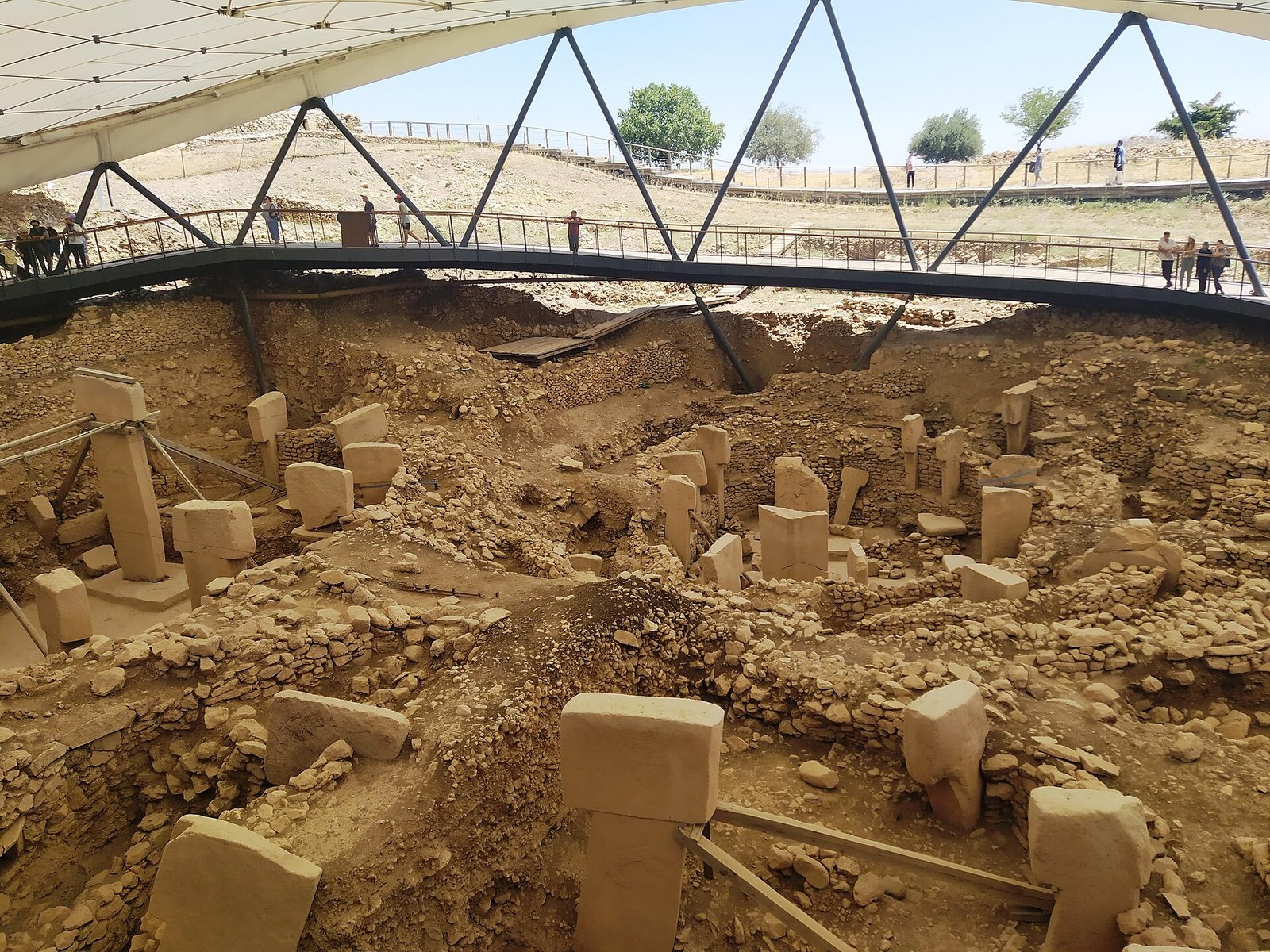
In lecture and interview material, Dr Lee Clare — head of the Göbekli Tepe research project for the German Archaeological Institute (DAI) — makes a plain case that these were not freestanding stone circles. The smaller pillars were set into the surrounding walls rather than standing apart from them, and the two great central pillars would have needed structural support. Read that way, the buildings were enclosed and very probably roofed.
This is not a lone hunch. The question of roofs has been discussed on the project for years — the architect Dietmar Kurapkat modelled roofed reconstructions long ago, and the team has often described the older enclosures as semi-subterranean, dug down into earlier deposits. What is notable is that the current director now states the roofed reading as the more likely one, against the open-air image that dominates popular coverage.
If he is right, standing inside Enclosure D in the Neolithic would have felt less like walking through an open ring and more like entering a dim, enclosed room — walls close around you, the carved central pillars rising in a covered space built to hold perhaps twenty or thirty people.
Why it changes the story
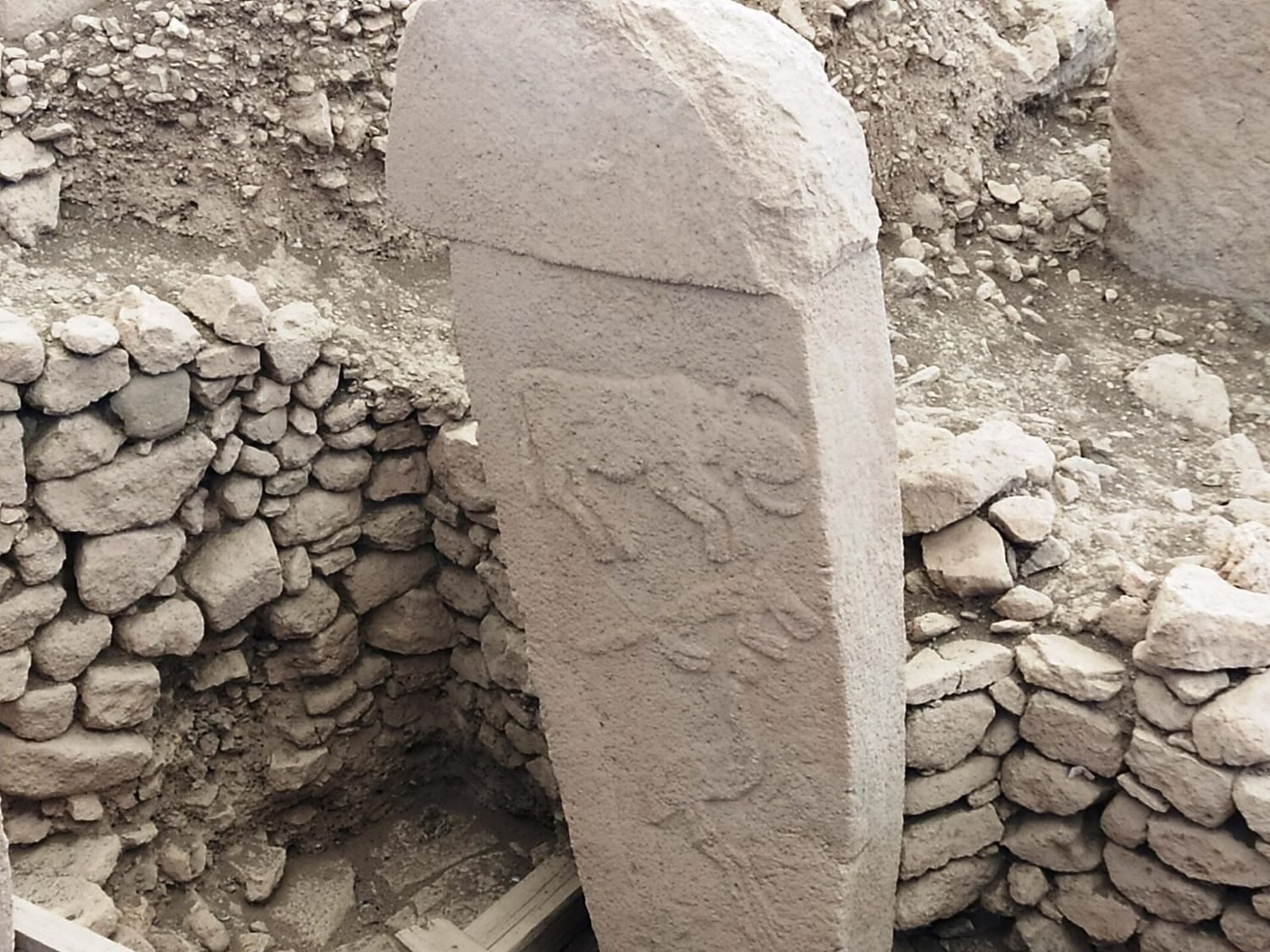
A roof is not a small detail. An open ring reads as a monument meant to be seen from outside and from above — a display. A walled, roofed room reads as an interior: a space you go into, for something that happens among a limited group of people, out of sight.
That shift lines up with the rest of how the excavation now talks about these buildings — as gathering places for a community rather than open-air sanctuaries. The architecture and the interpretation point the same way.
Why the open-ring picture stuck
The open-air image is easy to explain: it is roughly how an enclosure looks once it has been excavated and its fill removed. What lasts eleven thousand years underground is the stone. Timber, thatch or beams laid over the top would have been dismantled or rotted away long ago, leaving only the pillars and walls that the camera then records as a ring.
The roof question is not new to the project either. The architect Dietmar Kurapkat modelled roofed reconstructions of the buildings long ago, and the team has often described the older enclosures as semi-subterranean — dug down into earlier deposits rather than raised on open ground. What is notable now is that the current director states the roofed reading as the more likely one, against the open-air picture that dominates popular coverage.
An interior, not a display
A roof is not a small detail; it changes what kind of place this was. An open ring reads as a monument meant to be seen from outside and from above — something on display. A walled, roofed room reads as an interior: a space you go into, for something that happens among a limited group and out of sight.
On Clare's reading, standing inside Enclosure D in the Neolithic would have felt less like walking through an open circle and more like entering a dim, enclosed space — walls close around you, the carved central pillars rising in a covered room built to hold perhaps twenty or thirty people. That lines up with how the excavation now talks about these buildings generally: as gathering places for a community rather than open-air sanctuaries.
What is uncertain
No roof survives. If timber-and-thatch or beam roofs existed, they were dismantled or rotted away, and firm structural proof is still lacking — this remains an argued position, not a settled fact, and other reconstructions are possible. The point Clare makes is that the evidence of the walls and pillars favours enclosed, roofed buildings over open rings.
This position comes mainly from spoken lecture and interview material, and the project's formal architectural publications may refine or qualify it. Treat it as the director's considered reading, likely to be spelled out more carefully in print.
Common questions
Were Göbekli Tepe's enclosures roofed? The excavation's director, Lee Clare, argues they were. The smaller pillars sit within the surrounding walls and the central pillars would have needed structural support, which points to enclosed, probably roofed buildings rather than open stone circles.
Why do photos show open rings then? That is roughly how the enclosures look once they are dug out and the fill removed. The stone survives; anything that sat on top of it — timber, thatch or beams — did not.
Is the roof theory proven? No. No roof survives, so it remains an argued position rather than a settled fact, drawn mainly from lecture and interview material and the evidence of the walls and pillars.
Key takeaways
- The familiar image of Göbekli Tepe as open rings of stone under the sky is, per its own director, misleading.
- Lee Clare argues the smaller pillars were set into the surrounding walls and the central pillars needed support, so the buildings were enclosed and very probably roofed.
- Read that way, standing inside Enclosure D would feel less like an open ring and more like entering a dim, covered room.
- A roofed interior reframes the enclosures as spaces you go into for a limited group, rather than monuments meant to be seen from outside.
Sources
- Tepe Telegrams (DAI) — Ask an archaeologist (about Göbekli Tepe): the roof question
- Tepe Telegrams (DAI) — Frequently Asked Questions
This article is written from the primary literature and excavators' reports cited above. Interpretations are attributed; uncertainties are stated in the text.