A recurring Neolithic habit
Model-making is one of the quiet constants of the Neolithic. Across thousands of years and thousands of kilometres, communities that had only recently settled into permanent villages kept producing small-scale versions of their own architecture — little buildings in clay and stone, made to be held, looked at, kept, buried or exchanged. It is not unique to the Taş Tepeler, nor even to the Near East; it is a widespread feature of the Neolithic world as a whole.
What changes from place to place is what gets modelled — an ordinary house in one region, a monument in another — and, as always, why. This page sets out the broad phenomenon. For the Taş Tepeler's own spectacular twist on it — the hand-sized T-pillars of Göbekli Tepe and Nevalı Çori — see our companion discovery post, The miniature T-pillars, linked below.
The clay house models of Neolithic southeast Europe
The best-known class of Neolithic architectural model comes from the later Neolithic of southeast Europe — Thessaly, Macedonia and the wider Balkans. Communities there made small clay models of their own houses: hundreds survive, most of them only 5–20 cm high. Some are roofed and closed, with narrow slots for doors and windows and a round hole in the gabled roof for hearth-smoke; others are open-topped, made to show the interior.
Archaeologists are careful about what these objects are. They are not literal scale copies of real buildings but abstract depictions — the idea of a house reduced to its essentials. That is exactly why they matter: because so little Neolithic architecture survives above its foundations, these little models are among the best evidence we have for what the full buildings looked like — gabled roofs, upper storeys, the placement of doors and hearths.
There is a telling pattern. In Thessaly, house models appear en masse in the Middle Neolithic at the very moment the stone-founded, mud-brick house became standard — as if a surge in modelling was a deliberate response to a new way of building, a society suddenly representing its own architecture to itself. That is the single most suggestive clue we have about why people made them at all.
A society that had just learned to build in a new way kept making tiny copies of what it built. The impulse is everywhere in the Neolithic; the reason is nowhere written down.
The Near Eastern twist: shrinking the monuments
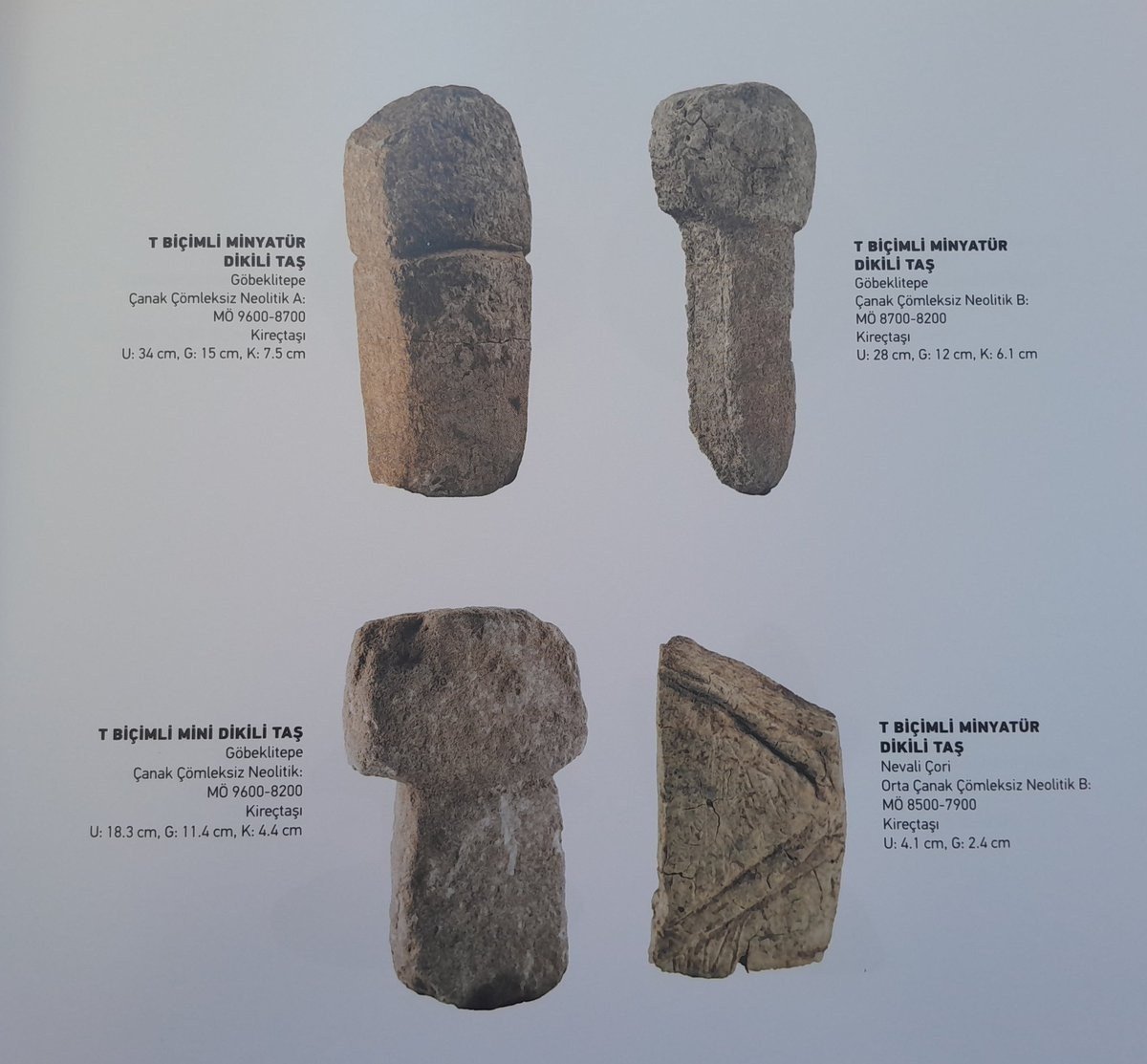
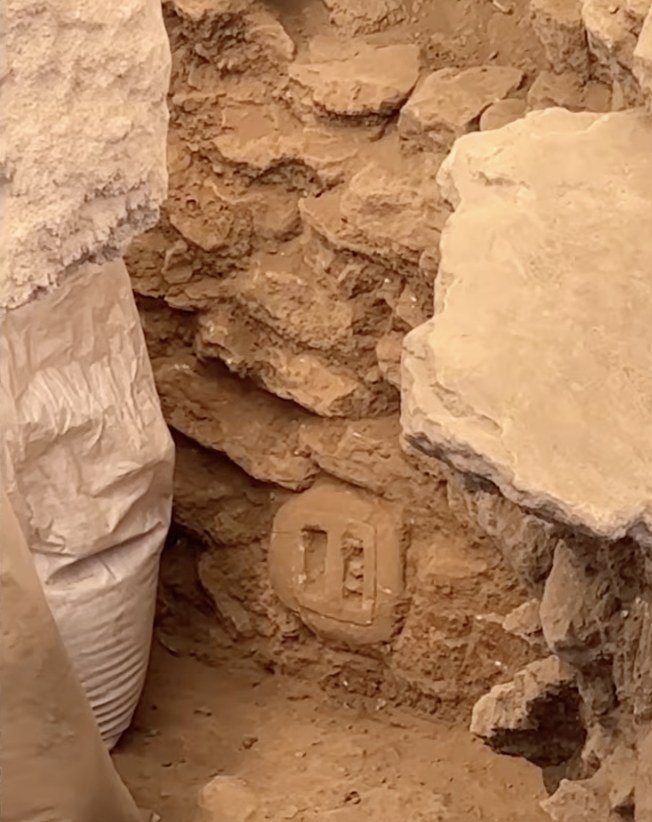
The Near Eastern strand is both the earliest known and a genuine twist on the European pattern. Here it is not ordinary houses that get shrunk but the monuments themselves. In the Taş Tepeler — the cluster of early Neolithic sites around Şanlıurfa — the same communities that raised multi-tonne T-pillars also made miniature T-pillars in the same limestone (catalogued examples from Göbekli Tepe and Nevalı Çori run from about 34 cm down to roughly 4 cm), and miniature porthole stones reproducing the big pierced threshold slabs (one recorded in situ at Sayburç).
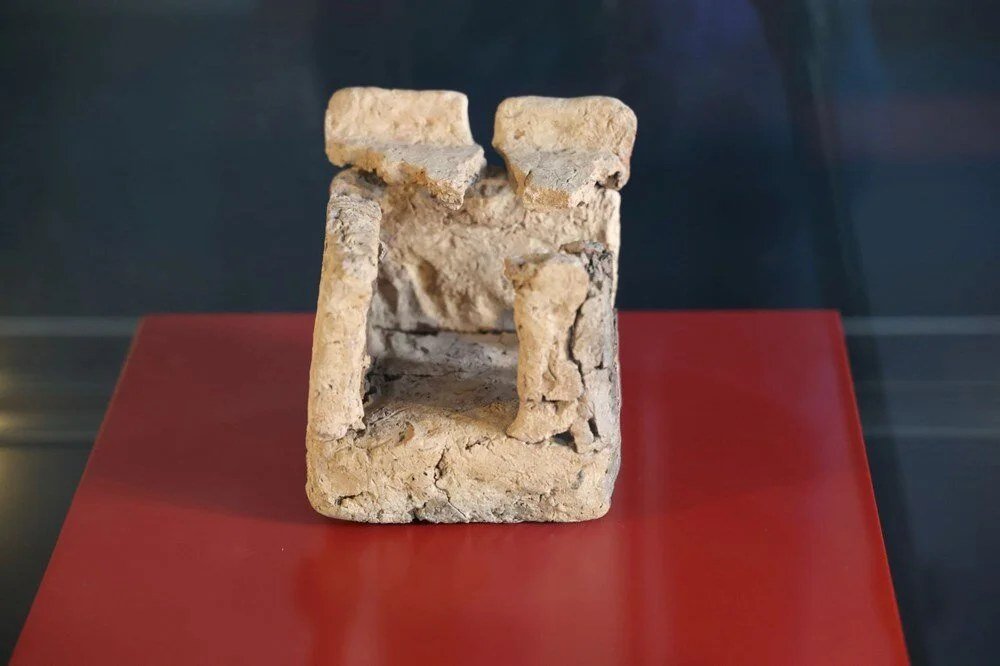
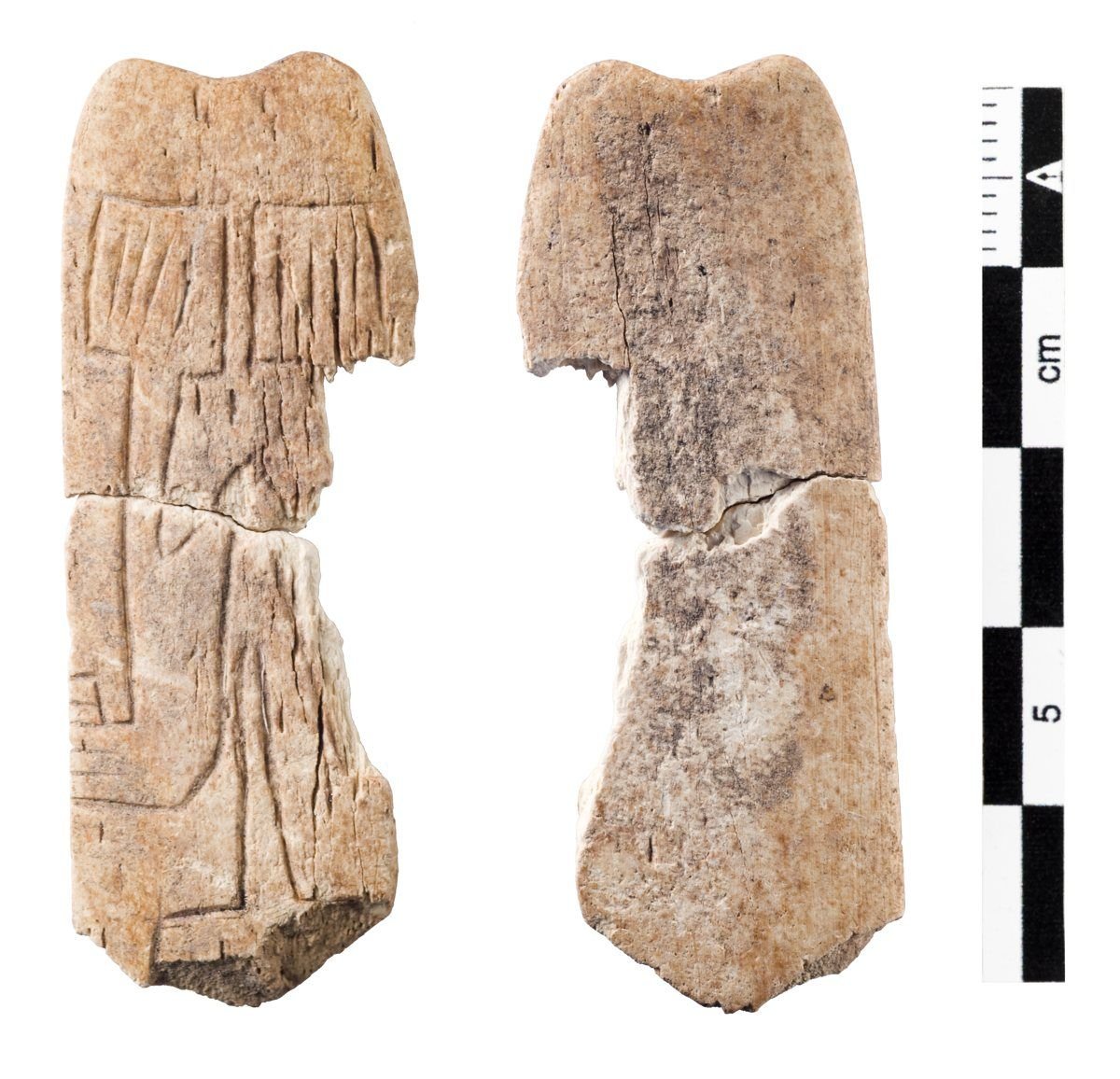
Nearby, at Çayönü in the Diyarbakır region, excavators have recovered small architectural house models — the most complete reported in 2025 as the world's oldest architectural model, around 12,000 years old, with 17 such models from the site (excavations led by Assoc. Prof. Savaş Sarıaltun). And a worn carved bone 'spatula' from Göbekli Tepe may even carry a two-dimensional depiction of the enclosure's own T-pillars — a tentative reading by Dietrich and Notroff.
Together these show the same impulse as the Balkan models — reducing architecture to something you can hold — but aimed at the extraordinary rather than the everyday. The full detail of the mini T-pillars, with their exact dimensions and periods, is set out in our discovery post The miniature T-pillars, linked below.
Why make miniatures? What is uncertain
This is where honesty matters most. The objects are secure — the clay house models, the mini T-pillars, the Çayönü models and the Sayburç porthole are all real, recorded finds. But why anyone made a small version of a building or a monument is genuinely unresolved. Every possibility below is interpretation, not fact, set out separately only to keep the options clear — not because the evidence chooses between them:
• Design and teaching aids. Portable models used to plan a building, or to teach construction — the reading the Çayönü excavators give their house models, and the one the Middle-Neolithic surge in European modelling most directly supports.
• Ritual objects or charms. Small objects carrying the power or protection of the building or monument they copy — a pocket version of something larger, to be held, worn or exchanged.
• Tokens of belonging or identity. Markers tying a person or group to a particular house, monument or community.
• Votive or grave goods. Miniatures made to be deposited, buried or placed with the dead.
• Apprentice or children's pieces. Practice carvings by those learning to work stone or clay, or small objects made by and for the young.
Crucially, different miniatures may have had different purposes: a scale model of a house fits the design-tool reading most naturally; a single mini T-pillar leans toward the charm-or-token readings; a clay house model placed in a grave is something else again. None of these is established, none excludes the others, and a single object could have shifted role across its life. The plain state of the evidence is that Neolithic people modelled their own architecture, repeatedly and across the map, and that we can describe the objects far better than we can explain them.
Common questions
Is miniature architecture unique to Göbekli Tepe or the Taş Tepeler? No. Small models of buildings recur across the Neolithic, from the clay house models of Thessaly, Macedonia and the Balkans to the Near Eastern examples. The Taş Tepeler's distinctive move is to shrink monuments — T-pillars and portholes — rather than ordinary houses.
What is the oldest architectural model? Reporting in 2025 describes a roughly 12,000-year-old house model from Çayönü (now in the Diyarbakır Museum) as the world's oldest architectural model; 17 such models have been found at the site.
Why did Neolithic people make them? Nobody knows for sure. Suggestions range from design and teaching models to charms, ritual deposits, tokens of identity, or practice pieces — all interpretation, not established fact, and different miniatures may have served different ends.
Key takeaways
- Making small versions of architecture is a recurring Neolithic habit, not unique to the Taş Tepeler or the Near East.
- The clay house models of SE Europe (Thessaly, Macedonia, the Balkans; mostly 5–20 cm) are abstract depictions, not literal copies — and among the best evidence for vanished Neolithic buildings.
- They surged in the Middle Neolithic just as the stone-founded mud-brick house became standard, as if a society were representing its own new architecture to itself.
- The Near Eastern strand is earliest and shrinks the monuments — mini T-pillars, miniature portholes, the Çayönü house models, a possibly-decorated bone.
- Why people made miniatures is genuinely open: design aids, charms, tokens, votive goods or apprentice pieces are all possibilities, none proven.
Sources
- Foundation of the Hellenic World — "House models": Neolithic clay house models of Thessaly and Macedonia (c. 5–20 cm; roofed and open-topped types; doors, windows and a roof opening for the hearth), as abstract depictions and as evidence for vanished architecture
- "Neolithic architecture" (overview): clay house models as a recurring Neolithic class and their use in reconstructing domestic buildings
- Arkeonews (2025). World's Oldest Architectural House Model from 12,000-Year-Old Çayönü Hill Now on Display in Türkiye (Diyarbakır Museum; 17 house models; excavations led by Assoc. Prof. Savaş Sarıaltun)
- Dietrich, O. & Notroff, J. (2016). A decorated bone 'spatula' from Göbekli Tepe — a possible depiction of the T-pillars. Neo-Lithics 1/16; see DAI Tepe Telegrams
- Banning, E. B. (2011). "So Fair a House: Göbekli Tepe and the Identification of Temples in the Pre-Pottery Neolithic of the Near East." Current Anthropology 52(5): the temple-vs-house debate and the interpretation of Neolithic buildings
- DAI Göbekli Tepe Project — Tepe Telegrams, "The current distribution of sites with T-shaped pillars" (2016): monumental T-pillars across the Urfa-region Neolithic, the idiom the miniatures echo
This article is written from the primary literature and excavators' reports cited above. Interpretations are attributed; uncertainties are stated in the text.