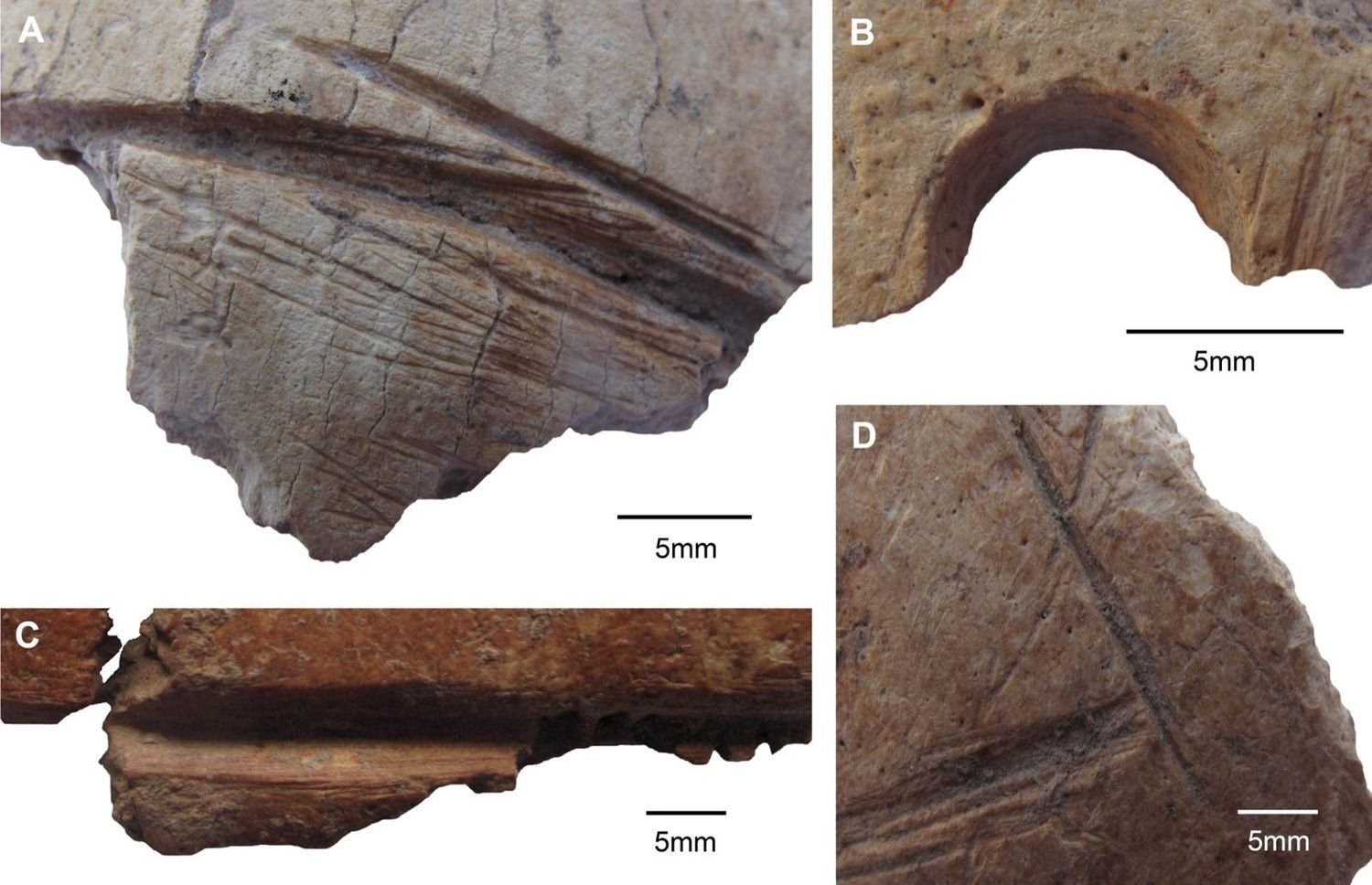
Among the human bone at Göbekli Tepe are fragments of at least three adult skulls that were stripped of flesh and then carved — deep, deliberate grooves cut into the bone after death, and on one skull a drilled hole. Published in 2017, they are read as the earliest clear evidence of a Neolithic 'skull cult.' Nothing quite like them had been found before.
How the skulls were modified
The work was careful, not casual damage. On already-dry bone, someone used stone tools to cut long, deliberate grooves running front-to-back over the crown of the skull. One of the three skulls was additionally drilled — a single hole worked into the bone. Fine cut marks elsewhere show the heads had first been defleshed, the soft tissue removed before the carving began.
That sequence — deflesh, then carve, then in one case drill — is what marks the skulls out as intentional cultural treatment rather than the ordinary breakage of buried bone. The excavators recorded it in detail and published it in the journal Science Advances in 2017.
The three skulls carry deliberate incisions made with stone tools on dry bone — long grooves over the crown — and on one skull a drilled hole. Cut marks show the heads were defleshed first. The bone is human and adult, and the working is careful and intentional.
We read the groove and the drilled hole as fixings — a way to hang, tether or steady a skull so it could be carried, mounted or displayed. Whether these were honoured ancestors or the heads of enemies, the act says the same thing: here the dead were not buried and forgotten. They were kept, worked, and shown.
This is a reading of the published evidence. The excavators themselves leave the exact purpose open — veneration and the display of defeated enemies are both live possibilities — and so do we.
Why it matters
Across the early Neolithic Near East, people treated the human head as something special: skulls were removed from bodies, kept, and — at sites like Jericho — even plastered and modelled into faces. Göbekli Tepe gives the carved version of that impulse, and gives it early, at the very dawn of the monumental phase.
It also changes what the site is. The pillars alone might read as pure architecture and imagery; the skulls show that the same community was handling its actual dead in a deliberate, ritual way. The carved animals and headless figures on the stones and the worked human heads in the ground turn out to be two halves of one preoccupation with death and the head.
What's established, and what's debated
What is established is the physical evidence: fragments of at least three adult human skulls, defleshed and then carved with deliberate grooves, one of them drilled, recorded and published to a high standard in 2017. That the treatment is intentional is not seriously in doubt.
What is debated is why. Whether the skulls belonged to venerated ancestors or to enemies, exactly how they were displayed, and how the practice relates to the site's carved imagery are all open questions. The 'skull cult' label is a careful shorthand for deliberate, ritualised treatment of the head — not a claim that we know the beliefs behind it.
Sources & further reading4 references
- Gresky, J., Haelm, J. & Clare, L. (2017). Modified human crania from Göbekli Tepe provide evidence for a new form of Neolithic skull cult. Science Advances 3(6): e1700564. doi:10.1126/sciadv.1700564
- Schmidt, K. (2012). Göbekli Tepe: A Stone Age Sanctuary in South-Eastern Anatolia. Berlin: ex oriente. The foundational monograph by the site's first excavator.
- Notroff, J., Dietrich, O. & Schmidt, K. (2014). Building Monuments, Creating Communities. Early monumental architecture at Pre-Pottery Neolithic Göbekli Tepe. In J.F. Osborne (ed.), Approaching Monumentality in Archaeology: 83–105. Albany: SUNY Press.
- Clare, L. (2020). Göbekli Tepe, Turkey. A brief summary of research at a new World Heritage Site (2015–2019). e-Forschungsberichte des Deutschen Archäologischen Instituts 2020(2): 81–88.
Full bibliography: the Taş Tepeler reference library →