A figure found in a field
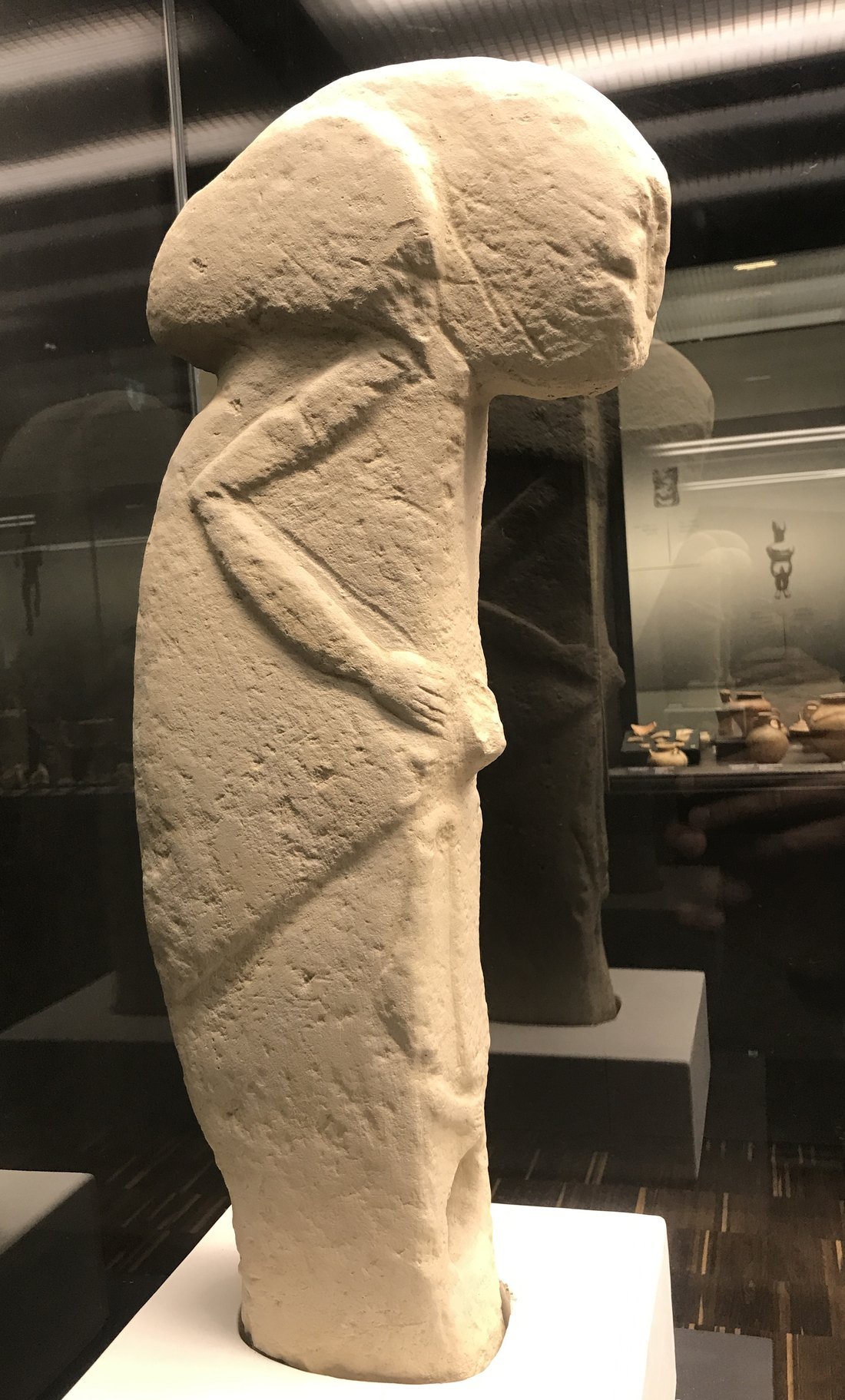
The Kilisik sculpture was not excavated; it was found by chance in 1965 in a field near the village of Kilisik, in Adıyaman province, and only later recognised for what it was. Roughly 80 centimetres of limestone, it now sits in the Adıyaman Museum, and it has puzzled everyone who has looked closely at it since.
What makes it extraordinary is that it sits exactly at the crossing-point of the region's ways of carving a human being — it is not quite a pillar and not quite a statue, but visibly both at once.
Three traditions in one stone
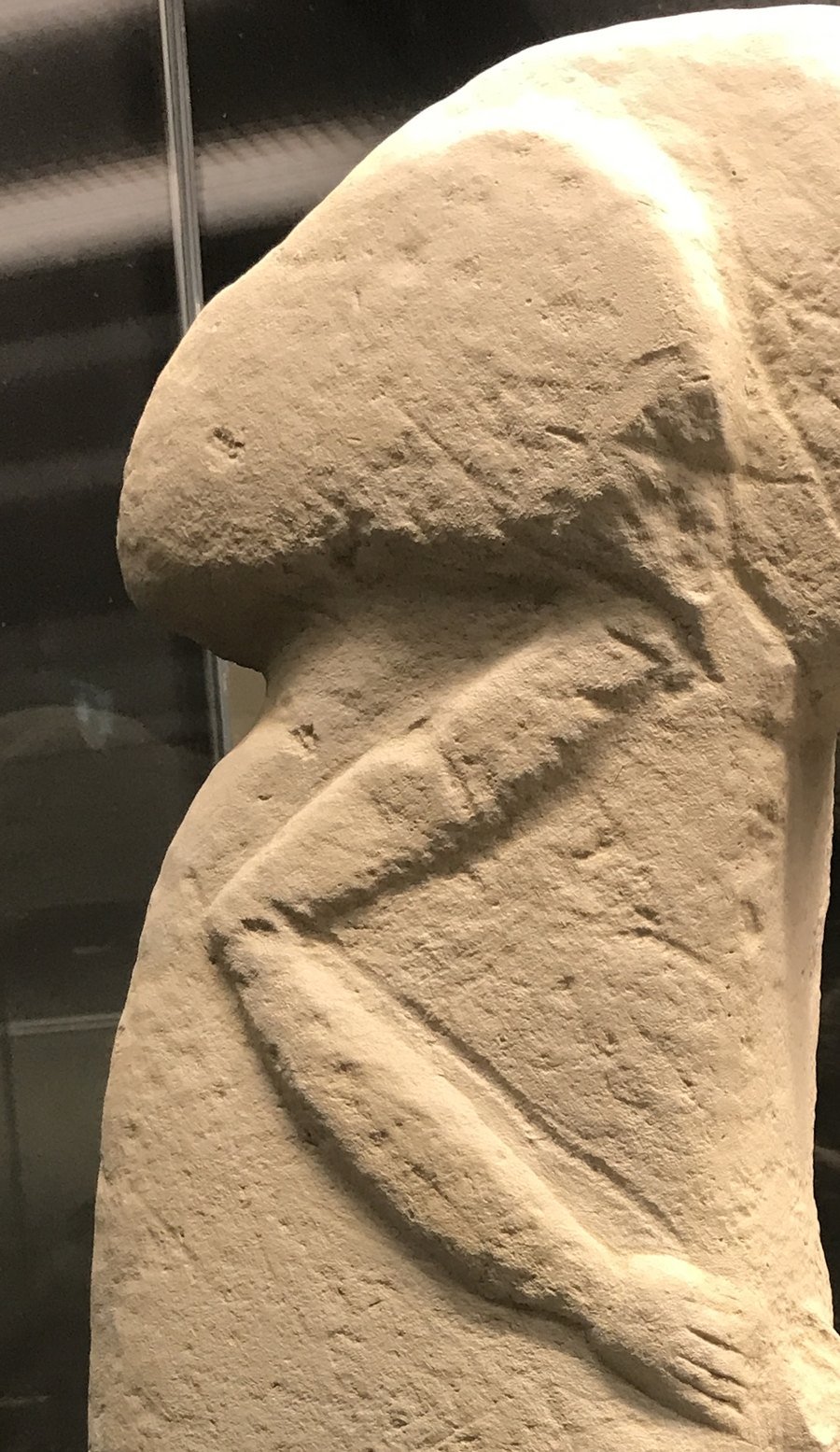
First, it is a T-shaped stele: the broad crossbar is a stylised head, exactly as on the great central pillars of Göbekli Tepe and Nevalı Çori, and arms and hands are carved coming round to the front. Second, it carries a hint of the naturalistic tradition — the modelled nose and face familiar from the life-size statue known as 'Urfa Man'.
Third, and strangest, it belongs to a small family of Neolithic images in which a larger figure appears to grasp or hold a smaller one against its body. In the Kilisik figure the two ideas — the abstract monument and the tender, holding body — occupy the same small stone.
What is it holding — a child, or itself?
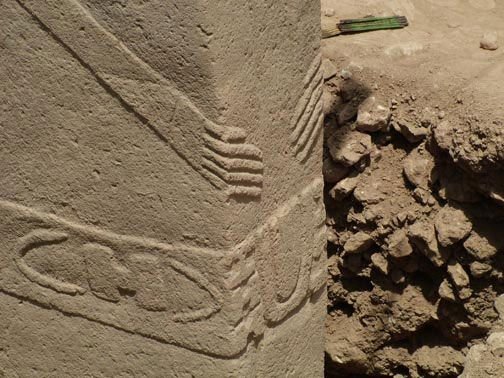
This is where agreement ends. Harald Hauptmann, who first published it in detail, initially read the element at the belly as a navel or phallus (2000), and later as a mother-and-child composition (2012). Marc Verhoeven asked plainly whether it was 'a person or a penis' (2001).
Ian Hodder and Lynn Meskell, comparing it with other Neolithic imagery, floated the idea that it is hermaphroditic, deliberately combining male and female. The honest position is that we do not know: the same carved shapes support strikingly different stories.
Why it matters for Göbekli Tepe
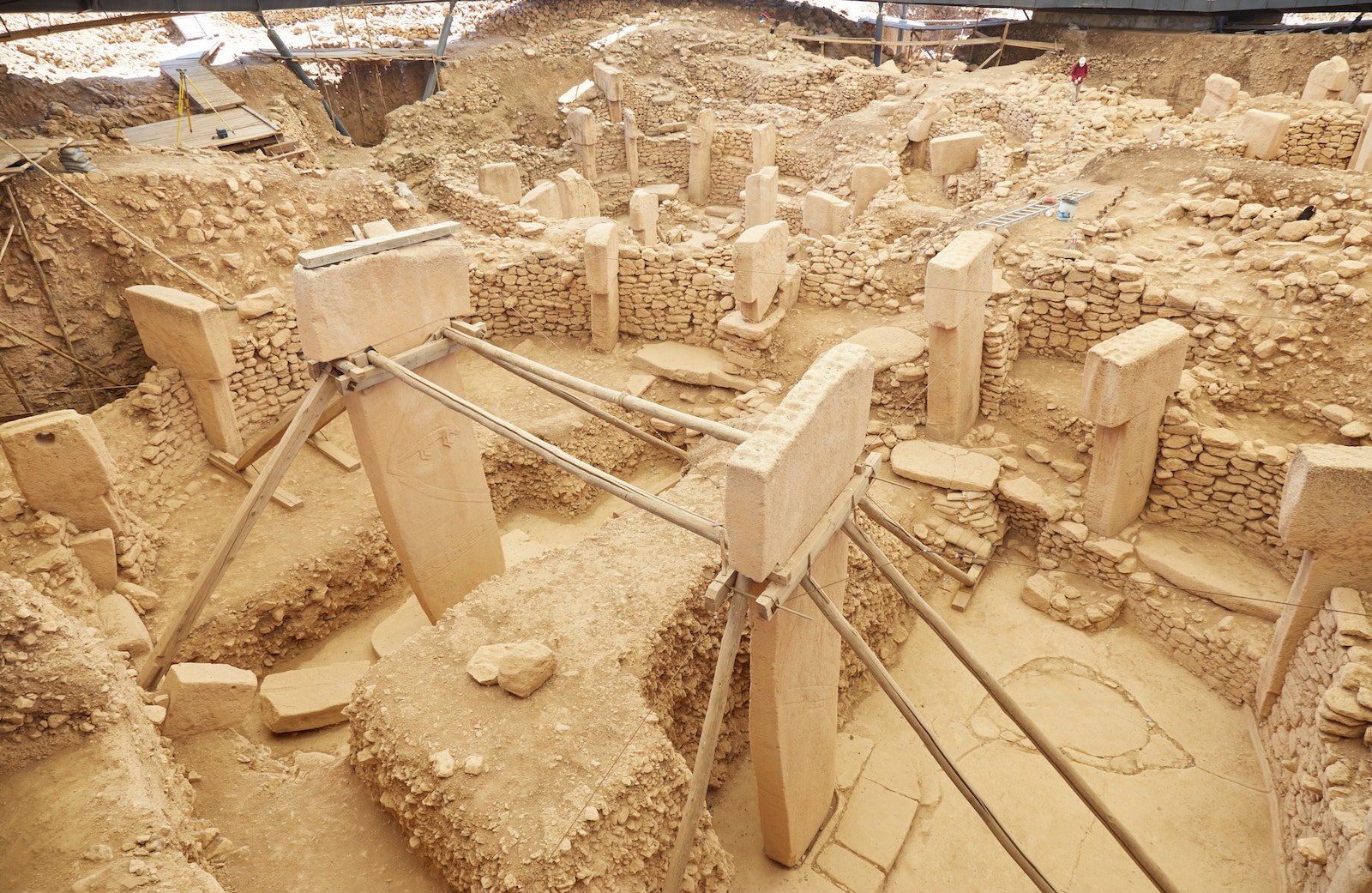
The Kilisik figure is a reminder that the Göbekli 'body-pillar' — the conviction that a great stone could be a person rather than merely support a roof — was a regional idea, not a single site's invention. It turns up, in this compressed and eccentric form, dozens of kilometres away.
It also warns against tidy readings. If a single well-preserved figure can be argued to be a father, a mother, a phallus and a hermaphrodite by serious scholars, it should make us cautious about confident claims over the far more worn carvings on the pillars themselves.
What is uncertain
Almost everything specific about the Kilisik sculpture is open: its date (it was surface-found, without a secure archaeological context), its sex, and the meaning of the element held at its belly. Even its exact original setting — freestanding, or once part of a building — is unknown.
What is not in doubt is its family resemblance to the T-pillars. Beyond that, we present the competing readings rather than pick one, because the evidence genuinely does not decide between them.
Key takeaways
- The Kilisik figure is a T-shaped stele that has become almost human — the crossbar reads as a head, and arms and hands are carved as on Göbekli's central pillars.
- It blends three traditions of the region: the abstract T-pillar, the naturalistic nose and face seen on 'Urfa Man', and the odd 'a larger figure grasping a smaller one' motif.
- Readings of what it holds range from a navel or phallus to a child to an interpretation of the whole figure as hermaphroditic — none settled.
- It shows that the Göbekli 'body-pillar' idea was not confined to Göbekli: it travelled across the Neolithic hills as a shared way of thinking in stone.
Sources
- DAI Tepe Telegrams — A rather odd figure: the so-called Kilisik Sculpture from Adıyaman
- Hauptmann, H. (2012). Frühneolithische Kultbilder in der Kommagene. In: Gottkönige am Euphrat.
- Hodder, I. & Meskell, L. (2011). A 'curious and sometimes a trifle macabre artistry'. Current Anthropology 52(2).
This article is written from the primary literature and excavators' reports cited above. Interpretations are attributed; uncertainties are stated in the text.