Where is Karahan Tepe, and how do you get there?
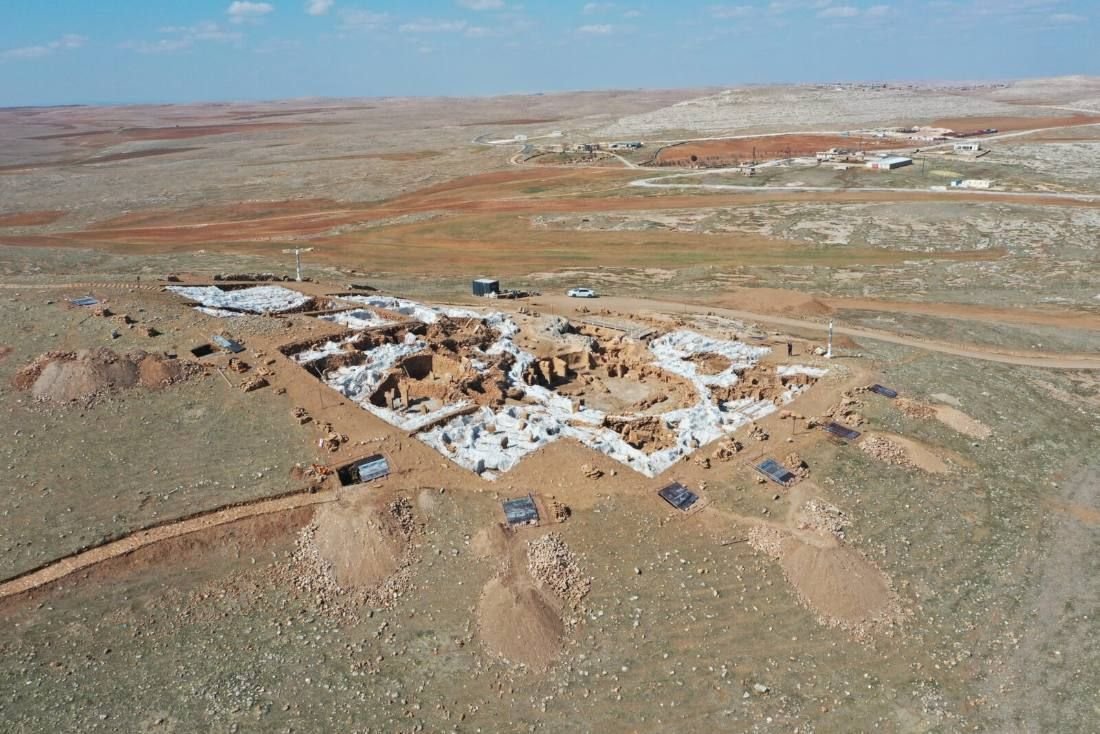
Karahan Tepe lies in the Tek Tek hills, southeast of Şanlıurfa, about 35 to 40 kilometres east of Göbekli Tepe and roughly 45 km from the city. It is more remote than Göbekli, out in open country, and that shapes the visit from the start.
The practical reality: there is no useful public transport to Karahan Tepe. You will need a private car, a taxi, or a guided tour. The roads are paved and reasonably maintained, but signage can be poor, so a driver who knows the way (or good offline maps) helps. If you're already visiting Göbekli, the simplest approach is to do both in one trip — a tour or a hired car with driver makes that easy.
What will you actually see?
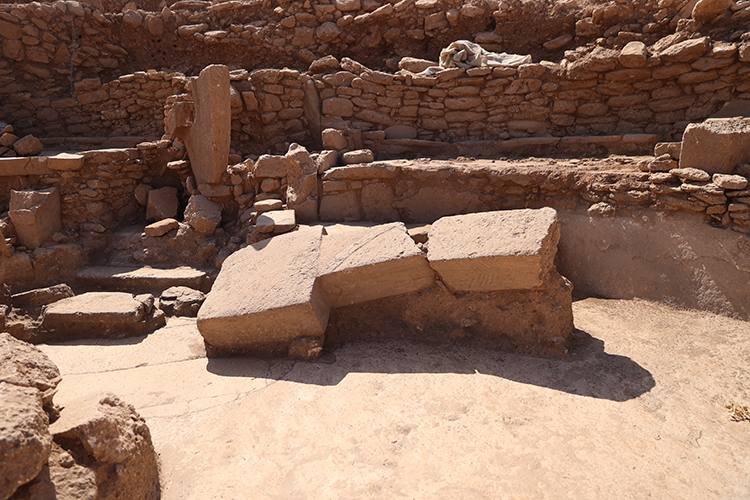
Karahan's centrepiece is the rock-cut chamber usually called Structure AB. Unlike Göbekli, whose pillars were quarried and raised up, here the builders carved down into the living bedrock — cutting a room and leaving pillars standing as the surrounding stone was removed around them. The detail everyone remembers is a human head carved straight out of the wall, leaning into the room on a serpentine neck and turned toward the entrance. A channel cut into the bedrock links the chambers, and a porthole window connects AB to the neighbouring structure.
The principal sunken chamber is now protected by a roof, and you view it from a raised walkway — Karahan opened to the public with this infrastructure around 2023. Beyond AB, you'll see the wider excavated area: pillared halls, benched rooms, and domestic zones, all in various states of exposure.
At Göbekli you look at pillars that were raised toward the sky. At Karahan you look into a room cut down into the rock — and a stone face, carved from the wall, looks back.
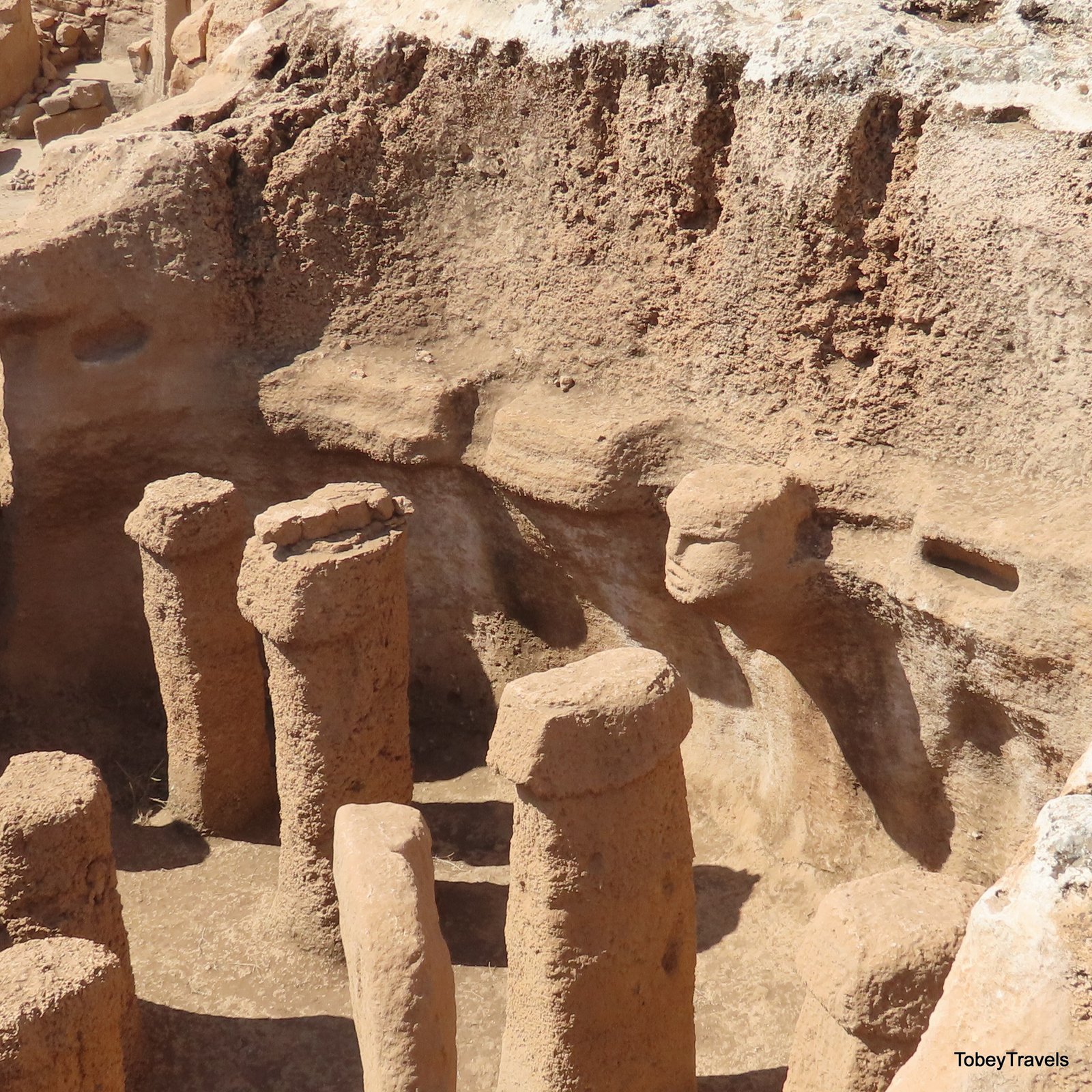
tobeytravels, Structure AB, Pillars Shrine with Porthole Window to AD and Carved Head, Karahantepe (Karahan Tepe), Turkey, CC BY-SA 4.0, via Wikimedia Commons.
Remember: it's a working excavation
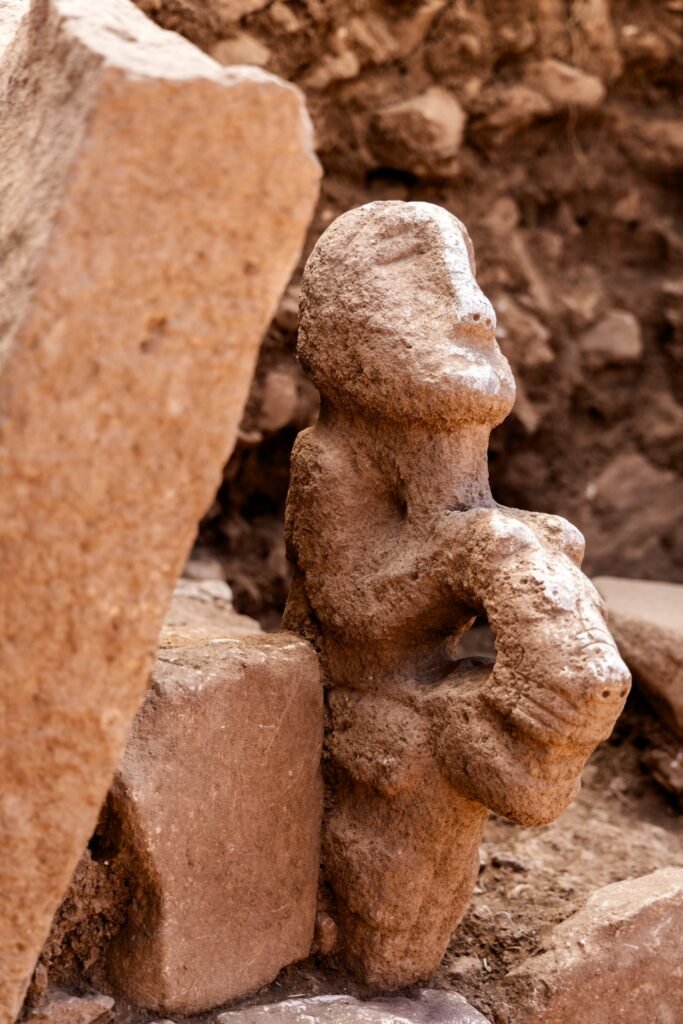
This is the biggest difference from Göbekli, and it cuts both ways. Karahan is a live dig, excavated since 2019 under Necmi Karul as the flagship of the Taş Tepeler project. That means the site is raw and immediate — you're seeing something still being uncovered, and the finds making world headlines (the 'Ribbed Man', the human-on-leopard statue) are coming out of these very trenches.
It also means the visit is less polished than Göbekli's. Exposed areas can be closed off during fieldwork, what's visible changes season to season, and there is less on-site interpretation — some panels, reportedly in Turkish and English, but not the developed presentation of a UNESCO site. Karahan rewards a guide, or a bit of reading beforehand, more than Göbekli does. Come curious rather than expecting a finished museum-in-the-open.
Where are the finds?
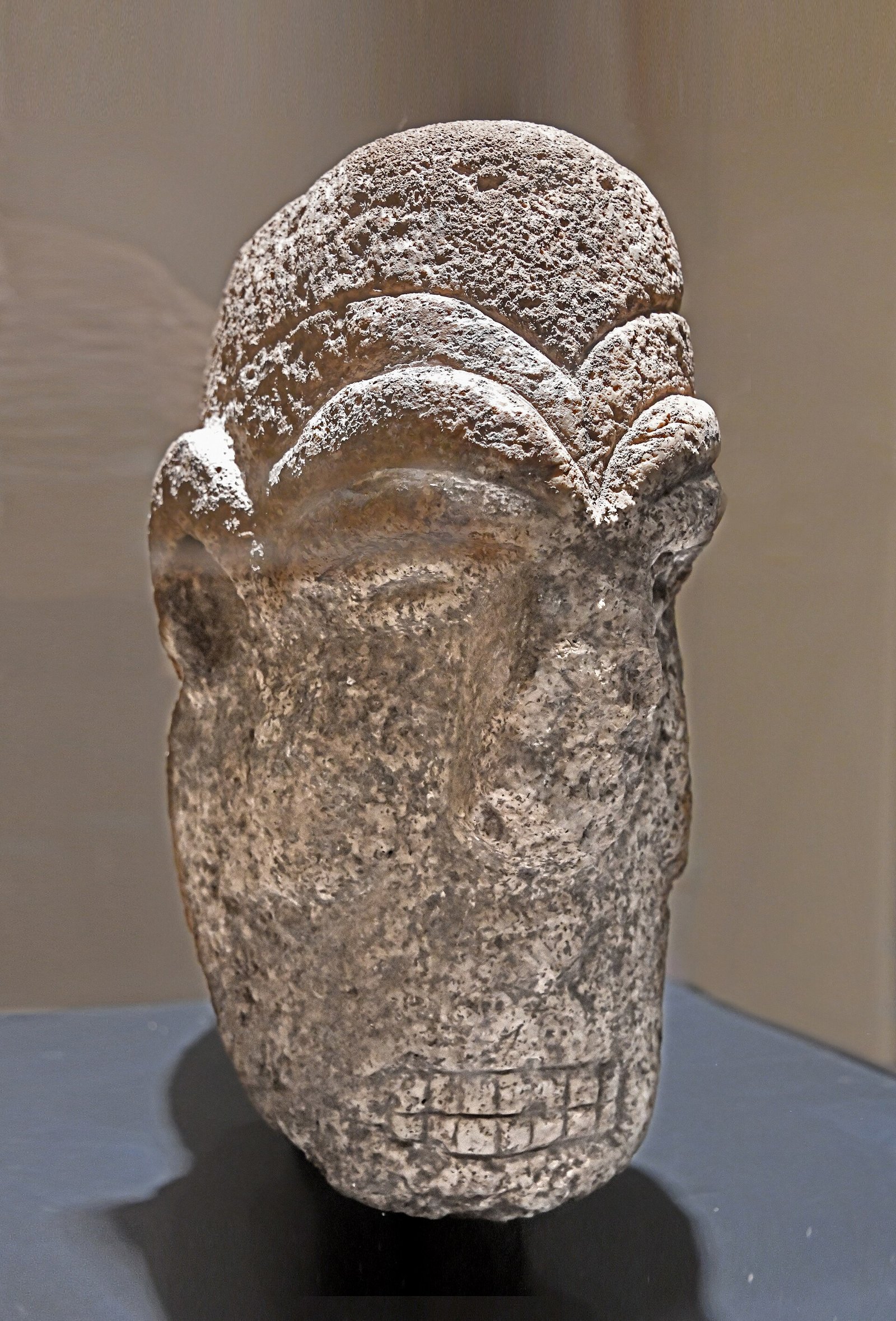
As with Göbekli, the movable objects are not kept at the site — they are held and displayed through the Şanlıurfa Archaeology Museum in the city. So a complete Karahan visit really has two halves: the rock-cut architecture out at the site, and the sculptures in the museum.
One honest caveat: Karahan's most famous statues are very recent finds, so whether a specific piece — the 2.3 m 'Ribbed Man', the 2026 human-on-leopard — is currently on display can change. If there's a particular object you want to see, it's worth checking with the museum before you go.
When to go, how long, and pairing with Göbekli Tepe
Go in the morning, and if you can choose your season, pick spring (roughly March–May) or autumn (September–November). Like Göbekli, Karahan is exposed and Şanlıurfa summers are severe, so early and mild is the rule. Bring water, a hat and sun protection — facilities here are more limited than at Göbekli.
On site, budget about 45 minutes to an hour on your own, or up to 90 minutes with a guide who can explain what you're looking at. Because Karahan and Göbekli are only 35–40 km apart, most visitors do both in one day — a common plan is the Şanlıurfa museum, then Göbekli Tepe, then Karahan, starting early. It's a full day, but very doable. If you'd like to understand how the two sites differ before you go, our Karahan Tepe vs Göbekli Tepe comparison sets it out.
Before you go — what's uncertain and worth confirming
Because Karahan is still being formalised as a visitor site, a few practical details are genuinely in flux, and we'd rather flag them than give you a number that's out of date.
Drive time from Şanlıurfa is the big one: older sources say around an hour and a half, while newer ones (after apparent road improvements) say closer to 45 minutes. Plan for somewhere in that range and check a current map before setting off. Entry fee: some recent reports say there's no charge, others imply ticketing — ministry policy can change as the site is developed, so confirm at muze.gov.tr or locally. Opening hours and which areas are open vary with the excavation season. And, as noted, which finds are on display at the museum changes.
The stable facts — where it is, how to get there, what the architecture is, and that you'll want a car or tour — are reliable. The volatile ones are drive time, fee, hours, so verify those close to your trip.
Common questions
Can you visit Karahan Tepe? Yes. It has been open to visitors since around 2023, with a protective roof and a raised walkway over the main rock-cut chamber. It remains an active excavation.
How do you get to Karahan Tepe? By car, taxi or guided tour only — there is no practical public transport. It's about 35–40 km east of Göbekli Tepe and ~45 km from Şanlıurfa.
Can you visit Karahan and Göbekli in one day? Yes — they're close enough to combine, ideally with the Şanlıurfa museum, in a full day starting in the morning.
Is Karahan Tepe a UNESCO World Heritage Site? No. Only Göbekli Tepe holds that status (2018). Karahan is open to visitors but not separately listed.
Is there an entry fee? Reports differ, and policy may change as the site develops — confirm current pricing before you travel.
Key takeaways
- Karahan Tepe is in the Tek Tek hills, ~35–40 km east of Göbekli Tepe — reachable only by car, taxi or guided tour (no useful public transport).
- Its signature is the rock-cut Structure AB — pillars and a human head carved down into bedrock — now under a protective roof, viewed from a walkway.
- It's a live excavation: rawer than Göbekli, with fewer facilities and less signage, and what's visible changes each season.
- Pair it with Göbekli and the Şanlıurfa museum in one day; go in the morning; and confirm the current drive time, hours and whether there's an entry fee before you travel.
Sources
- Karahan Tepe — site profile and current research (Taş Tepeler)
- Karahan Tepe — overview and excavation history
- Şanlıurfa Archaeology and Mosaic Museum — overview
- Republic of Türkiye, Ministry of Culture & Tourism — museums and sites (tickets/hours)
This article is written from the primary literature and excavators' reports cited above. Interpretations are attributed; uncertainties are stated in the text.