Where is Göbekli Tepe, and how do you get there?
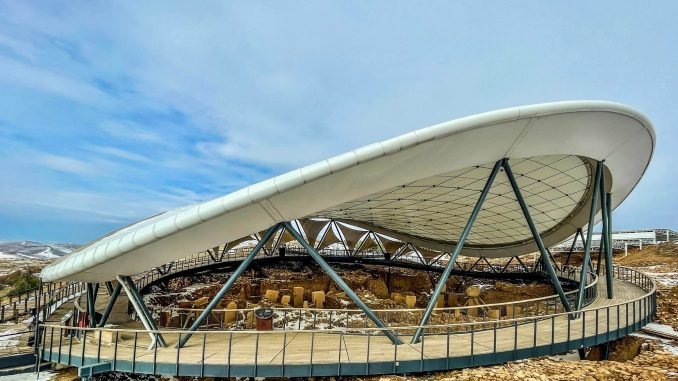
Göbekli Tepe stands on a limestone ridge about 15 kilometres northeast of Şanlıurfa (also called Urfa), in southeastern Türkiye — roughly a 20 to 30 minute drive from the city centre. The nearest airport is Şanlıurfa GAP Airport (GNY), about 40 km away and around a 30–40 minute drive; there is no direct public-transport link from the airport, so you'll need a car or taxi for that leg.
From the city, you have three realistic options. A taxi or private car is the simplest — agree the fare in advance and, importantly, arrange the return, because taxis do not reliably wait at the site. A guided tour solves the transport problem and, uniquely, comes with someone to explain what you're looking at. Public transport exists but is sparse and irregular, and not recommended if you're on a schedule.
At the entrance there is a visitor centre and ticket office, with a shop and café. A short shuttle runs the last stretch (about a kilometre) up to the enclosures; the ride is included with admission, or you can walk it.
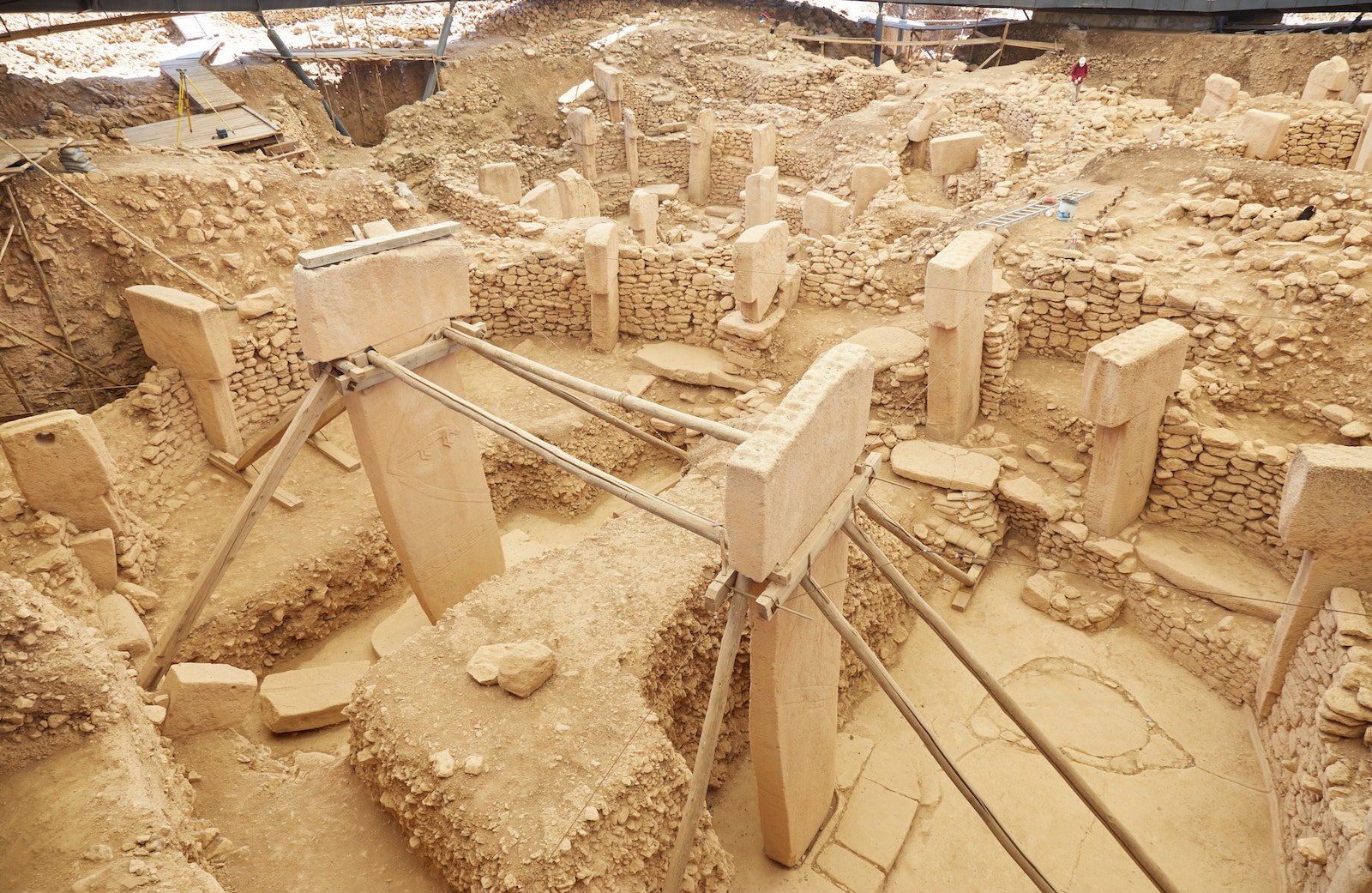
German Archaeological Institute, Göbekli Tepe Project, Enclosure D, Göbekli Tepe, Copyright: DAI — used with permission, via .
What will you actually see?
This is where first-time visitors are most often caught off guard, so it's worth being clear. The main excavation area sits under a large modern protective canopy, and you move around it on raised walkways that run above and around the enclosures. You look down into the great rings; you do not walk among the pillars or stand at the foot of a five-metre stone.
That can feel distant at first — but it is also the point. From above, you can finally read the plan of each enclosure: the encircling wall and bench, the ring of T-pillars, and the two taller central pillars facing one another. Enclosure D, the best-preserved, is the one most people photograph. Bring a zoom lens or good phone zoom if you want the carved foxes, snakes and the details of the pillars, since you're several metres away.
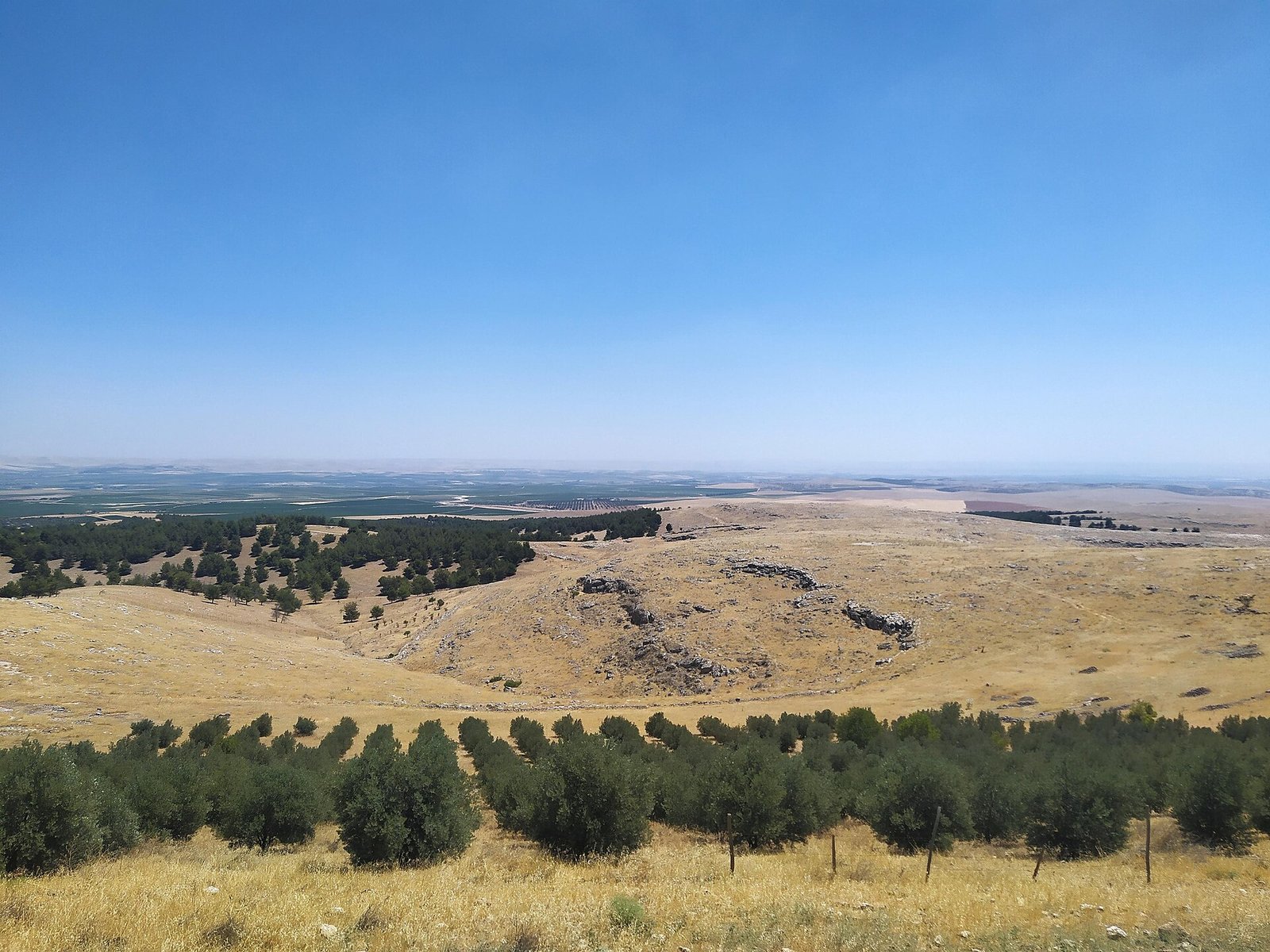
Give yourself time to simply take in the setting, too: the site commands a huge view over the Harran plain, and part of what makes it move you is standing where hunter-gatherers chose to raise the first monuments, looking out at what they looked at.
The single biggest surprise: you don't stand beside a five-metre pillar. You look down on the rings from a walkway — and that view, from above, is how the plan finally makes sense.
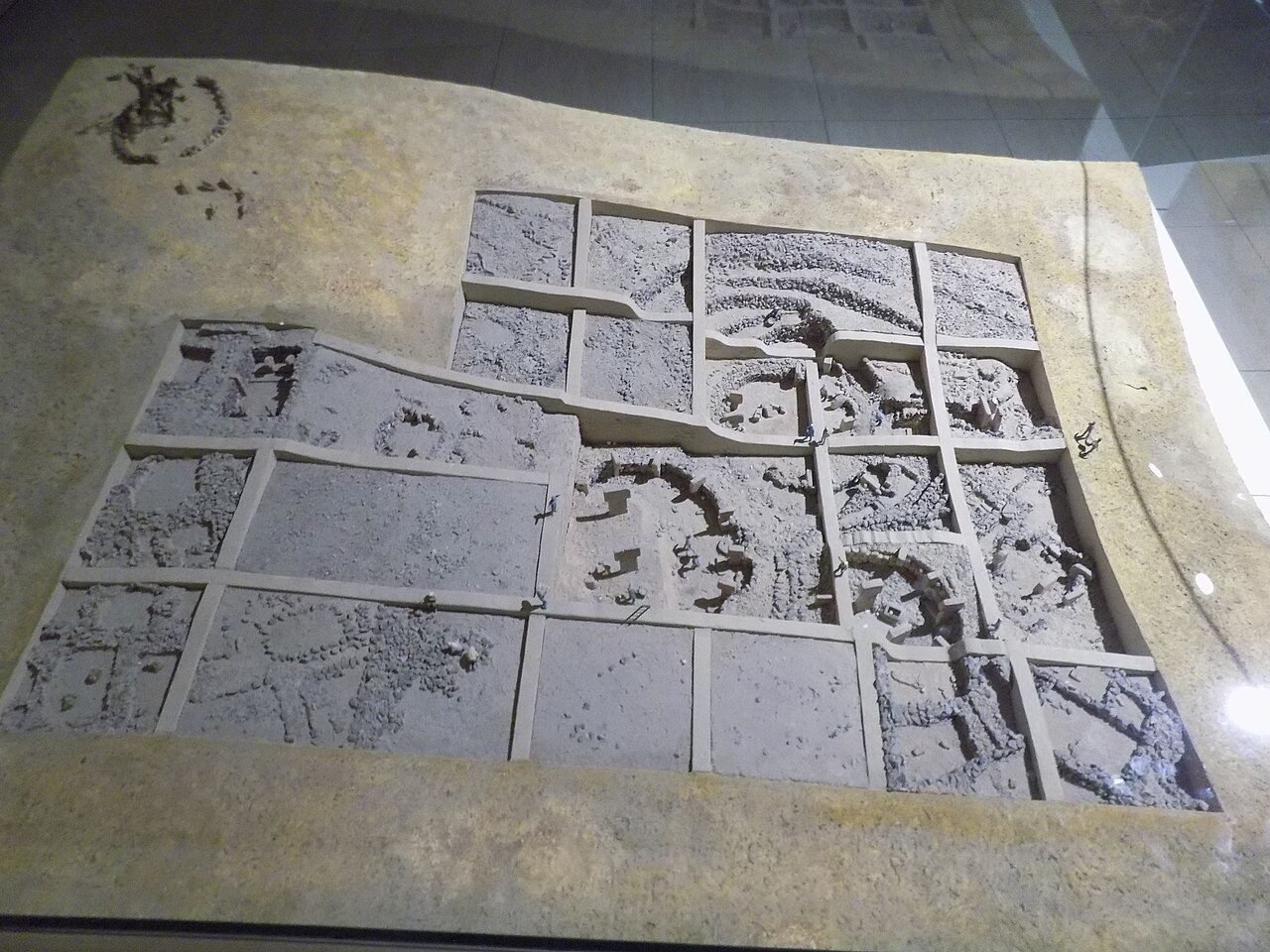
Cobija, Göbeklitepe kazı alanı maketi, CC BY-SA 4.0, via Wikimedia Commons.
Don't skip the Şanlıurfa museum
Here is the thing most rushed visitors get wrong: the finds are not at the site. The carved sculptures, the small objects, the movable pieces — they are in the Şanlıurfa Archaeology Museum in the city, a large modern complex (opened 2015) next to the famous Mosaic Museum. If you see only one indoor stop on your trip, make it this one.
The museum holds the Neolithic sculptures and finds, a full-scale reconstruction of an enclosure — which lets you stand among pillars the way the walkways at the site won't — and, in its own gallery, Urfa Man: the roughly 11,000-year-old Balıklıgöl statue, the oldest known life-size sculpture of a human being, with obsidian-inlaid eyes. Seeing the museum and the site together is the difference between glimpsing Göbekli Tepe and actually understanding it.
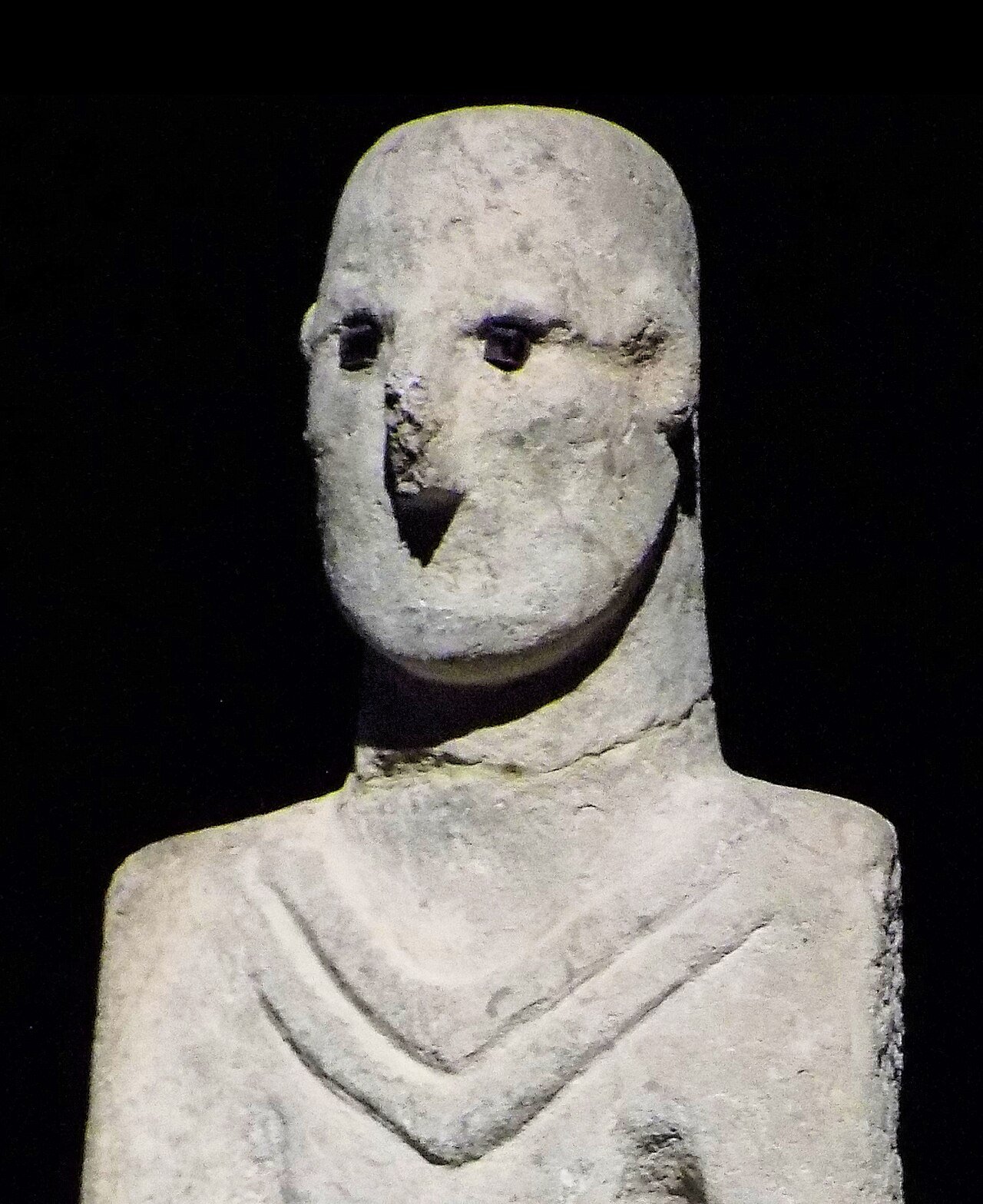
Cobija, Urfa man portrait, CC BY-SA 4.0, via Wikimedia Commons.
When is the best time to go?
Two rules: go early, and avoid high summer if you can. Şanlıurfa regularly climbs past 40°C in July and August, and the ridge is fully exposed — there is almost no shade beyond the canopy. A morning visit is cooler, quieter and better lit for photography; late afternoon is a good second choice.
Across the year, spring (roughly March–May) and autumn (September–November) are by far the most comfortable, with mild temperatures and clear light. Winter is cold but perfectly visitable. Whenever you go, bring water, sun protection and a hat — the single most common visitor mistake is underestimating the heat and sun.
How long to spend — and combining with Karahan Tepe
Allow about 1.5 to 2 hours for the site itself and its on-site displays. It is not a huge area to walk, but it rewards a slow, attentive visit rather than a quick lap.
Most people combine Göbekli with Karahan Tepe, its 'sister' site about 35–40 km east, and with the Şanlıurfa museum. A comfortable plan is: museum first (to see the finds and reconstruction), then Göbekli Tepe, then Karahan — a full but very doable day, ideally starting in the morning. If you'd rather not rush, split it across two days and give the museum the time it deserves. If you're deciding how the two sites differ, our comparison of Karahan Tepe vs Göbekli Tepe lays it out.
Practical notes
Facilities: visitor centre, ticket office, shop and café at the entrance; a shuttle up to the enclosures. Accessibility: the walkways make much of the site viewable without rough walking, though there are some slopes and steps; check ahead if that matters for your group. Photography is normal on site. Tickets are handled through the Turkish Ministry of Culture & Tourism; the Müzekart / Museum Pass Türkiye is the usual reduced-entry mechanism, though coverage and eligibility (especially for foreign visitors) change, so don't assume.
One more practical point: this is a working, protected archaeological site, not a theme park — parts can be roped off, and you should stay on the walkways. That restraint is exactly why it's still here to see.
Before you go — what's uncertain and worth confirming
A few things genuinely change from season to season, and we would rather flag them than print a number that's wrong by the time you read it.
Opening hours run on a summer/winter schedule (broadly longer hours in summer, shorter in winter, with last admission typically about 30 minutes before closing) — but confirm the current hours before you travel. Ticket prices are set by the ministry, quoted in different currencies, and change; check the official source (muze.gov.tr) or with a local operator rather than relying on an old figure. Public-transport timetables to the site are irregular and shift, so if you're not driving or on a tour, verify departures locally the day before.
None of this affects the visit itself — it just means the two volatile details, hours and price, are the ones to double-check. Everything else here is stable.
Common questions
Can you visit Göbekli Tepe? Yes. It is a UNESCO World Heritage Site (2018), open to visitors, about 15 km from Şanlıurfa, with a protective canopy and raised walkways.
Can you walk among the pillars? No — you view the enclosures from raised walkways above them. To stand among pillars, see the full-scale reconstruction at the Şanlıurfa Archaeology Museum.
Where are the actual finds? In the Şanlıurfa Archaeology Museum in the city, not at the site — including Urfa Man and a reconstructed enclosure.
How long do you need? About 1.5–2 hours on site; a full day if you combine it with the museum and Karahan Tepe.
When should you go? Morning, and ideally spring or autumn — summers on the exposed ridge are extreme.
Key takeaways
- Göbekli Tepe is ~15 km northeast of Şanlıurfa (20–30 min drive); get there by taxi, private car or guided tour — public transport is sparse.
- You view the enclosures from raised walkways under a canopy, not from among the pillars — bring a zoom lens.
- The finds are in the Şanlıurfa Archaeology Museum, not at the site — including a full enclosure reconstruction and Urfa Man. Budget time for both.
- Go in the morning, ideally spring or autumn; and always confirm current hours and ticket prices before travelling, as these change.
Sources
- Göbekli Tepe — UNESCO World Heritage List (2018), ref. 1572
- Şanlıurfa Archaeology and Mosaic Museum — overview
- Göbekli Tepe — site profile and current research (Taş Tepeler)
- Republic of Türkiye, Ministry of Culture & Tourism — museums and sites (tickets/hours)
This article is written from the primary literature and excavators' reports cited above. Interpretations are attributed; uncertainties are stated in the text.