A door in stone
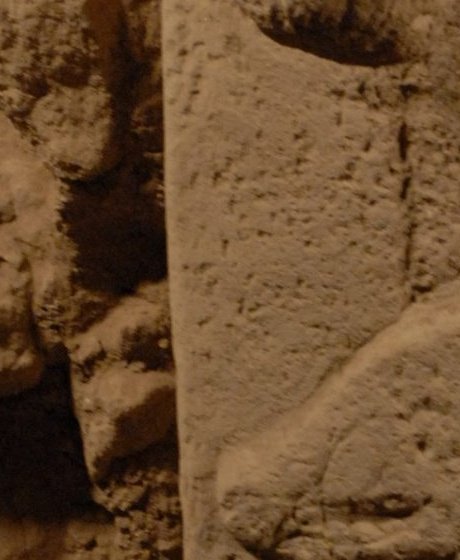
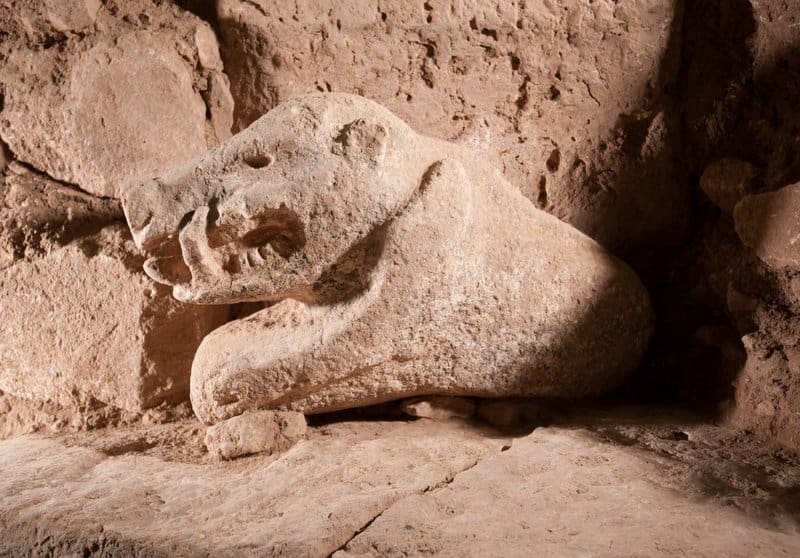
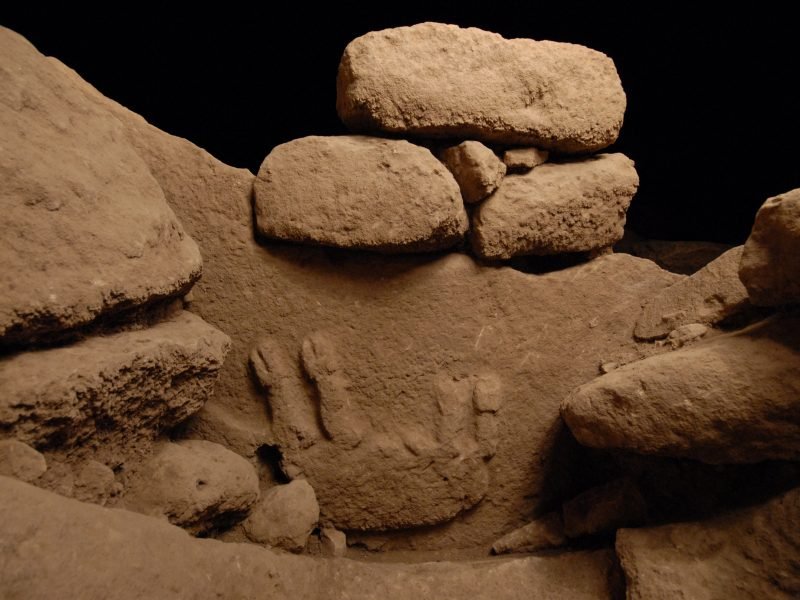
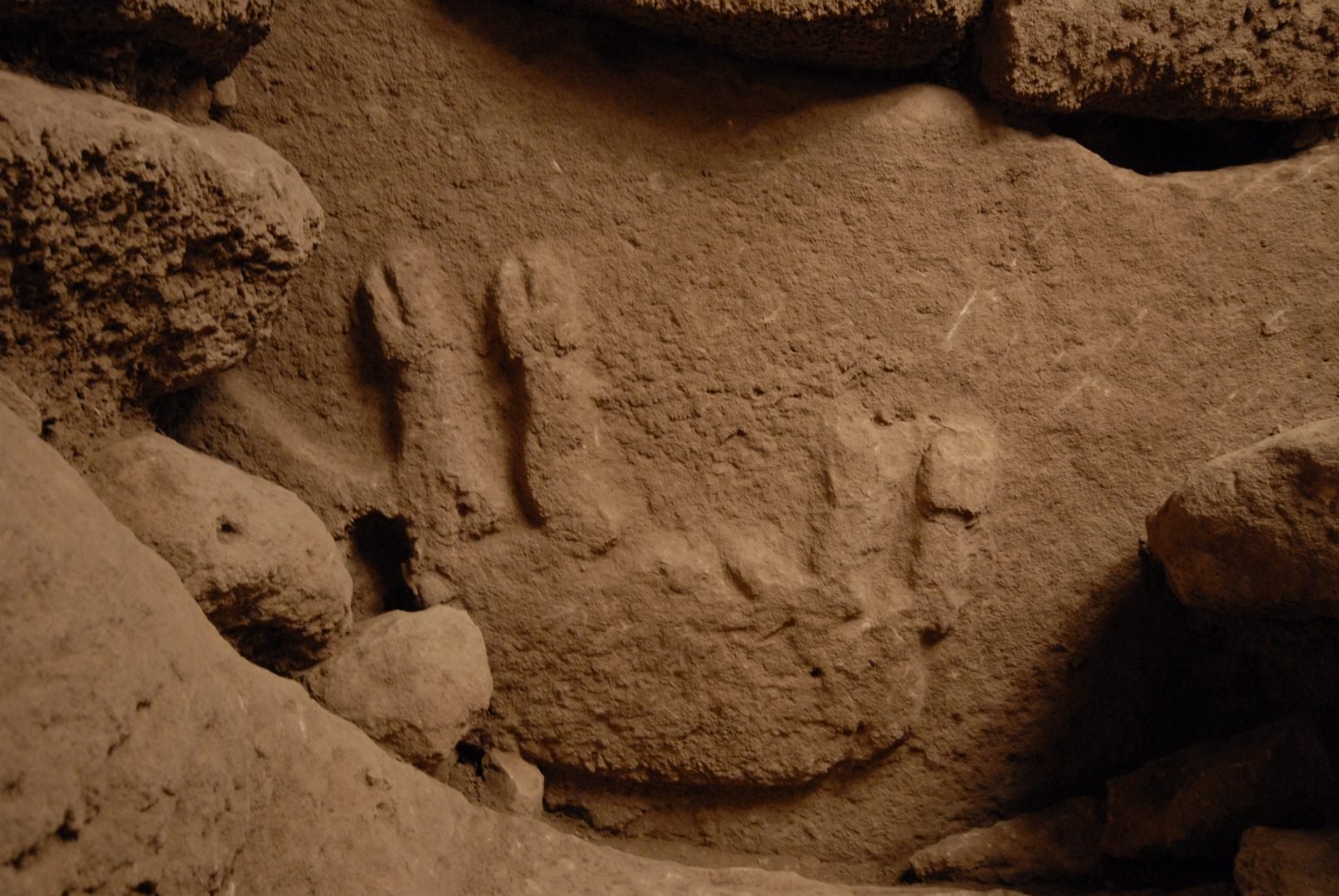
During the 2009–2010 seasons, excavators opening trenches on the northwestern hilltop found rooms of the site's younger phase — and among them, a 'porthole' stone: a large slab pierced by a round opening, like a doorway or window cut in rock. This one was carved with animals set on either side of the hole.
German Archaeological Institute, Göbekli Tepe Project, Boar relief on a porthole stone, Göbekli Tepe, Copyright: DAI — used with permission, via .
Watching the threshold
The DAI team's reading is that the beasts flank the opening as guardians — the passage through the stone is watched. It fits a pattern across Göbekli Tepe, where dangerous animals are placed at points of entry and gathering, as if thresholds were charged places that needed protecting.
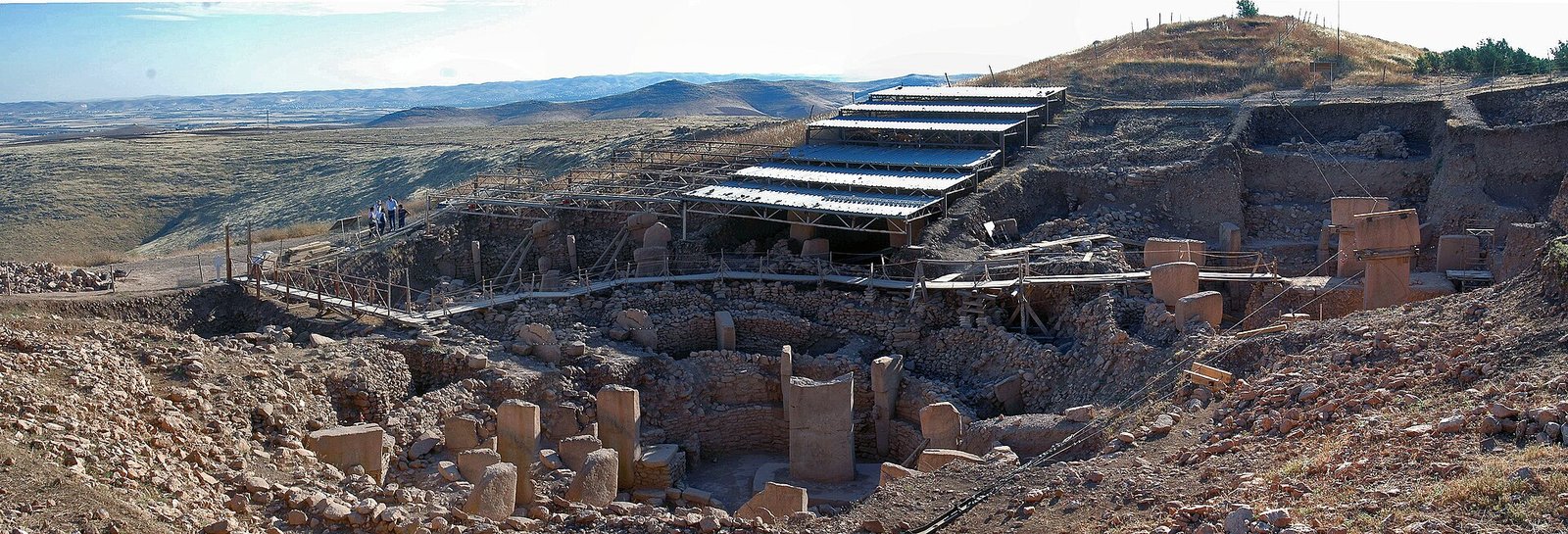
Rolf Cosar, Göbekli Tepe - 100525, CC BY-SA 4.0, via Wikimedia Commons.
What a porthole stone is for
'Porthole' stones are large slabs pierced by a round opening, and they recur across the region — some set as doorways between rooms, others too small to pass through, apparently symbolic passages rather than usable doors. Whichever this one was, the choice to carve animals around the hole treats the opening itself as something worth marking.
That the example here comes from the younger, northwestern rooms rather than the great early enclosures is part of its interest: it shows the concern with guarded thresholds carrying on into the site's later phase, at the domestic scale of small rooms.
Marking the threshold
A porthole stone is a large slab pierced by a round opening, like a doorway or window cut straight into rock. They recur across the wider Göbekli Tepe region, and they did not all do the same job: some were set as doorways between rooms, while others are too small to pass through and appear to be symbolic passages rather than usable doors. The type sits somewhere between architecture and image.
What makes the example here worth a second look is the carving. Animals were set on either side of the hole, and the excavation team reads them as guardians flanking the opening — the passage through the stone is watched. Whether the slab was a real doorway or a symbolic one, the choice to carve beasts around the opening treats the threshold itself as something worth marking.
That fits a habit visible across the site, where dangerous animals turn up at points of entry and gathering, as if thresholds were charged places that needed protecting. Openings — the moments of moving from one space into another — seem to have carried weight, and the porthole stone is that idea rendered literally: a hole in the rock with creatures posted to either side of it.
A concern that carried into the later phase
This porthole stone comes from a particular moment in the site's life. During the 2009–2010 seasons, excavators opening trenches on the northwestern hilltop found rooms belonging to Göbekli Tepe's younger phase — later than the great early enclosures with their monumental T-pillars — and the carved slab came from among them.
That context is part of the interest. The concern with guarded thresholds is often associated with the famous early architecture, but here it appears in the younger, northwestern rooms, at the smaller domestic scale of ordinary spaces. The impulse to watch and mark an opening carried on into the site's later life rather than belonging only to its monumental beginnings.
As always, the reading has honest limits. Whether this particular slab was a functional doorway or a symbolic 'false door' is not established, and porthole stones served both roles at Göbekli Tepe — a distinction that changes what 'guarding' the opening would even mean. 'Guardians' is a natural interpretation of animals placed beside a passage, and it fits the site's habits, but the carvings do not state a protective function, and the identity and meaning of the animals remain the same open question they are everywhere at Göbekli Tepe.
What is uncertain
Whether this particular slab was a functional doorway or a symbolic 'false door' is not established — porthole stones served both roles at Göbekli Tepe, and the distinction changes what 'guarding' the opening would mean. The size and setting of the hole would decide it, and that detail is not fully reported here.
'Guardians' is an interpretation of animals placed beside an opening; it is a natural reading and fits the site's habit of putting dangerous beasts at entry points, but the carvings do not state a protective function, and the animals' identification and meaning remain the same open question as everywhere at Göbekli Tepe.
Common questions
What is a porthole stone? A large slab pierced by a round opening, like a doorway or window cut in rock. They recur across the region — some set as doorways between rooms, others too small to pass through and apparently symbolic.
Why are animals carved around the opening? The excavation team reads the beasts as guardians flanking the passage. It fits a pattern where dangerous animals are placed at points of entry, as if thresholds were charged places that needed protecting.
Was this porthole a real doorway? It is not established. Porthole stones served both as functional doorways and as symbolic 'false doors' at Göbekli Tepe, and the distinction changes what 'guarding' the opening would mean.
Key takeaways
- The porthole stone is a doorway-like slab, carved with animals flanking its opening.
- The DAI team reads the beasts as guardians — the passage through the stone is watched.
- It fits a site-wide pattern of dangerous animals placed at points of entry and gathering.
- The example comes from the younger, northwestern rooms, showing guarded thresholds carried into the later phase.
Sources
- DAI Tepe Telegrams — 'Guarded by beasts: a porthole stone from Göbekli Tepe'
- DAI Tepe Telegrams — 'A Stairway to the Circle of Boars' (animals at Göbekli Tepe entrances)
This article is written from the primary literature and excavators' reports cited above. Interpretations are attributed; uncertainties are stated in the text.