What was found, and how
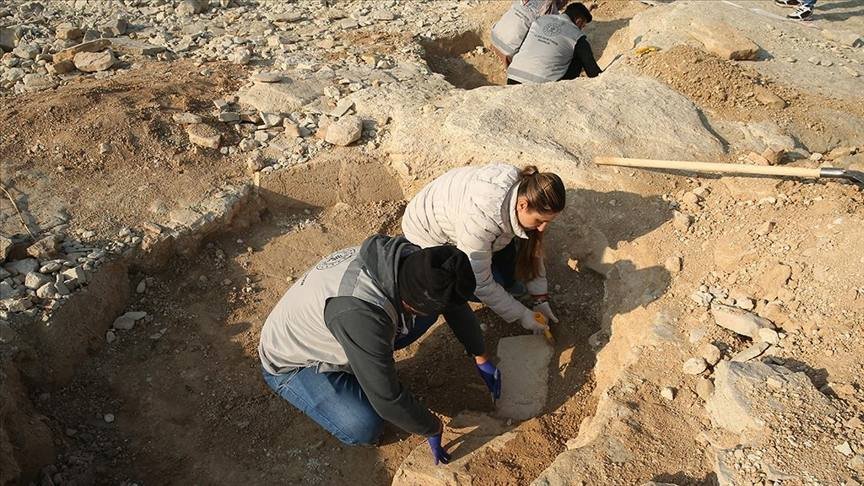
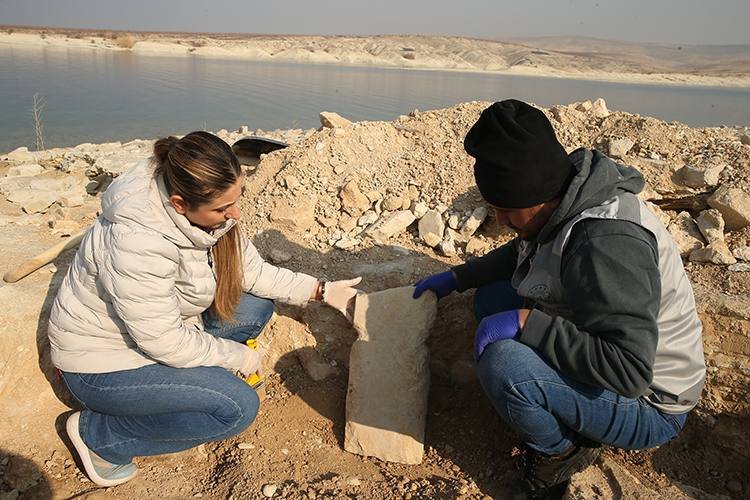
In the Samsat district of Adıyaman province, near the village of Kızılöz, receding water in the Atatürk Dam reservoir exposed stone features along the shoreline. A local report brought teams from the Adıyaman Museum Directorate to the site.
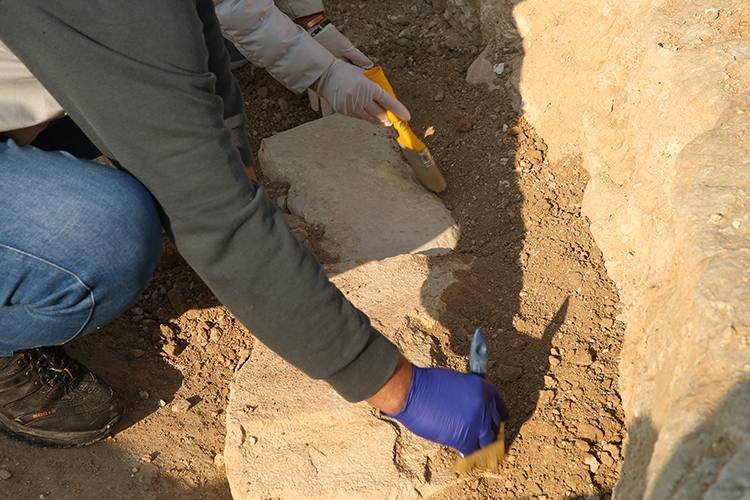
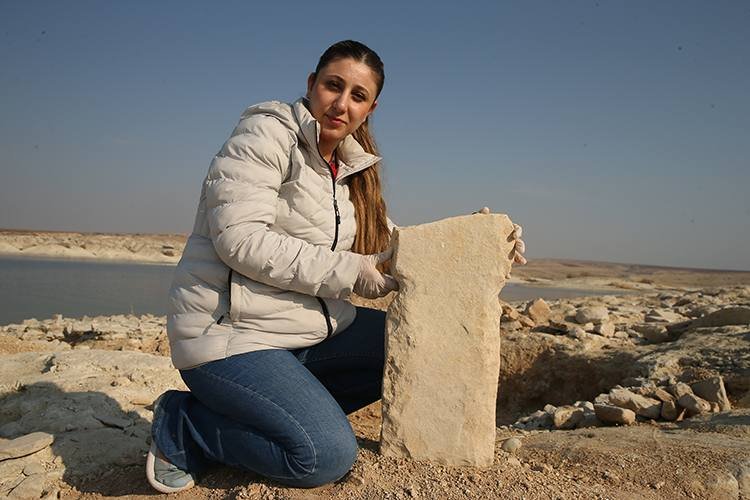
What they identified were T-shaped stone structures thought to be roughly 11,000 years old — Pre-Pottery Neolithic. The assemblage includes small-scale enclosures, stone slabs arranged around pits, and centrally placed T-pillars: the standard grammar of this architecture as it is known from Şanlıurfa.
The pillars are smaller than those at Göbekli Tepe. That matters less than it sounds. Form and placement, not scale, are what identify the tradition.
Why this is the most consequential find in years
Every Taş Tepeler site excavated so far — Göbekli Tepe, Karahan Tepe, Sayburç, Sefertepe, Çakmaktepe, Kurt Tepesi — sits in Şanlıurfa province. The whole framework, including the name, is built on that geography.
Samsat is not in Şanlıurfa. It is northwest, on the Euphrates, in Adıyaman. According to Prof. Dr. Sabahattin Ezer of Adıyaman University's Department of Archaeology, the stones carry architectural and symbolic traits consistent with the Şanlıurfa sites.
If that holds, the cultural horizon was never a provincial cluster. It followed the river. The Euphrates was the region's main corridor for movement and exchange, and a node on it strengthens the reading of these places as a network of ritual centres rather than a single focal point with satellites.
This is also the argument our own site has been making for two years — that Göbekli Tepe is one site among many, not an isolated exception. Adıyaman is the strongest evidence yet, and it arrived from an unexpected direction.
The site is disappearing
Museum Deputy Director Mustafa Çelik explained the mechanism plainly: the remains were originally buried two to three metres below the soil surface, and fluctuating dam levels have gradually stripped that sediment away.
The same process that revealed the site is destroying it. Rescue excavations are underway to document what is there before the water rises again.
It is worth sitting with that. A find that redraws the map of the Neolithic Near East surfaced because a reservoir dropped, and has a limited window before it is submerged. There will be other sites under that water, and no one has surveyed them.
Where to see it
Artefacts recovered from the site are on display at Perre Ancient City in Adıyaman.
Further excavation is planned, and researchers expect Adıyaman may yield more structures — possibly a larger settlement or ritual complex rather than an isolated enclosure.
Why the river changes the map
Everything about the Taş Tepeler framework, including its name, has been built on the geography of Şanlıurfa province — Göbekli Tepe, Karahan Tepe, Sayburç, Sefertepe, Çakmaktepe and Kurt Tepesi all sit there. Samsat does not. It lies northwest, on the Euphrates, in Adıyaman.
If the identification holds, the culture was never a single provincial cluster. It followed the river. The Euphrates was the region's main corridor for movement and exchange, and a node on it strengthens the reading of these places as a network of ritual centres rather than one focal point with satellites — the argument that Göbekli Tepe is one site among many, not an isolated exception.
A find on a clock
The way the site surfaced is also the way it is being lost. The remains were originally buried two to three metres below the soil, and fluctuating levels in the Atatürk Dam reservoir have gradually stripped that sediment away. The same process that revealed the pillars is destroying them, and rescue excavations are underway to document what is there before the water rises again.
It is worth sitting with that. A find that could redraw the map of the Neolithic Near East appeared because a reservoir dropped, and it has a limited window before it is submerged. Researchers expect Adıyaman may yield more — possibly a larger settlement or ritual complex rather than an isolated enclosure — and there will be other sites under that water that no one has surveyed.
What is still uncertain
The ~11,000-year date is a field assessment based on architectural form, not yet a published radiocarbon sequence. Treat it as a strong working estimate.
No excavation report has been published. What exists is a museum directorate identification reported through Anadolu Agency, plus commentary from a regional university archaeologist. That is a reasonable basis for reporting the find — it is not yet a basis for rewriting the textbooks, and we will update this page when the material is properly published.
Common questions
How was the site found? Receding water in the Atatürk Dam reservoir stripped away sediment and exposed T-shaped stone structures along the shoreline near Kızılöz.
Why does a find in Adıyaman matter? Every Taş Tepeler site excavated so far sits in Şanlıurfa; Samsat is northwest on the Euphrates, suggesting the culture spread along the river.
Where can I see the finds? Artefacts recovered from the site are on display at Perre Ancient City in Adıyaman.
Key takeaways
- Falling reservoir water exposed Göbekli-style T-pillars near Samsat — the first found outside Şanlıurfa.
- Prof. Sabahattin Ezer reads the stones as sharing the Şanlıurfa sites' architectural and symbolic traits.
- The find suggests the culture followed the Euphrates corridor — a network of centres, not one focal point.
- The same dropping water that revealed the site is now destroying it, prompting rescue excavation.
Sources
- Arkeonews — Göbeklitepe-style T-pillars discovered in Adıyaman (27 January 2026)
- Taş Tepeler — background on the T-pillar horizon
This article is written from the primary literature and excavators' reports cited above. Interpretations are attributed; uncertainties are stated in the text.