Short answer
No one is certain — and the uncertainty is the point. Göbekli Tepe's enclosures were found filled with debris. The long-standing view is that people deliberately buried the buildings at the end of their use; newer work argues the fill is at least partly natural slope wash and gradual accumulation.
The best-supported reading today is a mix: some enclosures were cleaned out and intentionally backfilled, but the site's burial was a longer, messier, partly natural process than the tidy phrase "deliberately buried" suggests. Calling it simply "buried" flattens a live scientific debate.
The short answer: we're not sure — and that's the interesting part
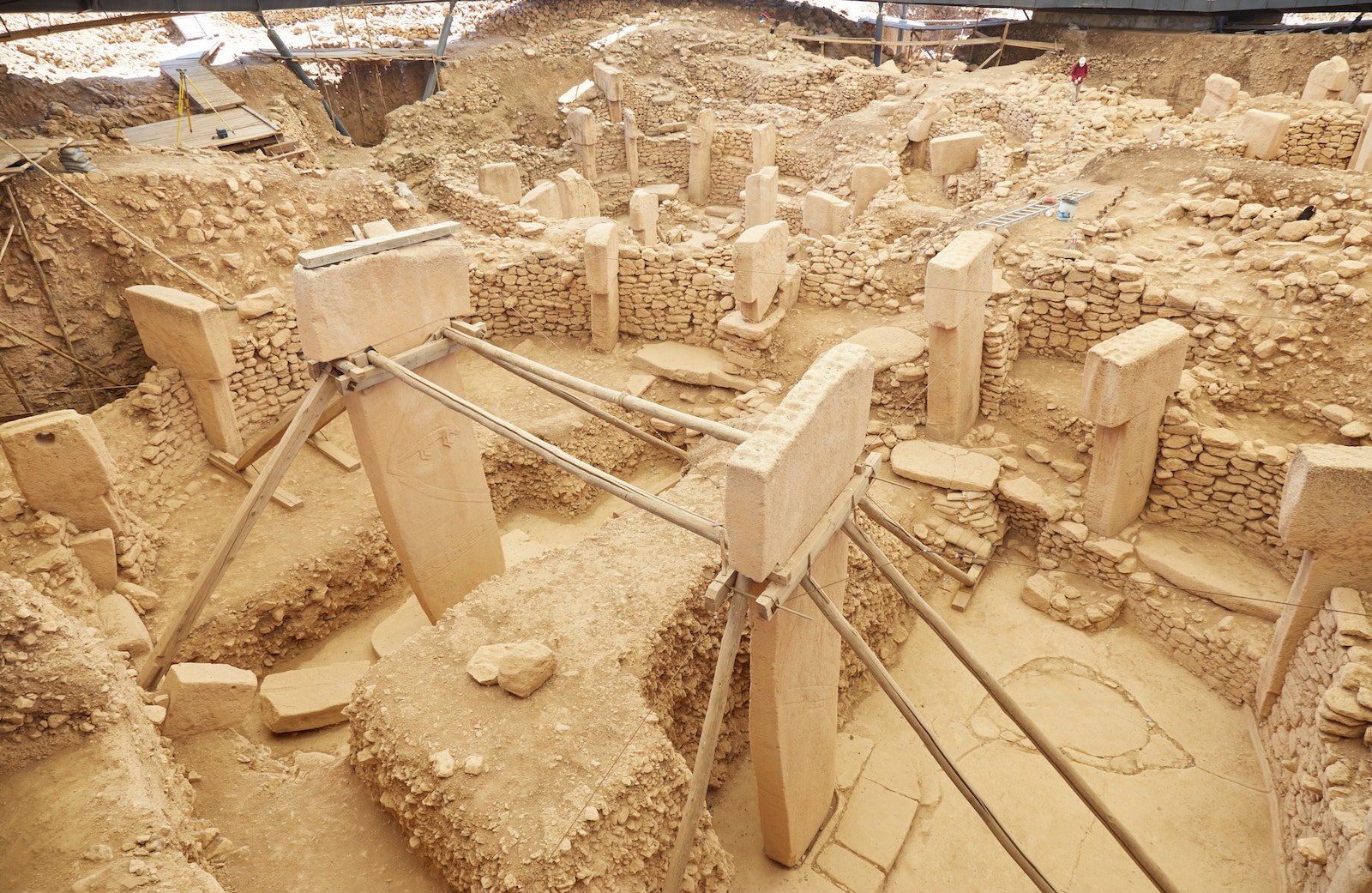
When excavators reached the bottom of Göbekli Tepe's great round enclosures, they did not find them open to the sky. They found them full — packed with limestone rubble, animal bones, flint tools and fragments of sculpture, right up over the tops of the pillars. Something had filled these buildings completely.
The question of what has divided the people who know the site best for three decades. And unusually for a famous mystery, the disagreement is not between believers and sceptics — it is between careful archaeologists reading the same dirt two different ways.
The original idea: deliberate burial
The site's first excavator, Klaus Schmidt, read the fill as an act. The enclosures, he argued, were cleaned out at the end of their use, part of their fittings dismantled, and then deliberately backfilled by people — buried on purpose, as a way of closing them down.
The evidence for this is real and specific. The fill contains the debris of feasting and tool-making, not the sterile silt you would expect from slow natural burial. And crucially, there are no intermediate layers of wind-blown or water-laid sediment inside the fill — no sign of the years of weather that gradual accumulation would leave. It looks, in places, like the buildings were filled quickly, in one deliberate campaign.
The newer view: it was messier than that
More recent work — much of it prompted by soundings dug in 2017 to place the columns of the protective canopy — has complicated the tidy picture. Researchers including Lee Clare and Moritz Kinzel have pointed to evidence of slope processes: material washing and slumping downhill on a sloping mound over a long period, so that at least some of the "fill" is natural, not carried in by hand.
This view also questions the story that usually rides along with deliberate burial — that the enclosures were finished with, sealed, and abandoned. Instead, the site may have been used, modified, partly filled, rebuilt and reused across a long span, with burial happening as part of an ongoing cycle of building rather than a single dramatic closing act.
What would settle it
The two readings are not as far apart as they sound, and the truth is very likely both: some enclosures cleaned and intentionally backfilled, elsewhere natural slope material accumulating, over a period long enough to blur the two.
What would sharpen it is exactly what the current excavations are producing — careful study of how each layer formed: whether a given deposit was dumped in one event or built up gradually, whether it moved downhill or was carried, whether it holds the fast, dry signature of a deliberate fill or the slow signature of weather. That is unglamorous, painstaking work, and it is where the answer actually lives.
Why it matters
It is tempting to treat this as a technicality. It is not. Why a society buries its own monuments goes to the heart of what those monuments were for.
If the burial was deliberate, it means the act of closing a building mattered as much as building it — that these communities had ideas about ending, sealing and memory sophisticated enough to spend enormous effort hiding what they had made. If it was largely natural, the story is quieter but no less telling: the monuments were left, and the hill slowly took them back. Which of those is true changes how we read the minds of the people who raised the first temples on Earth.
The excavators' own caution
It is worth ending where the excavation team itself does. They are careful not to oversell either version, because the site keeps resisting a single clean answer — the fill formed differently in different places, and the honest description is a range, not a verdict. "Buried" is a useful word for a headline. Inside the trench it is the beginning of the question, not the end of it.
Two readings of the same fill
The debate in one table. Most specialists now expect the answer combines both columns, varying from enclosure to enclosure.
Compiled from the Göbekli Tepe Research Project's published work (Dietrich et al.; Clare 2020) and the DAI's own public summaries. The formation of the fill is an open research question, not a settled fact.
Reading it from the walkway
From the walkway above Enclosure D you are looking at the exact problem: the great pillars stand clear now because excavators removed metres of fill to reach them. Picture that fill back — rubble to the pillar-tops — and you are seeing the question the whole debate turns on. A guide who knows the layers can show you where the argument actually lives.
See how a visit works →Common questions
Was Göbekli Tepe deliberately buried?
Partly, probably. The original view was that people intentionally backfilled the enclosures to close them. Newer work shows at least some of the fill is natural slope material. The likeliest answer is a mix of both, varying between buildings.
Why would people bury their own temple?
If the burial was deliberate, the leading idea is ritual closure — that ending or 'sealing' a building was itself a meaningful act, as important as constructing it. This is debated, because it depends on the burial being intentional in the first place.
How deep was the fill?
The enclosures were filled up over the tops of their pillars — several metres of limestone rubble, animal bone, flint and sculpture fragments — which is why they survived so well and why excavation removes so much material to expose them.
Does 'buried' mean the site was abandoned?
Not necessarily. Newer interpretations suggest Göbekli Tepe was used, modified and refilled over a long period rather than sealed and abandoned in one event. The word 'buried' can imply a tidier ending than the evidence supports.
Sources & further reading4 references
- Clare, L. (2020). Göbekli Tepe, Turkey. A brief summary of research at a new World Heritage Site (2015–2019). e-Forschungsberichte des Deutschen Archäologischen Instituts 2020(2): 81–88.
- Notroff, J., Dietrich, O. & Schmidt, K. (2014). Building Monuments, Creating Communities. Early monumental architecture at Pre-Pottery Neolithic Göbekli Tepe. In J.F. Osborne (ed.), Approaching Monumentality in Archaeology: 83–105. Albany: SUNY Press.
- Schmidt, K. (2012). Göbekli Tepe: A Stone Age Sanctuary in South-Eastern Anatolia. Berlin: ex oriente. The foundational monograph by the site's first excavator.
- Clare, L. (2025). Public lectures and interviews on Göbekli Tepe (Göbekli Tepe Project, DAI). Transcribed talks and interviews held in the Taş Tepeler research atlas. Spoken material rather than a peer-reviewed publication; positions may be refined in print.
Full bibliography: the Taş Tepeler reference library →