Short answer
Two of the twelve sites are set up for visitors: Göbekli Tepe and Karahan Tepe. The rest are working excavations with no facilities — and the Şanlıurfa Archaeology Museum, which holds the actual finds, is the stop most people wrongly skip.
Both open sites are doable in one full day from Şanlıurfa. Göbekli Tepe you view from a walkway; Karahan Tepe you can walk down into. Turning up uninvited at an active dig is neither useful nor welcome.
The two you can visit properly
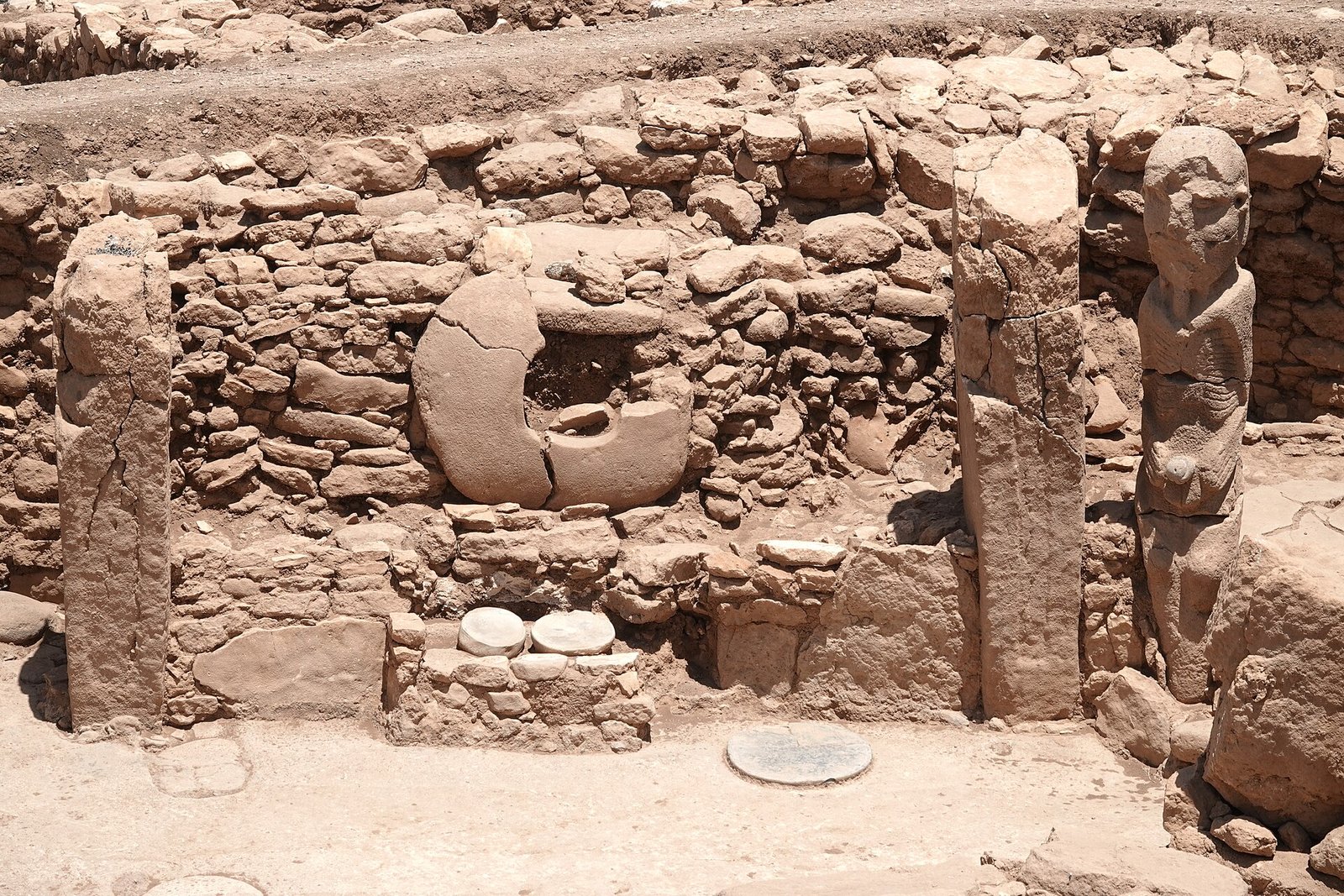
Göbekli Tepe is fully developed. It is a UNESCO World Heritage Site with a protective shelter over the main excavation area, raised walkways that let you look down into the enclosures, a visitor centre and standard opening hours. It is about 15 km northeast of Şanlıurfa and is the most straightforward archaeological visit in the region.
Karahan Tepe is open with visitor infrastructure in place. It is the natural second stop and, for many people, the more affecting of the two — the rock-cut chamber with its pillars and the head carved into the wall is a very different experience from looking down into Göbekli Tepe's enclosures from a walkway.
Both are realistically doable in a single day from Şanlıurfa, though that makes for a full one.
The one you should not skip
The Şanlıurfa Archaeology Museum is not an excavation, and it is the single best-value stop in the region.
The actual objects are there — not at the sites. Pillars, sculptures and small finds excavated from Göbekli Tepe and the surrounding sites are displayed indoors, including a full-scale reconstruction of an enclosure. The Urfa Man statue, among the oldest life-sized human sculptures known, is in the same complex.
Visiting the sites without the museum means seeing the architecture and none of the things that were in it.
The rest are working digs
Sayburç, Sefertepe, Çakmaktepe, Harbetsuvan Tepesi, Ayanlar Höyük, Gürcütepe, Mendik Tepe, Yoğunburç, Yenimahalle and Söğüt Tarlası are active or intermittent excavations rather than visitor destinations.
What that means in practice: no visitor facilities, no signage, often no parking and no path. Access depends on the season, on whether a team is working, and in several cases on permission. Some sit on or beside private land. Sayburç is inside a living village, where the ordinary courtesies of visiting somebody's community apply.
There is also a preservation point. These are open excavations with exposed surfaces and fragile deposits. Foot traffic on an unsupervised trench is a genuine problem, and at least one site in this group — Harbetsuvan — was salvage-excavated precisely because of damage from looting.
How to see more than the two
Go with someone who knows the current situation. That is not a sales pitch so much as a description of the problem: access to these sites changes year to year and season to season, and the information is not published anywhere reliable.
A guided visit can obtain permissions, knows which teams are on site and when, and knows which places are worth the drive in a given month. Turning up independently at a working excavation usually results in seeing a fenced mound from a distance.
If your time is limited, the honest advice is the boring version: Göbekli Tepe, Karahan Tepe, and the Şanlıurfa museum. Those three give you the great majority of what there is to see.
Practical notes
Base yourself in Şanlıurfa. Everything described here is within reach of the city, which has the airport, the hotels and the museum.
Season matters. Summer in Şanlıurfa is severely hot, and midday at an exposed site is unpleasant. Spring and autumn are considerably better for both comfort and light.
Excavation seasons typically run in the warmer months, which is when sites are most active — and most restricted.
Allow more time than you think for Göbekli Tepe. The walkway circuit is not long, but the site rewards standing still.
What you can actually see
The Taş Tepeler sites by visitor status, as of the 2026 season. Access to the working digs changes year to year.
The museum is the single best-value stop and the one most itineraries leave out. See the sites for the architecture; see the museum for what was inside them.
The honest itinerary
A good first visit is one full day: Göbekli Tepe from the walkway in the cool of the morning, Karahan Tepe's pillar room after, and the Şanlıurfa museum to meet Urfa Man and the finds the hills gave up. Two sites, one museum, one world — done in the right order, with the connections drawn.
See how a visit works →Common questions
Which Taş Tepeler sites can you visit?
Göbekli Tepe and Karahan Tepe are developed for visitors. The remaining sites are working excavations without visitor facilities, with access depending on season and permission.
Can you visit Karahan Tepe?
Yes. It is open with visitor infrastructure in place and is the natural second stop after Göbekli Tepe.
Can you visit Sayburç, Sefertepe or Çakmaktepe?
Not as ordinary visitor destinations. These are active excavations without facilities, and access varies by season and permission. Sayburç is inside a living village.
Where are the actual artefacts?
In the Şanlıurfa Archaeology Museum, not at the sites. It holds pillars, sculptures and small finds, plus the Urfa Man statue and a full-scale enclosure reconstruction.
Can I visit the sites independently?
Göbekli Tepe and Karahan Tepe, yes. For the working excavations, independent visits usually mean seeing a fenced mound from a distance, since access needs permission and current knowledge of who is on site.
What is the best time of year to visit?
Spring or autumn. Summer in Şanlıurfa is severely hot and the sites are exposed.
Sources & further reading3 references
- UNESCO World Heritage Centre (2018). Göbekli Tepe (inscription on the World Heritage List). UNESCO. link
- Şanlıurfa Neolithic Research Project — Taş Tepeler (2026). Official project site (Istanbul University / Şanlıurfa Museum). tastepeler.org link
- Karul, N. (2021). Buried Buildings at Pre-Pottery Neolithic Karahantepe. Türk Arkeoloji ve Etnografya Dergisi 82: 19–29. link
Full bibliography: the Taş Tepeler reference library →