Short answer
Ayanlar Höyük matters because a settlement the size of Göbekli Tepe lay unexcavated until 2025 — digging it extends the Taş Tepeler map westward and could sharply change how densely settled we think this landscape was.
Its ~14-hectare scale alone places it among the largest sites of the region, and its surface finds echo material from both the Urfa group and the Tigris sites, hinting at a well-connected world. But it is a brand-new excavation, so its importance is still mostly potential rather than proven.
Scale is the headline
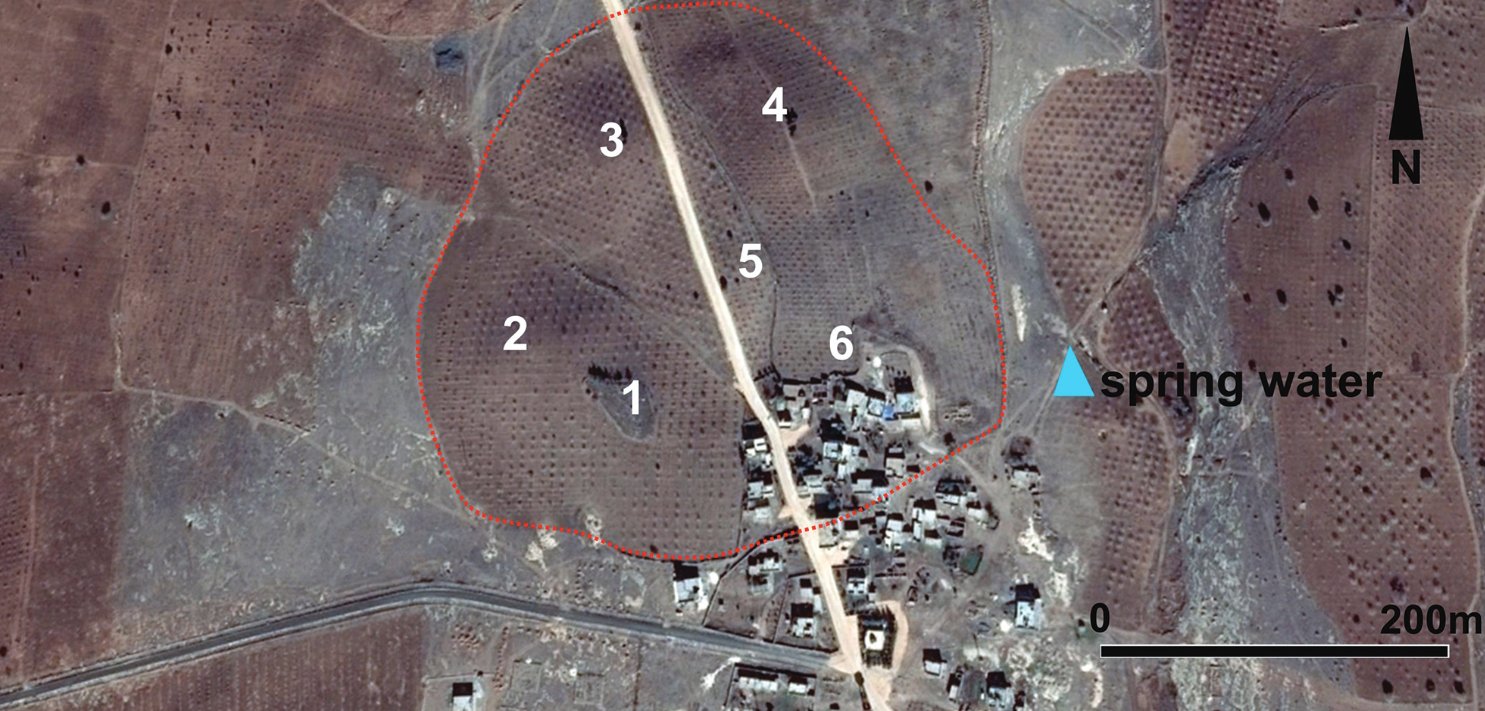
A mound of roughly 14 hectares is not a shrine on a hilltop; it is the footprint of a substantial community. That alone makes Ayanlar important, because it belongs to the size class of Göbekli Tepe and Karahan Tepe — the giants of the region.
The remarkable part is that a site this large sat in the landscape, known from survey since 2013, and was not systematically excavated until 2025. Whatever it holds, it has been holding it in reserve.
Widening the map westward
The best-known Taş Tepeler sites cluster to the east and southeast of Şanlıurfa — Göbekli Tepe, Karahan Tepe, Harbetsuvan. Ayanlar sits about 30 km west of the city, pulling the known network in the opposite direction.
That matters for the big argument the programme is built on: that this was not a handful of ceremonial centres in an empty countryside but a densely settled landscape. A large site out to the west strengthens that case.
Finds that point outward
The material collected from the surface was read as sharing traits with Körtik Tepe in the Tigris region as well as with the Urfa-group sites. If that holds under excavation, Ayanlar looks less like a local bubble and more like a node with connections across a wide region.
Long-distance links are one of the themes that make the Neolithic of this area interesting, and a big, richly connected site is exactly where they can be tested.
Excavated in the age of the programme
Göbekli Tepe was stumbled upon and dug over decades from 1995. Ayanlar is being opened deliberately, inside the Taş Tepeler framework, and through an international Türkiye–Japan partnership.
That is a different kind of archaeology — a large site approached with modern methods and comparative questions from the first day — and it is part of why the excavation is worth following closely.
Why the caution matters
For now, Ayanlar's importance is largely potential. Its interior is barely touched, its dating rests on surface finds, and its detailed story has not been written. That is not a weakness of the site but a description of where the work stands.
Read anything that gives Ayanlar a confident interior history with that in mind: this is a research frontier, not a settled account.
Common questions
Why is Ayanlar Höyük important?
Because it is a very large (about 14 ha) Neolithic settlement, in the size class of Göbekli Tepe and Karahan Tepe, that extends the Taş Tepeler network westward — and because its excavation, begun in 2025, could reshape how densely settled the region is thought to have been.
Is Ayanlar Höyük bigger than Göbekli Tepe?
It is in the same broad size class — roughly 14 hectares — though direct comparisons are difficult because Ayanlar has barely been excavated.
What could Ayanlar Höyük change?
If its scale and surface finds are borne out, it would strengthen the picture of a densely settled, well-connected Neolithic landscape rather than a few isolated centres. Its surface material echoes both Urfa-group and Tigris-region sites.
Is Ayanlar Höyük fully studied?
No. Systematic excavation began only in September 2025, so its significance is still largely potential and its interior is essentially unpublished.
Sources & further reading5 references
- Çelik, B. (2017). A new Pre-Pottery Neolithic site in Southeastern Turkey: Ayanlar Höyük (Gre Hut). Documenta Praehistorica 44: 360–367. doi:10.4312/dp.44.22 link
- Çelik, B.. Differences and similarities between the settlements in Şanlıurfa region where 'T' shaped pillars are discovered. Comparative survey of the Şanlıurfa T-pillar sites. Consulted via open repository copy; full bibliographic details not verified.
- Şanlıurfa Neolithic Research Project — Taş Tepeler (2026). Official project site (Istanbul University / Şanlıurfa Museum). tastepeler.org link
- Büyükyıldırım, O. (2025). Japanese Princess Akiko launches excavations at Ayanlar Höyük: Türkiye–Japan partnership expands the Taş Tepeler project. Anatolian Archaeology, 22 September 2025. link
- Clare, L. (2020). Göbekli Tepe, Turkey. A brief summary of research at a new World Heritage Site (2015–2019). e-Forschungsberichte des Deutschen Archäologischen Instituts 2020(2): 81–88.
Full bibliography: the Taş Tepeler reference library →