Short answer
Karahan Tepe is a ~12,000-year-old Neolithic site about 40 km east of Göbekli Tepe (sources give 35–60), in the Tek Tek Mountains of Şanlıurfa, Türkiye. It has the same T-shaped pillars and animal carvings — but its most famous chambers were carved down into bedrock, and it may be as old as, or older than, Göbekli Tepe's great enclosures.
It was found in 1997, but serious excavation only began in 2019 under Necmi Karul of Istanbul University. Roughly 5% of the site has been dug. What has come out already — a pillar room, a carved rock-face head, a phallus-holding statue — is enough to make it one of the most important digs on Earth.
Göbekli Tepe's sister site
For twenty years after its discovery in 1997 by the archaeologist Bahattin Çelik, Karahan Tepe was a scatter of pillar-tops poking through a hillside — noted, mapped, and left. Then in 2019 excavation began in earnest, and the hill started giving up chambers that stopped people in their tracks.
It sits in the Tek Tek Mountains National Park, in dry limestone country roughly 40 kilometres east of Göbekli Tepe — close enough that the two were plainly part of one world, far enough to be a distinct community. Locals call the hill Keçilitepe. The excavated site covers about ten hectares, fifteen if you count the quarries the builders cut their pillars from, and more than 260 pillars were counted on the surface alone before a spade went in.
It is routinely called Göbekli Tepe's "sister site," and the phrase is fair. Same T-pillars, same age, same repertoire of foxes, snakes, vultures and human figures. But a sister is not a copy, and Karahan's differences are the reason it matters.
Cut down, not built up
The defining move at Karahan Tepe is subtractive. Where Göbekli Tepe's builders quarried pillars and raised them into rings on the surface, Karahan's builders went the other way — they carved rooms, benches and whole pillars directly out of the bedrock, cutting a space downward into the rock rather than assembling one on top of it.
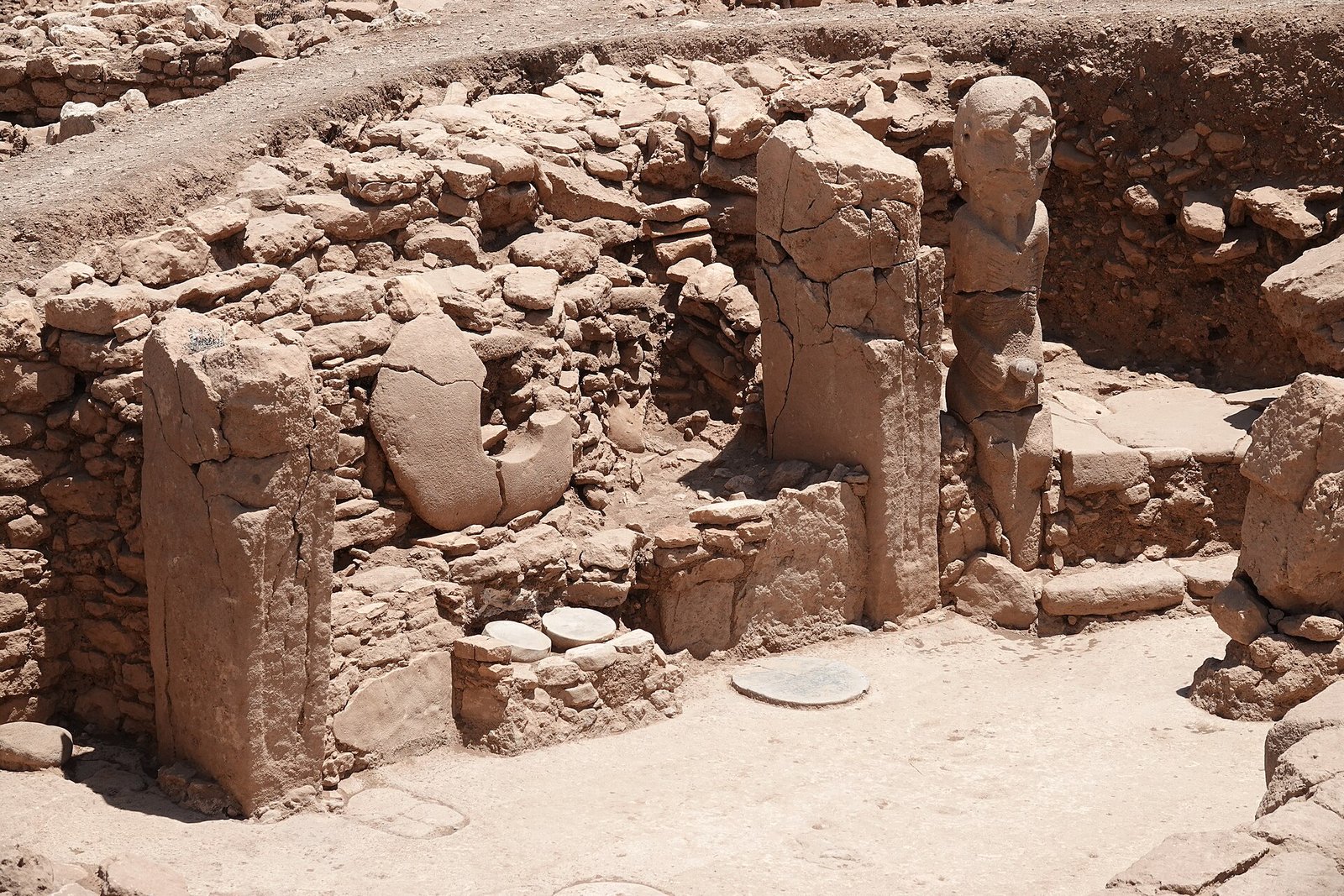
The most famous of these is a chamber sometimes called the pillar room or Structure AD: a sunken space in which a forest of phallic pillars stands carved from the living stone, entered from an adjoining room through a low porthole-like opening. And set into the rock wall, at the height of someone standing among the pillars, is a human head — carved so that it seems to grow out of the bedrock, watching everyone who enters. It is one of the most arresting things in the whole Neolithic world, and it is still there, in situ, where it was made.
This is not a decorative difference. Building a room by removing rock is a different act from building one by stacking it — more like sculpture than architecture, and it says these communities were not following a single template. They were experimenting with what a monument could be.
The bodies in the stone
Karahan Tepe is unusually direct about the human figure. In September 2023 excavators recovered a 2.3-metre statue of a naked man, probably shown seated, holding his phallus with both hands, ribs picked out in deep incised lines and a V-shaped collar at the neck — the same collar carved on the Urfa Man statue, the oldest known life-sized human sculpture. Alongside it came a vulture sculpture, one of the loaded animals of this world.
The pattern kept going. Recent seasons have produced a T-shaped pillar carved with a human face — sharp brows, deep-set eyes, a broad nose — which the excavation director Necmi Karul called some of the clearest evidence yet that the faceless T-pillars were meant to be human figures all along. A figurine with stitched-shut lips. Carved faces. A running wild donkey cut into a floor slab. Each find sharpens the same impression: these people were thinking hard about the body, the face, and the boundary between the living and the dead.
The oldest village?
There is a real possibility, still being tested, that Karahan Tepe reaches back as far as or further than Göbekli Tepe's monumental phase — into the centuries around 9500 BC and perhaps before. Some researchers have gone as far as calling it a candidate for the earliest known village, a place where the monuments and the ordinary business of living stood side by side.
That would matter enormously, because it bears on the central question of the whole region: did people gather to build before they settled down, or did settlement and monument-building begin together? Karahan Tepe, with domestic-looking buildings appearing near its ceremonial ones, is one of the places that question will be answered.
A dig you are watching live
The single most important thing to hold in mind about Karahan Tepe is how little of it has been excavated — around 5%. Almost the entire site is still in the ground.
That is why the news never stops: a carved head one season, a sealed chamber promised the next, a statue, a face, a floor. Interpretations shift as fast as the finds arrive, and much of what is reported reaches the public through ministry briefings and news agencies months or years before it is formally published. We flag that difference where it matters. But make no mistake — you are watching one of the great archaeological stories of the century unfold in real time, and it has barely begun.
What's settled, and what is still open
Settled. Karahan Tepe is a Pre-Pottery Neolithic site in the Tek Tek hills, part of the same regional world as Göbekli Tepe. Its builders carved chambers, pillars and a human head down into the living bedrock. A life-size seated statue of a man was recovered in 2023. Excavation has been led by Necmi Karul since 2019, and only a small fraction of the mound has been dug. None of that is in dispute.
Still open. Almost everything about meaning and sequence is unresolved. Whether Karahan Tepe is older than Göbekli Tepe is not established — its radiocarbon programme is young, and much public dating rests on comparison rather than on a published sequence tied to specific contexts. What the phallic pillars, the carved head and the bedrock channel were for is interpretation, not fact. And whether the site truly represents an early 'village' where settlement and monument-building began together is exactly the kind of claim the next decade of digging will test.
The honest position is that Karahan Tepe is spectacular and early, broadly contemporary with Göbekli Tepe — and that anyone offering a precise date or a confident story about its rituals is running ahead of what has been published. Treat single-year dates and 'blood channel'–style explanations with caution; they usually come from press coverage, not from the excavation.
Karahan Tepe and Göbekli Tepe, side by side
The things to see
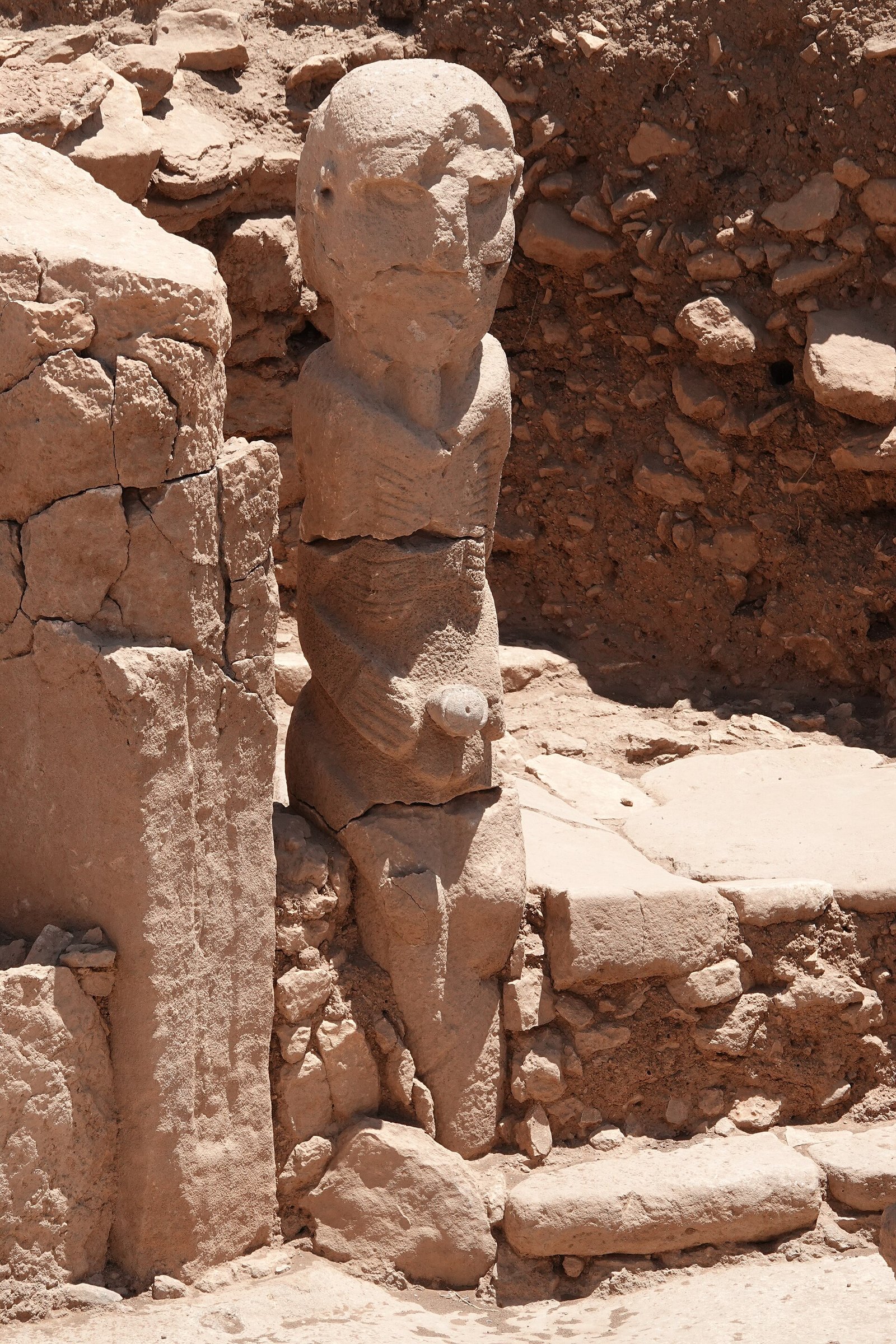 The 'Ribbed Man'A 2.45-metre seated figure with ribs and spine cut deep into the stone.
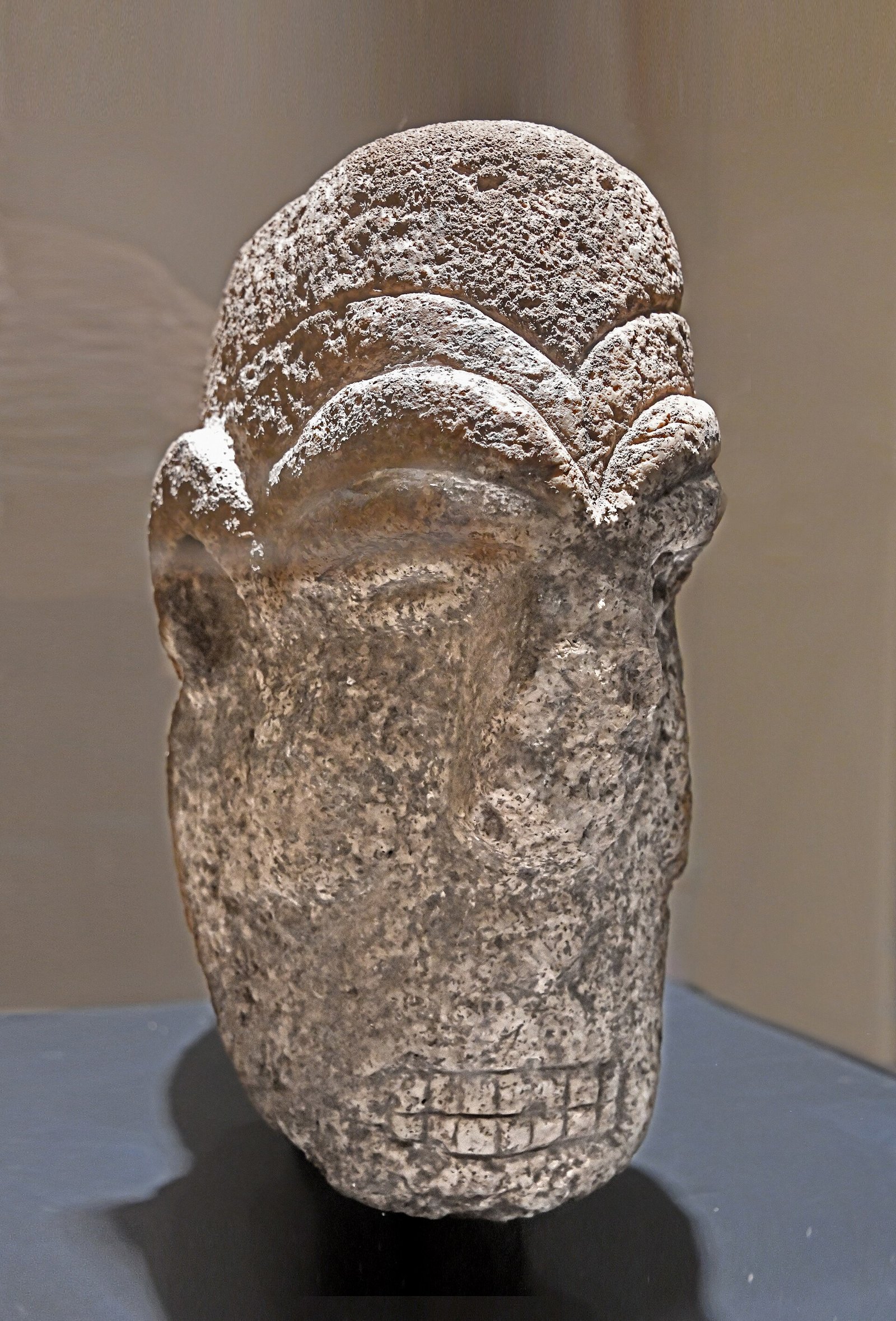 The watching headA human head carved from the wall of living rock, facing the entrance.
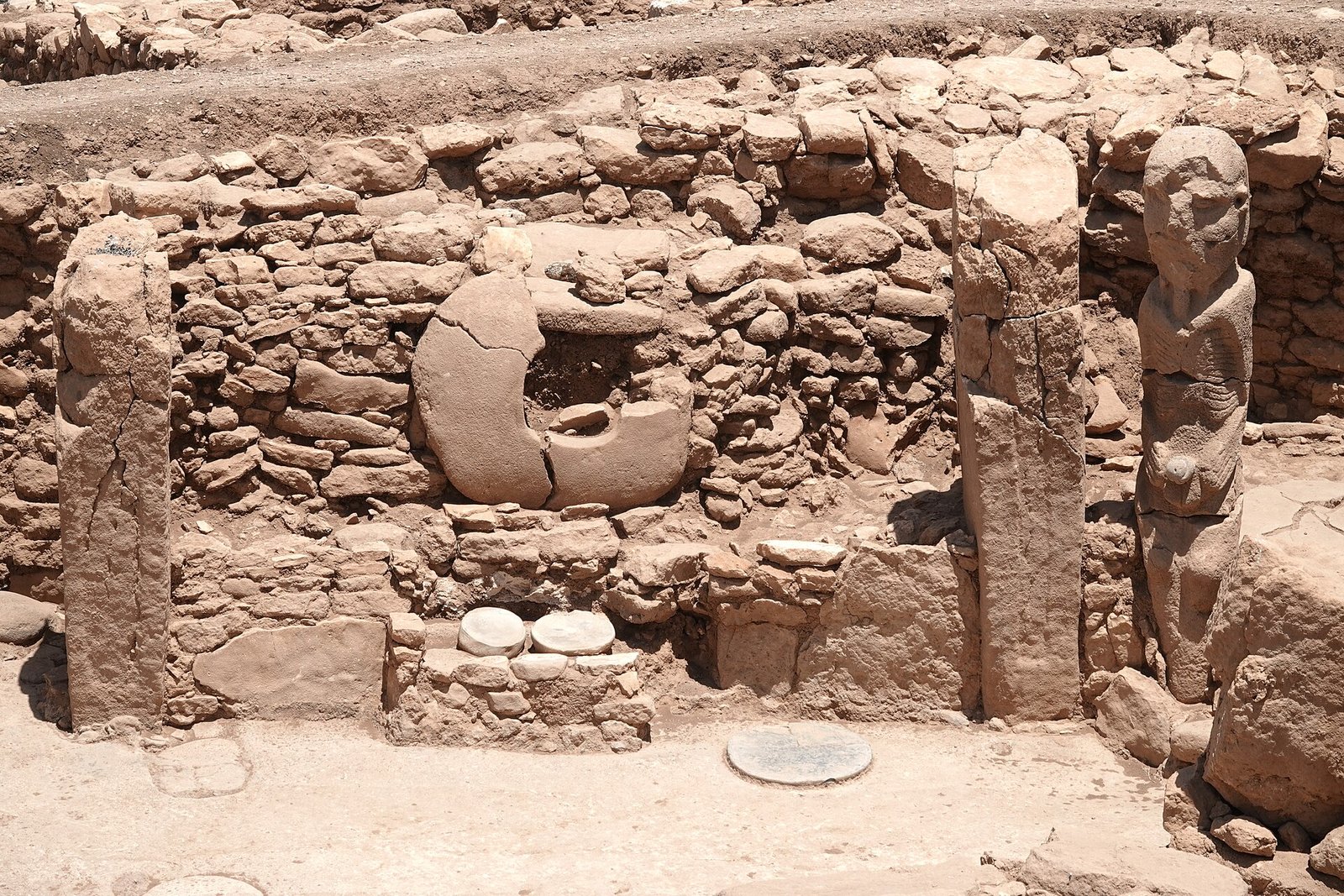 The phallic pillarsTall pillars left standing as the rock was cut away around them.
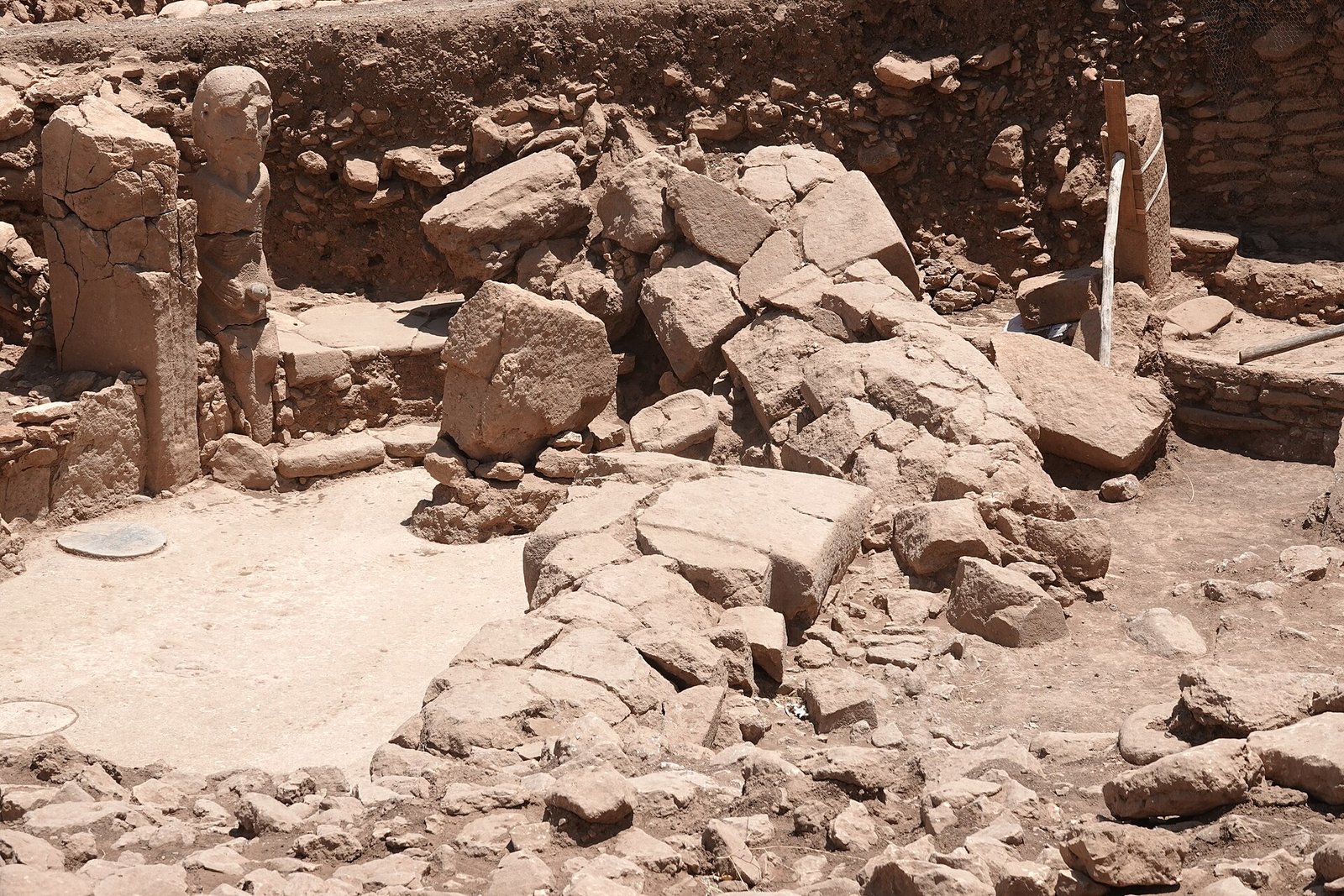 A hall of T-pillarsStructure BD's pillared hall, with two tall central T-pillars.
Standing in the pillar room
Göbekli Tepe you view from above, on a walkway. Karahan Tepe you can descend into — down the cut-rock approach, into the room of pillars, level with the carved head that has been staring out of the wall for twelve thousand years. It is the closest you can get to standing where these people stood. Most visitors never make it here.
See how a visit works →Common questions
How far is Karahan Tepe from Göbekli Tepe?
Roughly 40 km east (sources range 35–60), in the Tek Tek Mountains of Şanlıurfa province — under an hour's drive. They are close enough to have been part of one cultural world.
Is Karahan Tepe older than Göbekli Tepe?
Possibly. Its earliest phases may reach into the same centuries as Göbekli Tepe's great enclosures — around 9500 BC — and some researchers argue it is as old or older. The dating is still being worked out and published.
Can you visit Karahan Tepe?
Yes. It is open to visitors and, unlike Göbekli Tepe, you can walk down among the excavated structures rather than viewing from a raised walkway. It is an active dig, so access can change season to season.
What is the carved head at Karahan Tepe?
A human head carved directly into the bedrock wall of the pillar chamber (Structure AB/AD), positioned to face anyone entering. It is one of the most striking pieces of Neolithic sculpture found in situ anywhere.
Who excavates Karahan Tepe?
The excavation is led by Necmi Karul of Istanbul University, as part of the Taş Tepeler project run by Türkiye's Ministry of Culture and Tourism.
Sources & further reading3 references
- Karul, N. (2021). Buried Buildings at Pre-Pottery Neolithic Karahantepe. Türk Arkeoloji ve Etnografya Dergisi 82: 19–29. link
- Clare, L. (2020). Göbekli Tepe, Turkey. A brief summary of research at a new World Heritage Site (2015–2019). e-Forschungsberichte des Deutschen Archäologischen Instituts 2020(2): 81–88.
- Schmidt, K. (2012). Göbekli Tepe: A Stone Age Sanctuary in South-Eastern Anatolia. Berlin: ex oriente. The foundational monograph by the site's first excavator.
Full bibliography: the Taş Tepeler reference library →