Short answer
No — Göbekli Tepe was built by human hunter-gatherers, and the quarries, tool-marks and wider network of related sites prove it; there is no evidence of extraterrestrial involvement.
The question comes up because the site's age and sophistication clash with the cartoon of Stone Age people as primitives — but the fix is to correct the cartoon, not to invoke aliens. For the milder 'lost human civilisation' version of the claim, see the companion page.
The short answer: no
Göbekli Tepe was built by human beings — specifically, hunter-gatherer communities living in the region around 11,000 years ago. There is no evidence, anywhere, of extraterrestrial involvement. What there is evidence of is people: their tools, their quarries, their art, and the long local tradition their work belongs to.
The question comes up honestly, though. The site is so old, and so sophisticated, that it clashes with the cartoon image of Stone Age people as club-dragging primitives. When the real story breaks that stereotype, some people reach for aliens. The better response is to fix the stereotype.
Where the idea comes from
The 'ancient astronaut' idea — that beings from elsewhere handed early humans their monuments — was popularised in the 1960s and has since attached itself to almost every impressive ancient site, from the pyramids to the Nazca lines. Göbekli Tepe is simply the newest, and oldest, addition to the list.
It always rests on the same buried assumption: that ancient people were not clever or organised enough to build something impressive themselves. Göbekli Tepe is the strongest evidence anywhere that this assumption is wrong.
How we know humans built it
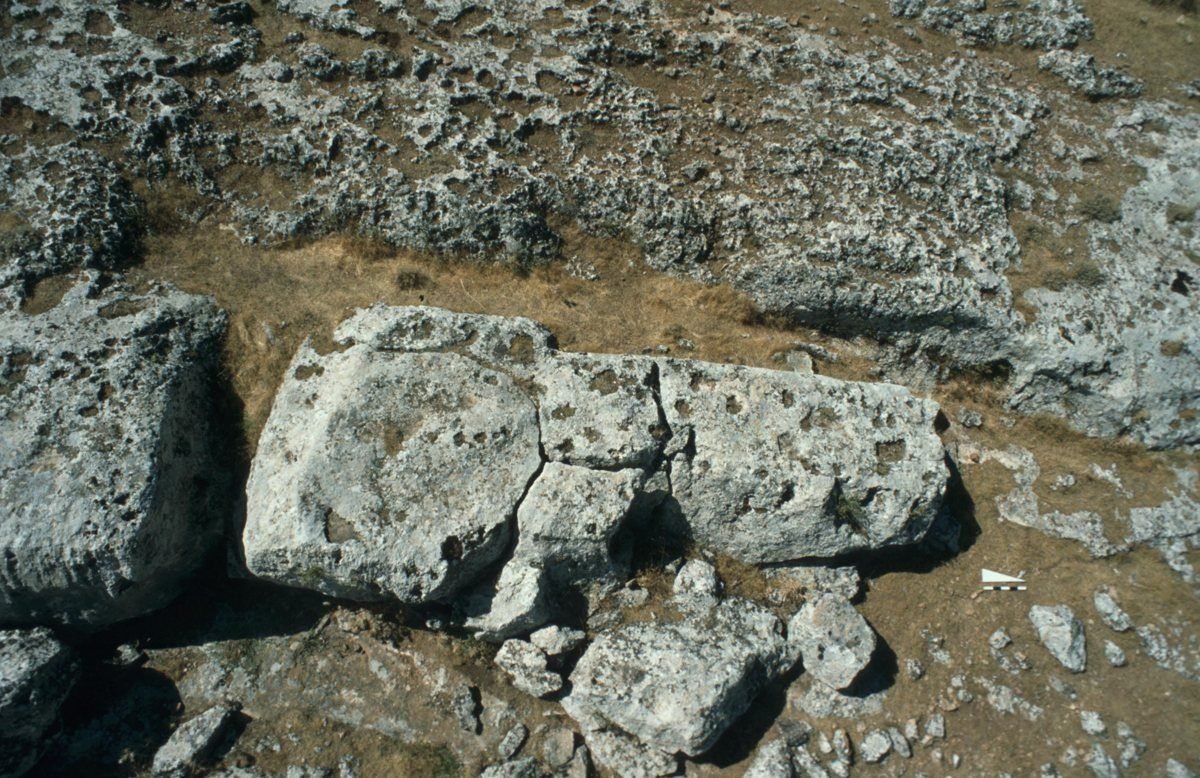
The proof is on the hill itself. The pillars were cut from limestone quarries a short walk from the enclosures, and at least one half-finished pillar still lies in the bedrock where it was being carved — complete with the marks of stone tools. You can trace the whole process, from raw rock to raised monument, in the ground.
Göbekli Tepe also isn't alone. It sits inside the wider Taş Tepeler world of related sites — Karahan Tepe, Sayburç, Sefertepe and more — that show the same ideas developing, spreading, and changing across a region over centuries. That is exactly what a human cultural tradition looks like. And every material at the site is ordinary and local: limestone, flint, bone. There is nothing anomalous — no metal, no machinery, no unexplained substance.
Why the idea won't die
If the evidence is this one-sided, why does the alien claim keep coming back? Partly because it is built to survive contact with facts: when no spacecraft or advanced tool turns up, believers can always say the proof was lost, hidden, or not yet dug. A claim that can absorb any missing evidence as confirmation is not really a claim about the past — it is unfalsifiable, and archaeology sets it aside for exactly that reason.
Partly, too, it flatters us. It is more thrilling to imagine visitors from the stars than to picture cold, hungry people in the Şanlıurfa hills organising themselves to move ten-ton stones. And there is an uglier root worth naming: 'ancient astronaut' stories have a long history of assuming that non-European or prehistoric peoples couldn't have built their own great monuments, and needed outside help. Göbekli Tepe was built by the ancestors of the people who live in the region today. Denying them the achievement is not a neutral guess.
The real story is the amazing one
Crediting aliens actually takes the wonder away. The astonishing fact is that people — without farming, metal, writing, the wheel, or draft animals — organised themselves to quarry, carve, move, and raise multi-ton stone figures, and to cover them in art. That they did this is the single most important thing Göbekli Tepe teaches us about human beings. It deserves the credit.
Aliens, or a 'lost civilisation'?
The alien claim is often tangled up with a milder-sounding one: that a lost human civilisation, not extraterrestrials, was behind Göbekli Tepe. That version at least keeps the builders human — but it fails for the same reason, because there is no trace of any such advanced culture anywhere in the record.
Either way the answer is the same. The people who raised these stones were Neolithic hunter-gatherers of the Şanlıurfa hills, and the evidence for that is sitting on the hillside. We take the 'lost civilisation' version apart in detail on its own page (see Explore next).
Common questions
Did aliens build Göbekli Tepe?
No. It was built by human hunter-gatherers. The quarries, tool marks, and the wider network of related sites all show a human cultural tradition, and no anomalous materials or technology have ever been found.
Why do people think aliens built Göbekli Tepe?
Because its age and sophistication clash with the outdated idea that Stone Age people were primitive. The site corrects that idea — it doesn't require aliens to explain it.
Is there any evidence of advanced technology at Göbekli Tepe?
No. Everything found is limestone, flint, and bone worked with stone-age tools. The craftsmanship is remarkable but entirely human.
Sources & further reading3 references
- Schmidt, K. (2012). Göbekli Tepe: A Stone Age Sanctuary in South-Eastern Anatolia. Berlin: ex oriente. The foundational monograph by the site's first excavator.
- Clare, L. (2020). Göbekli Tepe, Turkey. A brief summary of research at a new World Heritage Site (2015–2019). e-Forschungsberichte des Deutschen Archäologischen Instituts 2020(2): 81–88.
- Notroff, J., Dietrich, O. & Schmidt, K. (2014). Building Monuments, Creating Communities. Early monumental architecture at Pre-Pottery Neolithic Göbekli Tepe. In J.F. Osborne (ed.), Approaching Monumentality in Archaeology: 83–105. Albany: SUNY Press.
Full bibliography: the Taş Tepeler reference library →