Göbekli Tepe Structure Profile

Enclosure E / Rock Temple

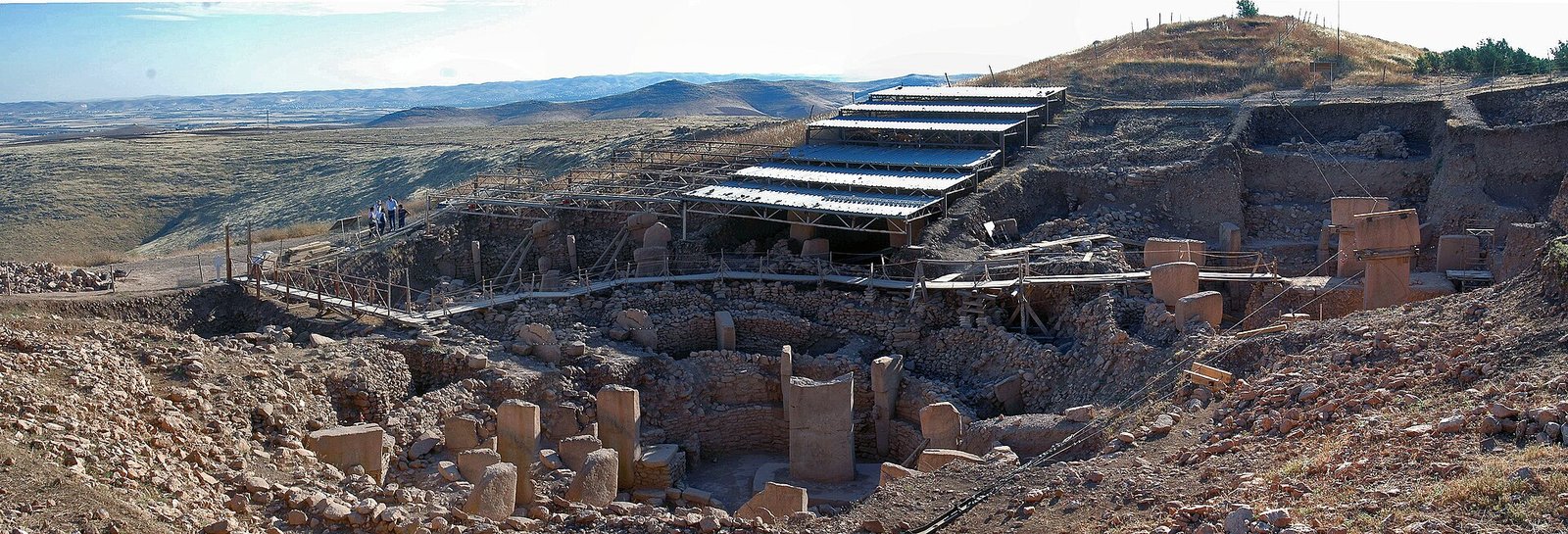
Enclosure E is different from the famous standing-pillar buildings because its strongest preserved evidence is cut into the bedrock itself. Two rock pedestals with oval holes are interpreted as the bases for central pillars that no longer survive, an interpretation strengthened by comparison with Enclosures C and D.

Enclosure E / Rock Temple visual reference
Visual reference for orientation. Use source images only when rights are clear.

At a glance

Site
Göbekli Tepe
Structure
Enclosure E / Rock Temple
Known For
A compact but important Göbekli feature because it preserves the central-pillar base logic in bedrock rather than as standing monoliths.

What you're looking at

Enclosure E, often called the Rock Temple, is a bedrock-cut Göbekli Tepe structure whose clearest preserved evidence is a pair of rock pedestals for now-lost central pillars.

Why it matters

  • The formal source describes a bedrock-cut structure now numbered Enclosure E, but the compact packet should avoid presenting a full plan until plan/figure recovery is completed.
  • A structure referred to as the rock temple is numbered Enclosure E in the formal source.
  • The structure is cut out of natural bedrock.
  • It has two pedestals with oval tub-shaped holes.
  • The pedestals were identified as bases for now-lost central pillars.
  • The reconstructed function of the holes is supported by later comparison with Enclosures C and D, where central-pillar pairs were found in situ.

What to notice first

  • structure cut out of natural bedrock
  • two rock pedestals
  • oval tub-shaped holes in the pedestals
  • now-lost central pillars
  • comparison with Enclosures C and D central-pillar bases
  • Rock-Cut Structure
  • Two Pedestals
  • Comparison With C and D

How to read it

  • Rock-Cut Structure: Enclosure E is a Göbekli Tepe structure cut into natural bedrock, often known by the conventional label Rock Temple.
  • Two Pedestals: Its strongest preserved evidence is a pair of rock pedestals, each described with an oval tub-shaped hole.
  • Lost Central Pillars: The pedestals are interpreted as bases for central pillars, but those pillars no longer survive in Enclosure E.
  • Comparison With C and D: The interpretation became stronger after Enclosures C and D were excavated with central-pillar pairs still in place.

How the space works

  • The formal source describes a bedrock-cut structure now numbered Enclosure E, but the compact packet should avoid presenting a full plan until plan/figure recovery is completed.
  • The pedestals were identified as bases for the structure's now-lost central pillars.

Spatial details

  • structure cut out of natural bedrock
  • two rock pedestals
  • oval tub-shaped holes in the pedestals
  • now-lost central pillars
  • comparison with Enclosures C and D central-pillar bases

Important objects

Guide Step Rock-Cut Structure

Enclosure E is a Göbekli Tepe structure cut into natural bedrock, often known by the conventional label Rock Temple.

Guide Step Two Pedestals

Its strongest preserved evidence is a pair of rock pedestals, each described with an oval tub-shaped hole.

Guide Step Lost Central Pillars

The pedestals are interpreted as bases for central pillars, but those pillars no longer survive in Enclosure E.

Guide Step Comparison With C and D

The interpretation became stronger after Enclosures C and D were excavated with central-pillar pairs still in place.

Central Pillars Central Pillar Pair

The pedestals were identified as bases for the structure's now-lost central pillars.

Research layer limits
  • Use reported wording where exact pillar counts, animal identifications, or construction phases remain open.
  • Do not turn layout, imagery, or fill evidence into one settled ritual interpretation.
  • The central pillars of Enclosure E do not survive and should not be described as standing.
  • The term Rock Temple should be treated as a conventional archaeological label, not proof of a settled temple function.
  • The exact plan, entrance, visitor movement, and complete architectural sequence need a plan-level source pass.
  • The porthole-stone comparison is important historically but does not prove porthole stones functioned as portable pillar bases.
  • The parked cat lead should not be public until direct source support is recovered.
  • specific ritual function of the Rock Temple
Evidence behind this evidence layer

Stable evidence

  • Enclosure E, often called the Rock Temple, is a bedrock-cut Göbekli Tepe structure whose clearest preserved evidence is a pair of rock pedestals for now-lost central pillars.
  • Enclosure E is different from the famous standing-pillar buildings because its strongest preserved evidence is cut into the bedrock itself. Two rock pedestals with oval holes are interpreted as the bases for central pillars that no longer survive, an interpretation strengthened by comparison with Enclosures C and D.
  • The formal source describes a bedrock-cut structure now numbered Enclosure E, but the compact packet should avoid presenting a full plan until plan/figure recovery is completed.
  • A structure referred to as the rock temple is numbered Enclosure E in the formal source.

Where it comes from

  • GT-ENC-E-SRC-001
  • GT-ENC-E-SRC-002

Limits

  • Use reported wording where exact pillar counts, animal identifications, or construction phases remain open.
  • Do not turn layout, imagery, or fill evidence into one settled ritual interpretation.
  • The central pillars of Enclosure E do not survive and should not be described as standing.
  • The term Rock Temple should be treated as a conventional archaeological label, not proof of a settled temple function.

What could change

  • full source cards
  • page/figure locators
  • porthole-stone comparison history
  • needs direct source recovery for cat lead

Open site profile

Back to Göbekli Tepe