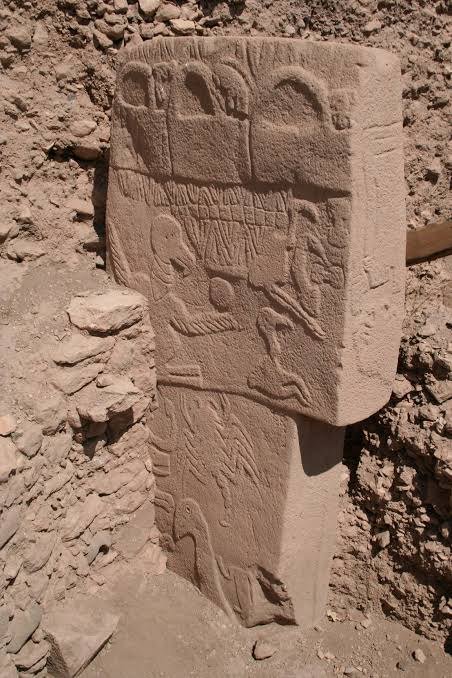
The claim
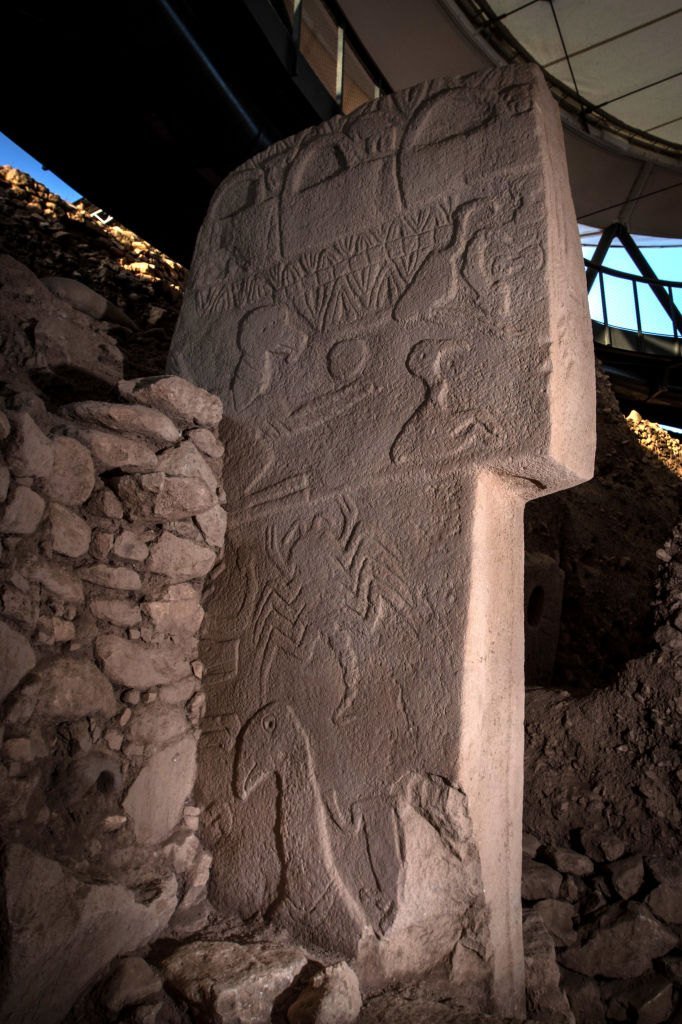
In 2017, Martin Sweatman and Dimitrios Tsikritsis argued that Göbekli Tepe's enclosures were observatories and that Pillar 43 records a 'Younger Dryas comet impact' — reading the carved animals as constellations and a date. The idea spread quickly online.
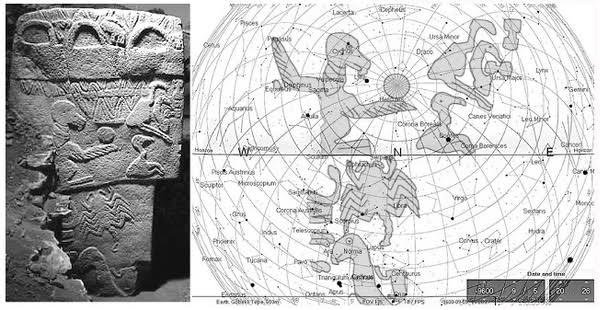
The excavators' reply
The Göbekli Tepe team responded directly on the DAI's Tepe Telegrams. Their objections, in plain terms: the animals are a consistent symbolic vocabulary repeated across many pillars, not a one-off star map; the enclosures were used and rebuilt across centuries, not a single dated event; and the pillar was carved well after the supposed impact. The site's imagery points to death and the body, not the sky.
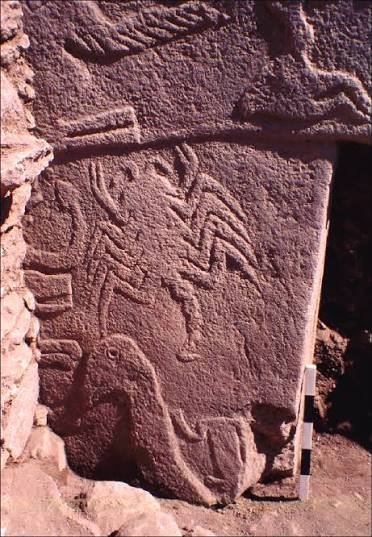
Why we flag this
The comet reading is a published claim, and it's exciting — which is exactly why it's worth knowing that the people who dig the site do not accept it. We treat it the same way: an interesting idea, clearly labelled as contested, not the conclusion of the evidence.
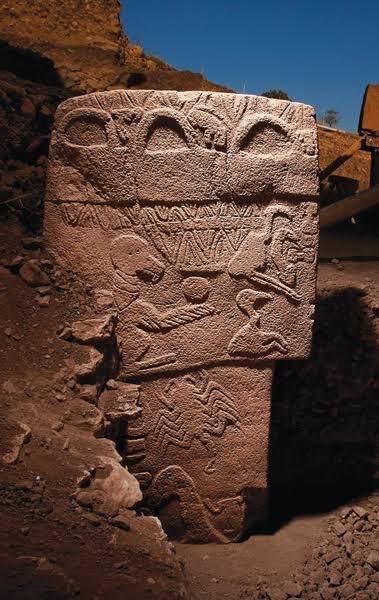
What the comet paper argued
In 2017 Martin Sweatman and Dimitrios Tsikritsis put forward a striking reading of Göbekli Tepe: that its enclosures worked as observatories, and that Pillar 43 — the so-called Vulture Stone — records a 'Younger Dryas comet impact', with the carved animals standing in for constellations and encoding a date. It is the kind of idea that travels, and it spread quickly online.
The appeal is obvious. A single famous carving, a cosmic catastrophe, an ancient culture watching the sky — the pieces assemble into a story that is far more exciting than 'a symbol we do not fully understand.' That is precisely why it is worth knowing how the people who actually dig the site responded to it.
Why the excavators do not accept it
The Göbekli Tepe team answered directly on the DAI's Tepe Telegrams, and their objections are concrete. First, the animals on Pillar 43 are part of a consistent symbolic vocabulary repeated across many pillars at the site, not a one-off arrangement you can read as a star map. Second, the enclosures were used and rebuilt across centuries, which sits badly with the idea that one pillar marks a single dated event. Third, the pillar itself was carved well after the moment the comet reading places it. And the site's imagery, they argue, points to death and the body rather than to the sky.
None of this proves what Pillar 43 does mean — that remains unknown, and the comet paper was peer-reviewed and has been defended by its authors, so the exchange is a genuine scholarly disagreement. What the rebuttal establishes is narrower and still useful: the star-map interpretation is not supported by how the site actually works. It is a good model for reading any dramatic claim about these places — treat the exciting idea as contested, and check it against the people who know the ground.
What is uncertain
This page reports a dispute, and a dispute is not the same as a settled verdict. The excavators' objections — repeated motifs, centuries of use and rebuilding, a carving date later than the supposed impact — are strong, and are why we side with them; but the comet paper was peer-reviewed and its authors have defended it, so the exchange is a live scholarly disagreement rather than a closed case.
The deeper problem is shared by both sides: the actual meaning of Pillar 43's animals is unknown. Rejecting the constellation reading does not prove the 'death and the body' reading; it establishes that the star-map interpretation is not supported, and leaves the positive meaning of the stone still open.
Common questions
Does Göbekli Tepe's Vulture Stone record a comet impact? Its excavators reject that reading. They argue the carved animals are a symbolic vocabulary repeated across many pillars rather than a one-off star map, that the enclosures were used over centuries rather than marking a single dated event, and that the pillar was carved well after the supposed impact.
Is the comet theory a fringe idea? It was a peer-reviewed published claim and its authors have defended it, so it is a live scholarly disagreement rather than pure fringe — but the site's own team does not accept it.
So what does Pillar 43 mean? Its actual meaning is unknown. Rejecting the constellation reading does not prove the 'death and the body' reading; it establishes that the star-map interpretation is not supported and leaves the positive meaning open.
Key takeaways
- In 2017 researchers claimed Göbekli Tepe's enclosures were observatories and that Pillar 43 encodes a comet strike — an idea that spread quickly online.
- The site's own excavators published a point-by-point rebuttal: the animals are a repeated symbolic vocabulary, the buildings span centuries, and the pillar postdates the supposed impact.
- The excavators read the stone's imagery as pointing to death and the body, not the sky.
- The exchange is a live scholarly disagreement — the comet paper was peer-reviewed and its authors have defended it — not a closed case.
Sources
- DAI Tepe Telegrams — 'More than a vulture: a response to Sweatman and Tsikritsis'
- DAI Tepe Telegrams — Frequently Asked Questions (background)
This article is written from the primary literature and excavators' reports cited above. Interpretations are attributed; uncertainties are stated in the text.