The discovery
In the autumn 2012 season, excavators traced how people actually entered Enclosure C — one of the great round buildings, and the one most heavily rebuilt across its life. A stone stairway led down into it, staging the approach into a space ringed with concentric walls and T-shaped pillars.
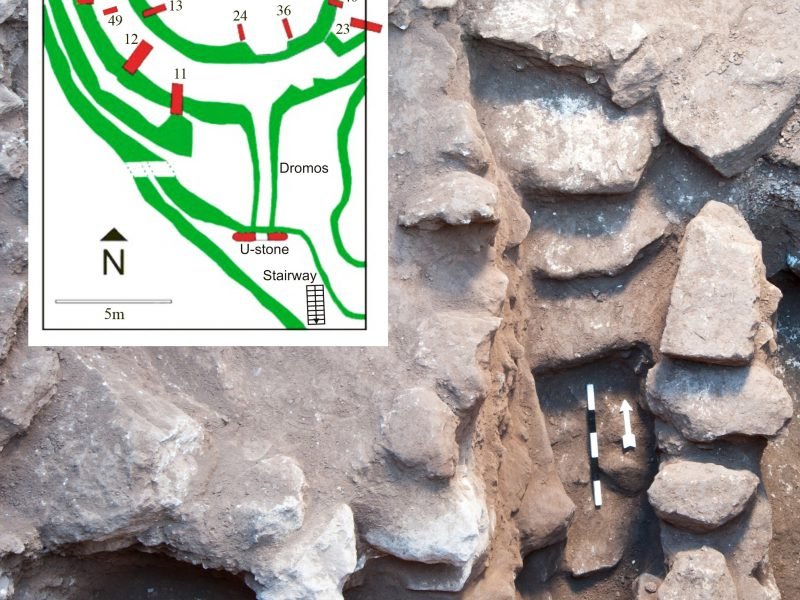
German Archaeological Institute, Göbekli Tepe Project, Building C entrance plan, Göbekli Tepe, Copyright: DAI — used with permission, via .
Under the boars' watch
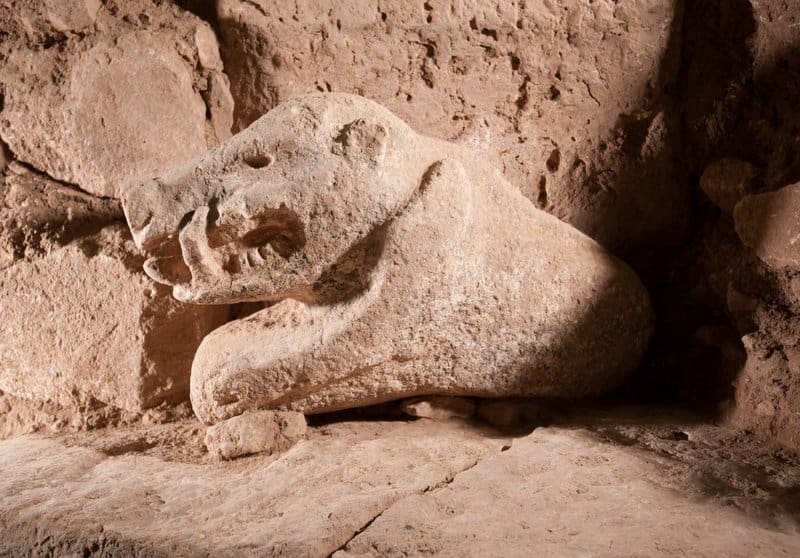
Enclosure C is dominated by boars — carved in relief and, in one case, a boar sculpture set as if guarding the way. The wild boar was among the most dangerous animals a Neolithic hunter faced, and here it lines the route in. To descend the stair was to enter beneath them.
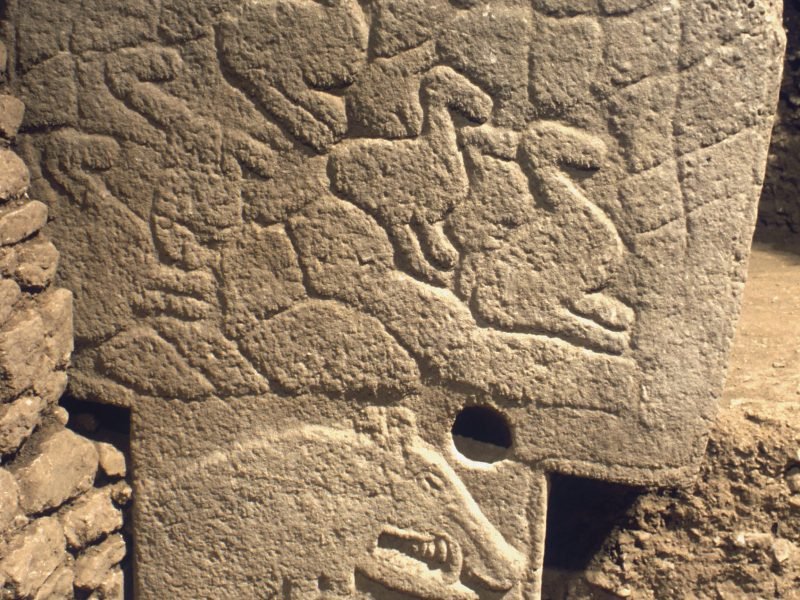
German Archaeological Institute, Göbekli Tepe Project, Boar relief on Pillar 12, Göbekli Tepe, Copyright: DAI — used with permission, via .
Why it changes how we read the site
The staircase turns Enclosure C from a static ring of stones into a designed experience — a route, a threshold, an arrival. These buildings were meant to be moved through, not only looked at.
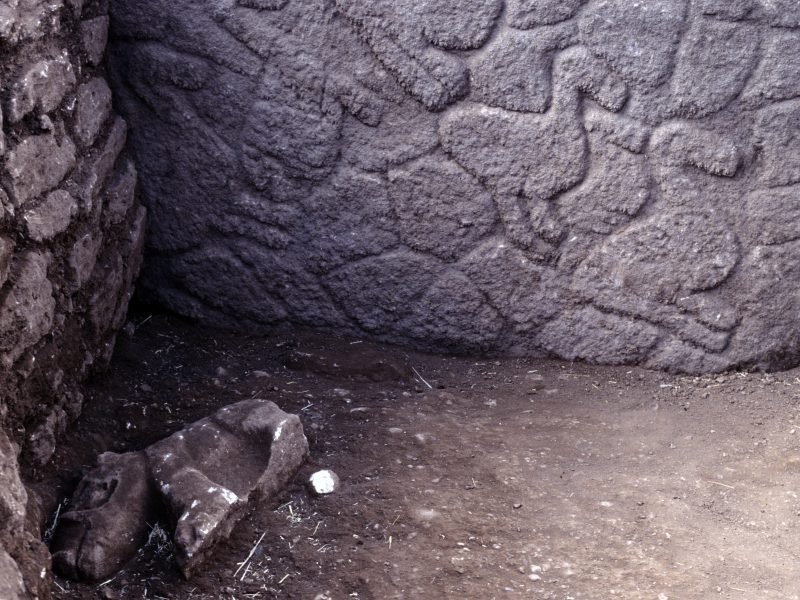
German Archaeological Institute, Göbekli Tepe Project, Boar sculpture at Pillar 12, Göbekli Tepe, Copyright: DAI — used with permission, via .
A building you walked into
It is easy to look at Göbekli Tepe's enclosures as objects — rings of carved stone to be photographed from above and studied as plans. The stairway into Enclosure C is a reminder that they were architecture, meant to be used. Excavators tracing how people actually got into the building in the autumn 2012 season found a stone stair that led down into it, staging the approach rather than simply opening onto it.
That single detail changes the experience the building offered. A staircase is a sequence: you descend, the walls rise around you, and you arrive in the ringed space of concentric walls and T-shaped pillars from a particular direction, having passed a threshold to get there. The enclosure stops being a static circle of stones and becomes a route with a beginning, a passage and an end.
Read that way, Enclosure C was designed as an event as much as a place. Whatever happened inside, it was reached by going down and in, beneath the carvings that line the way — an arrival that the architecture shaped deliberately. These were spaces to be moved through, not only looked at.
The most rebuilt ring at the site
Enclosure C carries a complication that runs through much of Göbekli Tepe: it is the most heavily rebuilt of the great round buildings. Over its life it was reworked repeatedly, and heavy rebuilding is exactly what blurs a building's history. Layers overwrite one another, and features that look like a single plan can belong to different moments.
That is why the stair, for all its vividness, leaves real questions open. Whether it belongs to the enclosure's original design or to a later remodelling is not settled by the plan alone — and it is even possible that a feature read as a formal entrance was a route cut during later disturbance of the building rather than the way Neolithic people first came in.
The boars raise a parallel caution. Enclosure C is dominated by them, carved in relief and set as a sculpture as if guarding the way, and the wild boar was among the most dangerous animals a hunter of this world faced. But reading the boars as guardians lining an approach — placed to be met on the way in, in a deliberate sequence — is a narrative laid over the carvings. The animals are there and concentrated in C; that they were staged along the route is interpretation, not something the stones themselves state.
What is uncertain
Enclosure C is the most heavily rebuilt ring at Göbekli Tepe, and heavy rebuilding is exactly what blurs a building's history. Whether the stair belongs to the enclosure's original design or to a later remodelling — and whether it was a formal 'entrance' for people or, say, a route cut for the later disturbance of the building — is not fully resolved by the plan alone.
Reading the boars as guardians lining an approach is interpretation. The animals are certainly there and certainly concentrated in C, but that they were placed to be met on the way in, in a deliberate sequence, is a narrative laid over the carvings rather than something they state.
Common questions
How did people enter Göbekli Tepe's Enclosure C? Excavators traced a stone stairway that led down into the ring, staging the approach into a space of concentric walls and T-shaped pillars.
Why are there so many boars in Enclosure C? The enclosure is dominated by boars — carved in relief and, in one case, set as a sculpture as if guarding the way. To descend the stair was to enter beneath them.
Are the boars really 'guardians'? That is an interpretation. The boars are certainly there and concentrated in Enclosure C, but the idea that they were placed to be met on the way in, in a deliberate sequence, is a reading laid over the carvings.
Key takeaways
- A stone stairway staged the approach down into Enclosure C's ring of walls and T-pillars.
- Boars line the route in — the wild boar was among the most dangerous animals a Neolithic hunter faced.
- The staircase turns the enclosure from a static ring into a designed experience: a route, a threshold, an arrival.
- These buildings were meant to be moved through, not only looked at.
Sources
- DAI Tepe Telegrams — 'A Stairway to the Circle of Boars'
- DAI — Göbekli Tepe painted boar press release (8 Oct 2023)
This article is written from the primary literature and excavators' reports cited above. Interpretations are attributed; uncertainties are stated in the text.