Small faces beside giant stones
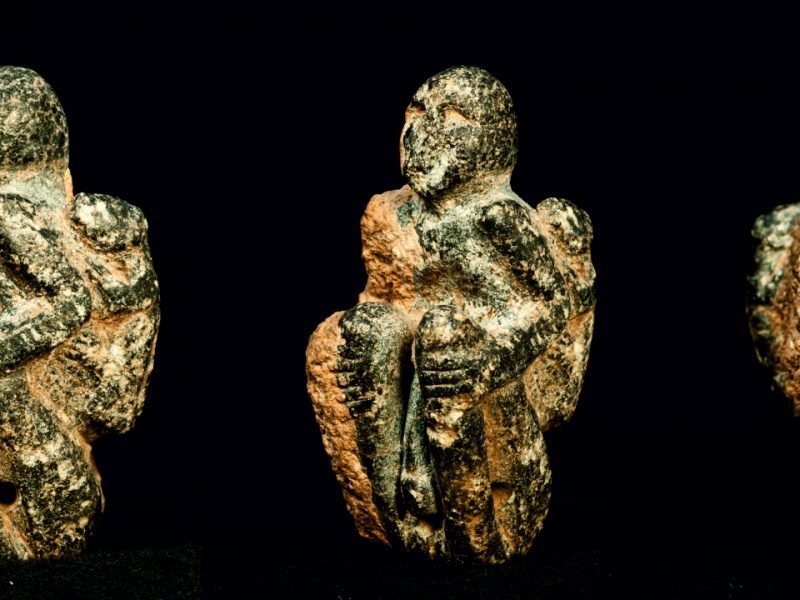
Alongside its monumental pillars, Göbekli Tepe produced a quieter class of finds — faces. A clay object from the 2001 season in Enclosure D appears to depict a face or mask, and the site and its neighbours have yielded miniature stone masks small enough to hold in the hand, along with at least one near life-size example.
Masks and masquerade
The German Archaeological Institute's researchers place these among the earliest masks in the world, comparing them to later mask traditions further south in the Judean hills. Whether worn in ritual, carried, or displayed, masks point to performance and transformation — to becoming someone, or something, else.
Part of one big idea
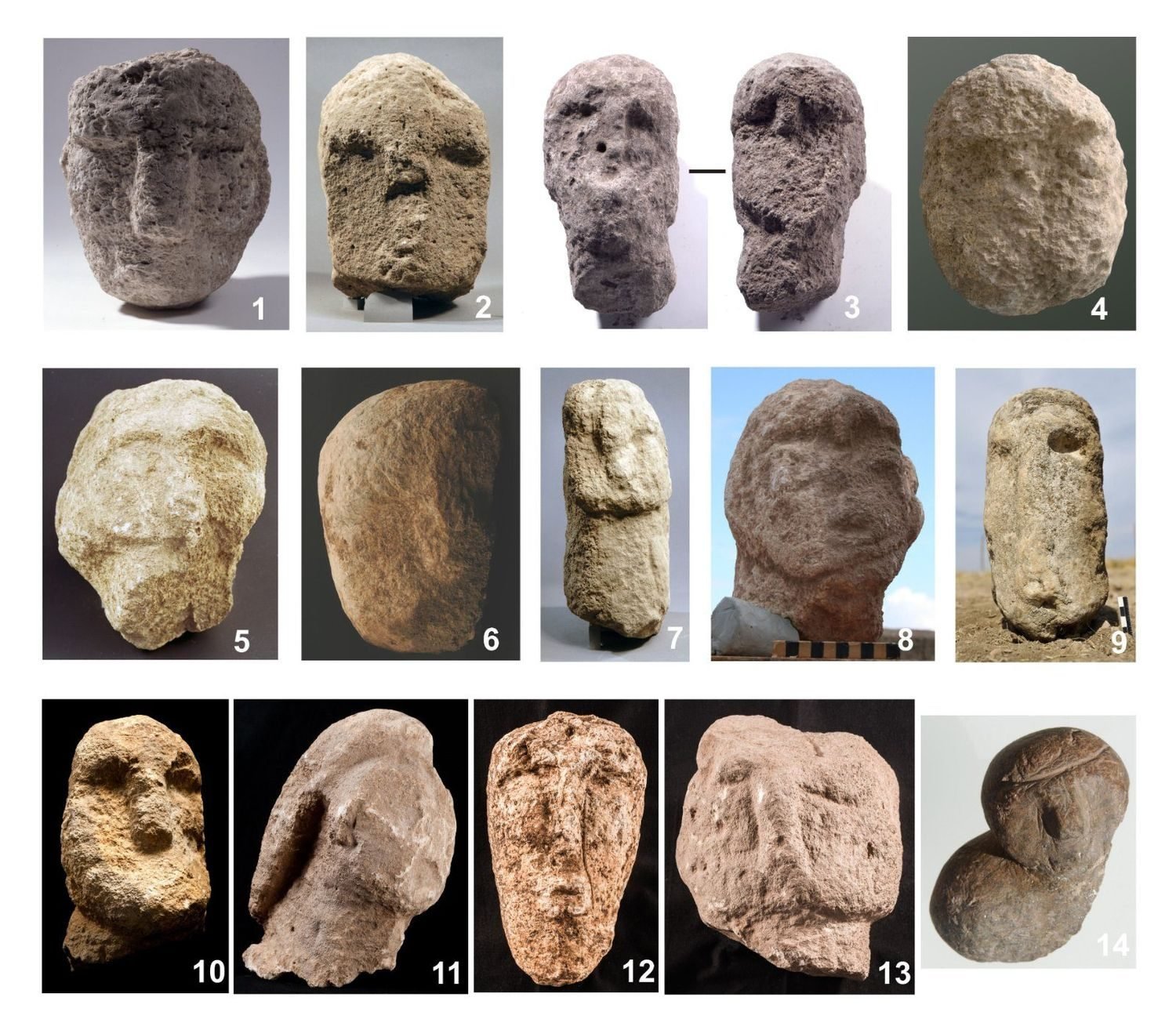
These masks belong to the region's deep fascination with the human head — from Göbekli Tepe's headless figures to the watching faces of Karahan Tepe. A mask is the head made portable, and it may be one of humanity's oldest tools for stepping into another identity.
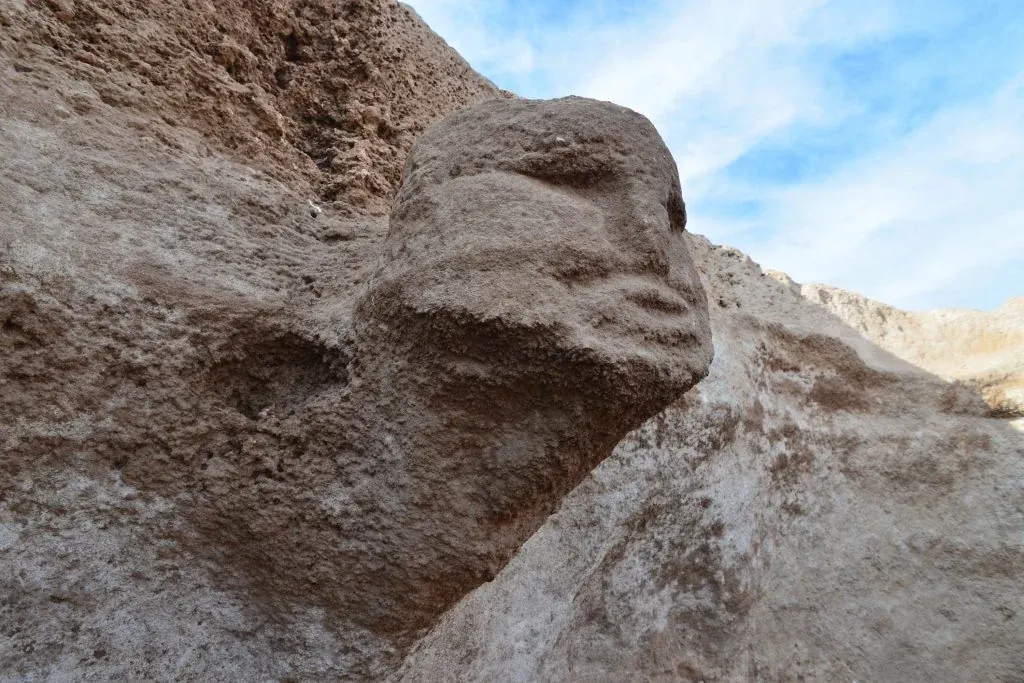
Faces at every scale
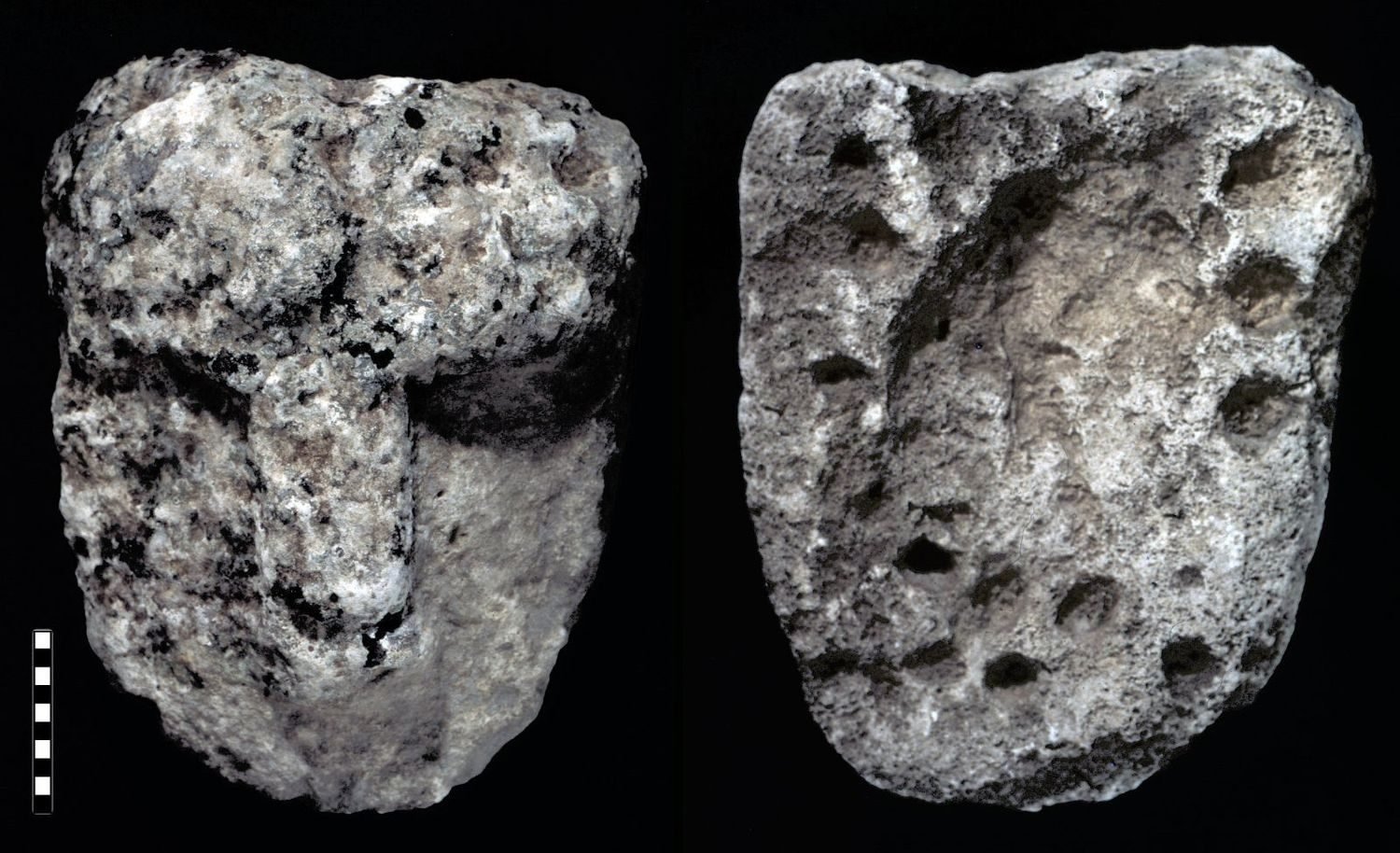
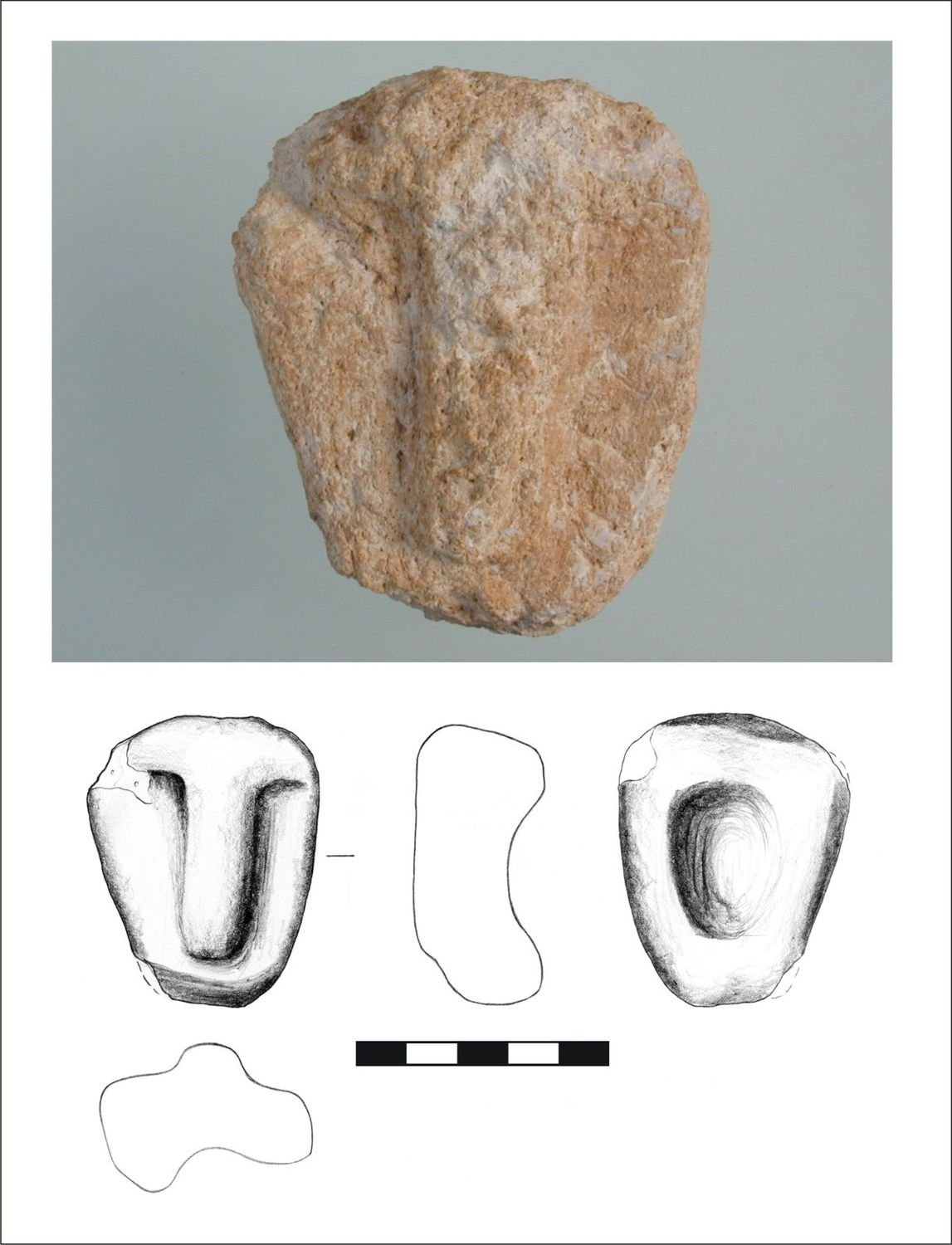
The faces come at very different sizes. The largest is a limestone mask close to life size — about 42 centimetres — found during clearance work in 1995, its features pared right back: forehead and nose carved almost as a single 'T', the mouth left out entirely. At the other end is a miniature only about 5.7 centimetres across, small enough to hold in the hand, recovered from the fill of Enclosure D in 2001; its concave back links it to a wider tradition of Neolithic masks.
Between them sits a clay object from the 2001 season in Enclosure D that appears to depict a face or mask, and a larger repertoire of carved limestone heads — non-individualised, often mouthless. Several of these pieces came from clearance or surface contexts rather than sealed deposits, which is part of why their dates and exact settings stay loose.
The head made portable
The DAI's researchers place these objects among the earliest masks anywhere, comparing them to later mask traditions further south in the Judean hills. Whether worn in ritual, carried or displayed, masks point to performance and transformation — to becoming someone, or something, else. Whether these particular pieces were ever strapped on is a separate and open question; the smallest are far too little for a face, so they at most represent masks rather than being usable ones.
Read that way, the masks belong with the region's deep and long fascination with the human head — from Göbekli Tepe's headless figures to the watching faces carved at Karahan Tepe. A mask is the head made portable, and it may be one of humanity's oldest tools for stepping, for a while, into another identity.
Taken together, the masked faces are another reminder that Göbekli Tepe was a place of performance and transformation, and not only of carving in stone.
What is uncertain
Whether these objects were actually worn is not established. The miniature examples are only a few centimetres across — far too small for a face — so at most they represent masks rather than being usable ones; even the near life-size head is identified as mask-like on the basis of its form, not of any evidence it was strapped on. 'Mask' is a description of shape and a hypothesis about use, not a proven function.
The clay object from Enclosure D is read as 'a face or mask', and that reading is tentative in the DAI's own account. Dates and exact contexts for several of these pieces — some found in clearance or on the surface rather than in sealed deposits — are correspondingly loose.
Common questions
Are the Göbekli Tepe masks really among the oldest known? The German Archaeological Institute's researchers place them among the earliest masks in the world, comparing them to later mask traditions further south in the Judean hills.
Were these masks actually worn? That is not established. The miniature examples are only a few centimetres across — far too small for a face — so at most they represent masks rather than being usable ones; 'mask' describes their shape and is a hypothesis about their use.
What do the masks have to do with the rest of Göbekli Tepe? They belong to the region's deep fascination with the human head — from Göbekli Tepe's headless figures to the watching faces of Karahan Tepe. A mask is the head made portable.
Key takeaways
- Beside its giant pillars, Göbekli Tepe produced a quieter class of finds: faces, including a clay face from Enclosure D and miniature stone masks.
- The DAI places these among the earliest masks in the world, comparing them to later traditions in the Judean hills.
- A mask points to performance and transformation — to stepping into another identity.
- They belong to the region's deep fascination with the human head, from headless figures to the watching faces of Karahan Tepe.
Sources
- DAI Tepe Telegrams — 'A clay mask depiction from Göbekli Tepe'
- DAI Tepe Telegrams — 'Behind the Mask: Early Neolithic miniature masks (and one larger-than-life example) from Göbekli Tepe'
This article is written from the primary literature and excavators' reports cited above. Interpretations are attributed; uncertainties are stated in the text.