Short answer
Not at first — in its earliest, famous phase Göbekli Tepe had no ordinary houses; it was a place people travelled to, gathered and feasted at, then left.
That was Klaus Schmidt's 'mountain sanctuary' picture. Newer finds — rock-cut cisterns and water channels, domestic structures, hearths and storage in later phases — have weakened the old sanctuary-versus-settlement split, and the honest answer is that the line blurred over the site's long life.
Not in the way you'd expect
In its earliest and most famous phase, Göbekli Tepe does not look like a place people lived. There are no ordinary houses from that time, no clear domestic quarters around the great enclosures. Instead it looks like a destination — somewhere scattered hunter-gatherer groups travelled to, gathered, built, and feasted, then left.
That was the excavator Klaus Schmidt's influential picture: a mountain sanctuary, not a village. Large quantities of wild animal bones point to big communal meals rather than everyday household cooking.
But the picture is shifting
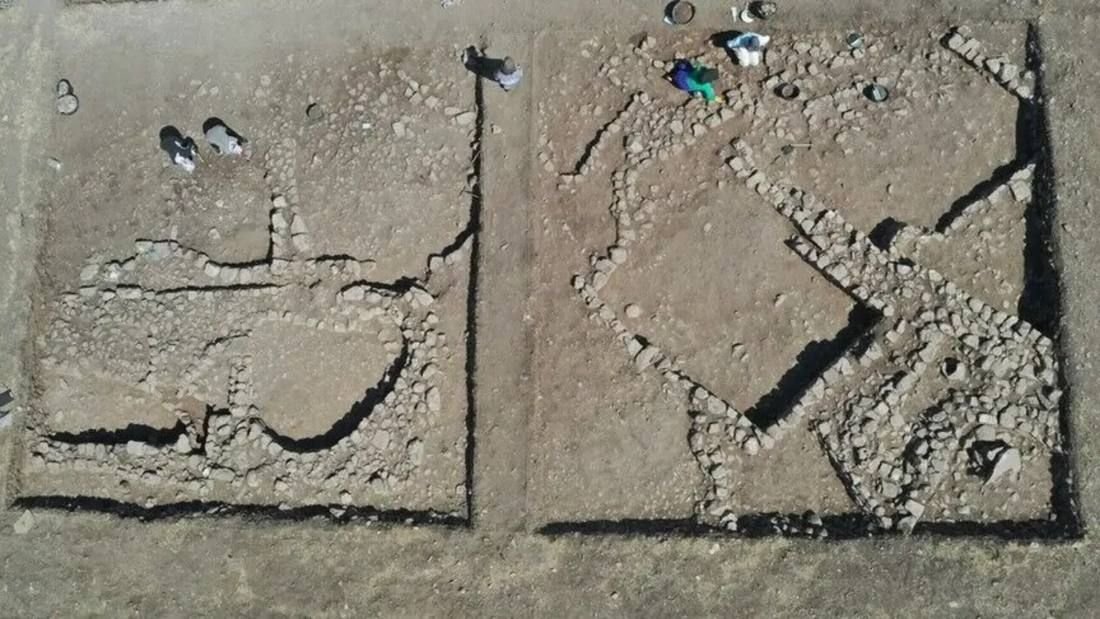
More recent work complicates the 'no one lived here' story. Later phases of the site include more building types, water-collecting cisterns, and evidence of activity that looks at least partly residential. Some archaeologists now think people may have stayed at or near the site more than Schmidt allowed — perhaps seasonally, perhaps in growing numbers as the Neolithic advanced.
So the honest answer has changed with the evidence: the earliest Göbekli Tepe was a gathering place people came to, but over its long life the line between sanctuary and settlement blurred.
Why it matters
This question sits at the heart of the site's importance. If people built monuments before they built permanent homes, it flips the old assumption that settling down came first. Göbekli Tepe suggests the desire to gather and to mark meaning may have helped pull people toward settled life — not the other way around.
Maybe the question is wrong
Here's a perspective competitor pages tend to miss: 'sanctuary or settlement' may be a modern either/or that the builders never recognised. Newer finds — rock-cut cisterns that gathered water, and traces of domestic activity in later phases — show people staying at or beside the hill, at least seasonally, more than Schmidt's 'no one lived here' allowed.
But for hunter-gatherers whose beliefs were woven through daily life, a place could be both where you gathered to build the sacred and where you lived while doing it. Splitting those into separate categories is our habit, not necessarily theirs.
The water problem has weakened
For years the strongest argument against people living at Göbekli Tepe was simple: there is no water source on the ridge. You cannot run a settlement without water.
That argument has weakened. Lee Clare points to channels cut into the bedrock, cistern-like features, runoff-collection systems and a possible large onsite water-storage feature — rainwater harvesting rather than a spring, but a water supply nonetheless.
Alongside that sits the domestic evidence itself: PPNA and early PPNB domestic structures, hearths, repeatedly renewed plaster floors, bone tools and bead production. Clare also emphasises heavy storage vessels, grinding stones, wild wheat and gazelle — the equipment and residue of people staying long enough to need storage and to plan around resources.
None of this makes Göbekli Tepe an ordinary village. It does make the old, clean split — ceremonial centre here, settlements over there — much harder to maintain.
Common questions
Did people live at Göbekli Tepe?
Not in the earliest phase — there are no ordinary houses from that time, and it looks like a gathering place people travelled to. Later phases show more residential-looking activity, so the picture is debated and shifting.
Was Göbekli Tepe a town or a temple?
Closer to a temple or gathering place than a town, at least at first. Its earliest phase lacks normal houses, though later activity blurs the line between sanctuary and settlement.
Sources & further reading4 references
- Clare, L. (2020). Göbekli Tepe, Turkey. A brief summary of research at a new World Heritage Site (2015–2019). e-Forschungsberichte des Deutschen Archäologischen Instituts 2020(2): 81–88.
- Dietrich, O., Heun, M., Notroff, J., Schmidt, K. & Zarnkow, M. (2012). The role of cult and feasting in the emergence of Neolithic communities. New evidence from Göbekli Tepe, south-eastern Turkey. Antiquity 86(333): 674–695.
- Notroff, J., Dietrich, O. & Schmidt, K. (2014). Building Monuments, Creating Communities. Early monumental architecture at Pre-Pottery Neolithic Göbekli Tepe. In J.F. Osborne (ed.), Approaching Monumentality in Archaeology: 83–105. Albany: SUNY Press.
- Clare, L. (2025). Public lectures and interviews on Göbekli Tepe (Göbekli Tepe Project, DAI). Transcribed talks and interviews held in the Taş Tepeler research atlas. Spoken material rather than a peer-reviewed publication; positions may be refined in print.
Full bibliography: the Taş Tepeler reference library →